





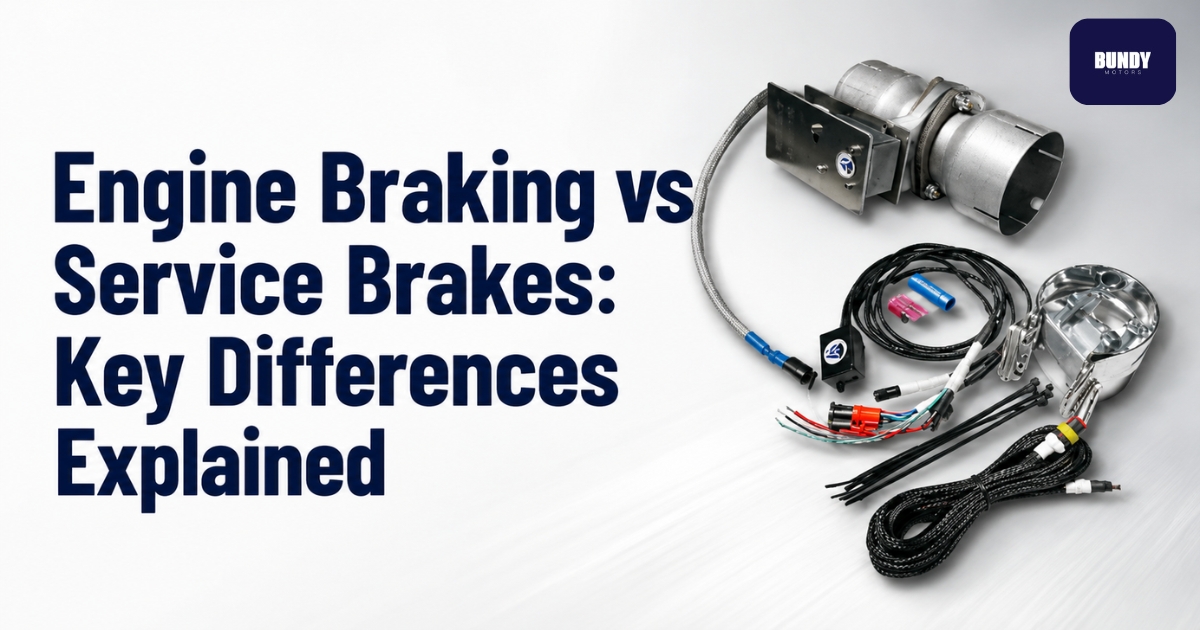
When it comes to controlling a vehicle—especially heavy-duty trucks—understanding braking systems is essential for both safety and performance. Two commonly discussed methods are engine braking and service brakes. While both serve the purpose of slowing down a vehicle, they operate in very different ways and are used in different driving conditions.
This guide breaks down the key differences between exhaust engine braking and service brakes, helping drivers and fleet operators make more informed decisions on the road.
What Is Engine Braking?
Engine braking refers to a method of slowing down a vehicle without using the traditional brake pedal. Instead, it relies on the engine’s internal resistance to reduce speed. This is commonly achieved by releasing the accelerator while the vehicle remains in gear.
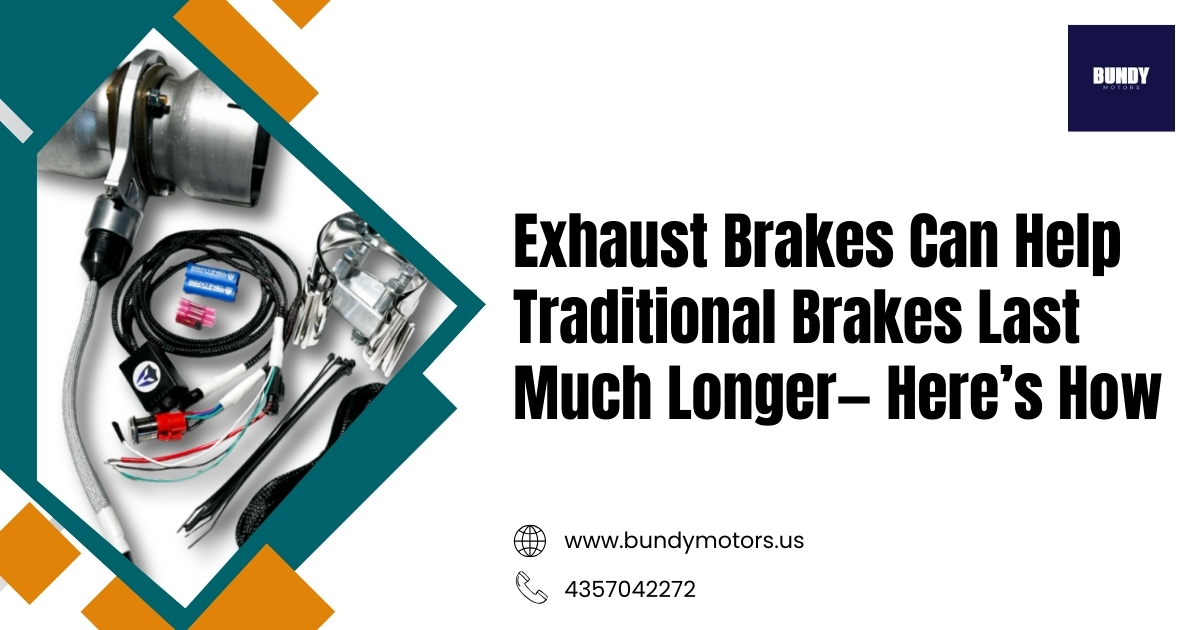
In diesel vehicles, engine braking can be enhanced using specialized systems that increase resistance within the engine, allowing for more effective deceleration—particularly useful on long downhill stretches.
What Are Service Brakes?
Service brakes are the conventional braking system found in all vehicles. These include components like brake pads, rotors, drums, and calipers that work together when the brake pedal is pressed.
When activated, service brakes create friction against the wheels, slowing down or stopping the vehicle. They are essential for everyday driving situations, including stopping at traffic signals or reacting to sudden obstacles.
Engine Braking vs. Service Brakes
Exhaust engine braking slows the vehicle using engine resistance, making it ideal for maintaining control on long descents without excessive wear. Service brakes use friction to deliver immediate stopping power, essential for quick stops and precise speed control in everyday driving.
1. Method of Operation
Engine braking uses engine resistance to slow the vehicle, while service brakes rely on friction generated by brake components.
2. Wear and Tear
Engine braking reduces reliance on physical brake parts, which helps minimize wear. In contrast, service brakes experience gradual wear due to repeated friction.
3. Best Use Cases
Engine braking is ideal for maintaining speed on downhill roads or long descents. Service brakes are necessary for quick stops and precise speed control.
4. Heat Generation
Service brakes generate significant heat due to friction, especially under heavy loads. Engine braking produces far less heat, making it more suitable for prolonged use.
5. Safety and Control
Using both systems together can improve overall control, especially in challenging driving conditions like mountainous terrain or when carrying heavy loads.
Why Understanding the Difference Matters?
For drivers of heavy vehicles, relying solely on service brakes—especially on steep declines—can lead to overheating and reduced braking efficiency. Incorporating engine braking helps distribute the load, improving safety and extending the lifespan of braking components.
For everyday drivers, understanding when to use each system can enhance control, reduce maintenance costs, and improve overall driving efficiency.
Final Thoughts
Both engine braking and service brakes play vital roles in vehicle control. Rather than choosing one over the other, the most effective approach is to use them together based on driving conditions. By understanding how each system works and when to apply it, drivers can ensure safer journeys, better vehicle performance, and longer-lasting braking systems.
Visit Website: https://www.bundymotors.us/

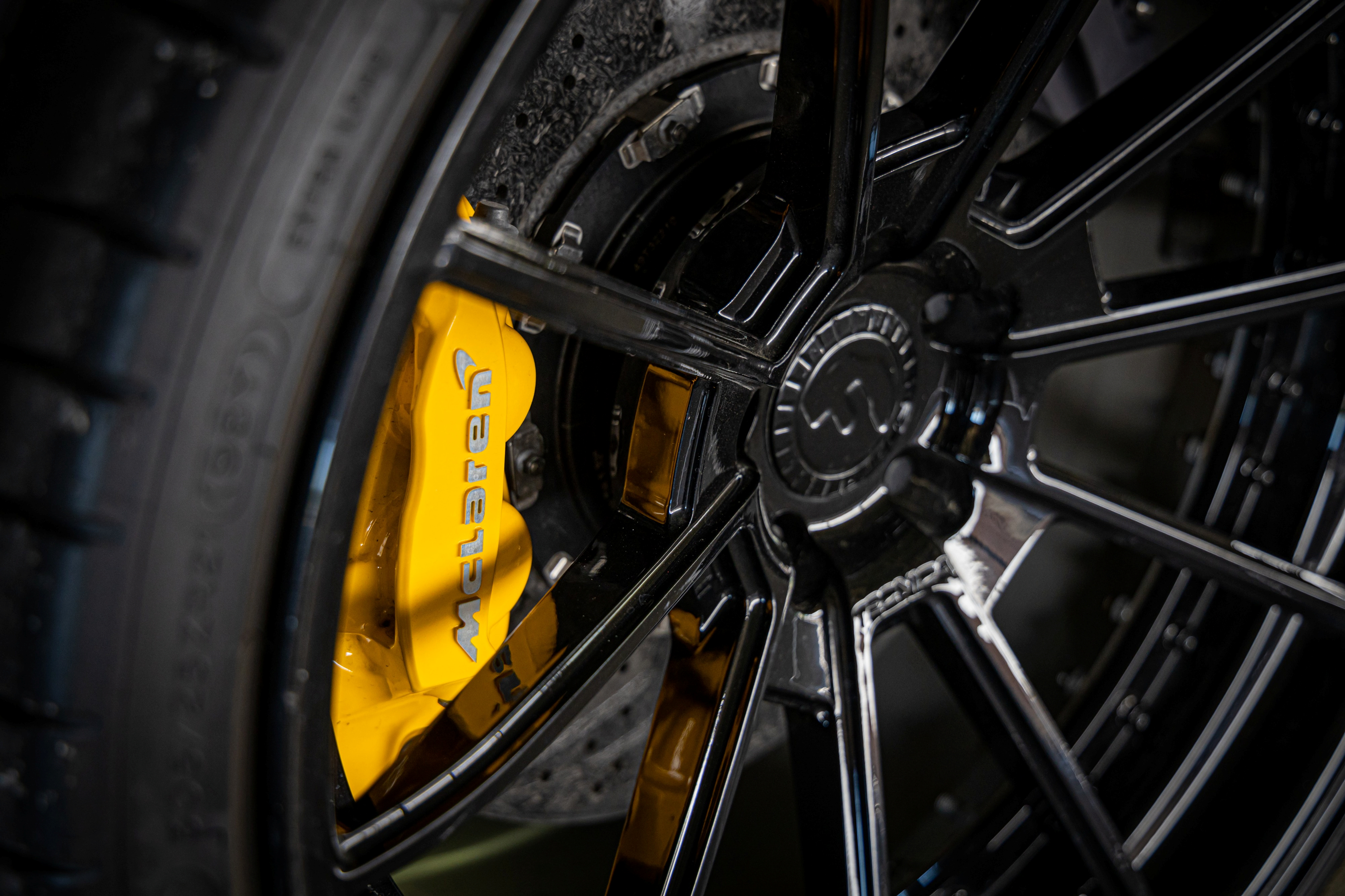
If you're even slightly interested in cars, you'll know just how important the braking system is, and have heard of carbon ceramic brakes.
For the everyday driver, not much thought is given to the brakes: if they work, they work, right?Read more - Everything You Need To Know About Carbon Ceramic Brakes
There is also an option for a four-wheel drive.
FORD GALAXY FEATURES Ford Galaxy gives you a lot of space.
The standard infotainment system is not that interesting in the Galaxy because of low resolution and graphics are a bit old-fashioned.
Galaxy comes with a six-speed manual transmission as standard, eight-speed automatic transmission is optional.
Ford Galaxy gives a surprisingly awesome drive for a car of such size.
The 2.0 TDCi with a horsepower of 119bhp with manual transmission has a fuel economy of 52.3mpg and CO2 emission of 135g/km.
