


Climate Data Is the Most Undervalued Alternative Dataset on the Planet
Climate and weather directly influence $8+ trillion in global economic activity annually — agriculture, energy, insurance, logistics, commodities, and real estate. A single frost event destroys billions in crop value. A heat wave spikes energy demand and prices. A hurricane reshapes insurance risk models overnight.
Yet despite this enormous economic footprint, climate and weather data infrastructure remains fragmented. Government agencies (NOAA, ECMWF, NASA, national meteorological services) publish vast datasets — but in formats that require significant engineering to operationalise. Satellite imagery providers offer extraordinary resolution — but at enterprise pricing that excludes most AgTech startups. Agricultural reports (USDA WASDE, EU MARS, India IMD) provide official forecasts — but with publication delays and limited granularity.
Climate and weather data scraping bridges these gaps — aggregating government data, satellite indices, crop reports, and market signals into unified intelligence platforms for AgTech companies, crop insurers, energy traders, commodity analysts, and climate risk platforms.
Why Climate Data Is Commercially Explosive
1. Crop Insurance Is a $50B+ Global Market
Crop insurance premiums exceed $50 billion globally. Every underwriting decision depends on weather and yield data. Better data means better risk selection, more accurate pricing, and lower loss ratios.
2. AgTech Investment Is Surging
AgTech raised $10+ billion in VC investment over 2023-2025. Precision agriculture, farm management platforms, and yield prediction tools all require comprehensive climate and agricultural data infrastructure.
3. Energy Trading Weather Sensitivity
Natural gas, electricity, and renewable energy generation are directly weather-dependent. Energy traders use weather data for demand forecasting, supply prediction (wind, solar), and basis risk management.
4. Commodity Trading Signals
Wheat, corn, soybean, coffee, cocoa, sugar — every soft commodity is weather-sensitive. Drought in Brazil, excessive rainfall in the US Midwest, or frost in European vineyards directly moves commodity prices.
5. Climate Risk for Real Estate and Infrastructure
Flood risk, wildfire exposure, heat island effects, and sea-level rise projections influence property valuations, insurance pricing, and infrastructure investment decisions.
6. ESG and Climate Disclosure Requirements
Mandatory climate risk disclosure (SEC, EU CSRD, TCFD) requires companies to assess and report weather-related risks. Comprehensive climate data supports these compliance requirements.
What Data Is Extractable
Government Weather Data
NOAA (US) — historical weather observations, forecasts, climate normals, severe weather alerts
ECMWF (Europe) — ERA5 reanalysis, seasonal forecasts, ensemble predictions
NASA — satellite-derived vegetation indices (NDVI), soil moisture, land surface temperature
National weather services — country-specific observations and forecasts (Met Office UK, IMD India, BOM Australia, etc.)
USDA — Weekly Crop Progress, WASDE reports, county-level yield data
Satellite & Remote Sensing Data
Sentinel (ESA) — free optical and radar satellite imagery
MODIS/VIIRS (NASA) — vegetation health, fire detection, snow cover
Landsat — 50+ years of Earth observation archives
Planet Labs, Maxar — commercial high-resolution imagery (where publicly accessible previews exist)
Agricultural Reports & Market Data
USDA NASS — crop production, livestock, prices received by farmers
EU MARS Bulletins — European crop condition reports
India Department of Agriculture — sowing reports, minimum support prices
Brazil CONAB — Brazilian crop estimates
Argentina Agriculture Ministry — export and production data
CME, ICE — agricultural commodity futures and options data
Soil & Water Data
USDA NRCS — soil surveys, soil moisture monitoring
NASA SMAP — global soil moisture satellite data
USGS — streamflow, reservoir levels, groundwater monitoring
National water agencies — irrigation water allocation data
Climate Risk Data
FEMA — flood maps, disaster declarations
FIRMS (NASA) — active fire data globally
Sea level projections — IPCC-derived regional sea level rise estimates
Air quality — EPA AQI data, Purple Air network
Key Data Points
Weather observations (per station, per hour/day): - Temperature (min, max, mean), precipitation, humidity - Wind speed and direction, solar radiation - Growing degree days (GDD), cooling/heating degree days - Frost events, extreme heat events - Soil temperature and moisture (where available)
Satellite-derived indices (per pixel, per revisit): - NDVI (Normalized Difference Vegetation Index) — crop health - EVI (Enhanced Vegetation Index) — vegetation vigour - Land Surface Temperature (LST) - Soil moisture estimates - Snow cover and water body extent
Agricultural data: - Crop planted and harvested area by region - Yield estimates and production forecasts - Crop condition ratings (excellent/good/fair/poor/very poor) - Growing season progress (% planted, % emerged, % harvested) - Commodity prices (farm-gate and futures)
Climate risk: - Flood zone classifications - Historical disaster frequency and severity - Wildfire risk indices - Projected temperature and precipitation changes (climate models)
Real-World Use Cases
Crop Insurance Underwriting
A major crop insurer uses comprehensive weather + yield data to improve county-level risk assessment. By replacing outdated actuarial tables with satellite-derived vegetation health indices and daily weather data, they reduce loss ratios by 15% while maintaining competitive premium pricing.
Precision Agriculture Platform
An AgTech startup builds a farm advisory platform using scraped weather forecasts, satellite vegetation indices, and soil moisture data. Farmers receive field-level irrigation and fertiliser recommendations. The platform covers 5 million acres across the US Midwest with weekly satellite updates.
Energy Trading Weather Models
A European energy trader scrapes ECMWF forecast data, wind speed observations, and solar irradiance measurements to predict renewable energy generation and demand. Weather-driven trading signals contribute 40% of their alpha.
Commodity Trading Fund
A commodity-focused hedge fund uses satellite-derived NDVI data across Brazil, Argentina, and the US to forecast crop yields ahead of official USDA reports. Historical accuracy: 88% directional accuracy on soybean yield surprises vs. 62% using USDA alone.
Climate Risk for Real Estate Investment
A real estate PE firm evaluates flood risk, wildfire exposure, and heat stress data for properties across their $3 billion portfolio. Climate risk assessments — built from FEMA flood maps, FIRMS fire data, and temperature projections — inform both acquisition decisions and insurance strategy.
ESG Climate Disclosure
A Fortune 500 company uses comprehensive climate data to support TCFD-aligned climate risk disclosures. Scraped weather data, combined with facility-level exposure mapping, demonstrates climate risk management to investors and regulators.
Agricultural Commodity Research
A research platform serving commodity traders aggregates USDA crop reports, Brazilian CONAB estimates, EU MARS bulletins, and Indian sowing data into a unified dashboard — providing global agricultural supply intelligence across 40+ crops.
Technical Challenges
1. Government Data Format Heterogeneity
NOAA uses one format. ECMWF uses another. NASA uses HDF/NetCDF. USDA publishes PDFs and CSVs. Unifying these into a single queryable database requires significant ETL engineering.
2. Satellite Data Volume
A single Sentinel-2 satellite generates 1.6 TB of data per day globally. Processing satellite imagery for specific regions and extracting meaningful vegetation indices requires cloud computing infrastructure and geospatial expertise.
3. Temporal Alignment
Weather observations are hourly. Satellite revisits are every 5-16 days. Crop reports are weekly or monthly. Aligning these different temporal resolutions for meaningful analysis requires careful data engineering.
4. Spatial Resolution Mismatches
Weather stations cover points. Satellites cover pixels (10m-1km). Crop reports cover counties or districts. Harmonising spatial resolutions is a core technical challenge.
5. Forecast vs Observation Distinction
Mixing forecast data with observation data in models is a common error. Data infrastructure must clearly distinguish predicted from observed data.
6. Historical Depth Requirements
Climate risk assessment requires 30-50 years of historical data. Building and maintaining deep historical archives is resource-intensive.
How Actowiz Powers Climate & AgTech Data
Actowiz Solutions operates a comprehensive climate and agricultural data extraction platform — serving AgTech startups, crop insurers, energy traders, commodity funds, and climate risk platforms.
What we deliver:
Multi-source weather data — NOAA, ECMWF, national weather services across 50+ countries
Satellite vegetation indices — NDVI, EVI, soil moisture from Sentinel, MODIS, and Landsat
Agricultural report aggregation — USDA, EU MARS, CONAB (Brazil), IMD (India), and 20+ country agriculture ministries
Commodity price feeds — CME, ICE, and global agricultural commodity exchanges
Climate risk data — FEMA flood maps, wildfire data, sea level projections, temperature scenarios
Historical archives — 30+ years of weather observations, 20+ years of satellite data
Spatial analytics — field-level, county-level, and regional aggregation capabilities
Flexible delivery — API, S3 drops, GeoTIFF for spatial data, warehouse loads
Our climate and agricultural data pipeline processes 50+ TB of climate data annually across global sources.
Frequently Asked Questions
Is scraping government weather data legal?
Government weather and agricultural data is publicly funded and published for public use. Scraping NOAA, ECMWF (for open data), NASA, and USDA is explicitly within the intended use of this data. Commercial satellite data has separate licensing terms.
Can you provide field-level weather and satellite data?
Yes — we support field-level data delivery when coordinates are provided. Resolution depends on data source (10m for Sentinel-2, 250m-1km for MODIS).
Do you cover global agricultural data or just the US?
Global coverage — US (USDA), EU (MARS), Brazil (CONAB), India (IMD/Agriculture Ministry), Argentina, Australia, and 20+ additional countries.
What's the engagement pricing?
Climate and AgTech data engagements start at $5,000/month for focused crop/region coverage. Global enterprise plans are custom-quoted.
Ready to Build Climate Intelligence?
In a world where weather drives $8+ trillion in economic activity, climate data is the ultimate competitive advantage for agriculture, energy, insurance, and investment. Build your climate intelligence now.
Conclusion
You can also reach us for all your mobile app scraping, data collection, web scraping , and instant data scraper service requirements!
Read More>>
https://www.actowizsolutions.com/climate-weather-agtech-data-scraping.php
Originally published at https://www.actowizsolutions.com


Make Video Marketing Your Best Friend With This AdviceVideo showcasing is an energizing and scaring field.
The counsel beneath is intended to start your imagination in advertising your business through recordings.Google search stories are an amazing method to keep yourself off the camera while as yet making video advertising which is viable.
You look for your locales and show the reality where they can be discovered, who is referencing them and what they contain, enabling individuals to discover what you’re about.Try not to accept that the salesmen at you organization are the ones that will glance best before the camera.
No one needs to realize that your organization representative is janitor or secretary.Ensure that you develop an association with your crowd.
Anything faked inside the video, be it, your background or your aura, will perplex them.
On the off chance that you need them to accept what you’re attempting to let them know, be straightforward, straightforward and put on a show of being warm and inviting.Also Visit-Best Video Marketing CompanyItem makers or affiliates ought to make recordings demonstrating how the item can be utilized in elective manners.

Industry Analysis of Microporous Insulation MarketThe Microporous Insulation Market report gives a holistic overview of the market scenario to offer accurate forecasts for the coming years, highlighting the competitive landscape, with industry-wide market segmentation, critical trends, and strategic recommendations to help readers sustain their position in the global market.
The Microporous Insulation market report also focuses on leading companies in the market and creates descriptive company profiles, market shares, product offerings, sales, and sales.Some of the market players studied in this report are Promat international N.V, Isoleika S. Co-op, Morgan Advanced materials, unicorn insulation limited, Guangzhou Hueing Environmental Protection materials Co. Ltd, Nichias corporation, Thermodyne, Unifrax, John MalvilleFill in your details to get your hands on an Exclusive Sample of this Report @ https://www.reportsanddata.com/sample-enquiry-form/1479Segments covered in the report:Product (Revenue, USD Million; 2016–2026)Rigid boards and panelsFlexible panelsMoldable partsMachined partsFeeder Bowl kitsVacuum insulated panelsPourable productsApplication (Revenue, USD Million; 2016–2026)IndustrialEnergy & PowerOil & GasDefenseAerospaceAutomotive industryFire protectionMarket Segment by Regions, regional analysis covers:North America (United States, Canada, and Mexico)Europe (Germany, France, UK, Russia, and Italy)Asia-Pacific (China, Japan, Korea, India, and Southeast Asia)South America (Brazil, Argentina, and Colombia)Middle East and Africa (Saudi Arabia, UAE, Egypt, Nigeria, and South Africa)Avail this report at Attractive Discount rates!
Click here to know more @ https://www.reportsanddata.com/discount-enquiry-form/1479Key point summary of the report:Critical Aspects: The Global Microporous Insulation Market research report sheds light on the latest growth trends, development, and elaborates on the research methodologies employed.
The market aspects that directly influence the growth of the market include the prevalent marketing strategies adopted by the leading companies, expansion tactics, and the product offerings of the companies, underlining that factors that could potentially affect the growth of the market segments and subsequently the overall market.
The research study has examined these factors elaborately.Market Overview: The study also takes into consideration crucial market aspects, including R, new product launches, deals, joint ventures, mergers and acquisitions, collaborations, and growth of the key industry participants, both on the regional and global levels.Key Features: The report performs an in-depth analysis of some of the crucial factors, such as cost, capacity, rates of production and consumption, gross revenue, import/export status, demand-supply dynamics, growth rate, profit margin, and market share.
Apart from this, the report also focuses on significant factors that might affect the market trends and categorizes the market into different segments and sub-segments.Analytical Tools: The Global Microporous Insulation Market report includes authentic and relevant information relating to the overall market, key players, and their reach in the market with the help of precise analytical tools like SWOT analysis, Porter’s five forces analysis, analysis of the return on investment, and feasibility study on recent projects.
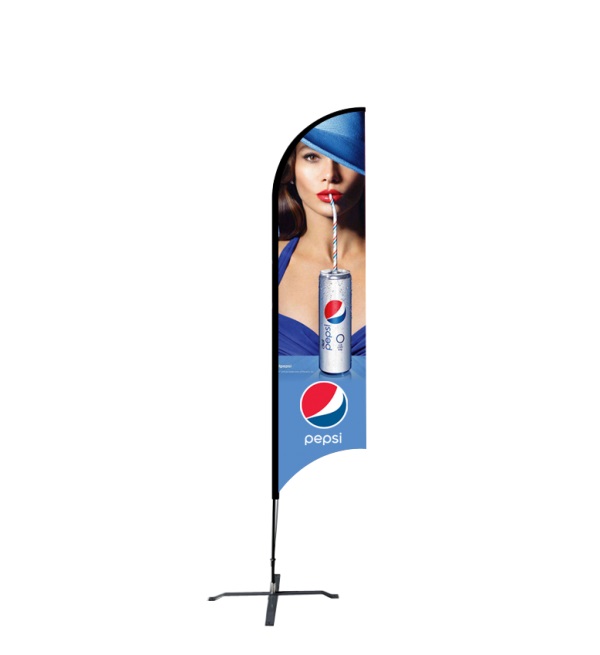
Custom flag banner & advertising flags at Great Prices available.
Plus fast shipping Millions of happy customers with 100% satisfaction guarantee !
Custom feather flag and personalised banners are available to buy online at Tent Depot.
For more information Order Online & Call us 1-877-409-0265.
Available sizes: 1 .6ft Custom Concave Flag With Ground Spike (Small) 9ft Custom Concave Flag With Ground Spike (Medium) 12ft Custom Concave Flag With Ground Spike (Large) Categories Available :1.Concave Flags2.Convex Flags3.Rectangle flags4.Teardrop Flag5.Promotional Flags Features : 1.Full Color Graphics Available in many sizes - mention the sizes Available verities - Bow,Blade, Teardrop,Feather etc Available With Single sided & Double side Banners Contact Us : Tent Depot Address : 30 Pennsylvania Avenue, Unit #5, Vaughan, Ontario, L4K 4A5, Canada Call : 1-877-409-0265 Mail Id: sales@tentdepot.ca Website:https://www.tentdepot.ca/