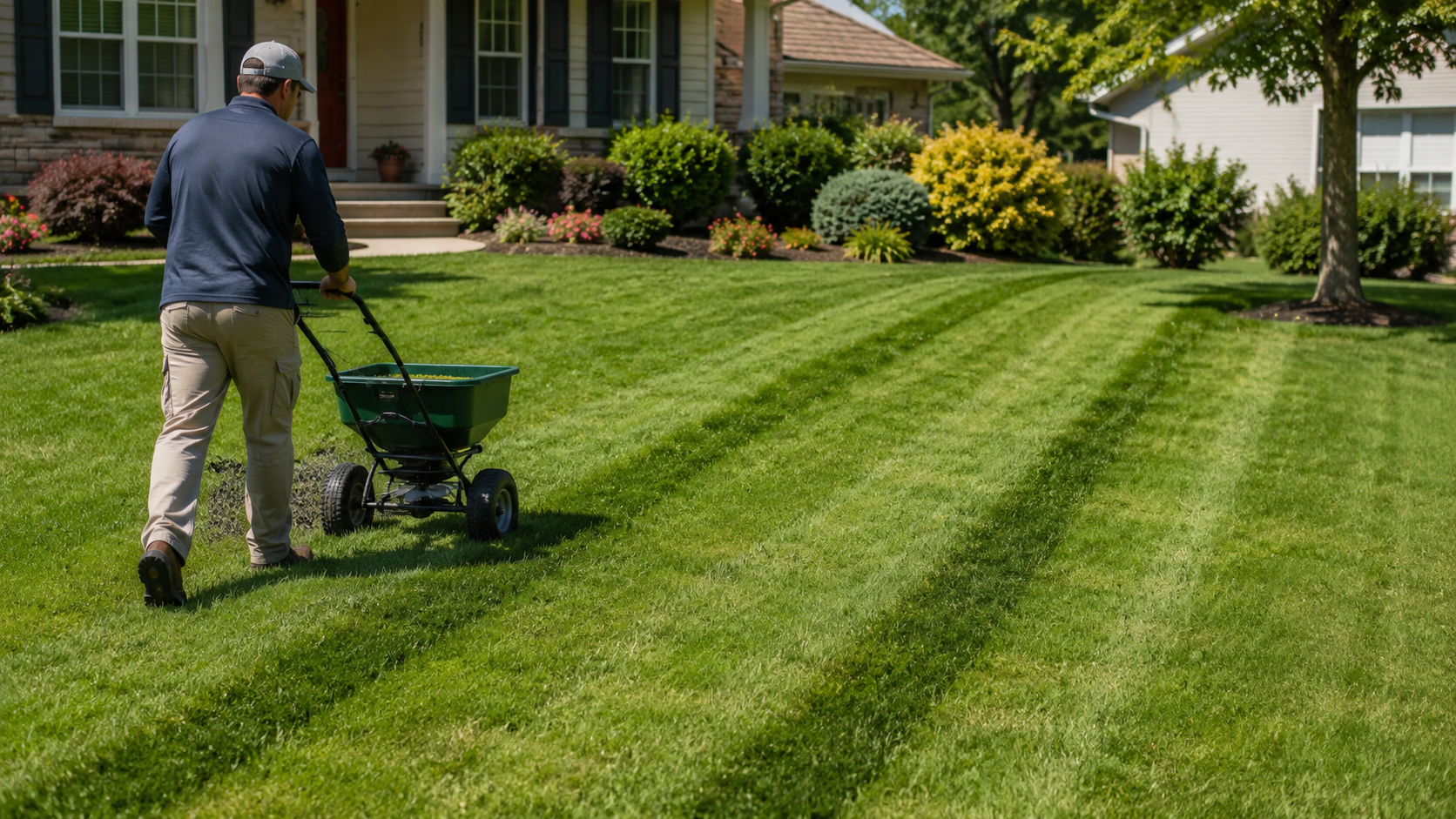
A push spreader seems like one of the easiest lawn tools to use. You fill it with fertilizer, adjust the setting, and walk across the yard. But many homeowners are surprised when the lawn starts showing dark green lines, lighter patches, or uneven growth a week or two later. In many cases, the problem is not the fertilizer itself. The problem is how it was applied.
One of the most common DIY lawn care mistakes is walking too slowly with a push spreader. When the spreader gate is open and the walking pace slows down, more product falls into a smaller area. Instead of spreading evenly across the turf, the fertilizer becomes concentrated along the exact path where the spreader was pushed. That concentrated application can cause the grass in those lines to grow faster and turn darker than the surrounding areas. From a distance, it can look like mowing stripes, but the pattern is actually caused by uneven fertilizer distribution. Volz Lawn & Landscape explains this issue in more detail in their article on [common push spreader mistakes that can leave stripes, missed areas, and uneven lawn growth].
Why Walking Speed Matters
Most lawn spreaders are designed to work at a steady walking pace. If you move too fast, product may not land where it should. If you move too slowly, too much product can fall in one area. Pausing, turning, or stopping while the gate is still open can make the problem even worse. This is why fertilizer stripes often follow the same path the homeowner walked. The grass receives more nutrients in those strips, responds faster, and stands out from the rest of the yard. A consistent walking pace helps the spreader distribute product more evenly. Homeowners should also close the gate before stopping, turning, or walking across sidewalks, driveways, and landscape beds.
Fertilizer Stripes Are More Than a Cosmetic Problem
Dark green lines may not seem like a serious issue at first, but uneven fertilizer can create several problems. Heavily treated areas may grow faster and need mowing sooner. Lightly treated areas may stay pale or thin. In hotter weather, concentrated fertilizer can even stress or burn the lawn.
Uneven fertilizer also makes it harder to judge the overall health of the turf. A lawn may look patchy not because it needs more fertilizer, but because the previous application was inconsistent. That is where professional lawn care makes a difference. A company like Volz Lawn & Landscape uses the right application timing, product rates, and equipment to help create more even results across the entire yard.
Weed and Feed Products Require Even Coverage
Fertilizer mistakes become even more noticeable when homeowners use weed and feed products. These products are designed to feed the lawn and treat weeds at the same time, but they need proper coverage to work correctly.
If weed and feed is applied heavily in some strips and lightly in others, weeds may continue growing in the missed areas. The result can be a lawn with dark green fertilizer lines and weed pressure between the passes. Weather and timing also matter. Some weed control products need certain moisture conditions to stick to weed leaves. Others may have watering, mowing, or temperature restrictions. Applying the wrong product at the wrong time can reduce results or damage the turf.
Grub Control Can Fail When Coverage Is Uneven
Grub control is another treatment where coverage matters. Since grubs feed below the surface, missed areas may not show problems right away. By the time brown patches or weak turf appear, the damage may already be done. If grub control is not spread evenly and watered in properly, some sections of the lawn may be protected while others remain vulnerable. This is one reason homeowners often choose a professional lawn care program instead of guessing with bagged products and spreader settings.
Other Common Push Spreader Mistakes
Walking speed is one of the biggest causes of fertilizer striping, but it is not the only mistake homeowners make. Other common issues include:
- Using the wrong spreader setting
- Forgetting to measure the lawn before applying product
- Overlapping passes too much
- Leaving gaps between passes
- Applying fertilizer before heavy rain
- Using a clogged or poorly maintained spreader
- Starting or stopping with the gate open
- Applying product during stressful heat or drought conditions
How Homeowners Can Reduce Spreader Problems
For homeowners who still want to fertilize their own lawn, consistency is key. Walk at a steady pace, follow the product label, use the correct spreader setting, and avoid stopping with the gate open. It can also help to apply product in a planned pattern instead of randomly crossing the yard.
However, even with careful DIY work, lawn care can be tricky. Soil conditions, weather, turf type, product timing, and equipment quality all affect the final result. For a deeper look at how these mistakes happen, Volz Lawn & Landscape has a helpful guide covering [push spreader mistakes, fertilizer stripes, weed control issues, and uneven lawn growth].
When to Call a Professional Lawn Care Company
DIY lawn care can work, but it leaves a lot of room for error. One small mistake with speed, overlap, or product selection can create visible lines across the yard for weeks. Other mistakes may affect weed control, grub prevention, or the long-term health of the grass.
Volz Lawn & Landscape provides professional fertilization and lawn care services for homeowners who want better results without the guesswork. Their team understands local Kansas City lawn conditions and uses a seasonal approach to help lawns grow thicker, healthier, and more evenly. For homeowners tired of fertilizer stripes, patchy turf, and confusing product labels, hiring a professional lawn care company can be the easier and more reliable option.
Final Thoughts
A push spreader may look simple, but using one correctly takes more care than many people realize. Walking too slowly, applying too much product, missing sections, or using the wrong setting can all leave behind visible problems.
The best lawn care results come from proper timing, even coverage, and the right products for the season. Whether you handle it yourself or hire a professional, avoiding these common spreader mistakes can make a major difference in how your lawn looks and performs.



If you are looking for the reputed and experienced professional lawn care service providers in Wichita?
Then you have come to the right place.
Wichita lawn care is experienced and professional lawn care that is readily available to offer you the best lawn services at the best market rates.