


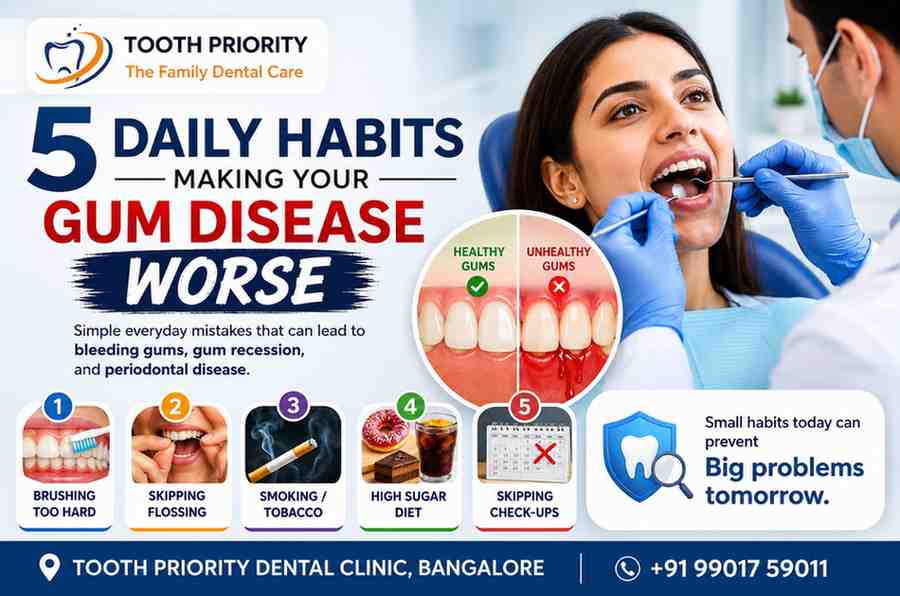
Most people don’t know they have gum disease until it’s already at an advanced stage. It doesn’t always hurt. It doesn’t always bleed noticeably. And by the time it does — teeth are already loosening. This guide explains everything you need to know about gum disease, from early warning signs to what treatment actually involves.
What Is Gum Disease? And Why It’s So Often Missed
Gum disease — clinically known as periodontal disease — is an infection of the structures that support your teeth: the gums, ligaments, and bone. It starts as gingivitis (inflammation of the gums) and, left untreated, progresses to periodontitis, where bone is gradually destroyed.
Here’s the thing most people get wrong: they wait for pain before taking it seriously. Gum disease is largely painless in its early and middle stages. By the time you feel discomfort, significant damage may already have occurred.
What Causes Gum Disease?
The Primary Cause: Plaque Buildup
Plaque is the sticky film of bacteria that forms on teeth continuously. When not removed by brushing and flossing, it hardens into tartar (calculus) within 24–72 hours. Tartar cannot be removed by brushing — it requires professional scaling. The bacteria in plaque and tartar produce toxins that irritate and inflame gum tissue.
Risk Factors That Make It Worse
Smoking or tobacco use: reduces blood flow to gums, masking inflammation and slowing healing
Diabetes: high blood sugar creates an ideal environment for bacterial growth
Stress: suppresses immune response, making it harder to fight infection
Hormonal changes: pregnancy, menopause, and puberty all increase gum sensitivity
Certain medications: some blood pressure drugs, antidepressants, and antihistamines cause dry mouth or gum overgrowth
Poor nutrition: vitamin C deficiency in particular weakens gum tissue
Teeth grinding (bruxism): puts excess stress on the supporting structures
Ill-fitting crowns or dentures: create areas where plaque accumulates
The Four Stages of Gum Disease
Stage 1: Gingivitis
This is the only reversible stage. Gums appear red, swollen, and bleed when you brush or floss. There is no bone loss at this stage. With professional cleaning and improved home care, gingivitis can be completely reversed within weeks.
Stage 2: Early Periodontitis
The infection has spread below the gumline. Pockets form between the teeth and gums (measured in millimetres by your dentist using a probe). Early bone loss begins. Professional deep cleaning (scaling and root planing) is usually effective at this stage.
Stage 3: Moderate Periodontitis
Deeper pockets, more significant bone loss, and possible tooth sensitivity. Teeth may begin to feel slightly loose. More intensive treatment is needed — often multiple scaling sessions and possibly surgical intervention.
Stage 4: Advanced Periodontitis
Severe bone loss, loose teeth, gum recession, and possibly tooth loss. This stage significantly affects chewing function. Treatment options include flap surgery, bone grafting, and in some cases, extraction followed by implant placement.
Warning Signs You Shouldn’t Ignore
Gums that bleed when you brush or floss — even slightly
Red, swollen, or tender gums
Gums that have pulled away from the teeth (receding gums)
Persistent bad breath that doesn’t go away with brushing
Loose or shifting teeth
A change in your bite or how your teeth fit together
Pus between teeth and gums
Teeth that look longer than before (actually the gum is receding)
Important: Bleeding gums are NOT normal. Some people have bled when they brush their whole lives and consider it normal. It is not — it is the primary early sign of gingivitis.
How Is Gum Disease Diagnosed?
At Tooth Priority in Gubbalala, periodontal evaluation is performed by Dr. Shivaprasad BM — an Implantologist and Periodontist with 26 years of experience. Diagnosis involves a periodontal probe measurement (checking pocket depths around each tooth), dental X-rays to assess bone levels, and a full assessment of risk factors.
This is not a painful process. The probe is a thin instrument that measures pocket depth in millimetres. Healthy gums have pockets of 1–3mm. Anything over 4mm indicates gum disease.
Gum Disease Treatment: What to Expect
Non-Surgical Treatment (Stage 1 & 2)
Professional scaling and root planing (deep cleaning) removes tartar and bacterial toxins from below the gumline. This is done under local anaesthesia for comfort. Most patients need 2–4 sessions. [More about this process: Professional Scaling & Cleaning in Bangalore — What It Involves]
Surgical Treatment (Stage 3 & 4)
When pockets are too deep for scaling to reach effectively, flap surgery allows the periodontist to access the roots directly, clean them thoroughly, and reposition the gum. Bone grafts may be placed to regenerate lost bone.
Antibiotic Therapy
Localised antibiotic placement (gel or powder placed directly into pockets) or systemic antibiotics may be prescribed alongside mechanical treatment for more aggressive cases.
Maintenance Phase
After active treatment, ongoing maintenance cleanings every 3–4 months (rather than the standard 6) are essential for preventing recurrence. Gum disease doesn’t disappear permanently — it is managed.
The Connection Between Gum Disease and Systemic Health
This is what I think most patients are genuinely surprised by: gum disease is not just a dental problem. Research has established associations between untreated periodontitis and cardiovascular disease, type 2 diabetes (a bidirectional relationship), adverse pregnancy outcomes, and respiratory infections.
The mechanism: chronic oral infection introduces bacteria and inflammatory molecules into the bloodstream. This systemic inflammation is the link between gum disease and heart and metabolic conditions. Treating gum disease has been shown in multiple studies to improve diabetes control.
How to Prevent Gum Disease
Brush twice daily — but technique matters more than duration; angle your brush at 45° toward the gumline
Floss once daily — this removes plaque from between teeth where brushes can’t reach
Use an antiseptic mouthwash as an adjunct, not a substitute for mechanical cleaning
Get professional scaling every 6 months — tartar cannot be removed at home
Stop smoking — the single most impactful change you can make for gum health
Control blood sugar if diabetic — periodontitis and diabetes worsen each other
Tell your dentist about all medications — some require gum monitoring
Don’t ignore early symptoms — gingivitis is completely reversible; periodontitis is not
Gum Disease Treatment Cost in Bangalore
Professional scaling (standard): ₹500 – ₹1,500 per session
Deep cleaning / scaling & root planing: ₹3,000 – ₹8,000 (full mouth)
Periodontal flap surgery: ₹15,000 – ₹40,000 (per quadrant)
Bone grafting: ₹20,000 – ₹60,000 depending on area
Maintenance scaling (every 3 months): ₹500 – ₹1,500 per visit
Worried About Gum Health? Book a Periodontal Assessment at Tooth Priority → Call +91-9901759011
FAQs
Q1: Can gum disease be cured completely?
Gingivitis (Stage 1) can be fully reversed with professional treatment and good home care. Periodontitis (Stages 2–4) cannot be cured but can be effectively controlled and managed with regular treatment and maintenance.
Q2: Is gum disease contagious?
The bacteria that cause gum disease can be transmitted between people through saliva, though the disease itself develops based on individual risk factors. Sharing utensils or kissing can transmit these bacteria.
Q3: Can gum disease cause tooth loss?
Yes — advanced periodontitis is one of the leading causes of tooth loss in adults. The bone and ligament that support the tooth are progressively destroyed, eventually making the tooth unsalvageable.
Q4: How long does gum disease treatment take?
Gingivitis responds within 2–4 weeks of professional cleaning and improved home care. Periodontitis treatment takes months to years depending on severity, with ongoing maintenance throughout.
Related Article
Teeth Scaling & Cleaning in Bangalore: What to Expect, Cost & How Often
Emergency Dental Care in Bangalore: What to Do & Where to Go
Daily Habits That Are Making Your Gum Disease Worse in Bangalore

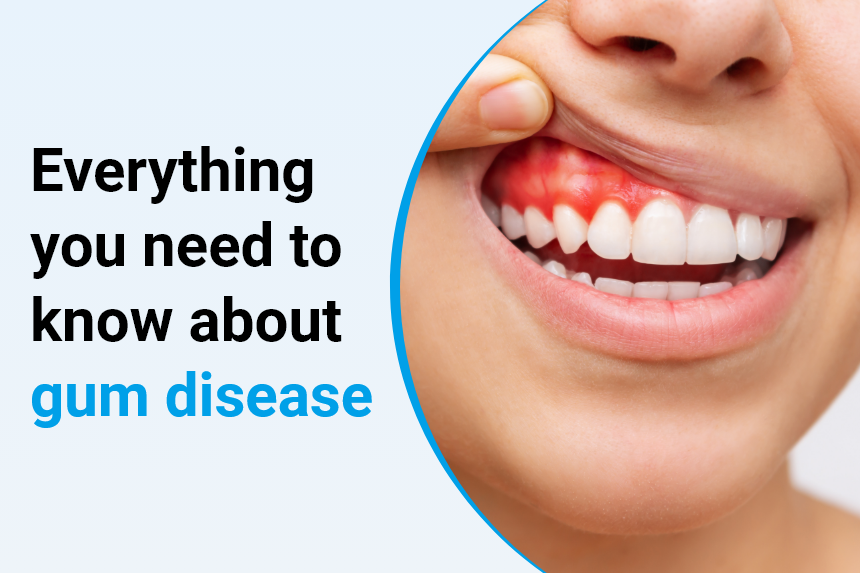
If your gums are tender or bleed when you brush your teeth, it may be gum disease known as gingivitis or it could be more advanced condition known as periodontitis.
If you improve your oral hygiene in an earlier stage, there are chances of healing the gums or reducing the severity of gum disease.
Book an appointment with your Dentist or Reach Ashton Avenue Dental Clinic for a detailed consultation.read more

When searching for the best periodontist in Arlington, trust your periodontal health to Dr. Kohli.
She offers the convenience of full periodontal treatment at the Columbia Pike Family office without referring patients to another practice.
Schedule your appointment today at (571) 312-4111.