


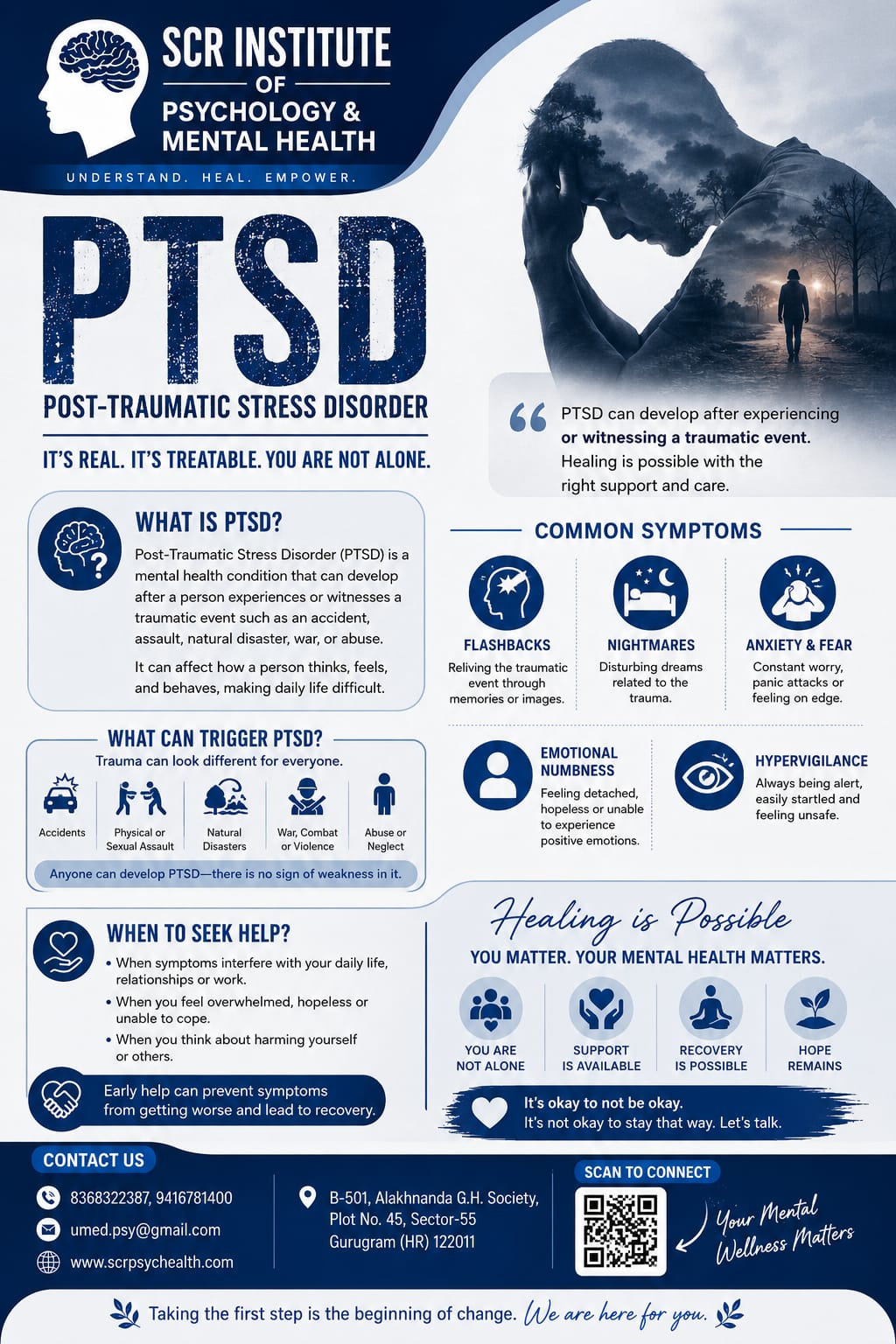
What is Post-Traumatic Stress Disorder (PTSD)? Understanding the Signs, Causes, and Treatment
Traumatic experiences can leave a lasting impact on a person's emotional and mental well-being. While many people gradually recover after a difficult event, some continue to struggle with distressing memories, fear, anxiety, and emotional pain long after the event has passed. This condition is known as Post-Traumatic Stress Disorder (PTSD).
At SCR Institute Of Psychology & Mental Health, Dr. Umed Singh and his team work with individuals who are dealing with trauma-related challenges, helping them understand their experiences and develop healthy coping strategies.
What is PTSD?
Post-Traumatic Stress Disorder (PTSD) is a mental health condition that can develop after a person experiences or witnesses a traumatic event. These events may include accidents, physical or emotional abuse, natural disasters, serious injuries, violence, military combat, or the sudden loss of a loved one.
It is normal to feel upset, scared, or anxious after a traumatic experience. However, when these feelings continue for months and begin to affect daily life, relationships, work, or studies, PTSD may be present.
Common Symptoms of PTSD
PTSD symptoms can vary from person to person. Some individuals may experience severe symptoms, while others may have milder difficulties.
1. Intrusive Memories
People with PTSD often experience unwanted memories of the traumatic event. These may include:
* Flashbacks
* Disturbing thoughts
* Recurring memories
* Nightmares related to the trauma
These experiences can feel very real and emotionally overwhelming.
2. Avoidance
Many individuals try to avoid anything that reminds them of the traumatic event. This may include:
* Avoiding certain places
* Avoiding conversations about the event
* Staying away from people or situations that trigger memories
While avoidance may provide temporary relief, it can make recovery more difficult over time.
3. Changes in Mood and Thinking
PTSD can affect how a person thinks and feels about themselves and the world around them. Common signs include:
* Persistent sadness
* Feelings of guilt or shame
* Loss of interest in activities
* Difficulty trusting others
* Feeling emotionally disconnected
4. Increased Alertness and Anxiety
People with PTSD often remain in a constant state of alertness, even when they are safe. Symptoms may include:
* Irritability
* Difficulty sleeping
* Trouble concentrating
* Being easily startled
* Feeling tense or on edge
What Causes PTSD?
PTSD develops when the brain and body continue to respond to danger even after the threat has passed. Several factors can increase the risk of developing PTSD, including:
* Experiencing severe trauma
* Repeated exposure to stressful events
* Lack of emotional support after trauma
* Previous mental health difficulties
* Family history of anxiety or mental health conditions
It is important to remember that PTSD is not a sign of weakness. It is a genuine mental health condition that can affect anyone.
How PTSD Affects Daily Life
Without proper support, PTSD can interfere with many aspects of life. Individuals may struggle with:
* Personal relationships
* Academic performance
* Workplace productivity
* Emotional regulation
* Physical health and sleep
Many people also experience feelings of isolation because they find it difficult to explain their emotions to others.
Can PTSD Be Treated?
Yes. PTSD is a treatable condition, and many people experience significant improvement with professional help.
Treatment often includes psychological therapies that help individuals process traumatic memories, reduce distress, and develop healthier coping mechanisms.
Some common therapeutic approaches include:
* Cognitive Behavioral Therapy (CBT)
* Trauma-focused therapy
* Stress management techniques
* Relaxation and mindfulness practices
* Supportive counseling
The right treatment plan depends on each person's unique experiences and needs.
The Importance of Seeking Professional Help
Many individuals delay seeking help because they believe they should "get over it" on their own. However, untreated PTSD can continue to affect emotional well-being and quality of life for years.
Speaking with a qualified mental health professional can provide a safe space to understand emotions, learn coping skills, and work toward recovery.
At SCR Institute Of Psychology & Mental Health, Dr. Umed Singh emphasizes a compassionate and evidence-based approach to mental health care. The focus is on helping individuals understand their challenges, build resilience, and move toward emotional well-being at a pace that feels comfortable for them.
Supporting a Loved One with PTSD
If someone you care about is living with PTSD, your support can make a meaningful difference. Consider:
* Listening without judgment
* Encouraging professional help
* Being patient during difficult moments
* Avoiding pressure to discuss traumatic memories
* Offering consistent emotional support
Recovery is often a gradual process, and understanding from family and friends can be extremely valuable.
Final Thoughts
Post-Traumatic Stress Disorder (PTSD) is a serious but treatable mental health condition. It can develop after experiencing or witnessing traumatic events and may affect emotions, thoughts, relationships, and daily functioning. The good news is that with the right support and professional guidance, recovery is possible.
If you or someone you know is struggling with symptoms of PTSD, reaching out for professional help can be an important first step. SCR Institute Of Psychology & Mental Health, under the guidance of Dr. Umed Singh, is committed to supporting individuals on their journey toward healing, emotional resilience, and improved mental well-being.
In today’s fast-paced and competitive world, mental health has become an essential aspect of overall well-being. Yet, despite the growing awareness, many individuals hesitate to seek professional h


Life is every so often without its troubles.
There are a few, in any case, that can be domineering to the point that it appears to be difficult to proceed onward Whether or not it's the death of a companion or relative or overwhelming conclusions of disquiet, it's noteworthy you understand that help is open for each troublesome life.Stress and nervousness Certain features of life are unpleasant, and numerous circumstances — from a prospective employee meeting to relationship issues — can make you feel on edge.Stress and uneasiness, whenever left to rot, can prompt social detachment, sorrow, and a huge number of different issues.A psychologist in Bhopal can assist you with overseeing pressure and uneasiness by finding the source or reason for your issues, just as suitable approaches to conquer them.Sorrow Overpowering sentiments of weakness or sadness are regular indications of melancholy.While a few people accept that you can simply "snap out" of sorrow, it seldom happens.Sorrow is a typical psychological wellness issue where individuals lose enthusiasm for things, experience exhaustion, and frequently experience difficulty dealing with their feelings.Psychologist in Bhopal can assist you with finding the wellspring of sorrow — regularly the initial step to feeling much improved, alongside assisting with negative points of view.Fears Fearing statures and arachnids are regular fears; however, some strange and unwarranted feelings of trepidation can make generous issues throughout your life.
For example, sitophobia (fear of eating) may incite real clinical issues.A practiced analyst can help you with beginning to vanquish your sentiments of fear so you can live without polyphobia (fear of various things) or phobophobia (fear of fear).Family and relationship issues Associations, whether or not family, individual, or business-related, have their high focuses and depressed spots.
While associations can be presumably the best things for the duration of regular daily existence, they can moreover be a wellspring of stress and issues.Working with a psychologist in Bhopal, either independently or in a gathering setting, can help iron out wrinkles that can frame in even the most grounded connections.Picking a clinical psychologist A psychologist in Bhopal is uniquely prepared to assist customers with a scope of injury, nervousness, and other emotional wellness issues, fitting their methodology as indicated by your individual conditions and targets.With regard to psychological well-being, it's essential to get to professionals with both the capabilities and qualities expected to give an outstanding standard of administration and care.
Throughout the years, psychologist in Bhopal fabricated a group of agreeable, talented, and exceptionally experienced psychologists and advisors, empowering us to locate the ideal individual or incorporated consideration bundle to help you on your way to recuperation.Our advisors all hold the important, current enlistments for their specialisms, for example,Human services Callings Committee (HCPC) EnlistmentBPS EnlistmentBABCP accreditationOur psychological well-being care administrations From our facilities by a psychologist in Bhopal, we offer private psychological wellness care benefits that can be gotten to through self-referral, or by means of your GP or specialist.Among the treatments and administrations our psychologists give are:Intellectual conduct treatment (CBT)Rationalistic conduct treatment (DBT)Intellectual scientific treatment (Feline)Sympathy centered treatment (CFT)Care and acknowledgment and duty treatment (ACT)