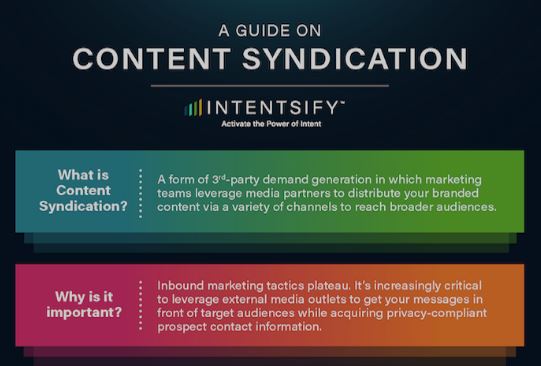
Most content teams are sitting on a gold mine they never touch. One solid blog post — if it's well-researched and covers a real topic — already contains everything you need for a week of multi-channel content. The problem isn't a lack of ideas. It's that repurposing gets treated as an afterthought instead of a system.
Here's how to build that system: take one article and extract 10 distinct assets from it, each formatted for a different channel and a different stage of attention.
Why repurposing beats publishing new content every time
Publishing something new every week is the obvious answer to "how do I get more content out there." It's also expensive in time and dilutes your focus. The better math: go deep on fewer topics, then extract maximum value from each piece before moving on.
A well-researched article already has the arguments, the data, and the structure. Reformatting it for different channels doesn't diminish the original — it multiplies the surface area where your ideas can be discovered. One article can simultaneously rank in Google, appear in an AI search answer, generate LinkedIn impressions, and end up in someone's email inbox. None of those channels requires you to start from scratch.
The 10 assets you can pull from one article
Asset 1 — The original article (your canonical home base)
Publish on your own site first, always. This is the canonical version. Every other asset points back to it or derives from it. Wait for Google to index the original before republishing anywhere else.
Asset 2 — A LinkedIn native post (the hook)
Extract the single most surprising or counterintuitive claim from the article. Write 5-7 lines making that one point standalone, no link needed to understand it. Add the link in the first comment. LinkedIn's algorithm suppresses posts with external links in the body — the first-comment trick preserves reach.
Asset 3 — A Twitter/X thread
The article's H2 headings become the thread's numbered points. Each section is one tweet, compressed to its sharpest form. The thread starts with the article's core insight and ends with a link to the full piece. Threads drive more reach than single tweets and perform well with new audiences.
Asset 4 — A republished version on Medium (with canonical tag)
Medium's import tool preserves your canonical URL, so the SEO value stays with the original. The Medium version gets the benefit of existing reader distribution without splitting authority. Ideal for thought leadership content; less useful for highly technical pieces.
Asset 5 — A DEV.to or Hashnode version (for technical content)
If the article is technical — SEO, analytics, development, AI — DEV.to and Hashnode are worth a canonical republish. Both allow dofollow links in the body and publish to audiences that AI search engines sample heavily. A DEV.to article on a technical topic has a meaningfully higher chance of appearing in a Perplexity answer than the same content on a general blogging platform.
Asset 6 — A short-form video script (Shorts/Reels/TikTok)
Strip the article to its single clearest point: one problem, one insight, one fix. Write a 60-90 second script — hook in the first 3 seconds, body, explicit CTA to read the full article. The script IS the asset; you don't need to produce the video in the same week to have the script ready.
Asset 7 — A Quora or Reddit answer
Find a thread that asks exactly what your article answers. Write a genuine reply — no copy-paste, adapted to the specific question's framing — with a link to the full article as the source. One well-placed answer in a high-traffic thread can drive referral traffic for months.
Asset 8 — An email to your list
The article's opening insight becomes the email's hook. Write 150-200 words making one point, then link to the full piece. Email subscribers are the highest-intent audience you have — they opted in to hear from you. This is the one channel where a promotional link never feels out of place.
Asset 9 — A quote card or data graphic
Pull the one stat or quote from the article that would make someone stop scrolling. Drop it into a simple visual — a quote on a branded background, or a mini table with the key numbers. Works on LinkedIn, Instagram, and Pinterest. Takes 15 minutes in Canva and has a long organic shelf life.
Asset 10 — A syndicated cloud backlink version
A standalone, reformatted version of the article published on high-authority cloud platforms (GitHub Pages, Netlify, Vercel, DEV.to) with a backlink to the original. This is a different purpose from canonical republishing: the goal here is domain authority transfer and AI citation surface, not audience reach. Tools like Forgendo automate this — the article is published across multiple platforms simultaneously, each with a contextual link back to the original, and IndexNow is triggered at publish to ensure fast indexation.
How to sequence the 10 assets
The order matters as much as the assets.
Day 1 — Publish the original on your site. Let it index.
Day 2 — Send to your email list. Then LinkedIn native post.
Day 3 — Publish the thread on X.
Day 4-7 — Canonical republish on Medium, DEV.to, or Hashnode (depending on topic).
Same week — Drop the Quora or Reddit answer if a relevant thread exists.
Within 30 days — Publish the cloud backlink version to build authority to the original.
Ongoing — Post the quote card whenever the topic resurfaces in the news cycle.
The video script can be batched: write five at once and record in one session.
What to repurpose first
Not every article is worth repurposing across all 10 formats. Prioritize pieces that cover a topic where you have genuine insight and that target a real search query with volume. The test: if you removed it from your site tomorrow, would someone somewhere be worse off? If yes, repurpose it. If it was written to fill a publishing quota, repurposing it just creates more noise in more channels.
Your top-performing posts by traffic and time-on-page are the obvious starting point. But also look at articles where the idea resonated in comments or social shares even if the traffic is modest — audience signal beats search signal when you're building for authority.
The honest limit: repurposing isn't a substitute for distribution
Reformatting puts your content in more places. It doesn't put it in front of new audiences automatically. LinkedIn native posts still require a following. Reddit answers require karma and genuine participation. DEV.to requires a technical topic. The distribution infrastructure has to exist before the repurposed assets can move through it.
The practical sequence: repurpose the formats you already have an audience for, then build toward the ones you don't. Email list first — even 50 subscribers means 50 guaranteed reads. Then the channels where you already participate. Save the channels that require from-scratch community-building for later.
For the channel distribution layer — deciding which platforms to prioritize for your specific audience — this guide to B2B content distribution strategy covers the full decision framework.

We all know that backlinks are one of the most important factors of off-page.
For creating backlinks, we need quality content that we can post on other websites.
Yangtze Solutions provide website blog writing services at very affordable rates that our clients can afford.