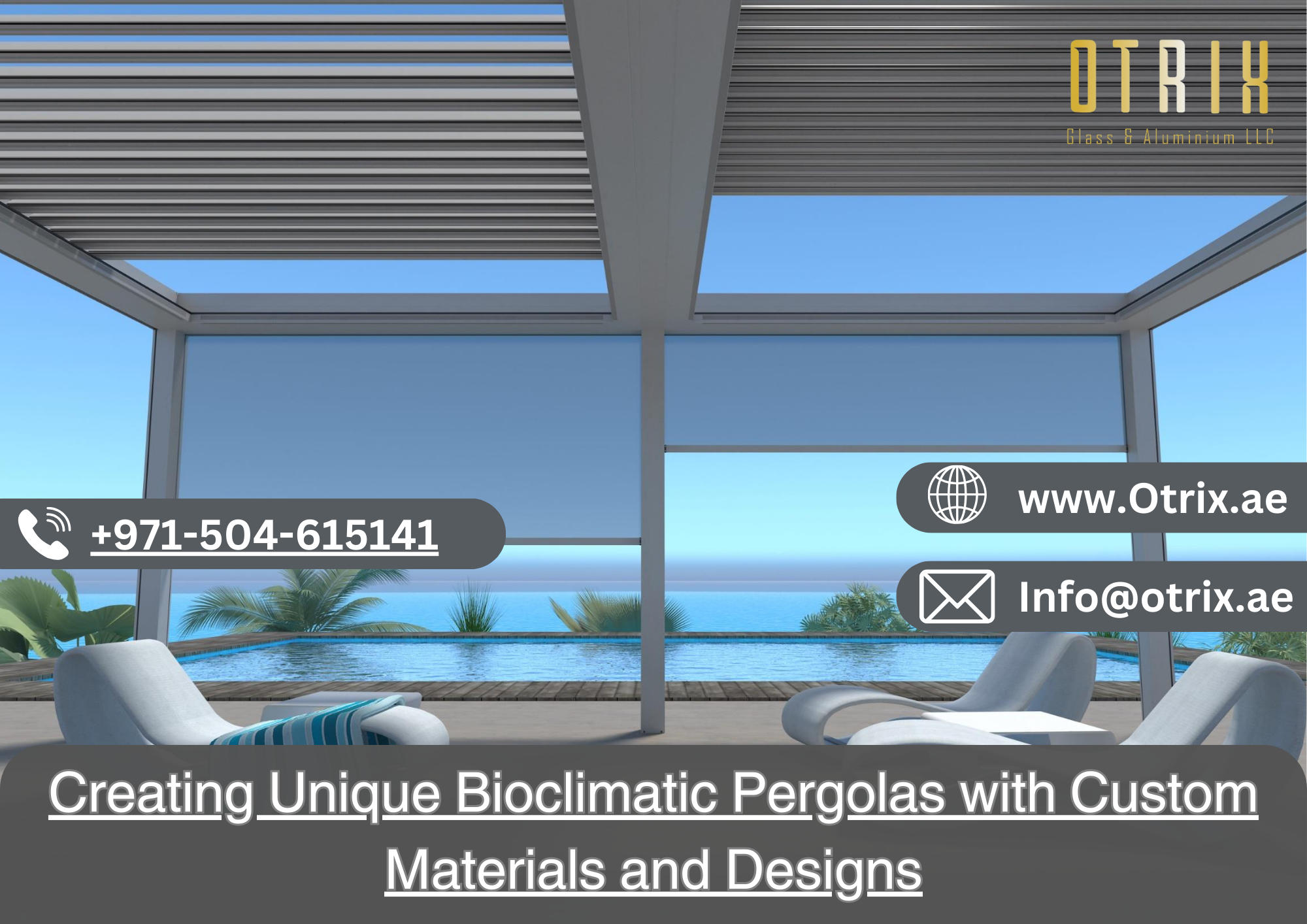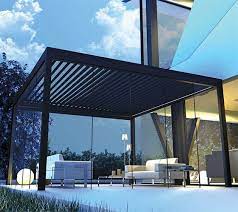


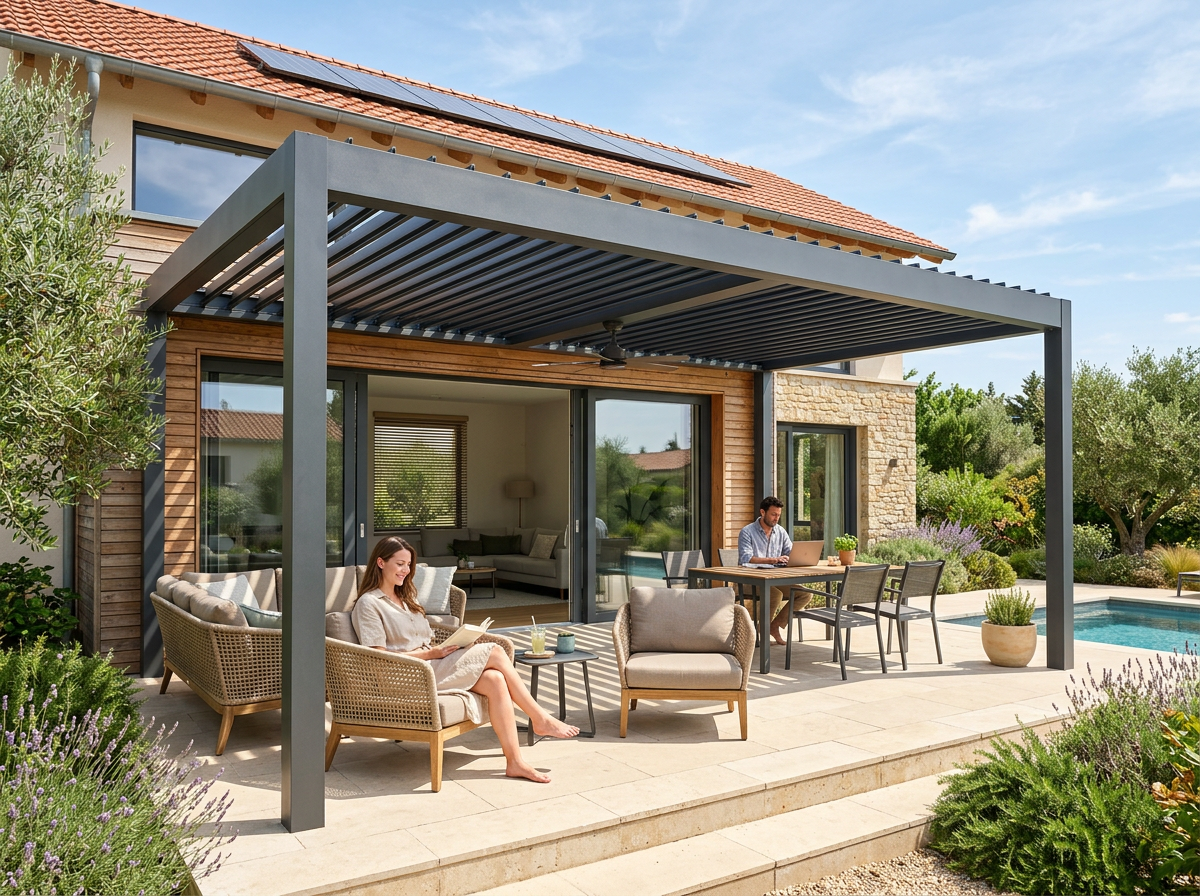
Quick Answer: A bioclimatic pergola is a motorized outdoor structure with adjustable aluminum louvers that automatically respond to weather, wind, and sunlight, creating a fully controlled outdoor environment year-round for both residential and commercial applications.
The contemporary life outside requires not just shade. It requires accuracy, reliability, and smartness. To satisfy that need, Bioclimatic pergola systems integrate motorized louvered roofs, structural aluminum frames, and intelligent automation, creating a transparent shading system.
You can be equipping a patio in a home, an awning in a hotel, an extension of a restaurant, or a commercial pool deck; these systems offer a level of performance that cannot be matched by traditional pergolas and fixed awnings.
What is a Bioclimatic Pergola?
Direct Answer: A bioclimatic pergola is a freestanding or wall-mounted aluminum structure with motorized, rotating louver blades that can open, tilt, or close fully — allowing precise control over ventilation, natural light, and rain protection.
The fact that the system can work with the climate around instead of against it is captured in the name of the term bioclimatic. During low sun, louvers will be tilted to allow warmth to enter. On rainy days, they close to seal the space. Once the wind increases, all the integrated sensors automatically change the blade angles to ensure structural stability.
Key Components of a Bioclimatic Pergola System
●Motorized Aluminum Louvers: These are usually 150 mm-250 mm wide, powder-coated blades that swing 00-135 degrees by tubular motors or linear actuators.
●Structural Aluminum Frame: Extruded 6063-T5 or 6061-T5 aluminum profiles with built-in rain gutters and concealed drainage.
●Control System: remote control, wall switch, smartphone app, or building automation (KNX, Zigbee, Z-Wave compatible).
●Weather Sensors: Wind speed sensors (anemometers), rain sensors, and sun trackers to operate on a completely automated basis.
●LED Lighting and Accessories: Built-in LED lighting in rafters, side screens available, zip blinds, and heating.
Bioclimatic Pergola vs. Traditional Pergola vs. Retractable Roof: A Direct Comparison
Understanding which system fits your project starts with a clear comparison.Bioclimatic PergolaRain Protection: Full (louvers close 100%)Ventilation Control: Precise ($0^\circ\text{--}135^\circ$ tilt)Automation: Yes (sensors + motor)Material: Powder-coated AluminumMaintenance: Low (no fabric)Lifespan: 20–30+ yearsWind Resistance: Up to Level 10 (approx. 89 km/h)Snow Load: Up to 200 kg/m²Aesthetic: Architectural / SleekCost (Relative): PremiumBest For: Year-round commercial/residentialTraditional PergolaRain Protection: NoneVentilation Control: Fixed / NoneAutomation: NoneMaterial: Wood / AluminumMaintenance: High (wood rot/paint)Lifespan: 10–15 yearsWind Resistance: Low–MediumSnow Load: VariesAesthetic: Rustic / ClassicCost (Relative): Low–MediumBest For: Decorative gardensRetractable RoofRain Protection: Full (when closed)Ventilation Control: LimitedAutomation: PartialMaterial: Aluminum + Fabric/PolycarbonateMaintenance: Medium (fabric replacement)Lifespan: 10–20 years (fabric: 5–10 yrs)Wind Resistance: MediumSnow Load: Low–MediumAesthetic: ModernCost (Relative): Medium–PremiumBest For: Seasonal residential useVerdict: In commercial applications, year-round and low-maintenance bioclimatic pergolas can be useful in almost all practical aspects compared to both traditional pergolas and retractable roofs.
How Bioclimatic Pergola Systems Work
Direct Answer: The system operates through a combination of motorized blade rotation and integrated sensor feedback — fully automated or manually controlled depending on user preference.
Automated Operation Flow
1.Sun Sensor Detects High UV → Louvers tilt to 45° to block direct sunlight while maintaining air circulation.
2.Rain Sensor Triggers → Louvers rotate to 0° (fully closed), activating drainage through integrated gutters.
3.Wind Speed Exceeds Threshold → Louvers rotate to a low-resistance angle or fully open to reduce structural load.
4.Temperature Drop Detected → Louvers close to trap warmth; optional infrared heaters activate.
5.User Override → Remote control or app allows instant manual adjustment at any point.
This degree of automatic reaction makes an outdoor space truly a usable extension of interior space in all four seasons.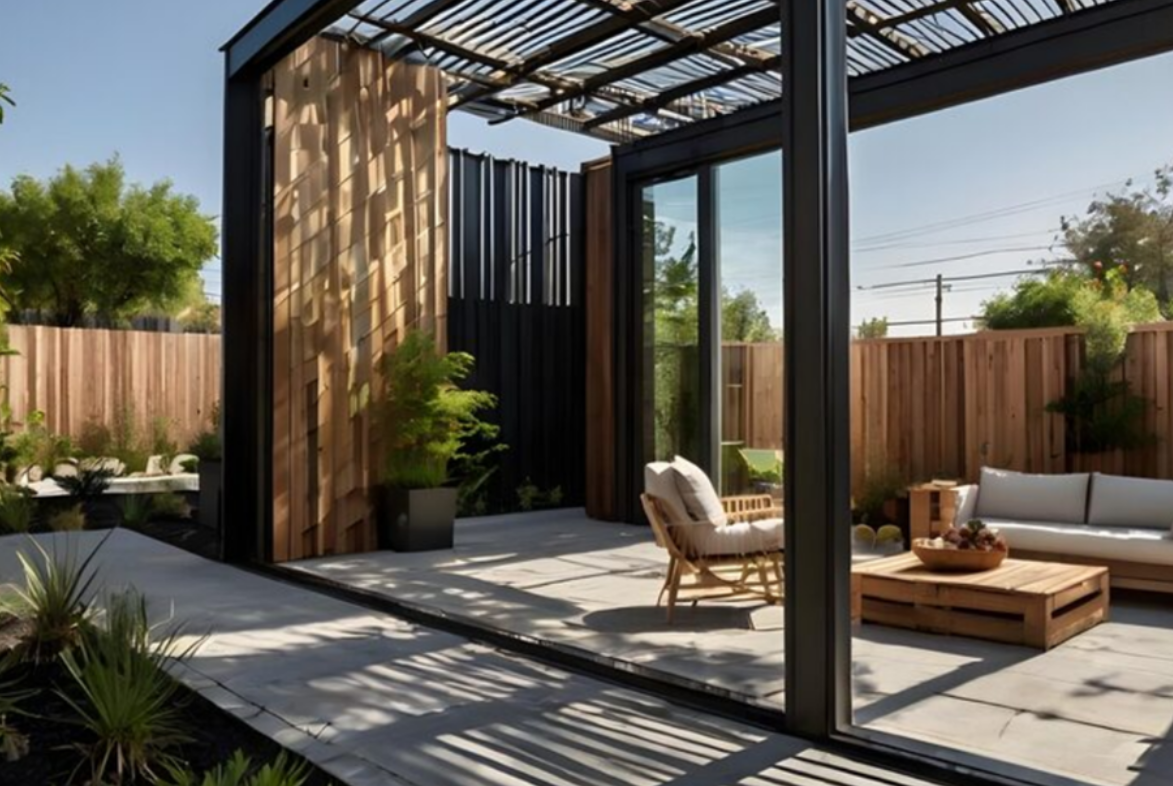
Commercial Applications of Outdoor Pergola Systems
Direct Answer: Bioclimatic outdoor pergola systems are widely used in hospitality, retail, food service, and residential development projects where outdoor space must function as productive, bookable square footage.
Restaurant & Hospitality
Louvered pergola systems enable restaurants to expand seating areas to outdoor areas and ensure the comfort of guests in all seasons. The covered terrace, which does not get wet during light rainfall and is cool in summer, contributes directly to the revenue per square meter. They are applied in hotels on pool decks, rooftop bars, and event terraces.
Retail & Commercial Plazas
Bioclimatic pergolas are used in the outdoor common space of shopping centers, corporate campuses, and mixed-use developments to provide foot traffic with weather protection throughout the year by creating common areas that are weather-protected.
Residential Projects
In high-end residential construction, developers are installing louvered pergolas atop patios, swim-spa-fenced areas, rooftop terraces, and garden spaces as a luxury addition that can increase the property value and usable square feet in a quantifiable manner.
Pool & Spa Enclosures
Pergola systems that are used in pool areas deal with humidity conditions using marine-grade anodizing or high-grade powder finishes. The open louver position gives the maximum ventilation to control condensation; the closed position gives the pool protection against debris and privacy.
What to Look for in a Bioclimatic Pergola System
Direct Answer: The most important specifications to evaluate are structural wind and snow ratings, aluminum alloy grade, blade width, motor warranty, and customization availability for size and color.
Structural Ratings
A commercial-grade bioclimatic pergola must have separately rated wind resistance and snow load. Find systems that are designed to accommodate wind up to Level 10 and snow loads of 150-200 kg/m² or more in snowy areas.
Aluminum Profile Quality
The backbone of a long-lasting pergola is its aluminum extrusion quality. Alloy profiles of 6063-T5 have high corrosion resistance and a strength-to-weight ratio. Larger span commercial installations prefer thicker profiles (2.5mm-4mm) in the walls.
Blade & Drainage Design
It is non-negotiable to have integrated drainage. The louver blades must direct the collected rainwater in hollow profiles into downpipes hidden in structural posts - ensuring that the facade is clean and that the water does not waterlog at ground level.
Motorization & Controls
Long-term reliability depends on the quality of the motor. Outdoor applications are normal with tubular motors of established brands (Somfy, Nice, or similar) with IP44 or IP54 ratings. Make sure the system is able to integrate with local control (remote, wall switch) as well as with the smart home.
Finish & Color Options
The minimum is standard RAL powder coating. High-end systems have wood-effect finishes, tailored RAL matching, and multi-tone to suit architectural requirements. The anodized finishes offer better UV and corrosion protection in high-humidity or coastal areas.
Bioclimatic Pergola Installation: Freestanding vs. Wall-Mounted
Direct Answer: Freestanding pergolas offer maximum flexibility in placement; wall-mounted pergolas are space-efficient and load-sharing with the building structure — both are valid depending on site conditions and project design.
Freestanding Configuration
●Four-post structure, fully independent of existing buildings
●Suitable for open lawn areas, pool surrounds, and commercial plazas
●Larger span capability (some systems span 6m–8m+ without intermediate posts)
●Can be modular — multiple units combined to cover large areas
Wall-Mounted (Lean-To) Configuration
●Two-post structure anchored to an existing wall at one end
●Reduces material cost and visual footprint
●Ideal for residential patios, restaurant facades, and retail frontages
●Requires structural assessment of the host wall to confirm load capacity
Modular Expansion
The majority of professional bioclimatic systems are modular. Units can be connected side by side or end to end to cover large commercial terraces without interrupting posts. This is important in restaurant and hospitality layouts where a clear view and flexibility in table placement are essential.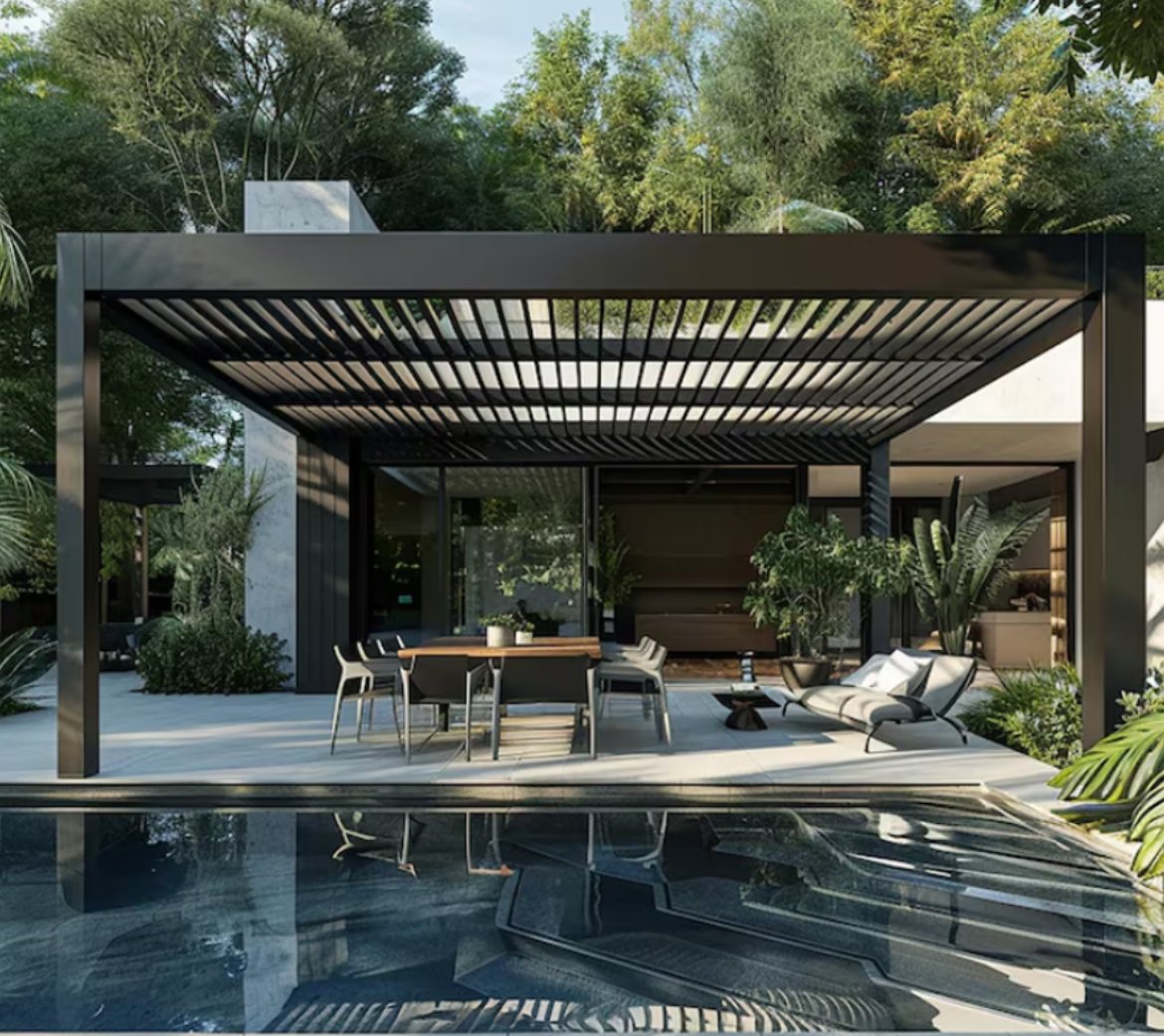
Frequently Asked Questions About Bioclimatic Pergolas
What is the difference between a bioclimatic pergola and a louvered pergola?
The terms are used interchangeably in the industry. The two are mentioning the same product: a motorized aluminum pergola featuring rotating louver blades. "Bioclimatic" is used to stress the dynamical character of the system responding to the conditions of climate, whereas the louvered pergola is used to characterize the mechanical property. With the addition of weather sensors and automation, any louvered pergola can be considered bioclimatic.
How long does a bioclimatic pergola last?
A properly made aluminum bioclimatic pergola can be expected to last 20-30 years or longer. Aluminum does not rot, rust, or need to be repainted. The key service parts are the motors (usually 50,000-100,000 cycles) and the control electronics. Quality manufacturers of finishes generally provide a 10-15 year UV warranty with powder-coated finishes.
Can a bioclimatic pergola withstand heavy wind and snow?
Yes, high-quality systems are designed to meet high climate conditions. Commercial-grade bioclimatic pergolas are rated to be able to withstand a sustained wind velocity of Level 10 on the Beaufort scale (around 89 km/h) and a snow load of up to 200 kg/m². When the wind occurs, the blade angle is adjusted dynamically and minimises aerodynamic load on the structure.
What maintenance does a bioclimatic pergola require?
It is minimal in terms of maintenance as compared to fabric awnings or wooden structures. Cleaning the aluminum profiles and louver blades yearly using mild soap and water, checking and lubricating the pivot points in the blades, and checking the connections of the motors are all yearly tasks. No cloth needs replacement, no paint to mend, and no wood care is needed.
Can bioclimatic pergolas be customized for commercial projects?
Yes, virtually any dimensions, RAL colors, blade width, post profile, and accessory configurations (LED, screens, heaters, sensors) can be programmed in professional manufacturing arrangements. OEM and ODM production enable constructors, contractors, and developers to demand precise needs and obtain branded or project-specific systems at scale.
Is planning permission required for a bioclimatic pergola?
Planning and permit regulations differ by country, region, and local authority. Most jurisdictions do not require planning permission to use freestanding pergolas under a certain height and footprint. Building permits are usually required in commercial installations. Always install with reference to the local planning authorities.
What is the typical lead time for a custom bioclimatic pergola order?
In the case of a conventional setup, 15-30 days of production time and shipping are considered to be the lead time of a reputable manufacturer. OEM orders with special profiles or finishes can take 30-45 days. The direct contact with a factory minimizes the lead time as compared to the process of sourcing by more than one intermediary.
How are bioclimatic pergolas priced?
The span size, the height of the post, the number of blades, the specification of the motor and sensor, the finish, and the accessory package drive pricing. Direct manufacturer residential single-bay units (3m x 4m) are generally at mid-range investment levels, whereas large commercial modular systems cost per square meter. Direct factory buying is very cost-efficient as compared to retail distribution channels.
Why Direct Factory Sourcing Matters for Pergola Projects
To contractors, pool builders, landscape architects, developers, and suppliers of building materials, there are certain benefits of procuring bioclimatic pergola systems directly from a dedicated manufacturer of aluminum pergolas:
●Lower Unit Cost: No distributor mark-up; factory-direct price is transferred to the customer.
●OEM/ODM Flexibility: Custom profiles, exclusive finishes, and branded products that cannot be found in retail outlets.
●Technical Support: First-hand contact with engineering and design staff to do project-specific sizing and specification.
●Scalable Volume: Capacity to complete large commercial orders at a consistent batch quality.
●Faster Iteration: Direct feedback cycle of custom product development without third-party delays.
Conclusion
The bioclimatic pergola systems are a combination of architectural design, material engineering, and smart automation. In the case of commercial projects, they transform unproductive outdoor space into productive revenue-earning space. In residential use, they are used to bring the living space to the outdoors on additional days of the year. With low maintenance, long service life, structural resilience, and accurate environmental control, they are one of the most cost-effective outdoor structure investments one can have today.
Be it a developer detailing systems in a hospitality project, a contractor dealing with residential construction, or a distributor seeking to extend your outdoor living product range, a combination of the right bioclimatic pergola system and a competent manufacturer will provide a solution that fixed structures and fabric solutions do not.
Ready to Specify or Source Bioclimatic Pergola Systems for Your Project?
OWEADO is a specialized factory of aluminum pergolas located in Guangzhou that has over 9 years of manufacturing experience, with a production capacity of more than 20000 square meters. We provide premium bioclimatic louvered roofs, retractable roofs, and full outdoor shading systems to wholesalers, contractors, pool builders, developers, and garden solution providers in North America, Europe, Oceania, and the Middle East.
We have systems that can withstand Level 10 winds and 200 kg/m² of snow loads. All products can be OEM/ODM customized to include sizes, colours, profiles, and accessories - to suit all your project needs and branding requirements.
Contact our team to talk about your project needs, request a product specification, or get a wholesale quote.