Digital technology has made it easier than ever to find inspiration, watch tutorials, and explore creative ideas. However, spending more time online does not always provide the same sense of accomplishment as making something with your own hands.
Traditional craft education gives people an opportunity to slow down, work with physical materials, and develop practical skills. Whether someone chooses woodworking, jewelry making, fiber arts, blacksmithing, glasswork, or pottery making classes, the process offers benefits that extend far beyond the finished object.
Organizations such as Brookfield Craft Center help make these experiences accessible by connecting students with experienced instructors, specialized tools, and a supportive creative community.
Hands-On Learning Builds Practical Skills
Watching a video can introduce a technique, but hands-on instruction allows students to understand how tools, materials, pressure, timing, and movement work together.
In a craft class, students learn by observing, practicing, making mistakes, and adjusting their approach. An instructor can immediately identify problems and provide personalized guidance. This direct feedback is especially valuable in disciplines that require precision or involve unfamiliar equipment.
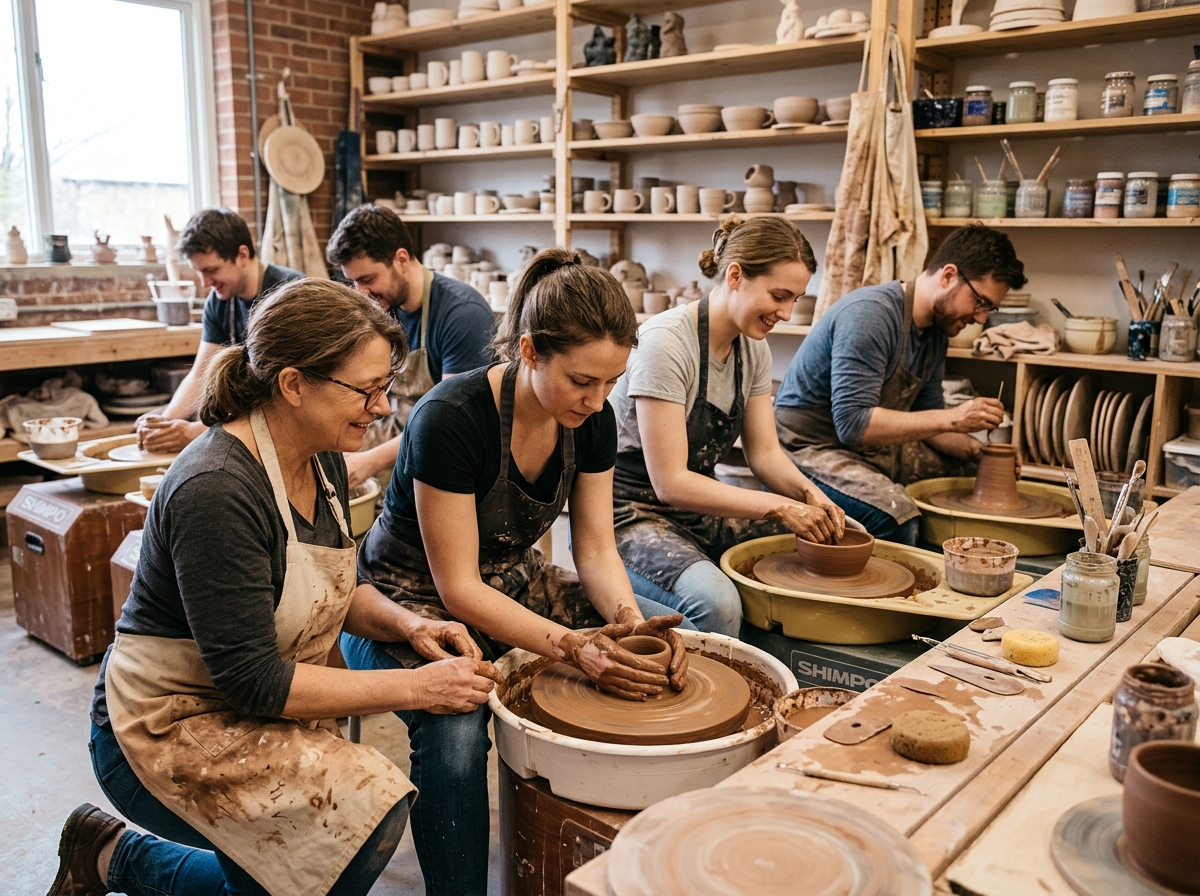
For example, pottery making classes teach more than how to shape clay. Students may learn how to prepare the material, center clay on a wheel, build forms by hand, apply glazes, and understand the firing process. Each step encourages attention to detail and thoughtful decision-making.
These practical lessons can help students become more patient, resourceful, and confident when approaching new challenges.
Crafting Creates a Meaningful Break From Screens
Many people spend much of the day working on computers, checking phones, or consuming digital content. Although technology is useful, constant screen exposure can make it difficult to focus on one activity for an extended period.
Crafting offers a different type of experience.
When working with clay, wood, metal, glass, or fiber, students must pay attention to what is happening in front of them. They notice texture, temperature, balance, resistance, shape, and movement. This encourages focused engagement with the present task.
Pottery making classes are a good example of this immersive process. Working with clay requires steady concentration, but it can also feel calming. Students gradually transform a simple material into a functional or decorative piece that they can hold, use, and share.
The result is not just an object. It is evidence of time, effort, learning, and creativity.
Traditional Crafts Remain Relevant Today
Traditional crafts are sometimes viewed as skills from the past, but they continue to serve an important role in modern life.
Craft education preserves knowledge that has been developed and passed down through generations. At the same time, contemporary artists continue to adapt traditional methods by experimenting with new designs, tools, technologies, and materials.
A handmade ceramic bowl, forged metal object, woven textile, or piece of custom jewelry can combine historical techniques with a modern personal style.
Brookfield Craft Center supports this connection between tradition and innovation by providing opportunities to explore multiple craft disciplines. Beginners can learn foundational techniques, while more experienced makers can continue refining their skills and developing original work.
Learning in a Community Improves the Experience
Creative work is often described as an individual activity, but learning alongside others can make the process more enjoyable and productive.
In a group class, students can exchange ideas, observe different approaches, and encourage one another when a project becomes difficult. Seeing how other people solve problems can expand a student’s understanding of what is possible.
A shared studio environment also provides access to tools and equipment that may be expensive, specialized, or impractical to maintain at home. This is particularly important for crafts that require kilns, forges, woodworking machinery, glass equipment, or dedicated workspaces.
At Brookfield Craft Center, students can participate in an environment built around learning, experimentation, and respect for the creative process.
Craft Education Is Valuable for Beginners
A common misconception is that someone must already be artistic to take a craft class. In reality, many programs are designed specifically for beginners.
Students do not need to arrive with advanced drawing skills or technical knowledge. They only need curiosity and a willingness to learn.
Introductory pottery making classes, for example, can guide students through basic methods step by step. Early pieces may not be perfect, but perfection is not the purpose. The value comes from understanding the process, developing control, and becoming more comfortable through practice.
Over time, students often discover abilities they did not know they had.
Making Something by Hand Builds Lasting Confidence
Completing a handmade project creates a unique sense of satisfaction. The final piece reflects a series of choices, adjustments, and lessons that cannot be duplicated by simply purchasing a finished product.
Craft education teaches that mistakes are part of learning. Clay can collapse, wood can split, glaze can produce an unexpected color, and metal may not move as planned. Students learn to respond, adapt, and try again.
Brookfield Craft Center gives people a place to experience that process through guided instruction and creative exploration.
In a world filled with fast content and constant digital distractions, traditional craft education offers something increasingly valuable: the chance to slow down, learn deeply, connect with others, and create something real.