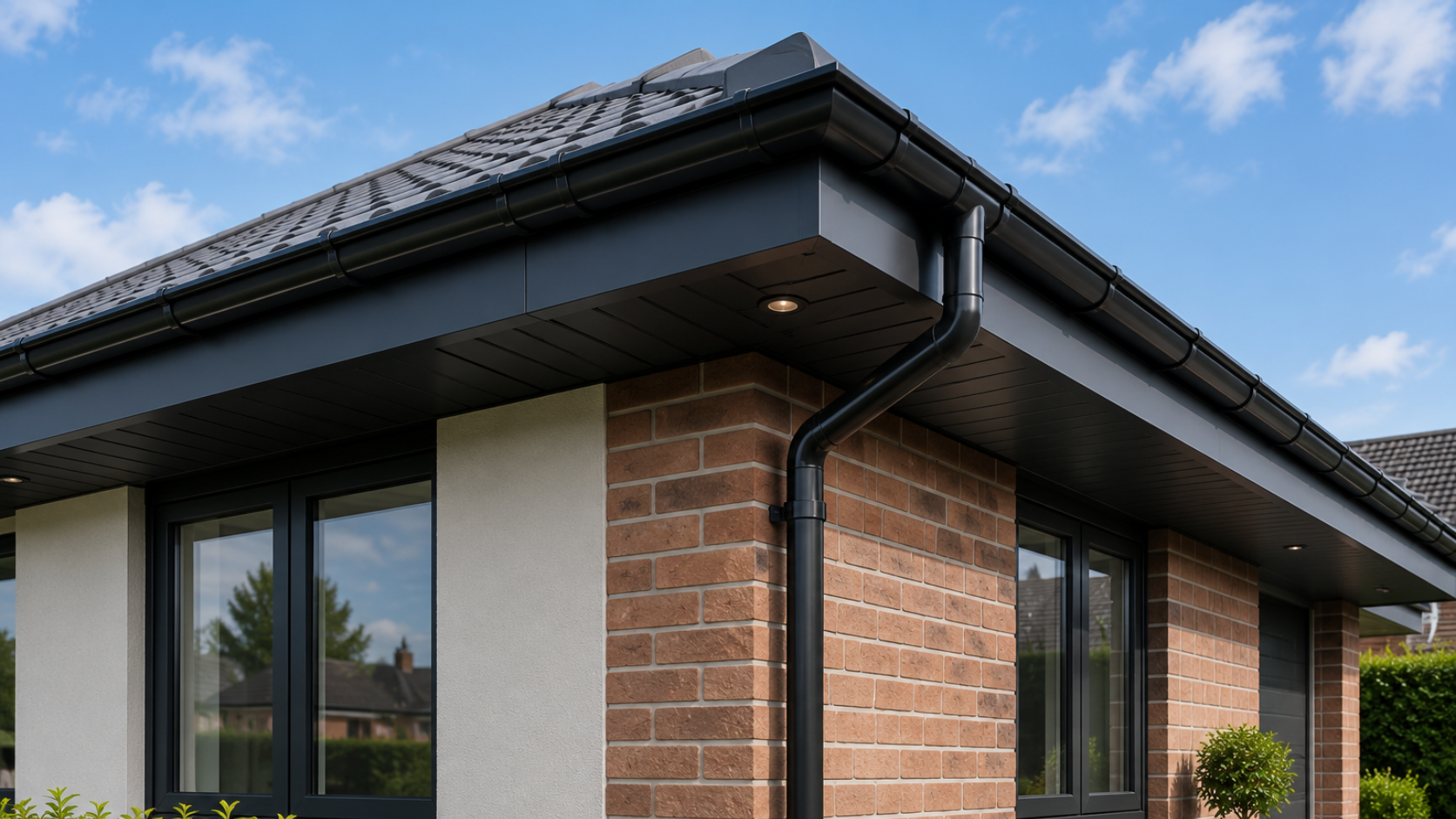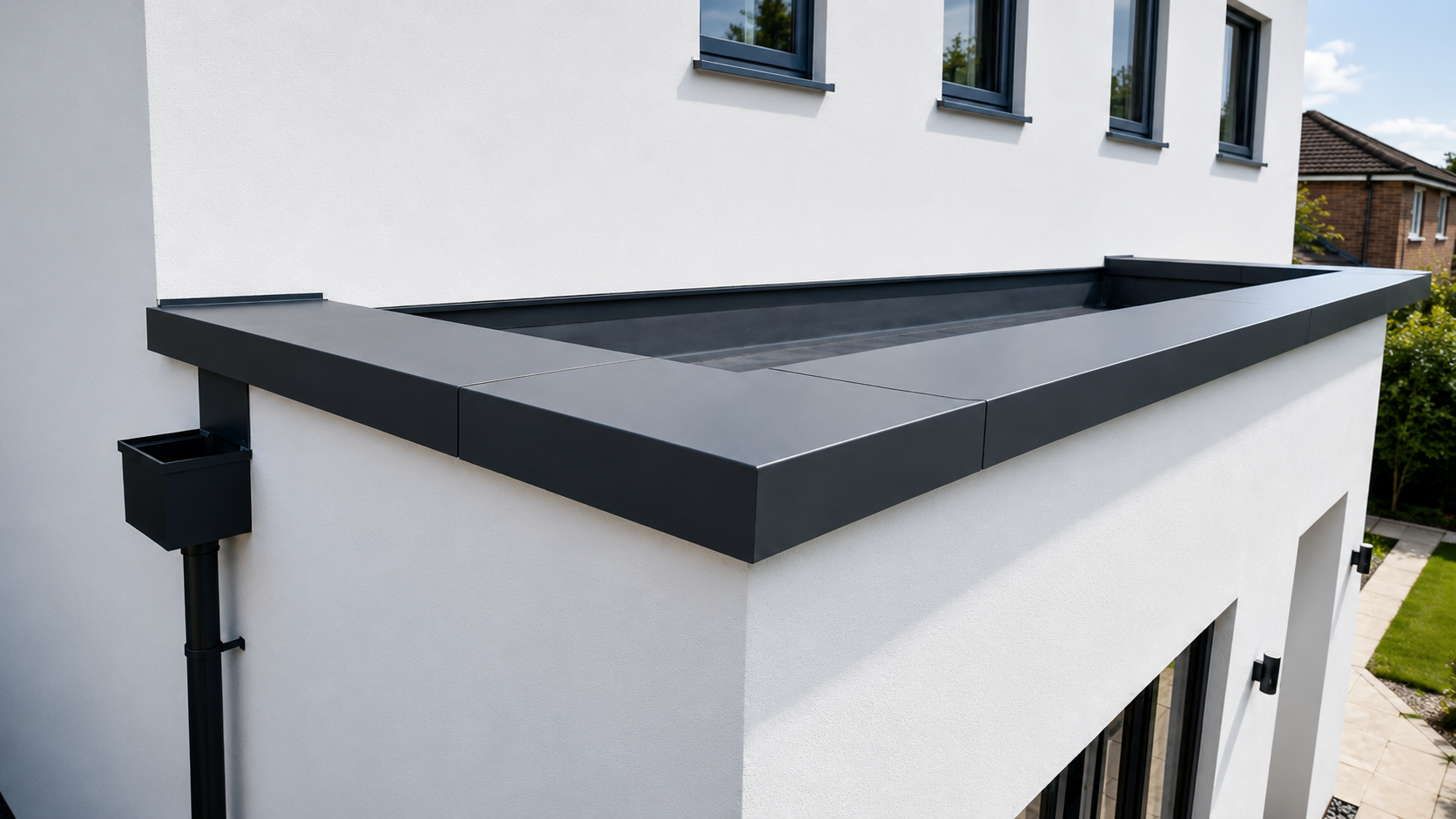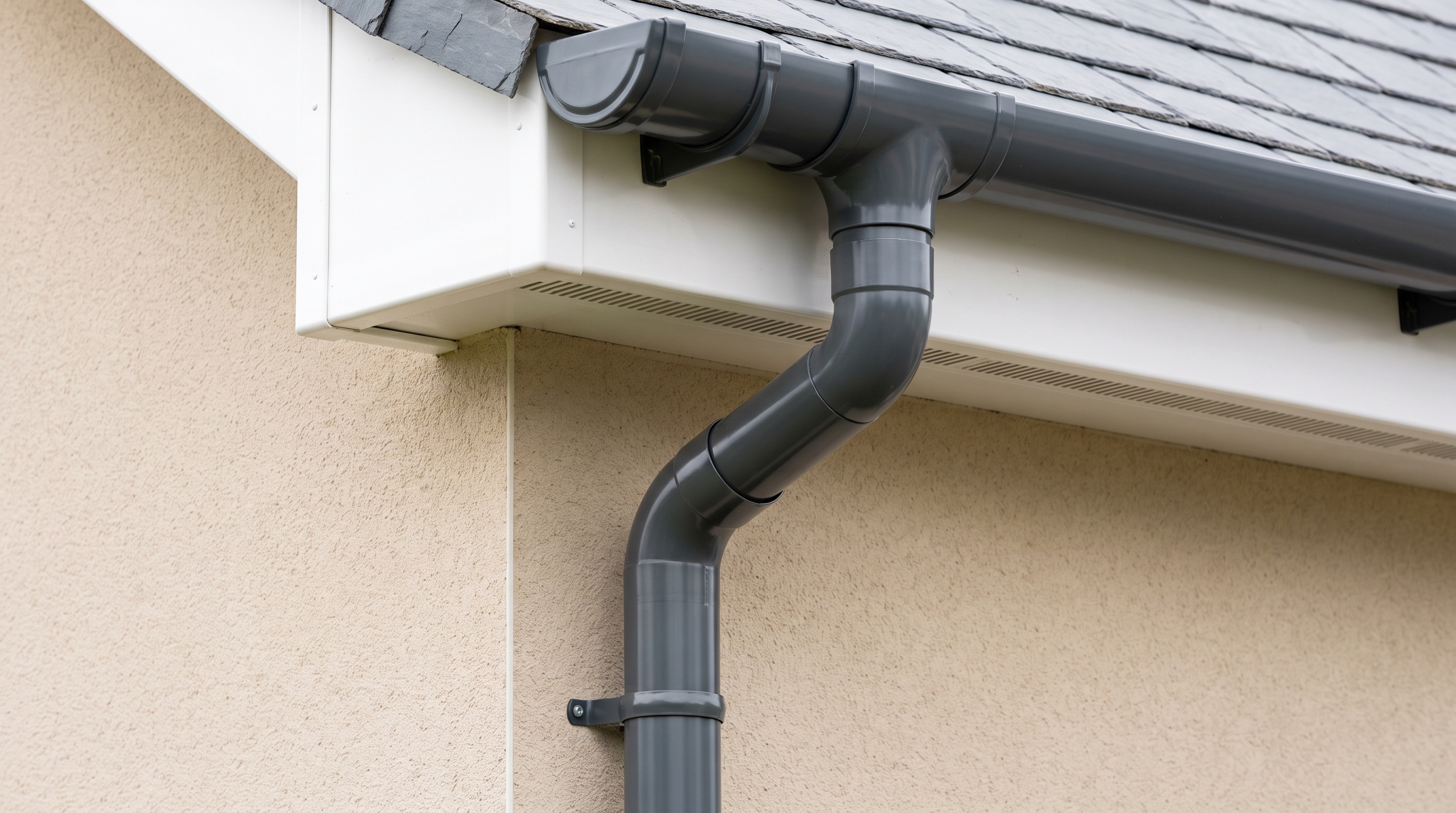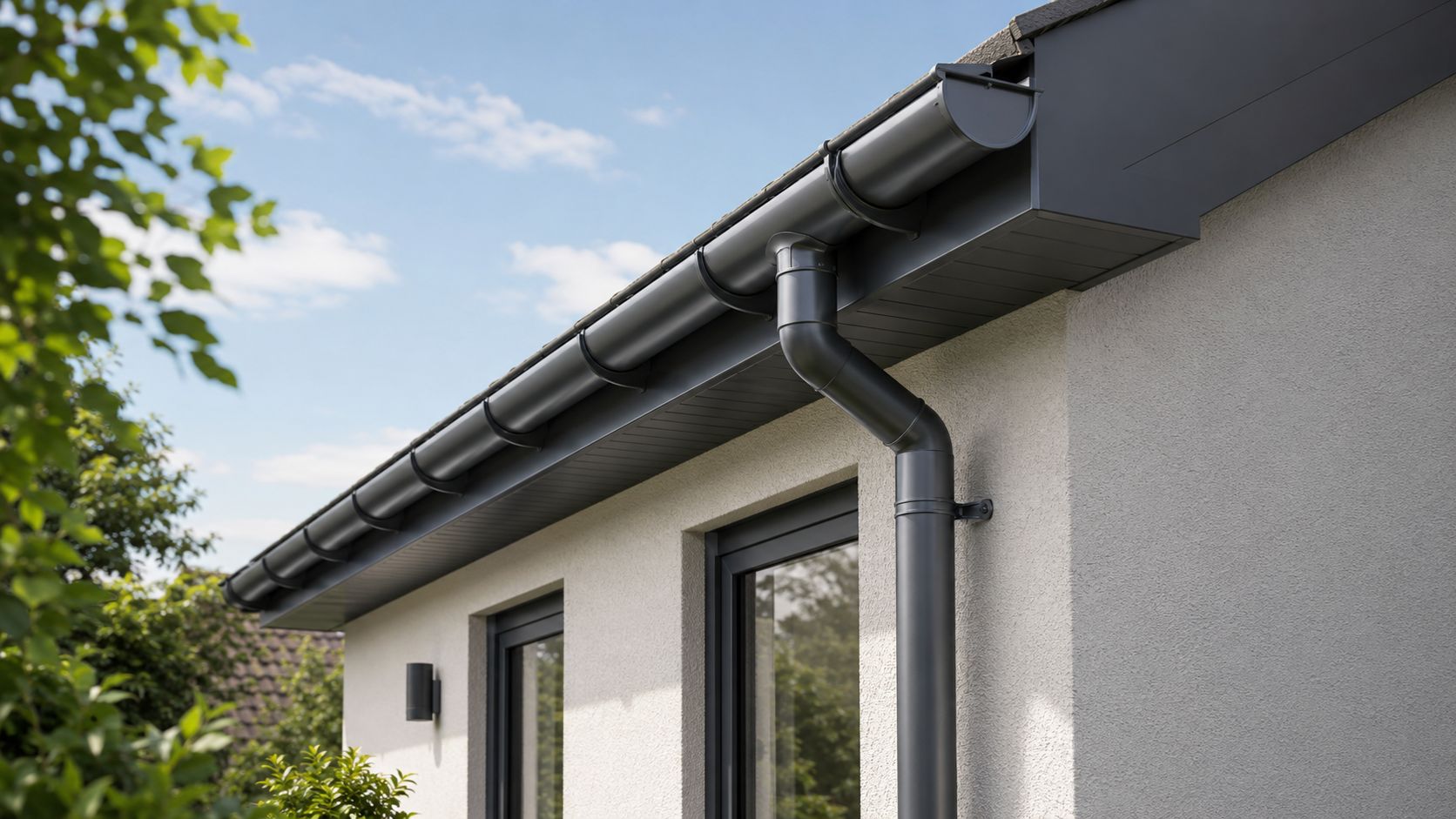
Round downpipe fittings turn a straight pipe into a complete rainwater route. They connect pipe lengths, move the system around roof projections, support the vertical run, introduce additional water paths, provide access for cleaning and finish the lower discharge point.
A buyer may begin with the correct 3m pipe length but still be unable to complete the installation if the necessary round downpipe fittings have not been identified. This is why a component schedule should be prepared before ordering.
Metal Profiles Ltd supplies 76mm and 100mm aluminium round downpipes together with internal joiners, pipe clips, bends, adjustable offsets, branches, access panels and shoes. The round downpipe category lists the coordinated products, while the rainwater goods range provides the wider gutter and downpipe context.
This guide explains what each fitting does, when it may be required and how to plan a complete UK rainwater route without mixing incompatible components.
12 Steps for Planning Round Downpipe Fittings
1. Confirm the Pipe Size First
All round downpipe fittings should be selected around the confirmed pipe diameter. Metal Profiles Ltd lists 76mm and 100mm aluminium round downpipes.
Once a size has been chosen, use corresponding joiners, clips, bends, branches and lower fittings. Avoid mixing the two diameters or relying on unverified adaptors.
For replacement work, measure the existing outside diameter and identify the material. Similar-looking plastic and aluminium pipes may not use the same connection details.
2. Choose the Main Pipe Type
The plain 3m aluminium round downpipe and flush-joint 3m round downpipe form the main vertical route. The choice between them can affect how the joints are planned and which round downpipe fittings are required.
Measure the total vertical drop, upper offset and lower connection. One 3m section may be sufficient for a short elevation, while a taller route will require an additional length and joining method.
3. Use Internal Joiners for Straight Connections
The round downpipe internal joiner connects two compatible straight pipe sections. It is one of the most important round downpipe fittings for routes longer than a single 3m length.
Plan the joint position before cutting. Keep it clear of clips, bends, branches and access panels. A clean straight section makes assembly and future inspection easier.
4. Use Pipe Clips for Wall Support
The round downpipe pipe clip supports the vertical pipe against the building. These round downpipe fittings are available for 76mm and 100mm pipes.
The clip size must match the pipe, while the fixing must suit the wall substrate. Do not fix into weak render, damaged masonry or unsupported cladding.
Bracket spacing and fixing details should be determined by the installer for the project. Keep clips clear of other round downpipe fittings so each component remains accessible.
5. Use Bends to Change Direction
Metal Profiles Ltd lists round downpipe bends in 92.5 degree, 112 degree and 135 degree options. These round downpipe fittings are commonly used below the gutter outlet or where the route needs a controlled change of direction.
Measure the geometry before choosing an angle. A bend should align naturally with the adjoining pipe rather than being forced into position.
6. Use an Adjustable Offset for Larger Projections
The round downpipe adjustable offset is available for 76mm and 100mm pipes and can accommodate measured offsets. It is particularly useful where the gutter outlet sits well forward of the wall or the elevation contains a projection.
These round downpipe fittings should be selected from actual horizontal and vertical dimensions. Do not choose the offset by appearance alone.
7. Use a Branch to Introduce Another Route
The round downpipe branch allows another pipe to enter the main route. This fitting may be relevant where more than one roof area or hopper connects to the same vertical downpipe.
A branch is not simply a convenient side connector. The direction of flow, branch angle and capacity of the receiving system should be considered. These round downpipe fittings should be specified as part of the complete drainage arrangement.
8. Use an Access Panel for Inspection
The round downpipe access panel creates an accessible point for inspection and cleaning. It should be positioned where it can be reached safely and should not be covered by a clip or hidden behind landscaping.
Access-related round downpipe fittings are particularly useful on routes where debris may collect or where a lower section needs periodic inspection.
9. Use a Shoe at the Lower End Where Appropriate
The round downpipe shoe forms a directional lower fitting. It may be used where the project requires water to be directed towards a suitable discharge point.
A shoe is one of the finishing round downpipe fittings, but it does not replace the need for an appropriate drainage strategy. The ground-level route should be checked before materials are ordered.
10. Check the Gutter or Hopper Outlet
The upper connection should match the selected pipe diameter. Metal Profiles Ltd supplies a 123mm x 51mm half round gutter in 3m lengths, and the half round gutter category contains the related outlet and support components.
A hopper with a round outlet may also form part of the route. All upper round downpipe fittings should be coordinated with the source of the rainwater.
11. Coordinate Colour and Finish
Metal Profiles Ltd offers mill finish and a broad selection of RAL and BS powder-coated colours. The straight pipes and visible round downpipe fittings should be ordered in a coordinated finish where appearance is important.
Record the exact colour reference rather than relying on general descriptions such as anthracite, black or white. Existing metalwork may use a different shade or finish.
12. Review the Full Order Before Checkout
Use the Metal Profiles Ltd Shop to review the wider product range, then compare the order against the elevation drawing.
Before ordering round downpipe fittings, read the current Shipping Policy and Product Policy. Architects and specifiers can consult the NBS Specification page, while the Case Studies provide wider project context.
For a non-standard route, send measurements and drawings through Contact Us before finalising the round downpipe fittings.
How Round Downpipe Fittings Work Together
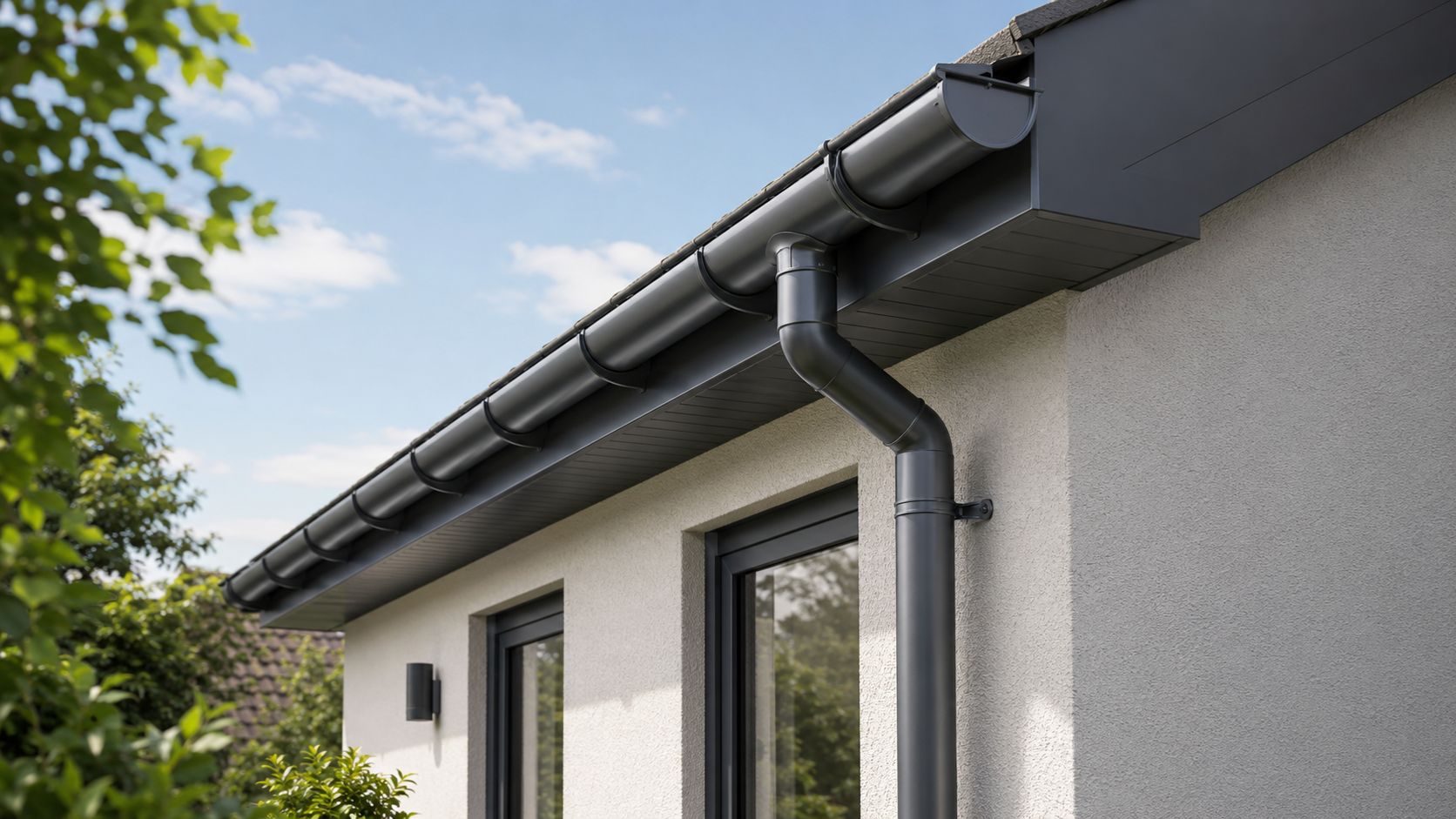
A typical route may begin with a gutter outlet, use two bends or an adjustable offset to reach the wall, continue through one or more straight pipe lengths, use an internal joiner, be supported by pipe clips and finish with a shoe or drain connection.
A more complex arrangement may add a branch or access panel. The important point is that the round downpipe fittings should be planned in sequence.
Crowding several fittings into one short section can make installation difficult. Leave clear straight pipe where possible between a connector, clip and access fitting.
Round Downpipe Fittings for 76mm and 100mm Systems
The 76mm and 100mm ranges should be treated as separate coordinated systems. Each size has matching round downpipe fittings.
The correct diameter depends on the outlet, roof drainage design and project requirements. The Met Office provides useful information on UK rainfall patterns, but the system should be designed for the individual roof rather than a national average.
Once the diameter is confirmed, every fitting on the schedule should be checked against it. Even one incorrect component can stop the installation.
Maintenance of Round Downpipe Fittings
Inspect round downpipe fittings after heavy rain and during routine gutter maintenance. Check for movement, water marks, loose clips, blocked access points and damage at the lower connection.
Clear leaves and debris from the gutter outlet. Confirm that bends, branches and internal joiners remain aligned. Inspect the coating where tools or ladders may have contacted the pipe.
For broader England-specific drainage context, Approved Document H covers rainwater drainage requirements. Maintenance should also follow the product and site conditions.
Round Downpipe Fittings for Common Project Scenarios
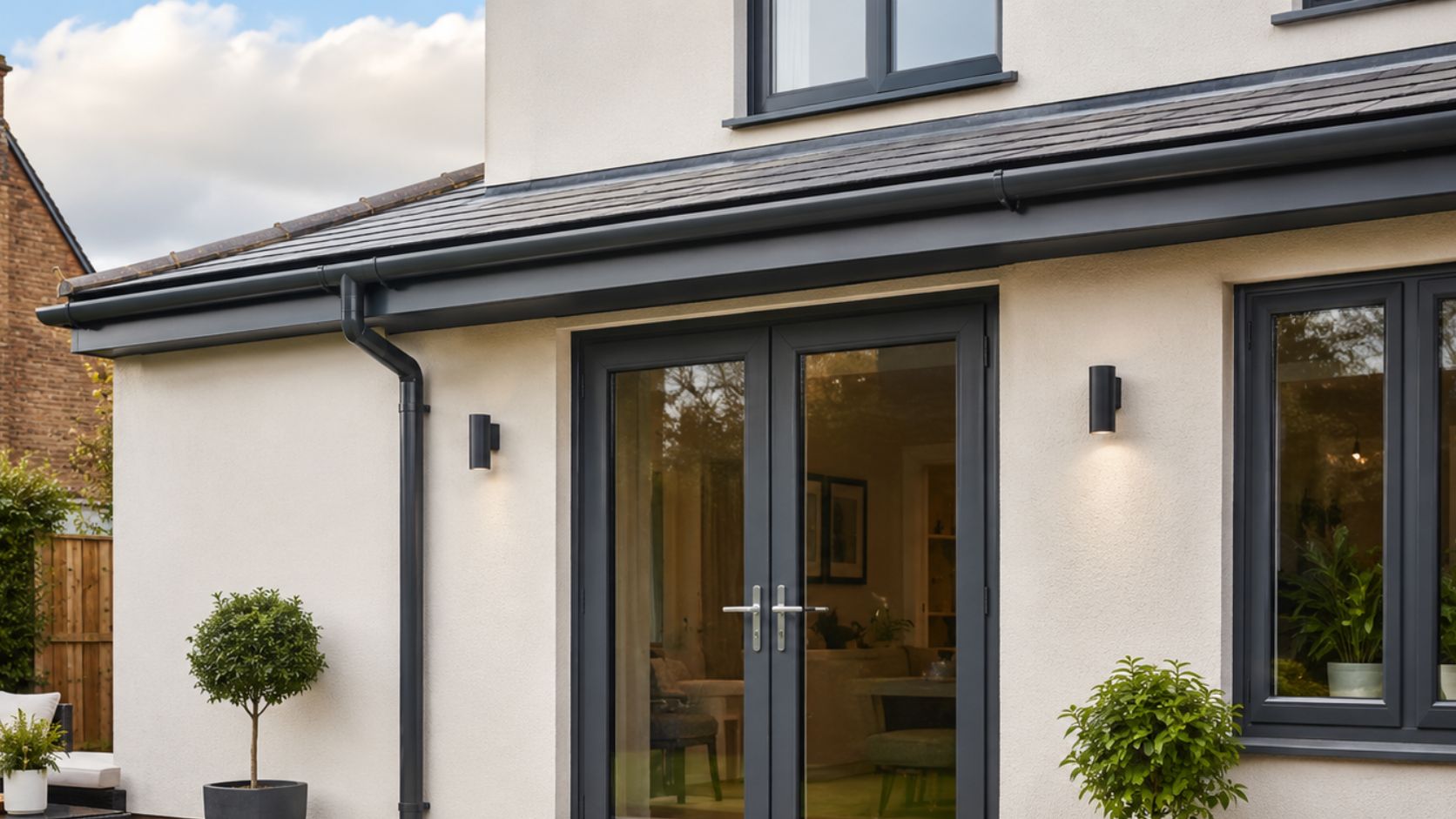
The same list of products can be arranged in different ways depending on the building. Looking at common scenarios helps buyers understand which round downpipe fittings may be needed.
Simple House Elevation
A straightforward domestic route may use a gutter outlet, two bends, one or two straight pipe lengths, an internal joiner, pipe clips and a lower shoe or drain connection. Even this simple arrangement should be measured carefully.
The upper offset may use more pipe length than expected, and the internal joiner should not sit behind a clip. Listing the round downpipe fittings in installation order makes missing parts easier to spot.
Deep Soffit or Projecting Roof Edge
A deeper roof projection may require an adjustable offset rather than a simple bend pair. The horizontal and vertical measurements determine the appropriate round downpipe fittings.
The first vertical clip should be positioned after the offset has been confirmed. Do not use wall supports to pull an incorrectly measured fitting back towards the wall.
Multiple Roof Areas Feeding One Pipe
Where a second route enters the main downpipe, a branch may be included. The branch is one of the more specialised round downpipe fittings because it changes the hydraulic arrangement, not just the physical direction.
The branch position, angle and receiving pipe capacity should be reviewed by the project designer or installer. An access panel may also be useful where the combined route needs inspection.
Tall Elevation
A taller wall will require multiple straight sections, internal joiners and additional clips. The round downpipe fittings should be spaced so joints remain accessible and the pipe stays aligned.
A tall route also makes visual accuracy more important. A slight error at the upper offset can move the pipe noticeably by the time it reaches ground level.
Refurbishment with Existing Drainage
When the gutter or lower drain is being retained, measure both connection points before selecting the new round downpipe fittings. Existing systems may use another diameter or material.
The new aluminium route should not depend on an improvised transition unless the connection has been properly assessed.
Bespoke and Non-Standard Round Downpipe Fittings
Standard components may not suit every roofline. A non-standard outlet, unusual facade projection, change between materials or constrained lower connection can create a bespoke requirement.
Send a dimensioned drawing and photographs through the Contact Us page. Show the pipe diameter, angles, available straight sections and all nearby obstructions.
The aim is to determine whether standard round downpipe fittings can create the route or whether another detail should be reviewed. Clear information is more useful than asking for a “special adaptor” without dimensions.
Final Round Downpipe Fittings Purchase Check
Before placing the order, compare every item with the route drawing. Confirm that all round downpipe fittings use the selected 76mm or 100mm size and that bend angles, branch details and offset dimensions are correct.
Check the quantity of pipe clips and internal joiners, then confirm the access-panel and shoe positions. Review the colour finish and current delivery information. This final check helps ensure the round downpipe fittings arrive as a complete coordinated package rather than a collection of unrelated parts.
FAQ
1. What is a round gutter downpipe used for?
A round gutter downpipe carries rainwater from the gutter down to a suitable drainage point. It helps move water away from the roofline, walls and foundation area, reducing the risk of water staining, damp patches and overflow around the property.
2. Is a round gutter downpipe suitable for UK homes?
Yes, a round gutter downpipe is a common choice for UK homes, extensions, garages and small commercial buildings. Its clean circular profile works well with many traditional and modern roofline designs, especially when paired with matching guttering, fascia and soffit details.
3. Which gutter works best with a round gutter downpipe?
A round gutter downpipe can be used with compatible gutter systems such as half round guttering or other matching rainwater systems. The key point is to use the correct outlet, bends, connectors and pipe clips so the whole system fits properly and drains efficiently.
4. What should be checked before installing a round gutter downpipe?
Before installation, check the gutter outlet position, downpipe route, wall fixing points and final drainage point. The pipe should be securely clipped to the wall, connected neatly to the gutter outlet and positioned so rainwater can flow away without leaking, splashing or pooling.
5. Why choose an aluminium round gutter downpipe?
An aluminium round gutter downpipe is a strong option for a clean, long-lasting UK roofline finish. It offers a premium appearance, good weather resistance and can be matched with aluminium guttering, fascia and soffit systems for a neat, professional exterior.
Metal Profiles Ltd is a UK manufacturer of aluminium rainwater goods and architectural metalwork for residential and commercial projects. A reliable system depends on choosing the correct round downpipe fittings for the confirmed 76mm or 100mm pipe size. Buyers should plan each joiner, clip, bend, offset, branch, access panel and lower fitting before ordering. The official Shop, policies, NBS resources and Case Studies provide useful supporting information. For unusual routes or bespoke requirements, Contact Metal Profiles Ltd with clear measurements and drawings so the round downpipe fittings can be reviewed as a complete system.