





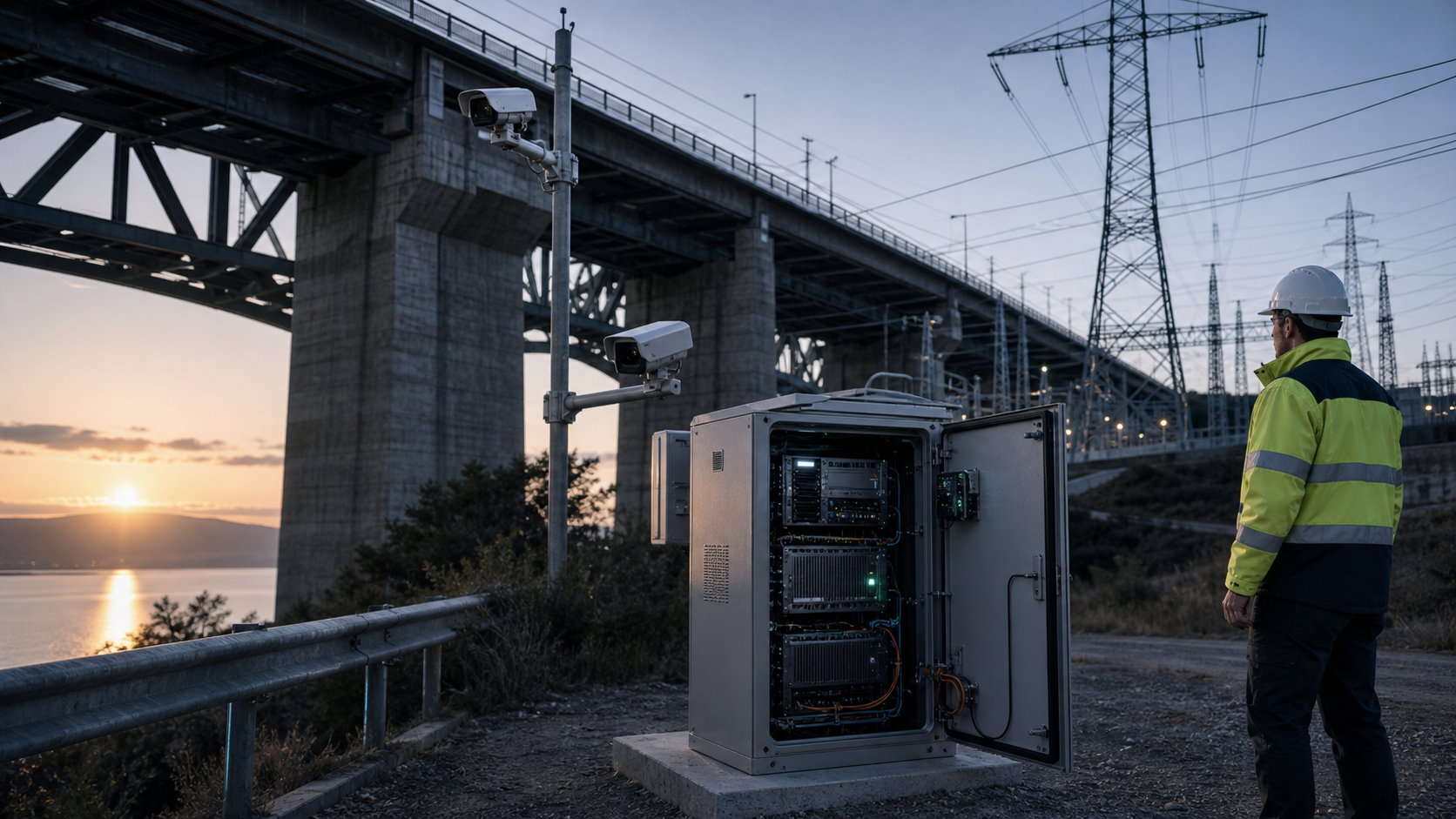
Infrastructure monitoring becomes more efficient when edge AI converts continuous local sensor data into prioritized, timestamped evidence for qualified people to review. It can reduce unnecessary data transfer, highlight changes, and maintain selected functions during network outages. It does not replace engineering judgment, statutory inspection, or a validated maintenance program. The useful system is the one that detects a defined condition, reports its uncertainty, and fits the site's power, environment, and service constraints.
For Infrastructure monitoring, buyers should begin with the failure mode or condition of interest—not with a camera, sensor, or AI model.
Quick Monitoring Decisions for Infrastructure Monitoring
- Asset: bridge, rail, power, pipeline, water, tunnel, building, road, or industrial equipment.
- Condition: crack growth, corrosion, deformation, heat, vibration, obstruction, intrusion, leakage, or component damage.
- Decision: inspect, prioritize, isolate, schedule maintenance, or collect more evidence.
- Sensor: visual, thermal, acoustic, vibration, strain, environmental, electrical, or a combination.
- Frequency: continuous, periodic, event-triggered, or inspection-time only.
- Evidence: measurement, image, clip, trend, location, and confidence.
- Environment: power, temperature, moisture, dust, vibration, access, and communications.
- Governance: qualified reviewer, escalation path, retention, and audit trail.
These fields define what the edge system must produce. Without them, “predictive maintenance” can become an untestable promise.
Define the Condition and the Consequence
Start by describing the physical condition in language that an asset engineer can verify. Then state the operational consequence of a positive or uncertain result.
Example condition statement
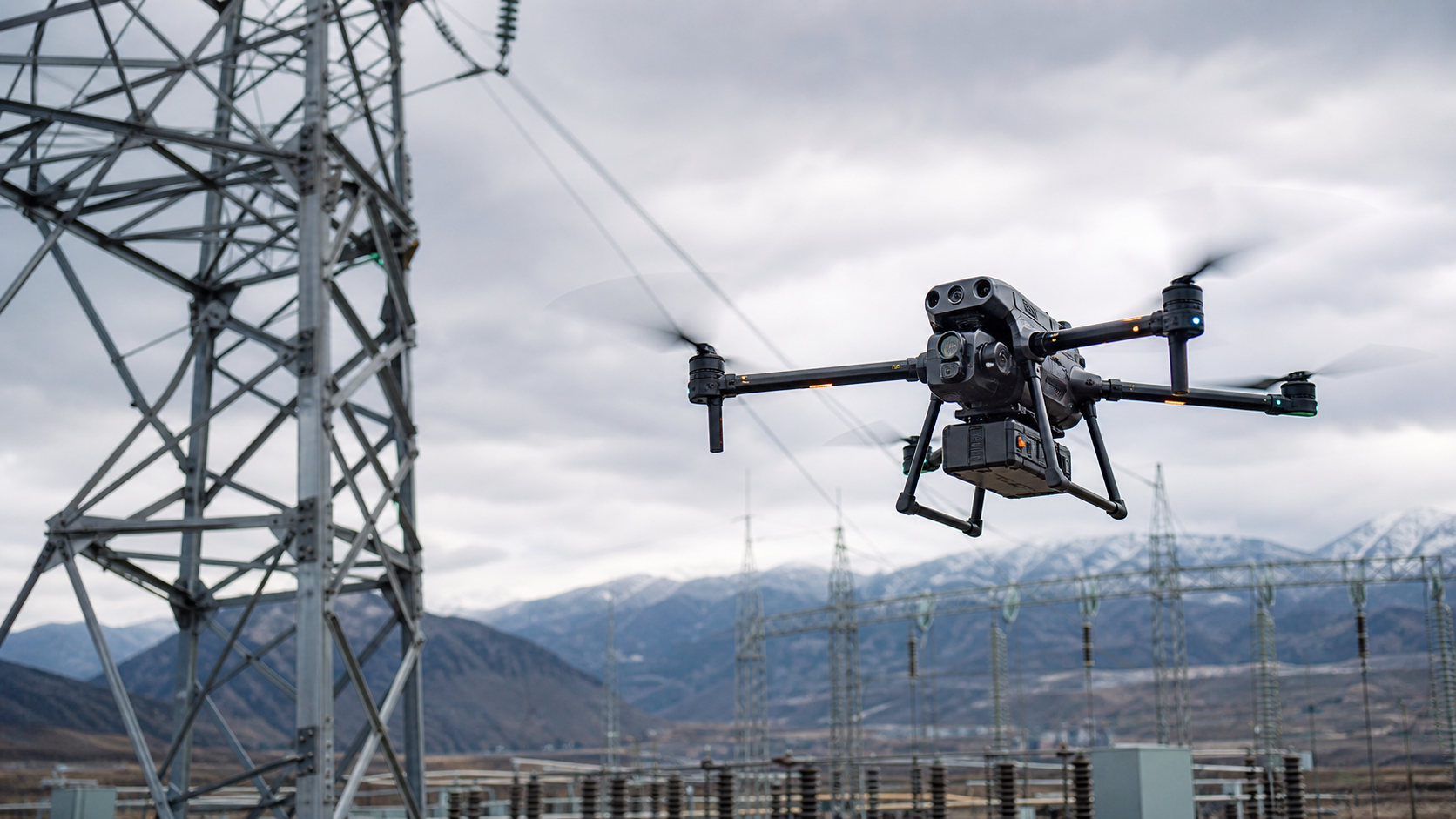
“Identify a visible object encroaching into a defined transmission-line clearance zone and create an event with time, location, confidence, and image evidence for operator review.”
This is better than “use AI to monitor power lines” because it defines the subject, zone, output, and human action.
Do not confuse detection with diagnosis
A model may identify a visual pattern associated with a defect, but the final diagnosis can require measurement, history, material knowledge, and a physical inspection. Label outputs accurately: “possible anomaly,” “change from baseline,” or “inspection priority” may be more defensible than “failure predicted.”
Buyer check: Ask who is authorized to interpret the event and what additional evidence is needed before maintenance or shutdown.
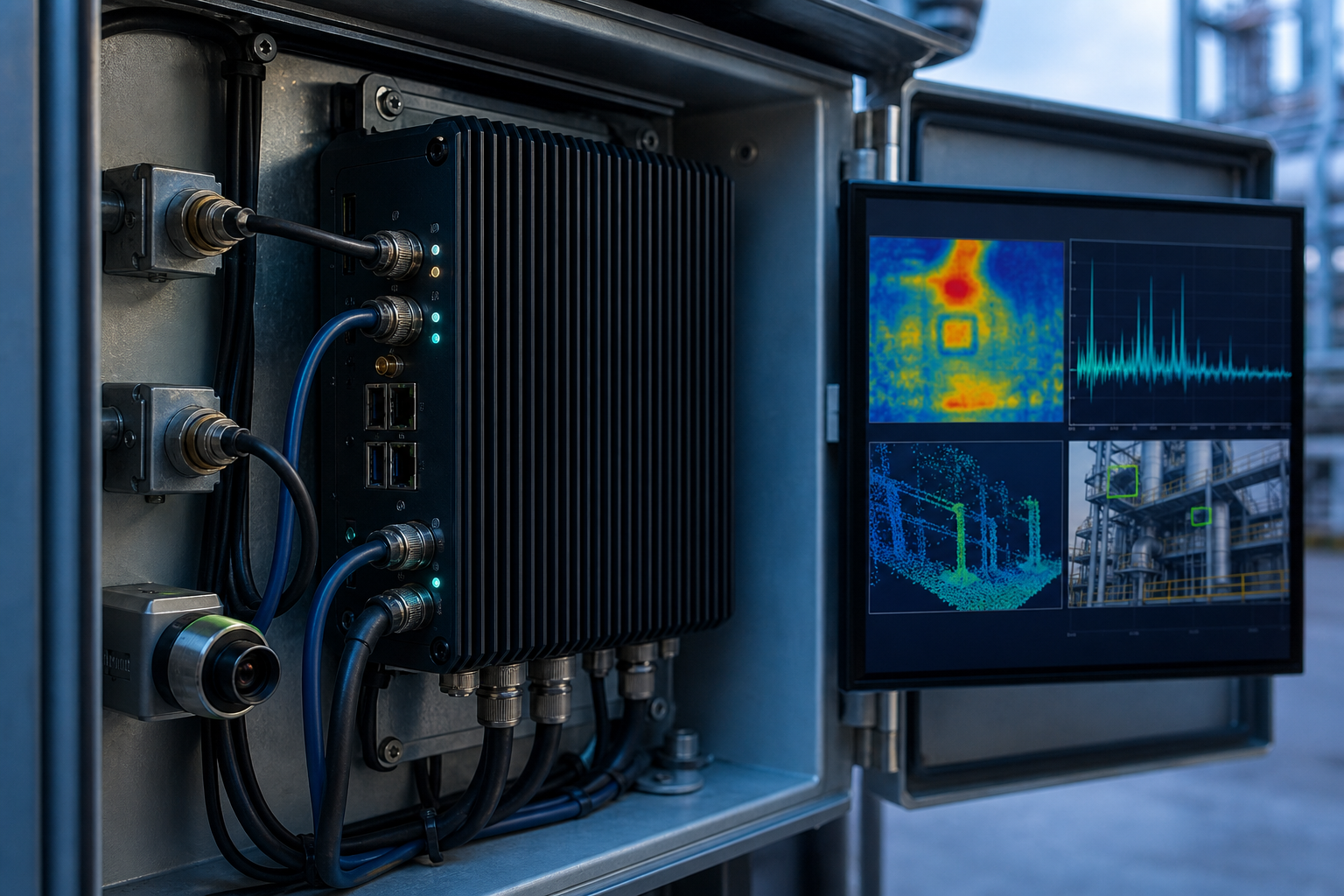
Choose Sensors from the Failure Signal
Visual cameras
Useful for surface condition, objects, alignment, occupancy, and change detection. Performance depends on distance, angle, resolution, lighting, weather, vibration, focus, and cleanliness.
Thermal cameras
Useful where temperature patterns reveal electrical, mechanical, insulation, or process conditions. Emissivity, reflections, distance, calibration, and ambient conditions affect interpretation.
Vibration and acoustic sensors
Useful for rotating equipment, structures, impacts, or leakage-related signals. Mounting, sampling rate, sensor calibration, and operating-state context are critical.
Strain, displacement, and environmental sensors
These can provide direct physical measurements but require calibration, installation quality, drift management, and a data-acquisition system suitable for the signal.
Use multiple sensors only when the fusion improves the defined decision. Additional data that cannot be maintained or interpreted does not automatically improve reliability.
Decide What the Edge Device Should Do
Sensor health
Detect missing data, frozen streams, obstruction, time errors, calibration status, storage health, and abnormal noise. Monitoring a broken sensor produces false confidence.
Local preprocessing
Normalize data, correct images, filter signals, synchronize sources, and calculate features. This can reduce the amount of data passed to the AI model or central platform.
Local inference and thresholds
Run the approved model and combine its output with zones, persistence rules, operating state, or sensor thresholds. A single-frame detection may be less useful than an event that persists or appears across related signals.
Evidence packaging
Store the event, time, location, model version, sensor context, and selected evidence. The recipient should be able to understand why the event was generated.
Store-and-forward
Buffer important events during a network interruption and transmit them in priority order after recovery. Define what happens if storage fills.
Size Compute from the Full Data Pipeline
Step 1: Quantify inputs
- Number of sensors.
- Resolution, sample rate, and format.
- Continuous or triggered operation.
- Required local history.
- Synchronization and timestamp accuracy.
Step 2: Quantify processing
- Preprocessing and feature extraction.
- Model count, version, precision, and rate.
- Fusion, trend, and event logic.
- Encoding, encryption, and storage.
- Remote management and health monitoring.
Step 3: Define output timing
Some monitoring supports long-term planning, while other events require a rapid field response. Do not apply the same latency target to crack trend analysis and a person entering a hazardous zone.
Step 4: Run a sustained test
Use representative data and environmental conditions. Record missed data, false and missed events, latency, CPU and accelerator load, memory, storage, network, power, temperatures, and throttling.
An edge-computer category contains different compute and interface tiers. The correct model follows this test specification rather than the category name.
What Should Be Sent to the Cloud?
Send events when
- The central system needs an alert or work-order input.
- Operators need selected evidence.
- Fleet trends require a consistent event schema.
Send summaries when
- Long-term condition trends matter.
- Raw high-rate data would be inefficient.
- The aggregation retains the engineering meaning.
Send raw data selectively when
- A qualified review requires it.
- The model must be audited or improved.
- A defined incident or research process authorizes collection.
Define bandwidth for normal operations, peak events, diagnostics, and backlog recovery. Continuous raw streaming is not the only architecture, but local filtering must not discard evidence required by policy or engineering practice.
Environmental and Power Design
Remote infrastructure can combine harsh weather, limited power, difficult access, and unreliable communications.
Power questions
- Grid, vehicle, battery, solar, or hybrid source.
- Continuous and peak load.
- Startup current.
- Backup duration.
- Controlled shutdown and restart.
- Seasonal solar or battery performance.
Environmental questions
- Operating and storage temperature.
- Condensation, humidity, rain, dust, salt, and corrosion.
- Vibration, shock, and mounting.
- Direct sun and enclosure heat.
- Cable, connector, and antenna exposure.
- Access for cleaning and replacement.
Test the complete enclosure with sensors, converters, storage, and communications. A processor rating does not certify the installed monitoring node.
Create a Human Review Workflow
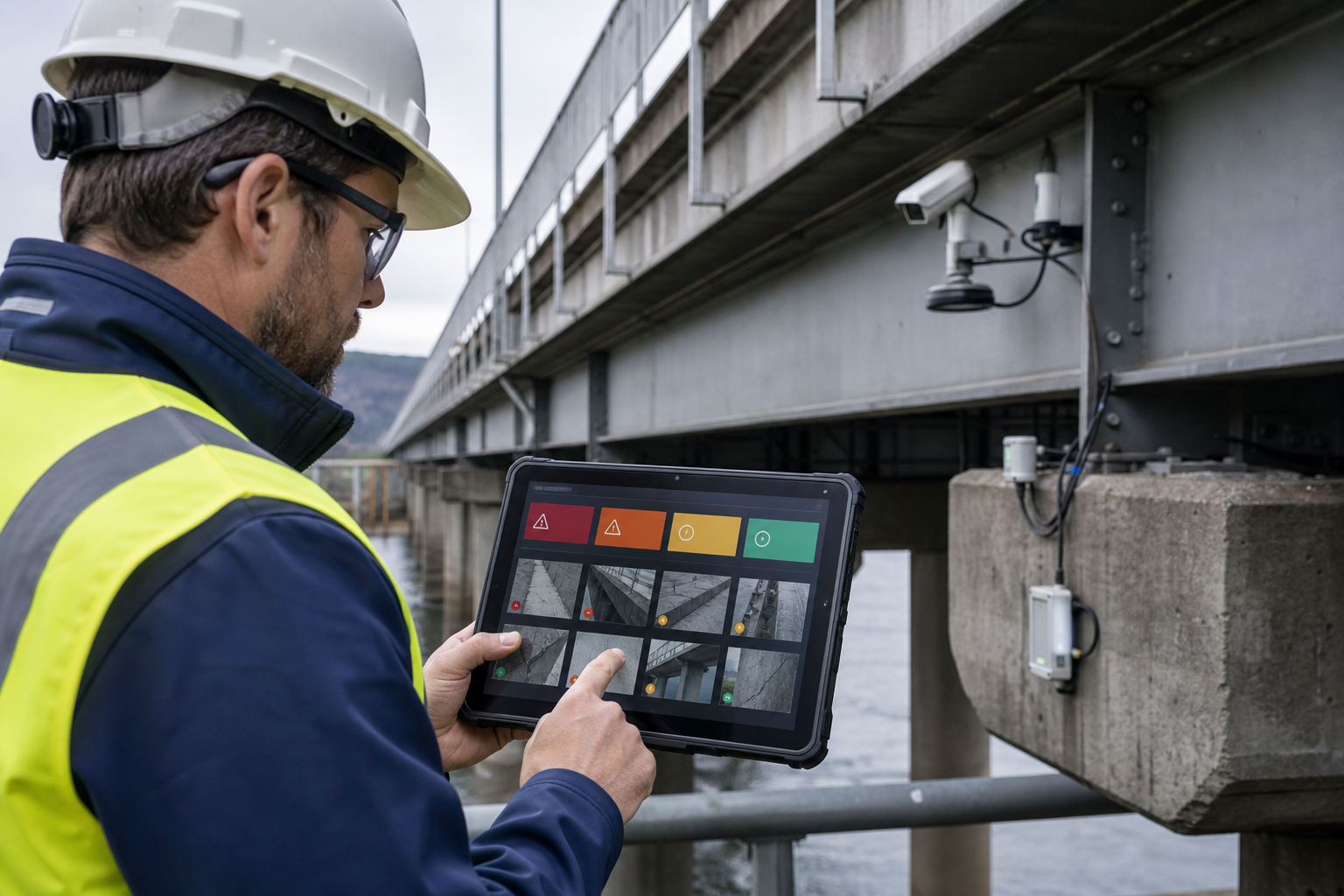
An edge AI event should enter an accountable process:
- Event generated with evidence and uncertainty.
- Automated checks remove obvious duplicates or sensor faults.
- Qualified reviewer accepts, rejects, or escalates.
- Inspection or maintenance action is recorded.
- Outcome feeds performance review and model governance.
Track false positives, missed events found by other inspections, time to review, and time to action. A high model score can still create poor operations if alerts are duplicated, unclear, or delivered to the wrong team.
Field Validation Plan
Baseline survey
Document asset condition, sensor placement, field of view, calibration, network, power, and environmental context.
Controlled examples
Where safe and permitted, test known conditions or reference targets. For rare defects, use qualified historical data and expert review rather than inventing a field event.
Seasonal and operating coverage
Collect evidence across lighting, weather, load, vibration, vegetation, and maintenance states that affect the sensor.
Fault testing
- Sensor disconnected or obstructed.
- Clock or positioning error.
- Network outage.
- Storage nearly full.
- Model process failure.
- Power interruption.
- Update and rollback.
Acceptance evidence
Record hardware, software, model, thresholds, sensor calibration, environmental conditions, and test results so the system can be audited and revalidated.
Supplier and Integrator Checklist
- Explain the failure mode and required decision.
- Provide exact sensor types and installation geometry.
- Define data rates, processing, timing, and retention.
- Ask for model-specific specifications and interface documentation.
- Test the complete workload in the final enclosure.
- Verify sensor health and edge-device health monitoring.
- Define cybersecurity, updates, and vulnerability response.
- Confirm field replacement and configuration restore.
- Keep a qualified human in the diagnostic and maintenance loop.
- Agree on a pilot and acceptance criteria before scaling.
Frequently Asked Questions
Can edge AI replace scheduled infrastructure inspections?
Usually no. It can add continuous or higher-frequency evidence and help prioritize work, but legal, engineering, insurer, and asset-owner requirements may still mandate qualified inspections. Treat AI as one input to the asset-management program.
What is the biggest source of false alerts?
It varies by use case, but environmental change, poor sensor placement, obstruction, vibration, lighting, calibration drift, and operating-state changes are common causes. Validate across the real site conditions.
How much data should be stored locally?
Store enough to support event evidence, outage buffering, diagnostics, and applicable retention requirements. Define priority and deletion behavior before storage becomes full.
What should an RFQ include?
Include the asset, condition, sensor models, data rates, model workload, timing, evidence, power, environment, network, enclosure, maintenance access, cybersecurity, fleet scale, and acceptance test.
Build Monitoring Around a Verifiable Engineering Decision
TWOWIN can compare edge-computer options after the request identifies the asset, failure signal, sensors, workload, timing, interfaces, power, environment, networking, storage, fleet operations, and human review process. Use a representative pilot to prove useful detection and reliable field operation before expanding coverage.
References and Sources
- TWOWIN, Edge Computer product category and linked model pages.
- NIST SP 500-325, Fog Computing Conceptual Model.
- CISA and NSTAC, communications resiliency material addressing local and edge computing.
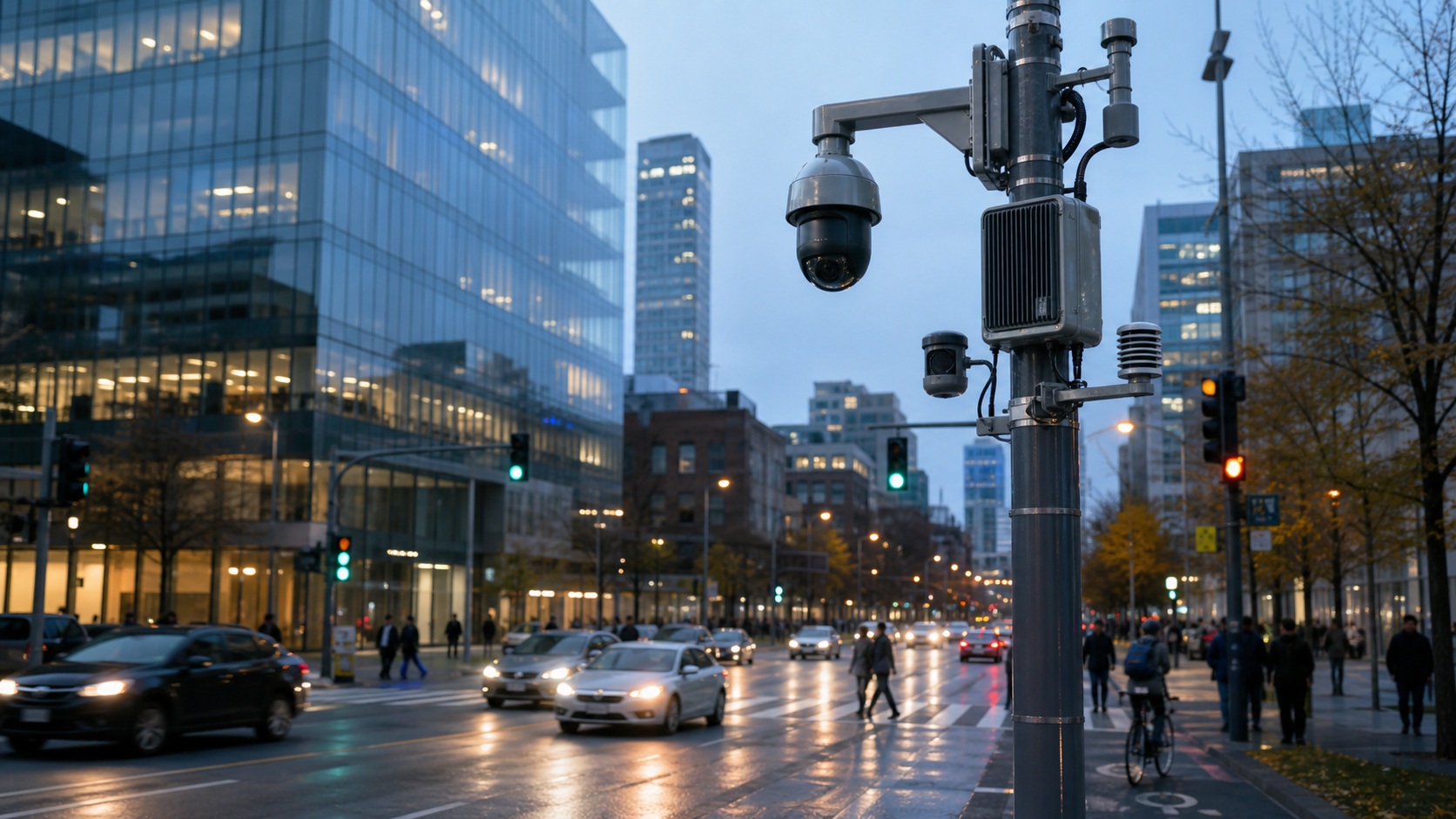

Smart city deployment should use edge AI devices for clearly defined local tasks: processing sensor data near the source, generating time-sensitive events, reducing unnecessary data transfer, buffe