






Choosing a software development company for a fintech product is a fundamentally different decision than choosing one for a generic web or mobile app. The stakes — regulatory exposure, financial data security, system uptime for money-moving infrastructure — mean that the usual evaluation criteria (portfolio, price, communication style) aren't enough on their own.
This framework breaks the decision into six pillars CTOs and technical decision-makers should evaluate systematically before signing with any fintech development partner.
Pillar 1: Regulatory and Compliance Fluency
The first question isn't "can they code" — it's "do they understand the regulatory environment your product operates in."
What to evaluate:
- Direct experience building under relevant frameworks: PCI DSS for payment card data, SOC 2 for security controls, GDPR or regional data protection law, and any sector-specific rules (lending disclosure requirements, AML/KYC obligations, open banking standards like PSD2)
- Whether compliance is treated as a design input from day one, or as something addressed after the fact
- Concrete examples of products they've shipped that passed relevant audits
Red flag: A vendor who treats compliance as a checklist added near launch, rather than a constraint shaping architecture from the start.
Pillar 2: Security Engineering Practices
Financial software is a high-value target, and security has to be built in, not bolted on.
What to evaluate:
- Their approach to secure development lifecycle (SDLC) — code review practices, dependency scanning, penetration testing cadence
- How they handle access control and data encryption for sensitive financial data, both in transit and at rest
- Whether they have relevant certifications (ISO 27001, SOC 2 Type II) and can share audit summaries or attestations
- Their incident response process — what happens if a vulnerability is found post-launch
Red flag: Vague or generic answers about "following best practices" without specifics on tooling, certifications, or process.
Pillar 3: Domain Expertise in Financial Systems
Fintech engineering has specific domain complexity: double-entry ledger design, idempotent payment processing, reconciliation logic, credit risk modeling, or card network integrations. This isn't something a generalist team picks up quickly.
What to evaluate:
- Portfolio examples in your specific fintech niche (lending, payments, wealthtech, insurtech, banking infrastructure) — not just "fintech" broadly
- Whether their engineers can speak fluently about the specific technical challenges of your product category
- References from past fintech clients who can speak to how the team handled domain-specific edge cases
Red flag: A portfolio heavy on generic e-commerce or SaaS work with only surface-level fintech experience.
Pillar 4: Engagement Model Flexibility
Different phases of a fintech product need different engagement structures — a long-lived core platform benefits from a dedicated team, while a bounded initiative might suit project outsourcing, and specific skill gaps call for staff augmentation.
What to evaluate:
- Whether the company can flex between engagement models as your needs change, rather than forcing a one-size-fits-all contract
- How they structure team continuity — will the same engineers who understand your system stay involved over time
- Clarity on how pricing and scope adjust if you shift engagement models mid-relationship
Red flag: A partner who pushes a single engagement structure regardless of what your project actually needs.
Pillar 5: Communication, Transparency, and Reporting
Fintech projects need tight visibility into progress, risk, and compliance status — not just sprint velocity.
What to evaluate:
- How they report progress: do updates include compliance and security status, or only feature delivery?
- Time zone overlap and communication cadence relative to your team
- Whether technical leads are accessible directly, or communication is filtered entirely through account management
- How change requests and scope adjustments are handled and documented
Red flag: Reporting that only covers "what shipped" with no visibility into risk, technical debt, or compliance posture.
Pillar 6: Knowledge Continuity and Handover Planning
The pillar most often skipped in vendor selection — and the one that causes the most pain 12–18 months later.
What to evaluate:
- Documentation standards: architecture decisions, runbooks, onboarding materials for new engineers
- What happens if a key team member leaves mid-project — is there a structured knowledge transfer process?
- For project-based work specifically: what does handover to your internal team (or a future vendor) actually look like, and is it defined in the contract?
Red flag: No clear answer on what happens to institutional knowledge when the engagement ends or when personnel changes.
Putting the Framework to Work
No single pillar should be a dealbreaker on its own — a strong partner might be light on one dimension but exceptional across the rest. The value of evaluating all six systematically is that it surfaces where the real risk sits before you sign, rather than six months into a project when the cost of switching partners is much higher.
For CTOs who want a deeper, structured walkthrough of this evaluation process — including questions to ask in vendor calls and how to weigh tradeoffs between pillars — this decision framework is a useful next read: How to Choose a Fintech Software Development Partner: A Decision Framework for CTOs.
Choosing a fintech development partner is a multi-year commitment in most cases. Spending a few extra hours evaluating against a structured framework is a small cost against the alternative.


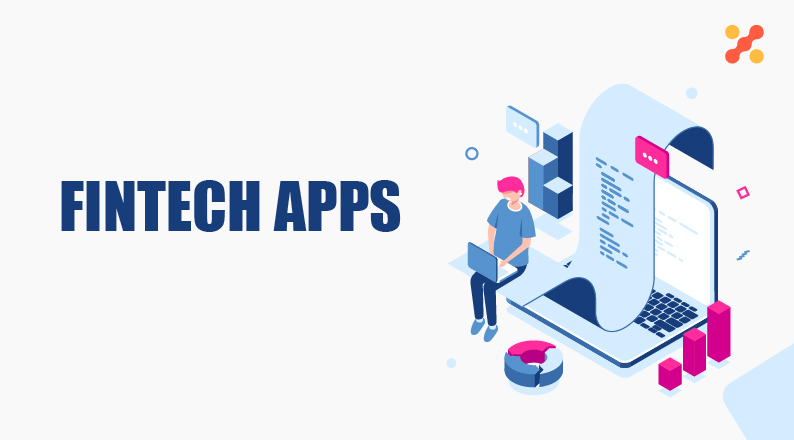
The growth in Fintech and mobile app development solutions elevates the possibilities and easiness that lead to financial innovations.Do you want to find out the role of mobile app development in Fintech?
Starting from viewing bank balances online to transferring money to friends within seconds, the efficiency of Fintech has improved sufficiently.
For the past couple of years, a large percentage of people choose digital financial services over the traditional money transfer due to various reasons such as;Easiness in financial transactionsNo need of carrying cash and cards all the timeTransactions carried out directly from the banksTrack every transactionTransactions can be carried out virtually anywhereExciting cashback and offersChoosing a digital path can even save your time to a great extent.
Advanced Payment SystemsAn exciting benefit of Fintech is improving the efficiency of enterprises through more accurate invitation acceptance and collection, which provides more professional services and helps to strengthen the relationship with customers.
In addition, it increases their chances of returning as loyal customers.3.
However, it only increases the number of people accessing the system, improves the agility and ability to obtain information about transactions and exchange data with other consumers, and improves the ability to solve this problem.4.
Considering Python web development, security is the essential factor of any FinTech application.
Also, its libraries and the data science ecosystem are ideal for Fintech products.
Python development is a quick fix and one-stop solution that answers all your fintech requirements.
Read more: Why Python Is the Best Language to Develop Amazing Fintech Products

Advancing technology has started influencing the BFSI sector, and we witness innovative app solutions in financial services.
These solutions fall under the fintech category and contribute to improving services.
Mobile wallets, banking apps, and cryptocurrency-related apps are some of the most popular examples of fintech apps.
In this blog, we are going to understand the role and benefits of cross-platform app development for a fintech firm