

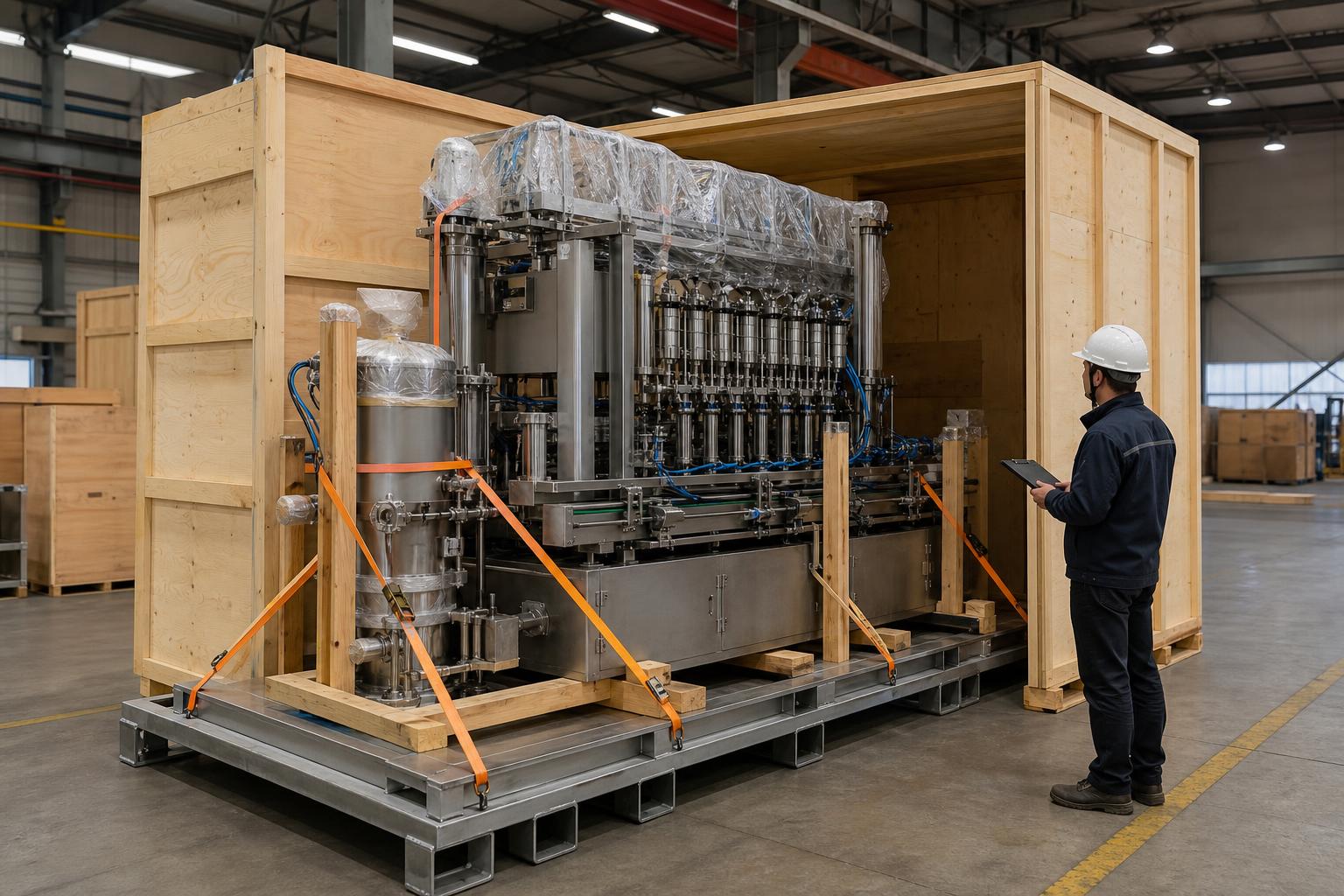
Quick Answer: An aerosol filling machine is prepared for international shipment by recording its configuration, securing the main equipment to a rigid skid or base, protecting detachable and sensitive assemblies, sealing exposed connections, and enclosing the equipment in a suitable export crate or case. The correct method depends on the machine format, package weight, centre of gravity, transport route, destination requirements, and agreed acceptance evidence. Packing should be approved as part of the purchase and dispatch process—not treated as an afterthought.
Buyer Requirement Snapshot
●Requirement: Define the exact machine or line, modules, loose parts, tooling, destination, and transport mode.
●Configuration rule: Treat a complete aerosol filling line as several controlled modules if its equipment cannot be safely shipped as one assembly.
●Capacity check: Confirm net weight, estimated packed weight, external dimensions, lifting points, and centre of gravity.
●Acceptance rule: Agree inspection, damage, shortage, moisture, and commissioning criteria before dispatch.
●Evidence: Request photographs, serial-number records, package drawings, packing lists, and final crate markings.
The key procurement question is not simply whether the equipment is placed in a wooden box. It is whether the packaging protects the actual.
How Should the Machine or Line Be Configured?
Build a controlled package register
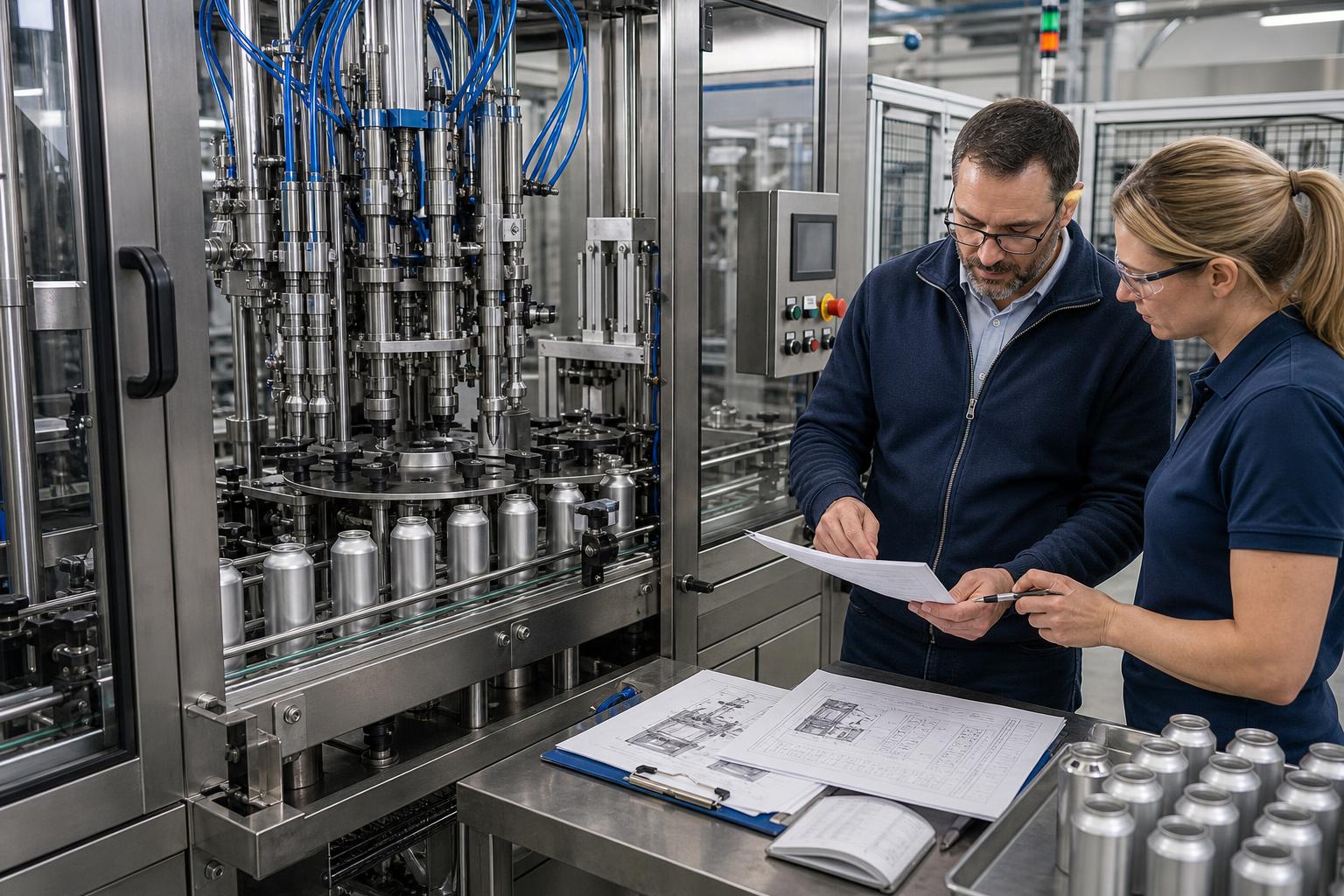
A high-speed aerosol line described by Aile includes can feeding, valve insertion, liquid filling, sealing, gas filling, weight checking, water-bath leak testing, nozzle pressing.
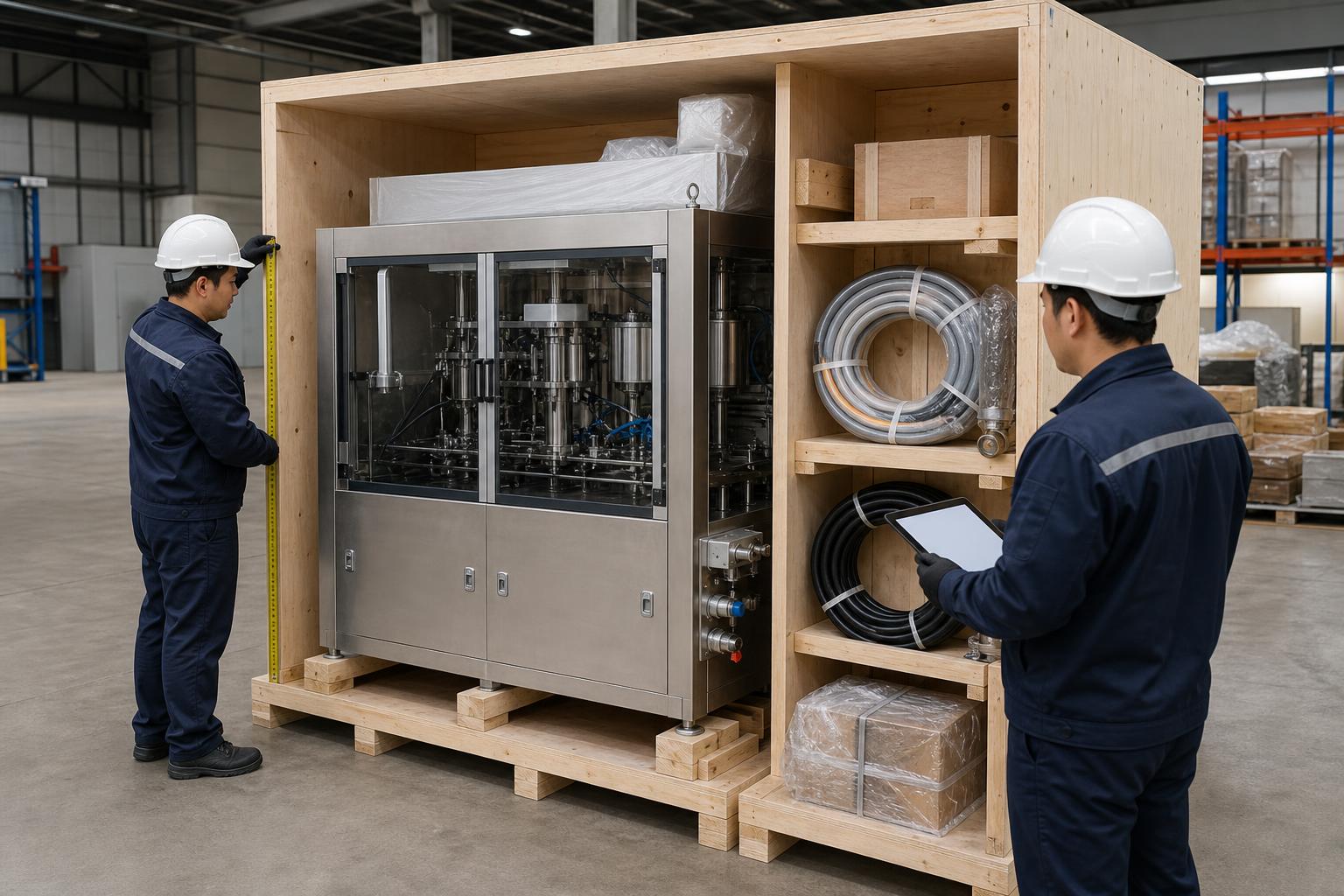
Configuration rule: Number every package and cross-reference it to the assembly drawing, equipment list, and installation manual. Identify the main machine, removable assemblies, tooling, spare parts, electrical items, pneumatic items, and document package.
Control panels, sensors, filling heads, feeders, pipework, glass components, and precision tooling may require immobilisation, removal, padding, or separate packing. These are packaging-design recommendations.
What Determines Real Output and Capacity?
Packing does not increase the rated output of an aerosol filling machine, but poor packing can prevent the equipment from reaching its intended operating.
Aile lists its high-speed aerosol line at 100–130 cans per minute, with a 30–900 mL filling capacity, 0. 6–0. 8 MPa working pressure, and.
Capacity check: Ask for both machine data and final shipment data. The freight and unloading decision requires gross package weight, crate dimensions, package count.
What Do Changeover, Utilities, and Staffing Require?
Export packing should support installation and future changeover. It should not make electrical cabinets, lubrication points, adjustment mechanisms, emergency stops, or removable tooling inaccessible.
Utility interfaces should be recorded before crating. For example, Aile lists 0. 6–0. 8 MPa compressed-air working pressure for the cited high-speed line and 0. 5–0. 7 MPa for the cited BOV machine.
Assign responsibility for unloading, unpacking, mechanical assembly, electrical and pneumatic connection, cleaning, lubrication, commissioning, and operator training. Do not assume that shipment packing includes installation or start-up support unless the.
For BOV equipment, Aile describes compressed air or nitrogen, sealing, and filling as integrated process functions, with product and propellant packaged separately in the.
For broader commercial planning, use Logistics & Costs of Aerosol Filling Equipment Sourcing: MOQ, Lead Time & Packaging as a related buyer reference, while shipment-specific inclusions remain in the quotation and purchase order.
How Should FAT, SAT, and Acceptance Be Defined?
Approve evidence before the crate is closed
Factory acceptance should cover both the machine configuration and the shipment record. Useful evidence includes dated photographs before closure, serial numbers, a component list.
Acceptance rule: Define pass/fail criteria before inspection or testing. Criteria may include complete package reconciliation, capped connections, protected fragile assemblies, legible markings, no visible.
ISTA treats the machine and its protective packaging as a combined packaged product for transport testing. If qualification testing is required, define the route.
At site, SAT should begin with photographs of the unopened crates and labels. Reconcile packages before disposal of packing materials, inspect for water ingress.
Installation, Operation, and Maintenance Risks
A rigid wooden case normally provides stronger impact, stacking, and handling protection than an exposed skid, but it increases package dimensions, tare weight, freight.
Over-restraint can deform guards, panels, conveyors, or precision assemblies. Under-restraint can allow movement, impact, vibration damage, or a shift in the centre of gravity.
Before commissioning, inspect capped pneumatic and process connections for contamination or moisture. Confirm that packaging has not blocked access to lubrication points, adjustment mechanisms.
Buyer Verification Checklist
1.Confirm the final machine model, line modules, format parts, tooling, and revision status.
2.Request a packing drawing showing the skid, restraints, blocking, lifting points, and centre of gravity.
3.Record net weight, estimated gross weight, package dimensions, package count, and unloading requirements.
4.Confirm that vulnerable assemblies are immobilised, separately packed, or protected from bending and impact.
5.Require caps or seals on exposed pneumatic and process connections.
6.Reconcile serial numbers, loose parts, cables, hoses, sensors, spares, manuals, and installation documents.
7.Identify any residual liquids, chemicals, lubricants, cylinders, or other transport-sensitive items.
8.Verify destination requirements for wood packaging. ISPM 15 may apply to crates, skids, blocking, and dunnage used in international trade; confirm current local requirements.
9.Approve package markings for weight, dimensions, lifting points, handling orientation, crate number, and destination details where relevant.
10.Photograph the equipment before closure, the closed crates, labels, seals, and loading condition.
11.Define the process for reporting concealed damage, shortages, moisture exposure, and commissioning problems.
What Should You Prepare Before Asking Aile to Confirm the Packing Plan?
Prepare the exact aerosol filling machine or line configuration, destination country, transport mode, unloading equipment, available installation space, utility conditions, package restrictions, and acceptance criteria. Ask Aile to confirm which packing details are included in the quotation, which components are shipped separately, and which documents will accompany each package. This gives procurement, logistics, engineering, and operations one controlled basis for approval.



Quick Answer: Aile’s public information does not state a standard deposit percentage, financing option, or fixed payment schedule for aerosol filling equipment. Buyers should request terms in the q