






How Should Cloud-Edge Synergy Divide Training, Inference, and Operations?
Quick Answer: Cloud-edge synergy works when each workload is placed by evidence. Keep latency-sensitive inference, local filtering, and outage-critical functions near the data source; use cloud resources for fleet analytics, model training, centralized governance, and elastic workloads. The right boundary depends on data volume, network reliability, privacy, model size, update frequency, observability, and the cost of operating distributed devices.
Decision Snapshot
Edge: local response, filtering, offline continuity, and device integration.
Cloud: training, fleet analytics, orchestration, and elastic storage or compute.
Shared: identity, versioning, monitoring, policy, and incident response.
Decision: place each function by latency, data, failure, and lifecycle requirements.
Evidence: test normal operation, degraded networks, rollback, and recovery.
What Must Be Normalized Before Comparison?
Comparison basis: Compare the same application across locations. Define the model, request rate, sensor volume, retention, response deadline, WAN characteristics, privacy constraints, number of sites, and maintenance model. A cloud benchmark with abundant bandwidth and an edge benchmark using a smaller input are not comparable. Include device, network, cloud, support, and update costs over the same period.
Also normalize test conditions and commercial boundaries. Ask whether performance was measured on the same data, model, precision, software, power mode, temperature, and background services. Separate one-time engineering, recurring unit cost, cloud or software fees, validation, accessories, logistics, support, and expected change work.
How Do the Options Differ on Buyer-Critical Criteria?
Which functions usually belong at the edge?
Use the edge for functions that must respond within a bounded delay, continue through WAN loss, reduce high-volume raw data, or connect directly to cameras, sensors, and controllers. Local placement also creates obligations: thermal design, capacity reservation, security hardening, monitoring, physical service, and controlled updates.
NIST's fog model describes a distributed, federated approach that complements centralized cloud services for IoT. It does not prescribe that everything move to the edge. Training, cross-site analysis, long-term data aggregation, certificate management, and fleet orchestration often benefit from centralized resources. Some training can occur near data, but that choice requires privacy, energy, synchronization, and model-governance analysis.
Compare evidence maturity as a criterion of its own: claimed, documented, independently tested, or reproduced by the buyer. A longer feature list is not stronger evidence. Require the provider to identify what is standard, optional, customized, not yet verified, or dependent on a third party.
Which Trade-Offs Matter Most?
Trade-off: More local processing can lower WAN dependency and raw-data transfer, yet it increases fleet complexity and the consequences of inconsistent versions. More cloud processing can simplify central operations and provide elastic resources, yet it may increase bandwidth, delay, and outage exposure. The Cloud-edge synergy article also distinguishes development kits from finished edge computers; treat its reliability and certification statements as company-provided guidance that must be verified per model.
A trade-off should connect an engineering choice to a buyer consequence such as schedule, power, thermal headroom, validation burden, support effort, supply exposure, or total cost. Avoid declaring a universal winner when the decision changes with workload, environment, market, or volume.
What Is the Selection Rule?
Selection rule: Place a function at the edge when its maximum tolerable delay or outage behavior cannot be met through the WAN, or when local filtering creates clear economic or governance value. Place it in the cloud when it benefits materially from global data, elastic scale, or centralized control. Split the workflow when local inference and cloud learning can exchange compact, governed artifacts.
Use a weighted decision only after hard constraints are passed. A supplier that fails a required interface, environmental condition, security responsibility, market obligation, or acceptance test should not recover through a high marketing or price score. Record assumptions and the person approving each exception.
Risks and Evidence to Request
Buyer check: Request an architecture diagram, data classification, bandwidth model, latency distribution, offline behavior, synchronization logic, device and cloud monitoring, security boundaries, release pipeline, rollback method, and five-year cost model. Run failure tests for packet loss, extended outage, expired credentials, partial updates, clock drift, and a cloud service change.
Check that every report names the product, revision, configuration, method, instrument, conditions, result, date, and approver. Treat unknowns as pre-order or pilot actions. Contractual acceptance should state how deviations are recorded, corrected, retested, and closed.
Frequently Asked Questions (FAQs)
Does cloud-edge synergy mean training must stay in the cloud?
No. Central training is common because it aggregates data and elastic compute, but some learning can occur locally or in federated patterns. The choice depends on data governance, bandwidth, energy, privacy, synchronization, and validation. Document where data and model artifacts move.
Can edge inference eliminate cloud costs?
Usually not. It may reduce raw-data transfer and centralized inference, while adding device hardware, fleet monitoring, security, updates, field service, and lifecycle management. Compare total cost for the same service level and number of sites.
What is the most important outage test?
Test whether the site continues its essential function safely, queues or expires data correctly, preserves audit records, and reconciles state after connectivity returns. The answer must be defined per application; not every function should continue automatically.
Add a change scenario to the comparison: a component substitution, software update, new camera or sensor, higher input rate, or deployment in another market. Ask which documents, tests, cost, schedule, and approvals would change. This exposes lifecycle capability that a static quotation cannot show and helps distinguish a supplier that controls the delivered system from one that only ships hardware.
What Workload Data Is Needed to Design a Cloud-Edge Split?
Prepare sensor and data volumes, models, response deadlines, WAN performance, outage tolerance, site count, privacy and retention rules, cloud services, edge interfaces, monitoring, update cadence, and cost assumptions. TWOWIN can then evaluate edge hardware as one layer of a measurable architecture rather than a replacement for the cloud.
References & Sources
Project input: TWOWIN 3-Month SEO/GEO Content Schedule, Week 9, 2026-08-06.
TWOWIN official landing page used as company-provided information; linked once in the article with the required keyword anchor.
NIST SP 500-325 Fog Computing Conceptual Model
NVIDIA Jetson Platform Services
NIST SP 800-82 Rev. 3 Guide to Operational Technology Security





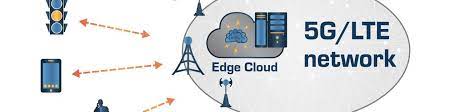
The global 5G Edge Cloud Network and Services Market research report, published by Value Market Research, is designed to offer various market framework such as market size, portion, trends, growth path, value and factors that impact the current market dynamics over the forecast period 2020-2027.
Most importantly, this report also provides the latest significant strategies adopted by major players along with their market share.The research report also covers the comprehensive profiles of the key players in the market and an in-depth view of the competitive landscape worldwide.
This section consists of a holistic view of the competitive landscape that includes various strategic developments such as key mergers & acquisitions, future capacities, partnerships, financial overviews, collaborations, new product developments, new product launches, and other developments.Get more information on "Global 5G Edge Cloud Network and Services Market Research Report" by requesting FREE Sample Copy at https://www.valuemarketresearch.com/contact/5g-edge-cloud-network-and-services-market/download-sampleMarket DynamicsThe global 5G edge cloud network and services market is anticipated to grow with rising cloud technology adoption, increasing demand for networking services with high-speed performance, and a drastic rise in the number of smartphones users worldwide.
5G technology is becoming increasingly essential as devices proliferate and become more intelligent.
Rising investment in 5G technology for commercialization and implementation into new technology model is foreseen to bring new market opportunities.
Emerging new technologies such as Virtual Reality (VR), Augmented Reality (AR), and Artificial Intelligence (AI), and Internet of Things (IoT), among other technological advancements, are estimated to trigger the growth of 5G edge cloud networks and services in coming years.
