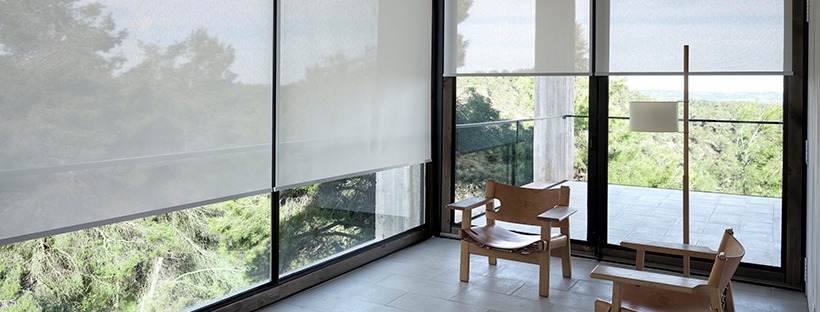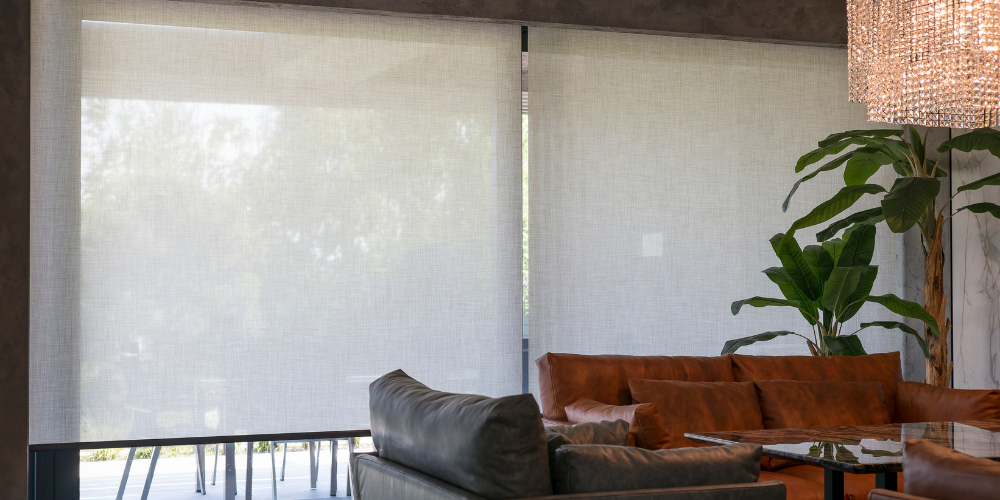
Direct sun takes over a room fast. It builds heat near the windows, bleaches out screens, and makes a comfortable space hard to use during the brightest part of the day.
Sunscreen roller blinds offer a practical way to manage these issues. Their open-weave fabric filters the sun as it passes through the glass, cutting glare while keeping the natural light and the view.
What Are Sunscreen Roller Blinds?
Sunscreen blinds are made from specially woven fabric that filters sunlight as it passes through the window. Unlike blockout blinds, they don't create a completely dark room. They soften the intensity of incoming light instead, which makes them useful where you want to reduce harsh sun without losing daylight. Fabrics come in openness levels such as 1%, 3% or 5%, with a more open weave keeping more of the view and a tighter weave filtering more strongly.
By diffusing the light, sunscreen fabric reduces glare that can make a television hard to watch, reflect off a computer screen or make reading uncomfortable. It helps most in spaces such as:
- Home offices where sunlight falls across a screen
- Living rooms with televisions facing windows
- Dining areas exposed to strong afternoon sun
- Rooms with large windows or extensive glazing
Balancing Sunlight With Natural Daylight
Blocking every ray of sunlight isn't always what you want. Cover a window too heavily, and the room just feels dark.
Sunscreen blinds work differently. They filter the stronger sunlight while letting softer daylight through, so the room keeps a bright, open feel without the harshness of direct sun. You can also adjust them as the sun moves. Lower the blind through the brightest part of the afternoon and raise it once the light eases, which suits rooms where the light changes throughout the day.
Managing Heat From Direct Sunlight
Sunlight doesn't only affect how bright a room feels. Direct exposure also adds to heat build-up, especially around large windows.
Filtering the sunlight before it enters cuts the heat reaching the room, so it stays more comfortable when the sun is strong. Window orientation matters here. A room with strong afternoon sun has different needs from one that gets softer morning light, and the size of the window, surrounding buildings and outdoor shading all affect how much sun reaches the glass.
Sunscreen blinds handle one part of heat and comfort, not a replacement for ventilation, insulation or other ways of controlling indoor temperature.
Reducing Sun Exposure to Interior Furnishings
Prolonged exposure to sunlight can affect more than the comfort of a room. UV exposure can contribute to fading and deterioration of materials over time.
Furniture, flooring, rugs, artwork and other furnishings positioned close to sunny windows can be particularly exposed.
By filtering sunlight through the fabric, sunscreen blinds can reduce the amount of direct sunlight reaching these surfaces. This can help limit ongoing exposure while still allowing the room to benefit from natural daylight.
The level of protection will vary depending on the fabric and the amount of sunlight reaching the window, but filtering direct sunlight can be a useful way to protect an interior.
Choosing the Right Sunscreen Roller Blinds
Not every window receives the same amount of sunlight, so the right blind will depend on the room and its surroundings. Before choosing a fabric, check:
- Window direction: East- and west-facing windows can receive strong direct sunlight at different times of the day, while other orientations may have different light conditions.
- Fabric openness: More open fabrics allow greater visibility and daylight through the window, while tighter weaves provide stronger filtering.
- Fabric colour: Colour can affect the way the room looks and how much light passes through the fabric.
- Room purpose: A home office may need stronger glare control than a hallway, while a living room may prioritise keeping the space bright and maintaining the outdoor view.
- Level of light control: Decide whether you want to filter sunlight or block it almost completely. This will help determine whether sunscreen or another type of window covering is more suitable.
Sunscreen Blinds vs Blockout Roller Blinds
Sunscreen and blockout blinds serve different purposes, so the better option depends on how you want to control light.
Sunscreen blinds are designed to filter sunlight. They can reduce glare, soften harsh brightness and maintain some natural light and outdoor visibility.
Blockout blinds are designed to block significantly more light. They're generally more suitable when creating a darker room is the priority, such as in bedrooms or media rooms.
For some spaces, the choice isn't necessarily about one being better than the other. It comes down to how much light you want to keep and how much you want to block.
Final Thoughts
Managing sunlight isn't always about keeping a room completely dark. In many spaces, the goal is to reduce harsh brightness and glare while still enjoying natural daylight and the view outside.
A sunscreen roller blind can provide this balance by filtering direct sunlight, helping manage glare and reducing the intensity of sunlight reaching the room and its furnishings.
The right choice will depend on the window's position, the amount of sunlight it receives and how the room is used. Taking these factors into account can make it easier to find a window covering that keeps the space bright without letting strong sunlight take over.



The sunscreen roller blinds are made just for you, and they are designed from the specially made mesh that allows a lot of light to enter when protecting you out from the glare and sun’s UN rays.
This can allow the light to come through the cloth, however, it will provide different degrees of the opacity, which depends on the color was chosen as well as fabric thickness.
The light-filtering fabrics also are available with the delicate patterns or prints The light filtering blinds can be ideal if you do not want to darken your room during a day, however, want to maintain the level of privacy, like rooms that are very close to the street.
Also good for blocking out any unsightly views, like neighbors fence from the kitchen window.Sunscreen blinds aren’t recommended as only window furnishing for the rooms that need privacy in the evening.
It can be solved very easily just by adding the Blockout roller blind on the special double bracket, and this can then provide the best of all worlds – Daytime and evening privacy.
During daylight outside hits on the screen as well as reflects away so people outside will not see in.