





Introduction
India’s garment export industry has reached a scale where traditional methods of managing production, inventory, procurement, and costing are becoming increasingly difficult to sustain. Ready-made garment exports reached approximately ₹139,350 crore in FY 2025–26, while India’s broader textile and apparel exports continue to serve more than 100 international destinations.
Yet growth brings complexity. Exporters must manage thousands of SKUs, multiple fabrics and trims, supplier dependencies, production deadlines, quality standards, and increasingly demanding global buyers.
The answer is not simply “more software.” Indian garment manufacturers need a new ERP playbook—one designed around the realities of apparel manufacturing and exports. A modern garment ERP can connect the factory floor with procurement, inventory, costing, quality, finance, and management decisions.
Why the Old ERP Approach Is No Longer Enough
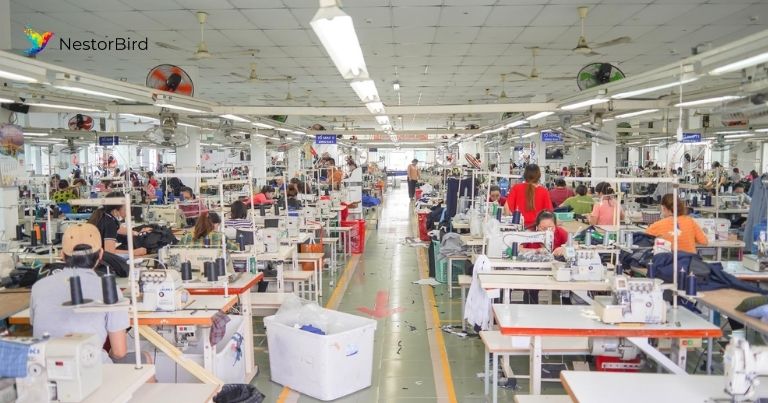
For years, many garment businesses have relied on a combination of accounting software, spreadsheets, WhatsApp messages, paper records, and disconnected production tools.
That approach can work when a factory is small. But as order volumes and product variety increase, information starts becoming fragmented.
One person may maintain fabric inventory in Excel, another may track production progress manually, while finance uses a completely separate system for costing and invoicing.
The result?
Managers may know what has been purchased and sold, but not always what is happening between those two points.
A new ERP playbook needs to connect the complete garment manufacturing lifecycle rather than simply digitising individual departments.
What Should a New Garment ERP Playbook Include?
1. Start With the Order, Not the Accounting Ledger
The customer order should become the starting point of the digital workflow.
- An apparel exporter needs to know:
- Which styles have been ordered?
- What quantities and sizes are required?
- What fabrics and trims are needed?
- When should production begin?
- What is the promised shipment date?
- How much will the order actually cost?
A garment-specific ERP connects these questions instead of treating them as separate activities.
NestorBird’s garment export ERP software in India is designed around this type of connected export workflow, covering areas such as production, inventory, procurement, costing, quality, and finance.
2. Connect BOMs With Procurement and Inventory
A Bill of Materials (BOM) is more than a production document in apparel manufacturing. It determines what the factory needs to purchase, stock, consume, and eventually account for.
When BOM information is connected to procurement and inventory, manufacturers can identify material requirements earlier.
For example, if a new export order requires a specific fabric, zipper, label, and packaging material, the ERP can help teams determine what is already available and what needs to be purchased.
This reduces the risk of discovering a shortage only after production is scheduled.
Real-Time Inventory Should Become the New Normal
Fabric inventory can represent substantial working capital. Holding too much creates unnecessary costs, while holding too little can stop production.
A modern ERP should give manufacturers visibility into raw materials, trims, work-in-progress, and finished goods.
This is particularly important when exporters manage multiple colours, sizes, styles, batches, and customer orders simultaneously.
NestorBird’s garment manufacturing ERP capabilities focus on connecting inventory, orders, production, and financial information so manufacturers can make decisions using a shared operational picture.
Production Visibility Is a Competitive Advantage
For an exporter, producing an order is only half the challenge. Producing it on time is what protects customer relationships.
A new ERP playbook should therefore make production status visible across every important stage.
From Cutting to Stitching to Finishing
Managers should be able to see whether an order is:
- Waiting for material
- In cutting
- In stitching
- Under finishing
- Waiting for quality inspection
- Ready for packing
- Ready for dispatch
This visibility helps managers identify bottlenecks before they become shipment delays.
It also reduces the need to call multiple departments simply to understand the current status of an order.
For businesses looking to digitise the entire workflow, NestorBird’s guide on digitising the garment workflow from fabric sourcing to GST invoicing covers how these processes can be connected through ERP.
Costing Needs to Move From Estimation to Intelligence
One of the biggest weaknesses in traditional garment manufacturing is delayed costing.
A manufacturer may estimate an order before production but only discover the true margin after the goods have been produced and shipped.
A modern ERP can bring together material consumption, purchase prices, production costs, wastage, labour, overheads, and other relevant expenses.
That creates a much clearer picture of order profitability.
For exporters operating on tight margins, this is critical. Winning more orders is not necessarily valuable if the business does not know which orders are actually profitable.
Quality Should Be Part of the ERP Workflow
Quality control cannot remain an isolated final-stage activity.
Defects discovered late can lead to rework, delays, excess material consumption, and rejected shipments.
An ERP system can integrate quality inspections into production. Inspection results, defects, rejected quantities, rework, and approval status can be recorded against relevant production orders or batches.
This creates better traceability and gives management data that can reveal recurring quality problems.
ERP Must Connect the Factory With Finance
The new ERP playbook should not create another information silo.
Operational data should ultimately connect with financial processes.
When procurement, inventory, production, sales, costing, and invoicing use connected information, finance teams can spend less time reconciling different versions of the same data.
This is also why garment manufacturers should look beyond accounting-only solutions. NestorBird’s Garment ERP vs Tally comparison explains why accounting software alone may not provide the operational visibility required by a growing manufacturing business.
Why This Matters for India’s Global Competitiveness
India is competing with established apparel manufacturing hubs on cost, quality, speed, flexibility, and reliability. Government data shows textile and apparel exports reached ₹325,339 crore in FY 2025–26, with export growth recorded across more than 100 destinations.
At the same time, global apparel supply chains are becoming more geographically diverse. Indian manufacturers therefore have an opportunity to capture additional international business—but they need operational systems capable of supporting that growth.
Recent industry developments also show Indian apparel companies exploring greater geographic diversification and international expansion, making supply-chain visibility increasingly important.
For manufacturers in Tier 2 and Tier 3 cities, this creates an especially important opportunity. They do not necessarily need massive enterprise platforms. They need practical, scalable technology that solves real manufacturing problems.
What Should Garment Exporters Look for in an ERP?
Before choosing an ERP, exporters should evaluate whether the platform can support their actual workflow.
Key capabilities should include:
- Garment style, size, and colour management
- BOM and material requirement planning
- Fabric and trim inventory
- Purchase and supplier management
- Production planning and scheduling
- Work orders and job cards
- Cutting, stitching, and finishing tracking
- Quality inspection
- Costing and profitability analysis
- Finished-goods management
- Export order and dispatch management
- GST and financial integration
- Management dashboards and reporting
NestorBird’s digital tools for garment manufacturing in India provides additional context on the technology modern exporters can use to improve production visibility, inventory control, compliance, and operational efficiency.
Conclusion
India’s garment export industry does not simply need more technology. It needs better-connected technology.
The new ERP playbook is about linking every important part of the business—from customer orders and BOMs to procurement, inventory, production, quality, costing, dispatch, and finance.
For exporters, that connection can mean faster decisions, better inventory control, stronger production visibility, improved cost management, and fewer operational surprises.
As India expands its position in global apparel markets, manufacturers that build this digital foundation early can be better prepared to scale. The competitive advantage will not come from ERP alone. It will come from using ERP to create a garment business that is more visible, responsive, profitable, and ready for international growth.
Frequently Asked Questions
What is a garment ERP playbook?
A garment ERP playbook is a structured approach to using ERP technology across apparel manufacturing—from customer orders and BOMs to procurement, inventory, production, quality, costing, dispatch, and finance.
Why do Indian garment exporters need ERP?
Growing exporters face increasingly complex orders, supply chains, production schedules, and customer requirements. ERP connects these processes and gives management better visibility into operations.
Can ERP reduce garment manufacturing costs?
ERP does not automatically reduce costs, but it can identify material wastage, inventory problems, production bottlenecks, purchasing variances, and unprofitable orders. These insights can help management take corrective action.
Is ERP suitable for small and medium garment manufacturers?
Yes. A scalable garment ERP can help SMEs replace disconnected spreadsheets and manual processes while giving them a foundation for future growth.
Is cloud ERP a good option for garment exporters?
Cloud ERP can be a practical option because it provides centralized access to business information without requiring manufacturers to maintain extensive on-premise infrastructure. Businesses should still assess security, integrations, scalability, and garment-specific functionality before choosing a solution.



If you don’t have garment manufacturing erp software for your business you should make sure that you get it.
Samadhan provide best garment manufacturing erp software at best price.