



Saturn is one of the most significant planets in astrology, especially when it comes to long-term growth, responsibility, discipline, and major life transitions. One of the most talked-about astrological periods involving Saturn is the Saturn return.
A Saturn return occurs when Saturn returns to approximately the same zodiac position it occupied when you were born. Because Saturn takes roughly 29.5 years to travel around the zodiac, people generally experience their first Saturn return around their late twenties or early thirties.
A Saturn return calculator can help you determine when your Saturn return may occur based on your birth information. Instead of manually studying planetary positions, you can enter your birth date, time, and location to identify the approximate period associated with your Saturn return.
This guide explains what a Saturn return is, how to calculate it, why birth information matters, and what astrologers traditionally associate with this important period.
What Is a Saturn Return?
In astrology, a Saturn return happens when the planet Saturn returns to the same zodiac sign and approximately the same degree that it occupied at the time of your birth.
Saturn moves slowly through the zodiac, taking approximately 29.5 years to complete one orbit. Because of this long cycle, Saturn returns are associated with major stages of adulthood.
Most people who follow Western astrology may experience three Saturn returns during their lifetime:
First Saturn return: Around ages 27–30
Second Saturn return: Around ages 56–59
Third Saturn return: Around ages 84–89
The exact timing varies from person to person because it depends on the precise position of Saturn in the natal chart and Saturn's retrograde periods.
Why Is the Saturn Return Important in Astrology?
Saturn is traditionally associated with responsibility, structure, discipline, boundaries, commitments, patience, and long-term goals.
Because a Saturn return brings Saturn back to its natal position, astrologers often interpret the period as a time when people reassess important areas of their lives.
This may include questions such as:
Am I building the life I actually want?
Are my commitments still meaningful?
What responsibilities do I need to accept?
Which habits are no longer helping me?
What long-term goals deserve more attention?
Where do I need stronger boundaries?
In this sense, Saturn return astrology is often described as a period of maturity and restructuring rather than simply a period of difficulty.
How Does a Saturn Return Calculator Work?
A Saturn return calculator uses your birth information to determine the zodiac sign and degree of Saturn at the time you were born.
It then compares that natal Saturn position with Saturn's current and future movements.
Most calculators may require:
Date of birth
Exact birth time
Birthplace
The date helps identify your natal Saturn placement. The time can improve the precision of the natal chart, while the birthplace provides geographical information used for the complete chart calculation.
Once your information is entered, the calculator can estimate when transiting Saturn reaches the same position as your natal Saturn.
What Is Your Natal Saturn?
Your natal Saturn is the position of Saturn in your birth chart.
For example, your natal Saturn might be in Aries, Taurus, Gemini, Cancer, or another zodiac sign. It will also have a specific degree within that sign.
The zodiac sign provides one layer of interpretation, while the exact degree is particularly important when calculating the timing of a Saturn return.
A person with Saturn at 15 degrees of a zodiac sign will experience their exact Saturn return when transiting Saturn reaches approximately 15 degrees of that same sign.
Why Exact Birth Information Matters
Accurate birth information can make your Saturn return calculation more precise.
Date of Birth
Your date of birth determines the planetary positions associated with your natal chart.
Time of Birth
Saturn itself moves slowly, so a small difference in birth time does not usually shift its zodiac sign. However, exact birth information is still useful when creating a complete natal chart and determining the houses.
Birthplace
Your birthplace helps calculate the geographical and time-zone information associated with your birth.
For the most detailed interpretation, it is best to provide all available information accurately.
When Does the First Saturn Return Happen?
The first Saturn return typically occurs around the late twenties or early thirties.
However, there is no single age that applies to everyone.
Because Saturn takes approximately 29.5 years to complete its orbit, the timing depends on the exact degree of natal Saturn and Saturn's movement through the zodiac.
Some people may experience the strongest part of their first Saturn return around age 28, while others may experience it closer to age 30.
Retrograde motion can also cause Saturn to cross the same natal degree more than once, which means a person may have multiple exact Saturn return dates within a broader Saturn return period.
Can You Have More Than One Saturn Return?
Yes.
Astrologers generally identify three major Saturn returns for people who live into their eighties or beyond.
First Saturn Return
The first Saturn return occurs around the late twenties. It is traditionally associated with entering a more mature stage of adulthood.
People may reassess relationships, careers, finances, living arrangements, responsibilities, and long-term goals.
Second Saturn Return
The second Saturn return generally occurs around the late fifties.
It may be interpreted as another major period of reflection about purpose, commitments, career, family, retirement, and personal priorities.
Third Saturn Return
The third Saturn return typically occurs around the mid-to-late eighties.
Because not everyone reaches this stage, it is less frequently discussed than the first two returns. In astrology, it may be associated with another significant cycle of reflection, maturity, and life perspective.
What Does Saturn Return Mean for Your Zodiac Sign?
The zodiac sign containing your natal Saturn can provide a symbolic framework for interpreting your Saturn return.
For example, Saturn in Aries may traditionally emphasize themes involving independence, initiative, self-direction, and personal responsibility.
Saturn in Taurus may be interpreted through themes involving stability, resources, security, and values.
Saturn in Gemini can be associated with communication, learning, information, and intellectual discipline.
Saturn in Cancer may emphasize themes involving emotional security, family, home, and personal foundations.
The interpretation changes for each zodiac sign.
However, the sign alone does not tell the complete story. Astrologers also examine Saturn's house placement, aspects, and relationships with other planets.
The Role of Houses During a Saturn Return
The house containing natal Saturn can indicate the area of life where Saturn return themes may be emphasized.
For example:
First House
Themes may involve identity, self-image, independence, and personal direction.
Second House
The focus may involve money, possessions, values, and financial responsibility.
Third House
Communication, education, learning, and relationships with close surroundings may become important.
Fourth House
Home, family, roots, and emotional foundations may receive greater attention.
Fifth House
Creativity, romance, self-expression, and personal enjoyment may become areas of reflection.
Sixth House
Work routines, responsibilities, habits, and everyday organization may be emphasized.
Seventh House
Partnerships, marriage, commitments, and one-to-one relationships may become important.
Eighth House
Shared resources, intimacy, transformation, and deeper emotional issues may receive attention.
Ninth House
Education, philosophy, travel, beliefs, and worldview may become important themes.
Tenth House
Career, ambition, reputation, and long-term professional goals can become major areas of focus.
Eleventh House
Friendships, communities, networks, and future aspirations may be reassessed.
Twelfth House
Solitude, reflection, closure, inner life, and unconscious patterns may become more significant.
The house interpretation depends on the complete natal chart and the house system being used.
What Does Saturn Return Feel Like?
Astrology does not define one universal experience for everyone going through a Saturn return.
Some people describe this period as a time when they become more aware of responsibilities or realize that certain parts of their lives need to change.
Others may experience it as a period of increased focus, commitment, or maturity.
From an astrological perspective, Saturn is not necessarily about punishment. Its traditional symbolism is more closely connected with structure, accountability, patience, and long-term development.
A Saturn return can therefore be viewed as an opportunity to evaluate what is sustainable and what may need restructuring.
Common Saturn Return Themes
Although every chart is different, astrology often associates Saturn returns with several broad themes.
Career and Purpose
You may question whether your current career path aligns with your long-term goals.
This does not necessarily mean changing careers. It may involve accepting greater responsibility, pursuing a leadership position, or becoming more intentional about professional development.
Relationships
Long-term relationships may receive greater scrutiny.
People may evaluate whether their relationships are based on genuine compatibility, mutual responsibility, and shared goals.
Financial Responsibility
Saturn's symbolism is often connected with long-term planning and responsibility, so financial organization can become an important practical theme.
Personal Boundaries
A Saturn return may encourage stronger boundaries and greater clarity about commitments.
Long-Term Goals
You may become less interested in short-term rewards and more focused on building something sustainable.
Saturn Return and Major Life Decisions
Popular astrology often describes Saturn return as a period when people make major life changes.
Some may get married, end relationships, change careers, move to a new city, start businesses, return to education, or take on new responsibilities.
However, these events should not be viewed as guaranteed consequences of a Saturn return.
Astrology provides symbolic interpretations rather than scientifically proven predictions. Major decisions should be based on your circumstances, information, values, and professional advice when appropriate.
How to Use a Saturn Return Calculator
Calculating your Saturn return can be a simple process.
Step 1: Find Your Birth Information
Gather your date, exact time, and birthplace.
Step 2: Enter Your Details
Enter your information into a Saturn return calculator.
Step 3: Identify Your Natal Saturn
Find the zodiac sign and degree of Saturn in your natal chart.
Step 4: Check Saturn's Current Position
The calculator compares your natal Saturn position with Saturn's current and upcoming movements.
Step 5: Review Your Saturn Return Dates
Depending on Saturn's movement, you may receive one or several dates when Saturn reaches your natal Saturn degree.
Remember that the broader Saturn return period can extend beyond one exact date.
Why Can There Be Multiple Saturn Return Dates?
Saturn does not always move continuously forward from the perspective of Earth.
During retrograde periods, Saturn appears to move backward through the zodiac. As a result, it can cross the same degree multiple times.
For example, Saturn might reach your natal degree, move beyond it, retrograde back across it, and later cross it again while moving forward.
This can produce multiple exact Saturn return dates.
Rather than focusing on a single day, astrologers often examine the broader period surrounding these contacts.
Saturn Return vs. Saturn Transit
A Saturn return is a specific type of Saturn transit.
A Saturn transit occurs whenever Saturn moves through a particular part of your natal chart.
A Saturn return happens when transiting Saturn returns to the same zodiac position as your natal Saturn.
Therefore, every Saturn return is a Saturn transit, but not every Saturn transit is a Saturn return.
Can a Saturn Return Be Positive?
Yes.
Despite the dramatic reputation sometimes associated with Saturn return, astrology does not necessarily interpret it as a negative period.
Saturn's traditional symbolism includes discipline, maturity, responsibility, boundaries, patience, and lasting structures.
This means the period can be interpreted as a time for building stronger foundations.
The experience may involve challenges, but challenges can also encourage practical growth and long-term decision-making.
Frequently Asked Questions
What is a Saturn return?
A Saturn return occurs when Saturn returns to approximately the same zodiac sign and degree it occupied when you were born.
When is the first Saturn return?
The first Saturn return usually occurs around ages 27 to 30, although the exact timing varies according to your natal Saturn position and Saturn's movement.
How long does a Saturn return last?
The broader Saturn return period can span months or longer, especially when Saturn crosses the natal degree multiple times because of retrograde motion.
Can I calculate my Saturn return without my birth time?
You can often determine your approximate natal Saturn sign from your birth date, but exact birth information is useful for a complete chart and house-based interpretation.
Why can Saturn return happen more than once?
Saturn can cross the same natal degree multiple times due to its apparent retrograde motion. This can create multiple exact Saturn return contacts.
How many Saturn returns can a person have?
A person may experience a first return around their late twenties, a second around their late fifties, and a third around their eighties, depending on lifespan and individual chart timing.
What does Saturn represent in astrology?
Saturn is traditionally associated with discipline, responsibility, structure, boundaries, patience, maturity, and long-term development.
Is Saturn return always difficult?
Not necessarily. Some people experience it as a challenging period, while others experience increased clarity, stability, commitment, or personal growth.
Does Saturn return mean something bad will happen?
No. Astrology does not provide a guarantee that specific events will occur during a Saturn return. It is better understood as a symbolic period traditionally associated with maturity and responsibility.
What is the difference between Saturn return and Saturn transit?
A Saturn transit refers broadly to Saturn moving through your natal chart. A Saturn return specifically occurs when Saturn returns to its natal position.
Can a Saturn return affect relationships?
Astrologers often associate Saturn returns with reassessing commitments and long-term relationships. However, there is no guaranteed relationship outcome.
Can a Saturn return affect your career?
Career and long-term goals are commonly discussed in Saturn return astrology, particularly when Saturn interacts with the tenth house or other career-related chart placements. However, individual interpretations vary.
Is Saturn return scientifically proven?
Astrology is not scientifically established as a method for predicting life events or personality. Saturn return interpretations belong to astrological tradition and should be treated as symbolic rather than scientific predictions.
Final Thoughts
A saturn return calculator can be a useful starting point for discovering when Saturn returns to the position it occupied at your birth. Because Saturn moves slowly, this cycle is traditionally associated with major stages of maturity, responsibility, and long-term development.
The first Saturn return typically occurs around the late twenties, followed by another around the late fifties and potentially a third later in life. Your exact timing depends on your natal Saturn placement and Saturn's movement through the zodiac.
Rather than thinking of Saturn return as a guaranteed period of crisis, it can be viewed through the traditional astrological lens of structure, accountability, patience, and growth. Understanding your natal Saturn sign, degree, house, and aspects can provide additional context for exploring what this cycle represents within astrology.
As with other astrological interpretations, use Saturn return as a framework for reflection rather than a guaranteed prediction of what will happen in your life.



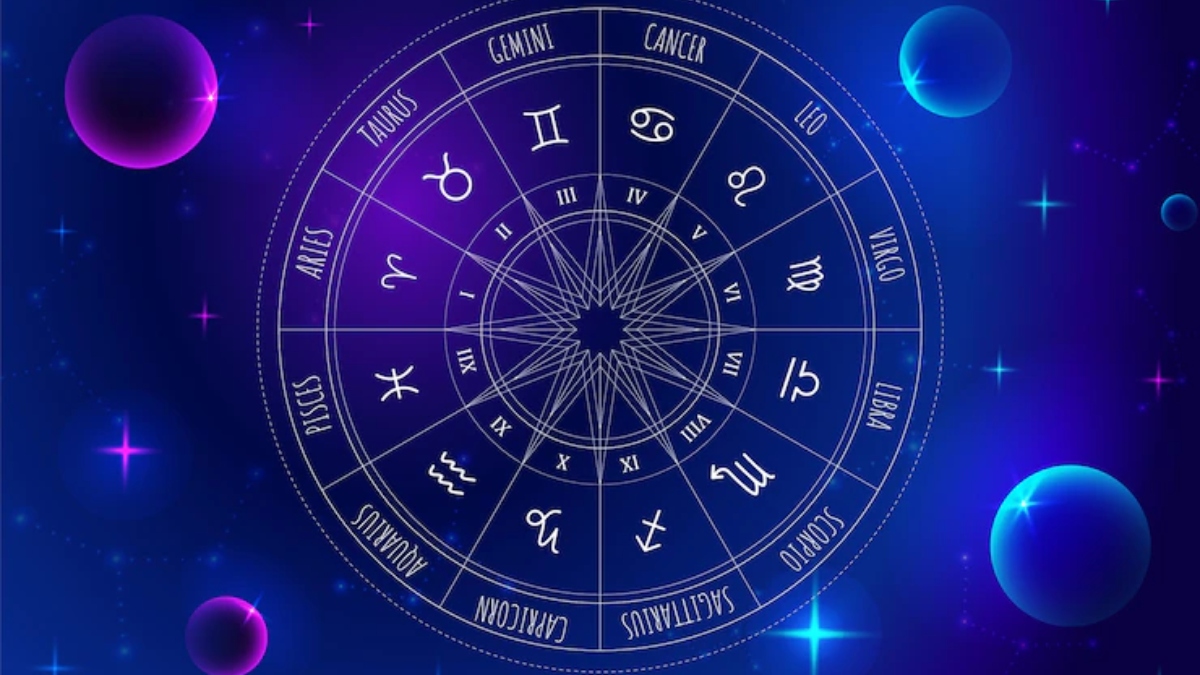

Consequences of Saturn in the 6th house of the horoscope: This position of Shani in the horoscope makes a person skilled in eloquence and also a good speaker.
Such persons get skill in reasoning and debate on any subject.
This position of Shani not only makes the person powerful but also weakens his enemies so that no enemy of his can stay in front of the person for a long time.In Vedic Jyotish, it is believed that such people who have Shani in the sixth house of their horoscope, such people provide shelter to many people in life, and nurture all.
Shani situated here gives a lot of wealth and servants to the native.
This position of Shani also gives fearlessness to the person in every way and the person does not suffer any kind of fear in life.If Saturn in the sixth house is under the bad influence, then the person takes unnecessary pride and does not allow anyone to walk before him.
As far as possible, such people should stay away from the passions and keep their character good, by this Shani Dev will give them wealth, honour and fame.

Darakaraka is the Planet which gets the Lowest Degree in Horoscope.
It represents our spouse in Kundali.
This is a Unique Process to Predict about your Spouse or Life Partner.
It is a completely Different technique than the widely used traditional process.https://www.talktoastro.com/article/how-to-predict-about-spouse-in-astrology