


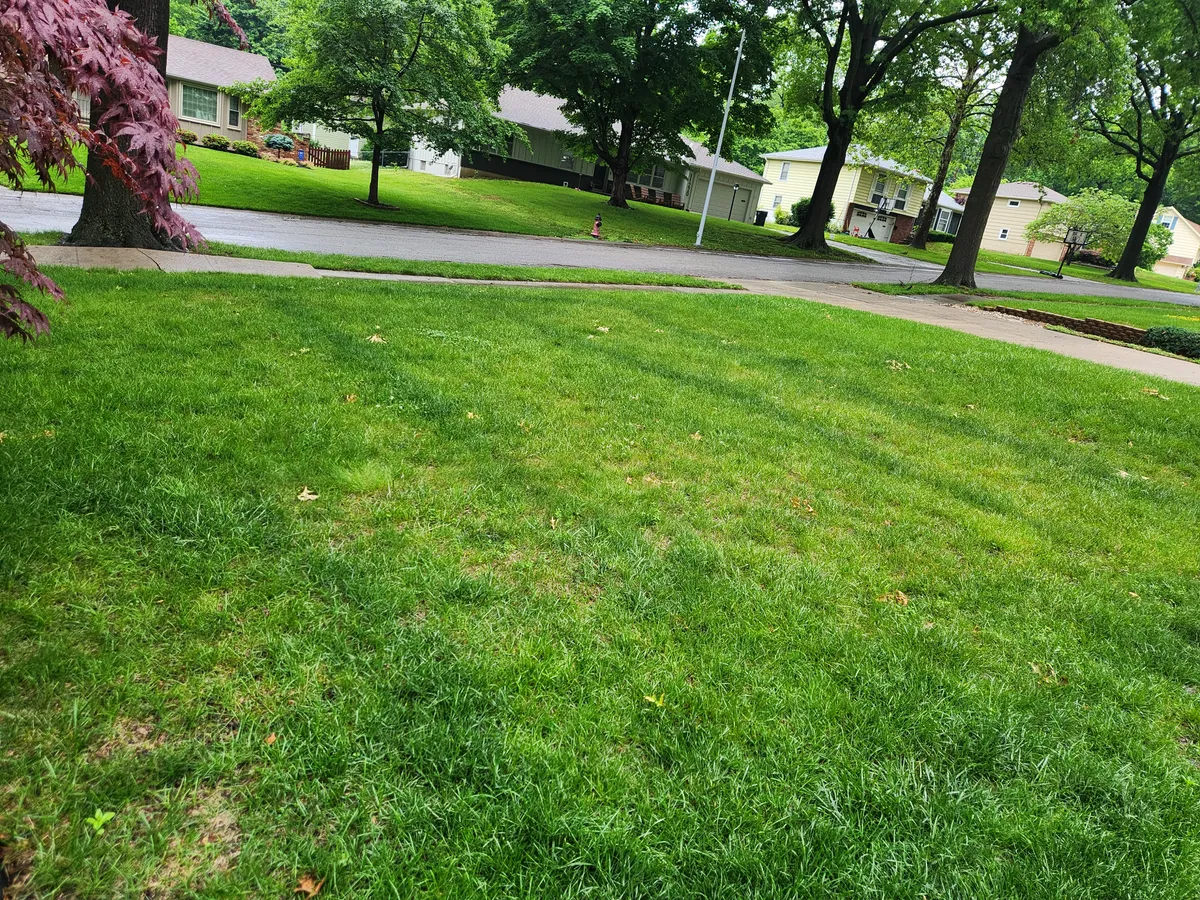
Using a push fertilizer spreader seems straightforward: add the product, choose the appropriate setting, and walk across the lawn.
However, small mistakes involving walking speed, spreader settings, overlap, and application conditions can produce surprisingly noticeable problems.
Uneven fertilizer coverage can result in dark green stripes, lighter patches, missed weeds, and inconsistent grass growth throughout a lawn.
Why Walking Speed Matters With a Push Spreader
Broadcast and rotary spreaders work best when they're pushed at a steady, consistent pace.
Walking too slowly allows more fertilizer to fall within a smaller area. Pausing or hesitating while the spreader gate remains open can make the problem even worse.
The grass receiving the extra fertilizer may then grow faster and become noticeably darker than the surrounding turf.
This can create stripes that initially look like mower lines. If those lines correspond with the path you took while fertilizing rather than your mowing pattern, uneven fertilizer application may be responsible.
Maintain a comfortable but consistent walking speed throughout the application.
Whenever you need to stop, turn around, move around an obstacle, or otherwise interrupt your pace, close the spreader gate before stopping.
Fertilizer Stripes Can Be More Than a Cosmetic Problem
Uneven fertilizer doesn't necessarily destroy a lawn, but it can make the turf look inconsistent.
Areas receiving additional fertilizer may:
- Become darker green
- Grow faster
- Require more frequent mowing
- Stand out noticeably from surrounding grass
Meanwhile, areas receiving too little fertilizer can appear pale or underfed.
Heavy concentrations of fertilizer can cause more serious problems, particularly during hot or dry weather. Excessive fertilizer may stress the grass and potentially cause yellowing, burning, or weakened areas.
Proper fertilization therefore depends on more than simply spreading fertilizer across the lawn. Product selection, application rate, timing, watering, and consistent coverage all matter.
Weed and Feed Makes Uneven Coverage Even More Noticeable
Poor spreader technique can become especially obvious when applying weed-and-feed products.
If certain strips receive considerably more product than others, those areas may receive effective weed control while weeds continue growing between the application paths.
The result can be a lawn with dark fertilizer stripes combined with weeds growing in under-treated areas.
Application conditions matter too.
Depending on the specific product, weed-and-feed treatments may require moisture on the leaves to help the herbicide stick. Other products have specific requirements involving watering, mowing, temperature, or pets.
Always follow the instructions for the specific product you're applying.
Poor Coverage Can Affect Grub Control Too
The same coverage problem applies when spreading granular grub-control products.
If the application isn't uniform, some areas may receive sufficient treatment while others receive very little.
Because grubs feed beneath the soil surface, you might not notice those missed areas immediately.
Eventually, affected turf may develop brown patches, weakened roots, or grass that pulls away from the soil unusually easily.
Consistent coverage is important, as is properly watering the treatment into the soil according to its label directions.
8 Common Push Spreader Mistakes
1. Using the Wrong Spreader Setting
Fertilizer, weed-control, and grub-control products generally provide recommended spreader settings.
Don't simply guess.
Applying too much product can damage or burn the lawn, while applying too little may produce disappointing results.
2. Failing to Calibrate Your Spreader
The number printed on the fertilizer bag isn't necessarily perfect for every spreader.
Equipment age, worn components, clogged openings, and even your walking speed can affect how quickly material leaves the hopper.
Calibrating your spreader helps ensure you're actually applying the intended amount.
3. Starting or Stopping With the Gate Open
This is an easy way to create concentrated spots and streaks.
Start walking before opening the spreader gate.
Likewise, close the gate before stopping or making a turn.
4. Using the Wrong Amount of Overlap
Broadcast spreaders typically distribute material considerably wider than the wheels themselves.
Space your passes too far apart and you'll create untreated gaps.
Overlap them excessively and some sections receive twice as much product.
Either mistake can produce uneven color and growth.
5. Applying Products to Wet Grass When They Require Dry Grass
Application requirements vary significantly between lawn products.
Some treatments should be applied when the grass is dry. Certain weed-and-feed products, however, work better when there's enough moisture on weed leaves for the granules to stick.
Check the product label instead of assuming the same application method works for everything.
6. Fertilizing Immediately Before Heavy Rain
Some fertilizers benefit from light watering after application.
Heavy rainfall is different.
A significant storm can move fertilizer or lawn chemicals away from where you applied them before they have enough time to work.
Besides wasting product, runoff can create environmental concerns.
7. Ignoring the Size of Your Lawn
Know approximately how many square feet you're treating.
If a fertilizer bag is designed to cover 10,000 square feet and your lawn is only 5,000 square feet, spreading the entire bag can dramatically exceed the intended application rate.
Measure or estimate the lawn before determining how much product to use.
8. Using Cheap or Poorly Maintained Equipment
Even perfect walking technique can't completely compensate for a malfunctioning spreader.
Clogged openings, damaged wheels, broken agitators, worn components, and inconsistent flow can all create uneven distribution.
Inspect your spreader before applying fertilizer or lawn treatments.
How to Prevent Spreader Lines in Your Lawn
A few basic habits can dramatically improve your results.
Maintain a consistent walking speed throughout the lawn. Use the appropriate spreader setting and close the gate before stopping or turning.
Keep your passes smooth and evenly spaced.
When permitted by the product label, another technique is to divide the application in half. Apply one half while walking in one direction and the remaining half while walking perpendicular to your original passes.
This cross-pattern can help produce more uniform coverage.
Above everything else, follow the label instructions for the exact fertilizer, weed-control, or grub-control product you're using.
Professional Lawn Fertilization in the Kansas City Area
DIY lawn treatments can produce good results, but there's considerable room for error.
Incorrect timing, uneven coverage, inappropriate products, and excessive or insufficient application rates can all prevent a lawn from reaching its potential.
Volz Lawn & Landscape provides professional fertilization, weed control, and lawn maintenance throughout the Kansas City metro.
Prairie Village Lawn Care
Prairie Village properties often combine mature trees, established turf, significant shade, and relatively tight property lines.
Those conditions can make uniform fertilizer coverage particularly important.
Areas receiving full sun can respond differently than heavily shaded sections even when they receive the same fertilizer application.
A professional program can account for these differences while maintaining consistent coverage across the property.
Overland Park Lawn Care
Overland Park contains everything from mature established neighborhoods to newer developments with relatively thin topsoil.
Both types of lawns can experience problems from excessive fertilizer.
Established turf can develop visible stripes when spreader speed varies, while newer lawns can be particularly vulnerable to concentrated applications.
Matching fertilizer, weed control, mowing practices, and treatment timing to the local growing season can produce considerably more consistent results.
Olathe Lawn Care
Larger Olathe properties make consistent walking speed and overlap especially important.
A relatively small application mistake can become a long visible stripe when repeated across a large front or backyard.
Wind and slopes can also influence where granular products land.
Properly calibrated equipment, consistent application patterns, and products selected for the season can help create uniform turf color and reduce weeds between passes.
Final Thoughts
Push spreaders are effective lawn-care tools, but they're only as consistent as the person operating them.
Walking too slowly, stopping while the gate remains open, selecting the wrong spreader setting, or incorrectly overlapping passes can create obvious stripes and uneven growth.
The fundamentals are simple:
Maintain a consistent pace, use the proper application rate, keep your passes evenly spaced, close the gate whenever you stop or turn, and always follow the product label.
For homeowners who would rather eliminate the trial and error, Volz Lawn & Landscape offers professional fertilization, weed control, and full-season lawn maintenance throughout Prairie Village, Overland Park, Olathe, and the greater Kansas City area.
Want a Lawn Without the Trial and Error?
Let Volz Lawn & Landscape handle your fertilization, weed control, and seasonal lawn care.
Contact the team today for a free quote on professional lawn service in the Kansas City metro.
Phone: (913) 354-7513
Service Area: Greater Kansas City Area

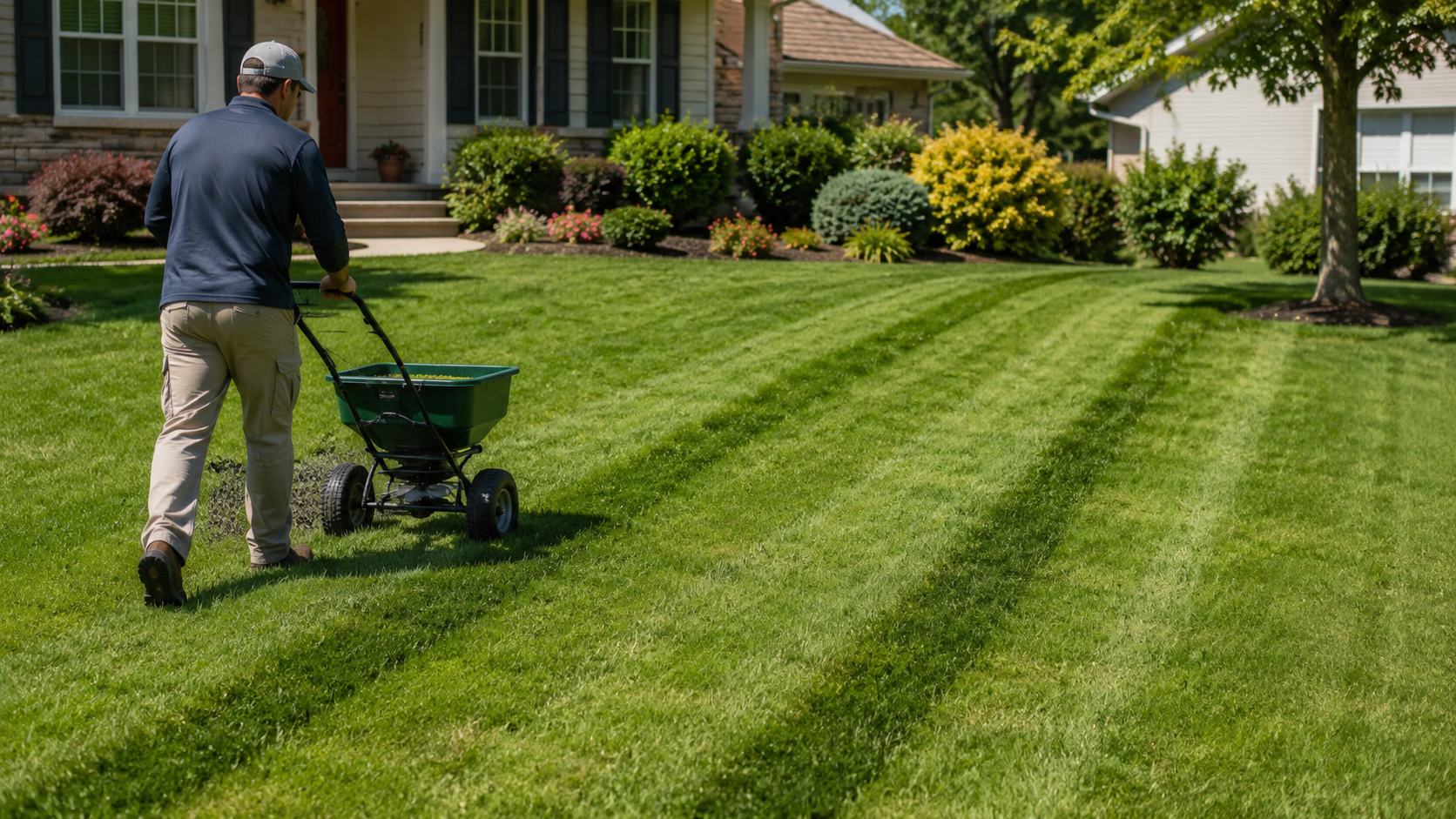



A push spreader seems like one of the easiest lawn tools to use. You fill it with fertilizer, adjust the setting, and walk across the yard. But many homeowners are surprised when the lawn starts sh
