





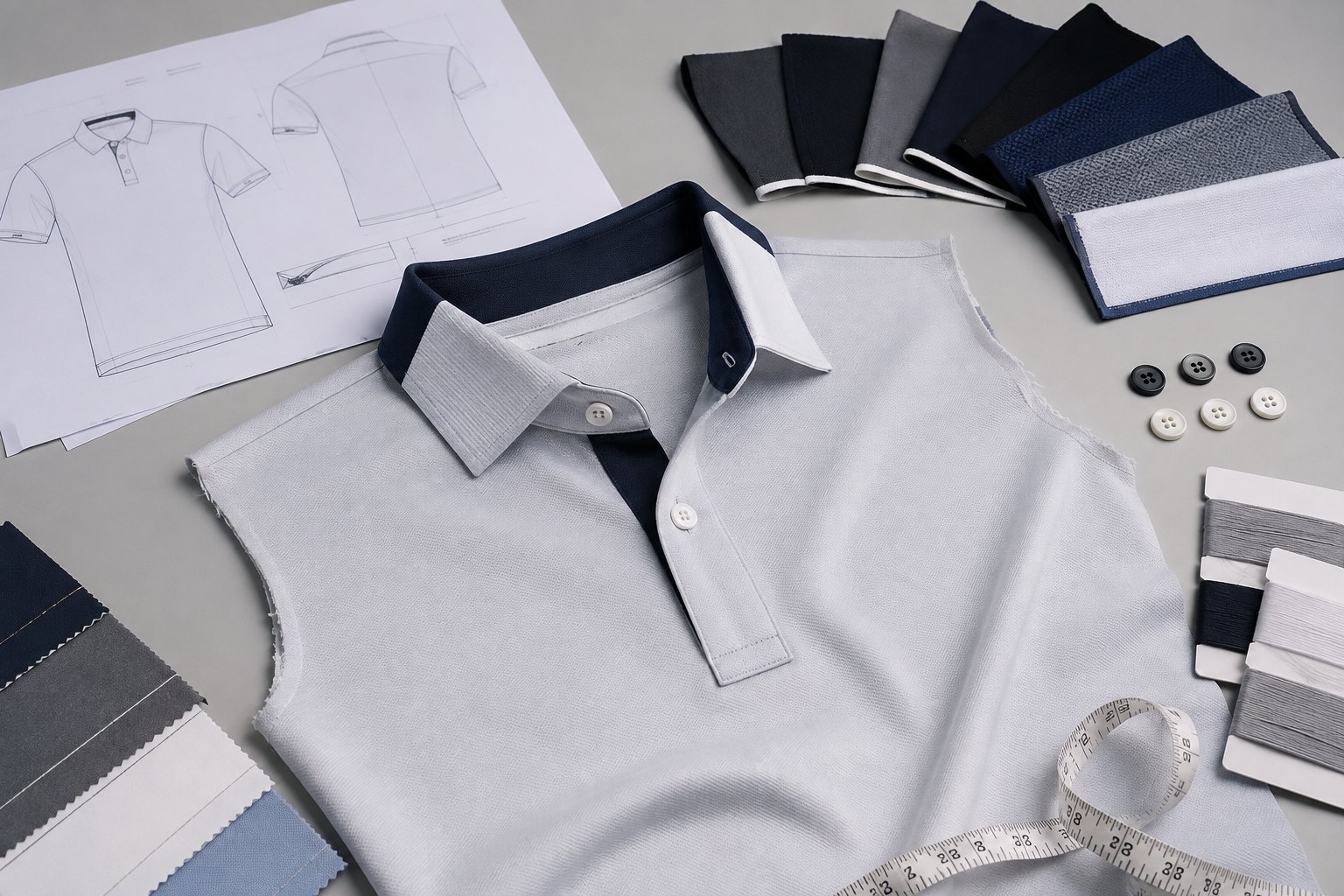
A private label polo is a small product system, not a blank shirt with a new label. Its collar, placket, fabric, fit, decoration, care instructions, and packaging must work together for a defined customer. Development becomes faster when the buyer converts brand language into measurable decisions before asking a factory to sample.
Start With a Brand and Customer Brief
Describe the intended wearer, price position, climate, sales channel, and occasions of use. A polished commuter polo and a lightweight training polo may share a silhouette but require different surface, stretch, opacity, and collar behavior.
Limit the first brief to decisions that affect the product. Reference images can show proportion and mood, but they should be supported by a measurement chart, color standard, artwork files, and an explanation of what must remain consistent across sizes.
Decide What the Fit Must Communicate
Choose whether the range should read as athletic, regular, or relaxed, then define that choice through chest ease, shoulder width, sleeve opening, body length, and hem shape. Do not rely on fit names alone because factories and markets interpret them differently.
Fit the sample on more than one body. Check seated comfort, reach, collar position, placket gaping, and whether the back length remains adequate during movement. Record every approved change against one sample version.
Engineer the Collar Placket and Body Together
Collar yarn, rib construction, reinforcement, and finished width influence both appearance and wash durability. The collar should be assessed with the chosen body fabric because weight and recovery affect how the two components settle together.
Specify placket length, number of buttons, button size, stitch construction, and interlining. Wash the development sample to reveal puckering, twisting, color movement, or a collar that no longer sits flat.
Build Branding Into the Garment System
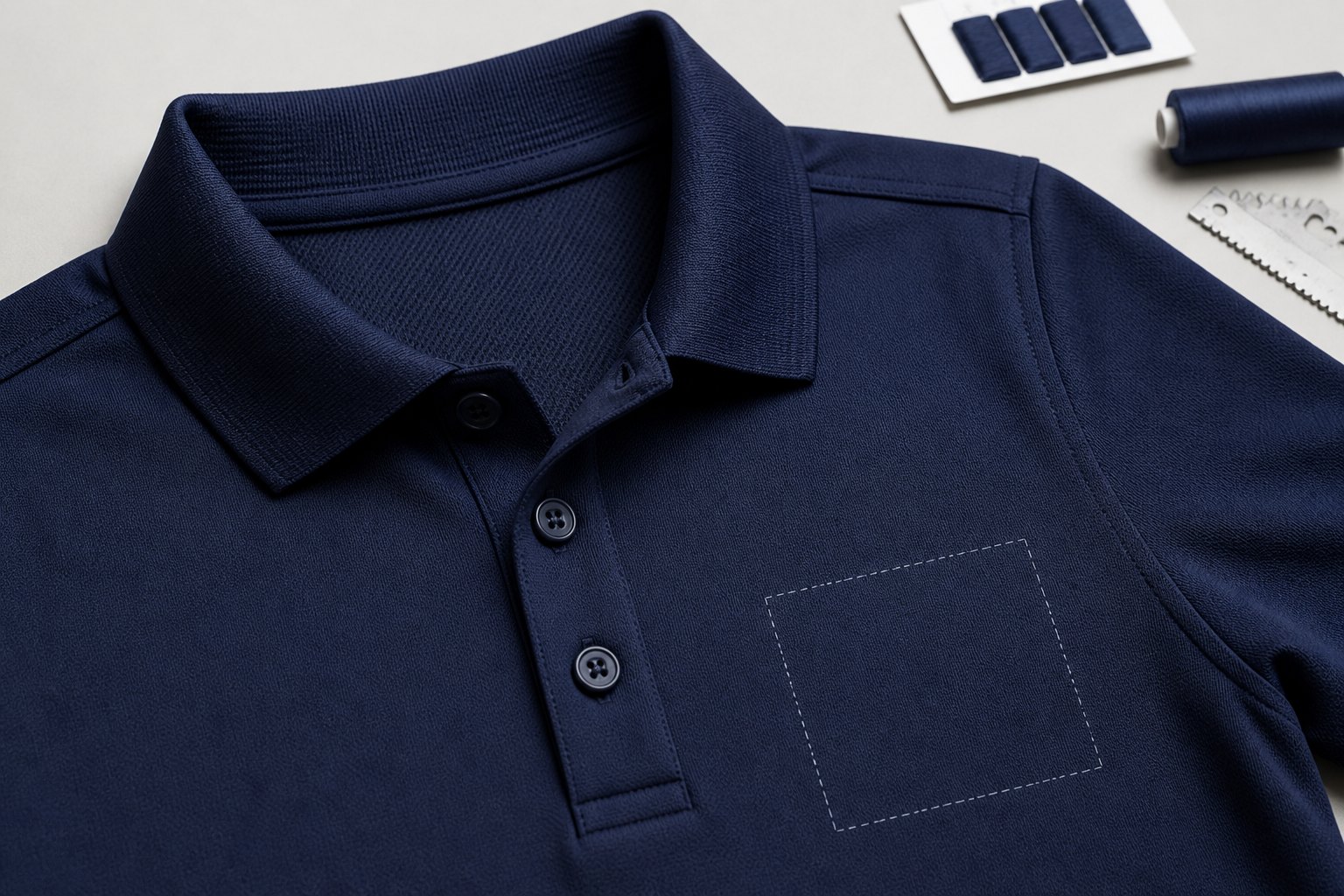
Map the main label, size mark, care label, origin information, hangtag, and packaging before bulk approval. Confirm exact wording, languages, dimensions, colors, and attachment positions so compliance and branding are reviewed at the same time.
Decoration also needs production limits. Embroidery density, patch thickness, heat-transfer temperature, and artwork size can change hand feel or distort lightweight fabric. Approve the real artwork on the real fabric.
Use Samples to Retire Risk in Stages
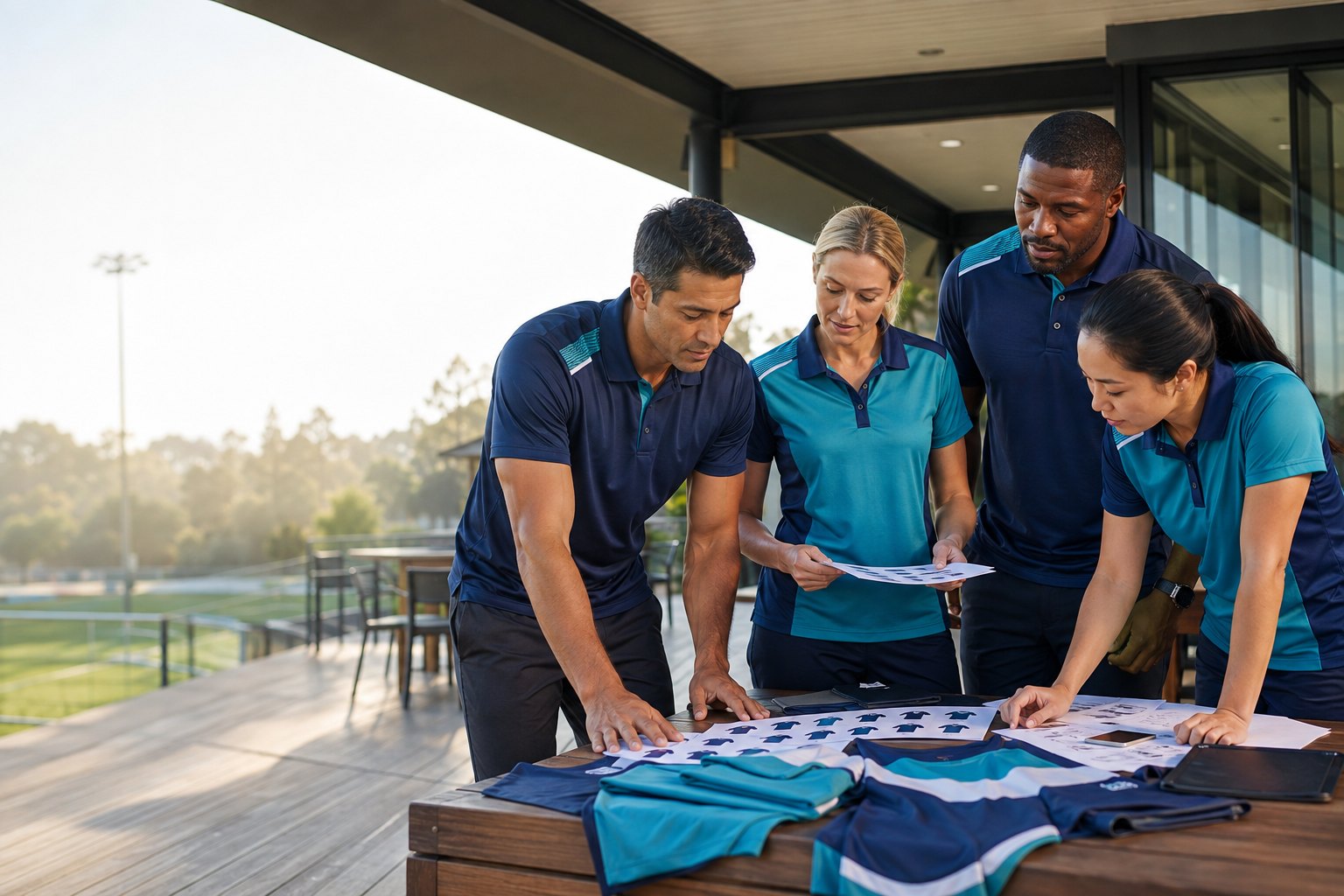
Use an early prototype to settle silhouette and construction, a branded sample to approve trims and artwork, and a pre-production sample to confirm the final combination. Each stage should have a dated comment sheet with measurements and photographs.
Avoid adding new ideas after approval. Late changes to fabric, label position, or decoration can invalidate earlier tests and create avoidable differences between the approved garment and production.
Create a Production File That Can Be Repeated
The final file should include the specification, graded measurements, bill of materials, color standards, artwork, placement dimensions, labels, care wording, packing method, approved sample reference, and agreed tolerances. Version control is essential when several people communicate with the supplier.
Use private label sports polo options as a category reference, and confirm current fabrics, samples, minimums, lead times, and commercial terms directly. AIKOO Apparel provides a broader view of available apparel development categories.
Explore private label sports polos
Learn more from AIKOO Apparel


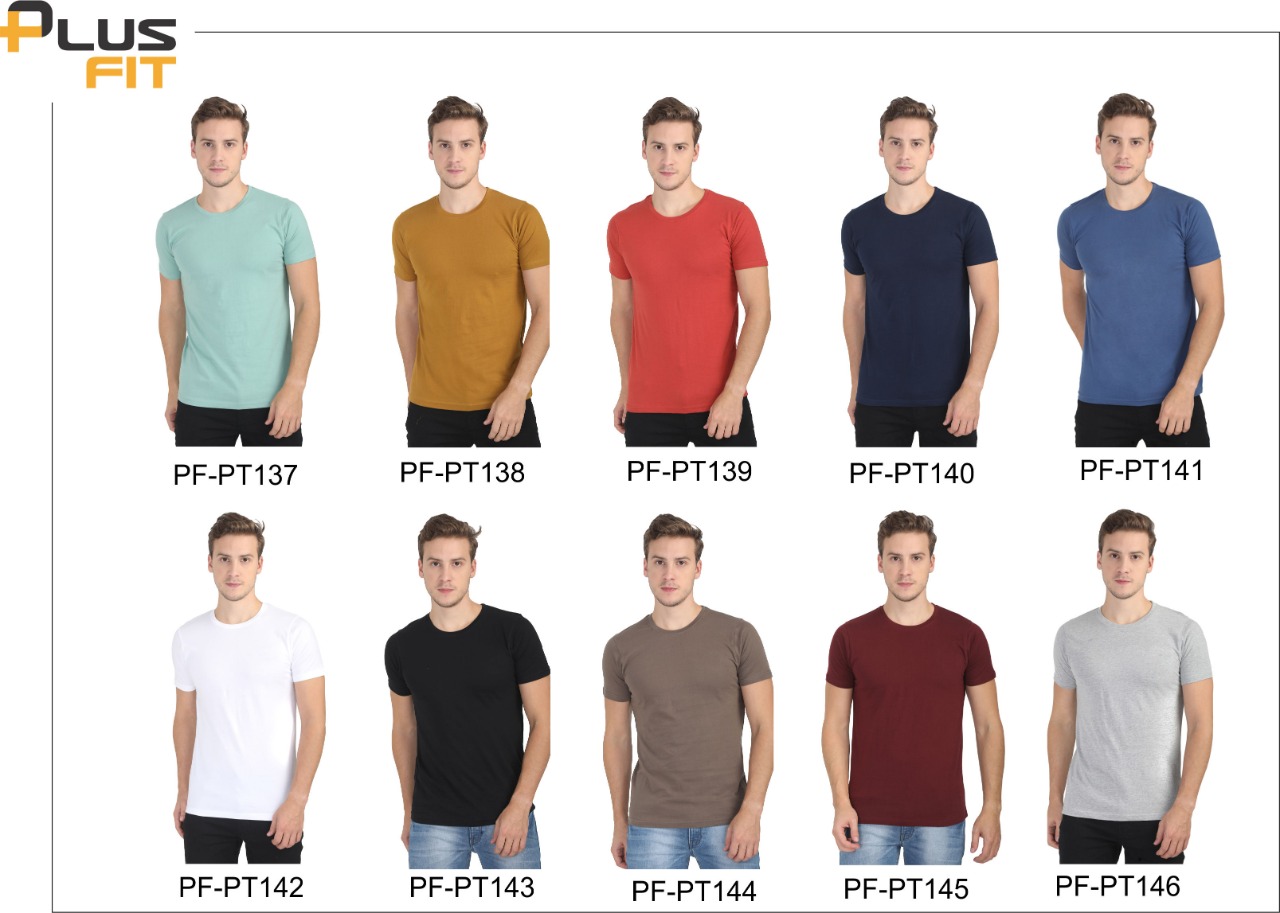
KR Creation - We are specialized in t shirts, polo t shirts, promotional t shirts, track pants, shorts, womens wear t shirts, tshirt top dress, we have more than 200 workers to produce bulk amount of production in every month.http://krcreation.in/products/index.phpCurrently we hold the entire domestic market.Our produts also meet the different requirements of our customer.
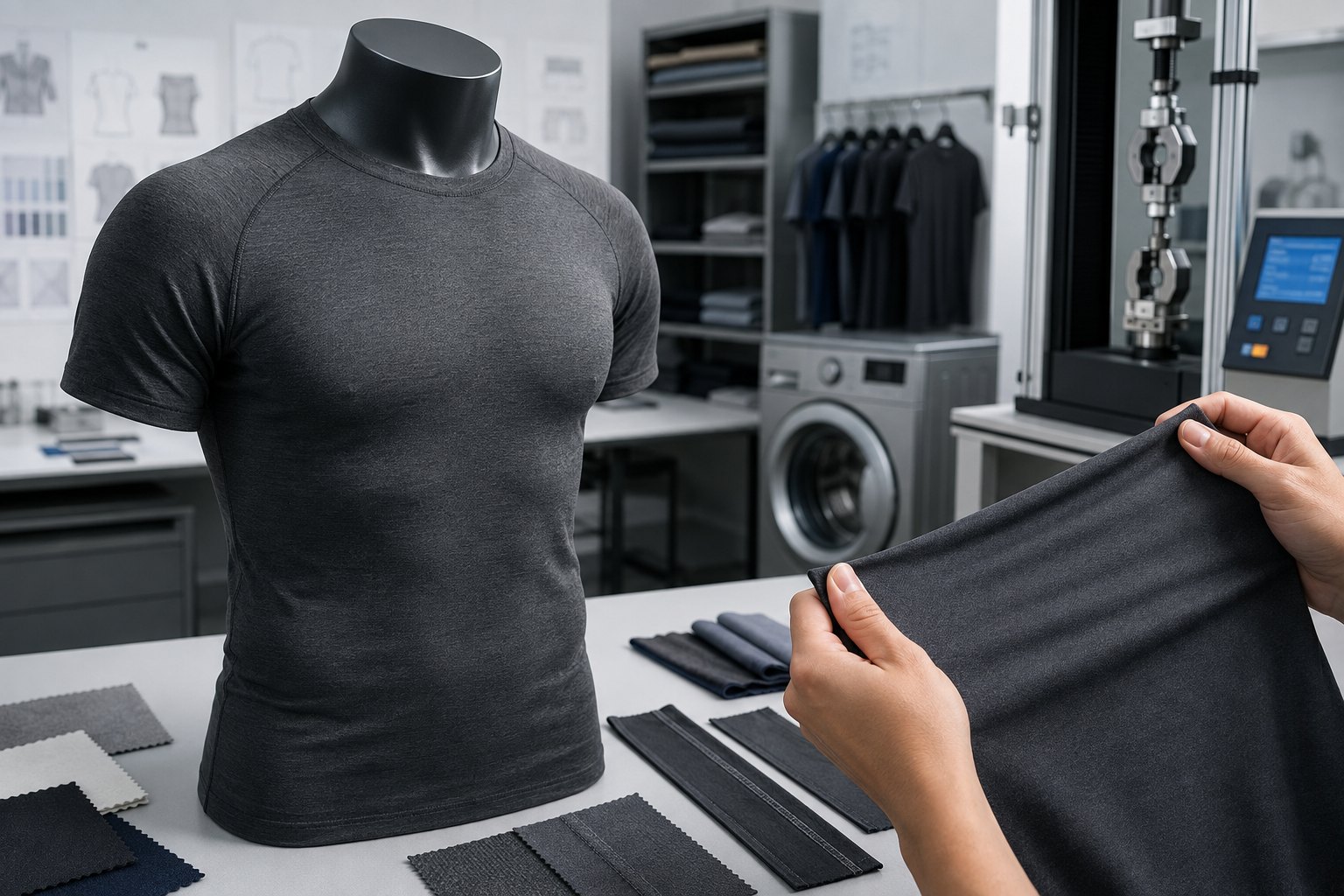
A private label sports T shirt is judged after sweat, stretch, washing, and repeated wear, not only on a clean sample table. Development should convert broad claims such as breathable or durable in