

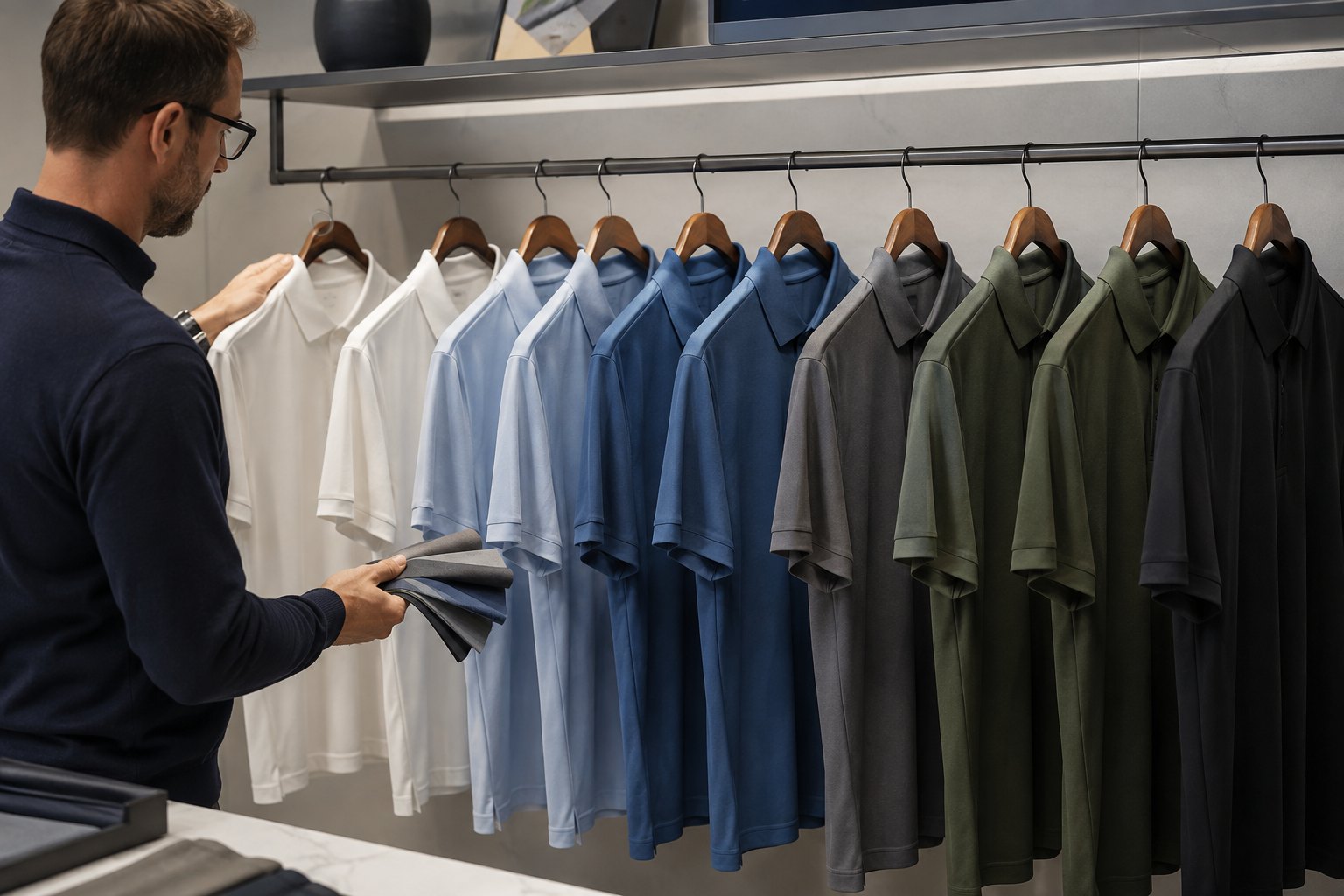
A retail polo can look simple while generating a complicated inventory problem. Every additional color, fit, trim, and size multiplies the number of units that must be forecast, photographed, stored, and replenished. A disciplined sourcing plan protects customer choice without creating a long tail of weak SKUs.
Define the Role of the Polo in the Range
Decide whether the polo is a core replenishment item, seasonal fashion piece, uniform solution, or performance layer. That role determines how much development time, color novelty, stock coverage, and reorder flexibility the product deserves.
Write a customer and channel brief before requesting quotations. Include target retail price, expected selling period, fabric performance, required certifications, decoration, packaging, and the markets where the product will be sold.
Build an Assortment With Controlled Complexity
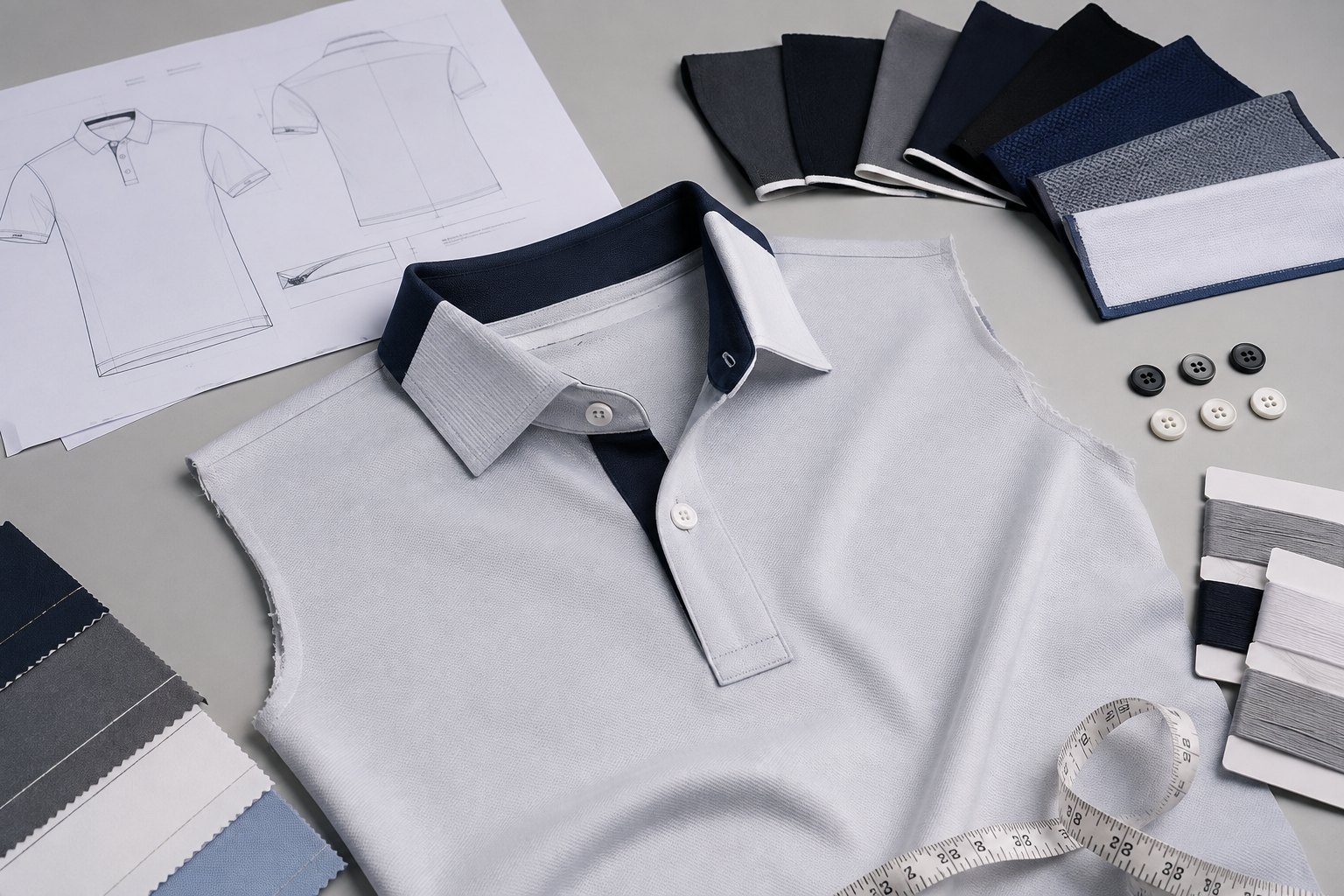
Start with a small number of commercially distinct choices. Differences should be visible or meaningful to the customer, not minor internal variations that complicate purchasing. Keep the same fit block, fabric family, and trim architecture where possible.
Use Color and Size Depth Deliberately
Allocate depth according to evidence from comparable products. Core colors normally need broader size coverage and stronger replenishment, while test colors can be bought more narrowly. Review whether the smallest and largest sizes need separate pack ratios.
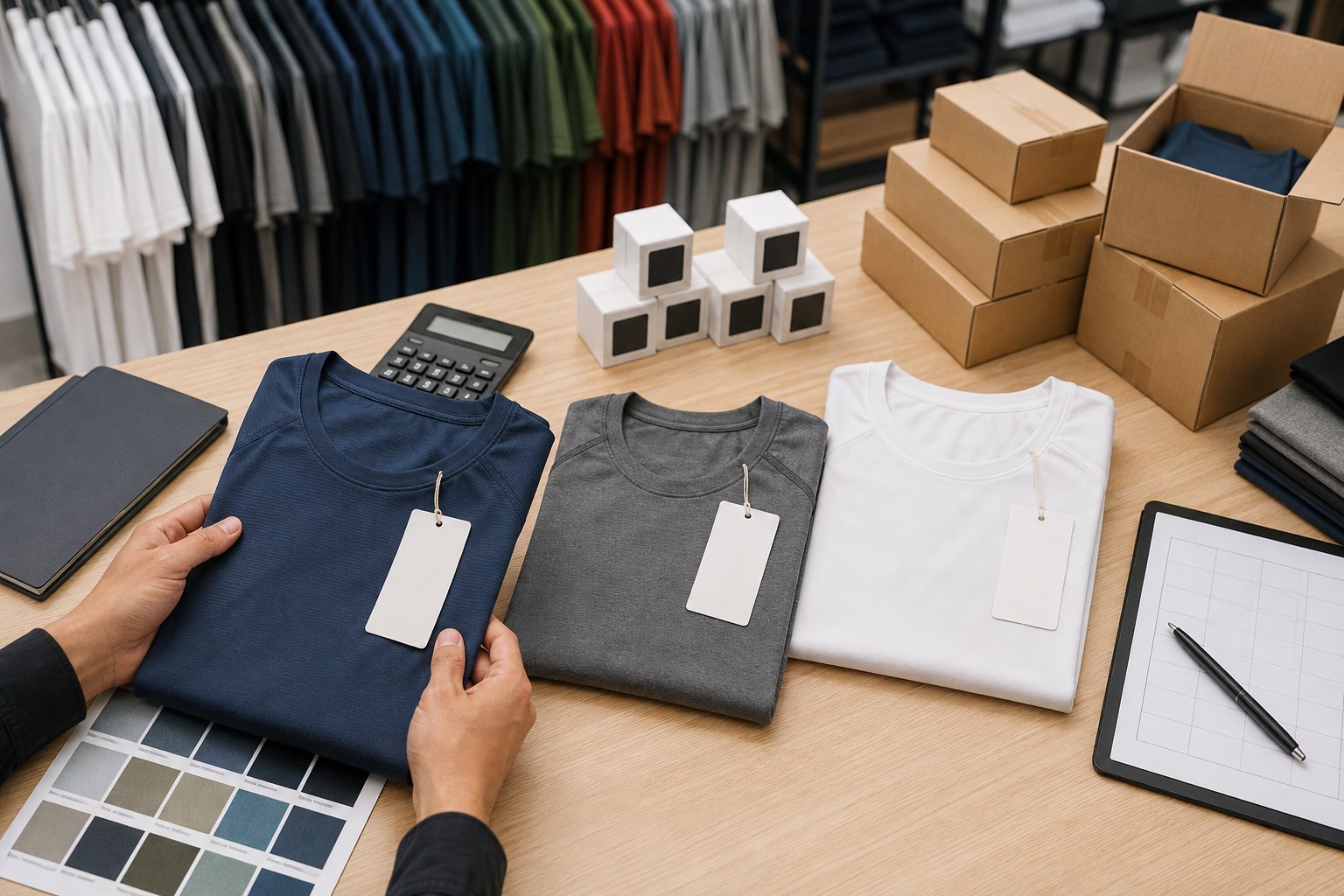
Track options in an SKU matrix that shows style, color, size, cost, retail price, forecast, and reorder status. The matrix reveals complexity before purchase orders are issued.
Compare Suppliers on Evidence Not Promises
Ask each supplier to quote the same technical brief. Compare fabric specification, sample quality, measurement control, testing support, minimum quantities, lead time assumptions, packing, payment terms, and communication discipline.
A low quotation is not useful if it excludes labels, testing, freight preparation, or the expected decoration. Request a cost breakdown and identify which inputs could change after sampling.
Model Margin Beyond the Factory Price
Calculate landed cost with packaging, inspection, testing, freight, duty, payment fees, and a realistic defect or markdown allowance. Then test margin under planned promotions rather than only at full retail.
Include the cost of complexity. Slow colors occupy warehouse space and often require deeper discounts, while fragmented reorders can carry higher unit and freight costs.
Protect Reorders Before the First Order
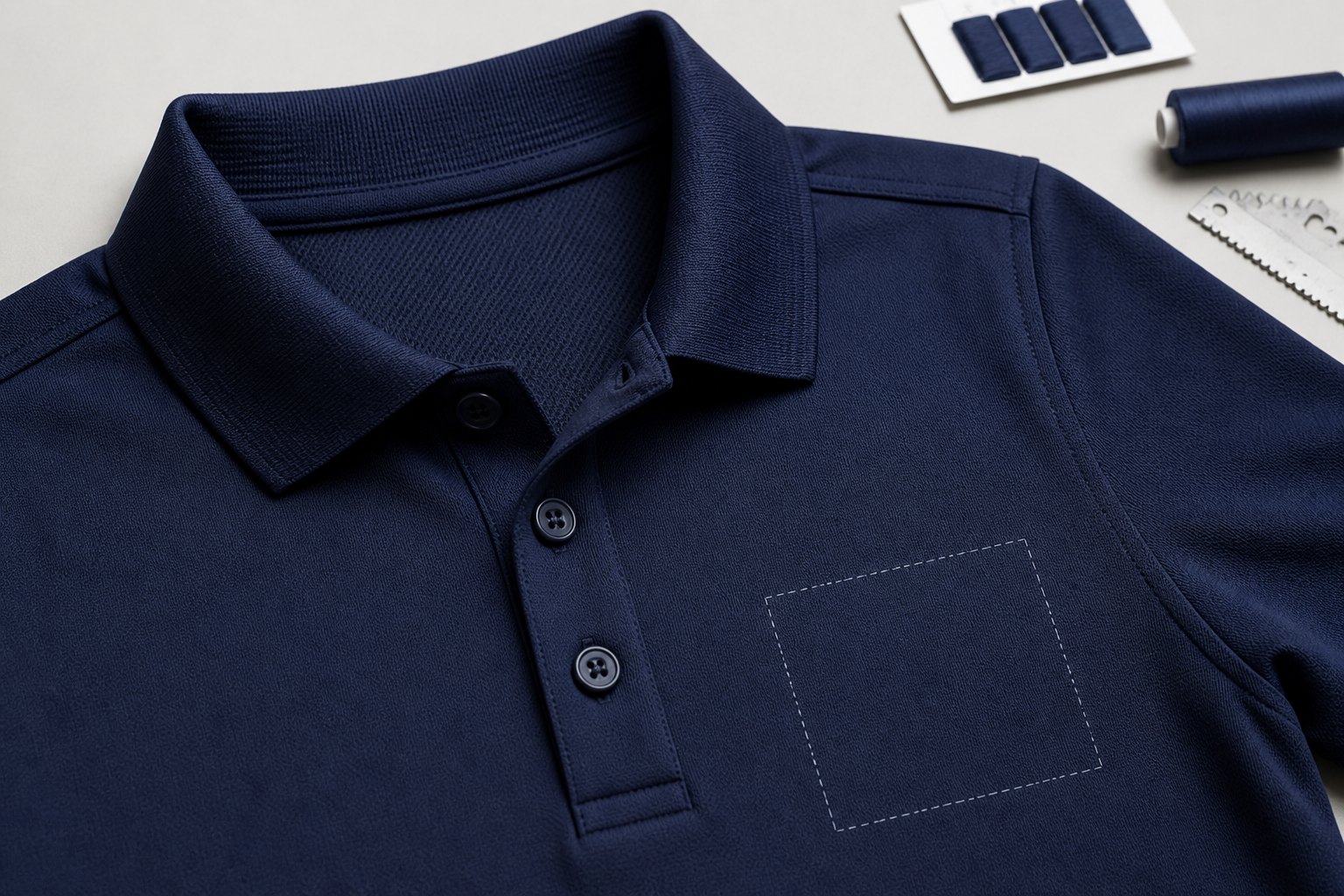
Confirm whether the fabric and trims are continuous, seasonal, or custom. Record color references and retain an approved sample. Ask how small reorders, replacement units, and discontinued components are handled.
Review sports polo shirts as a product-category reference, then verify current materials, order minimums, sampling, production timing, and replenishment terms with the supplier. AIKOO Apparel offers additional context on its apparel manufacturing scope.
Explore retail sports polo shirts
Learn more from AIKOO Apparel

Retail sourcing for sports T shirts is a balance between product performance, landed margin, and inventory exposure. Buyers create avoidable risk when they compare only unit prices or add too many