

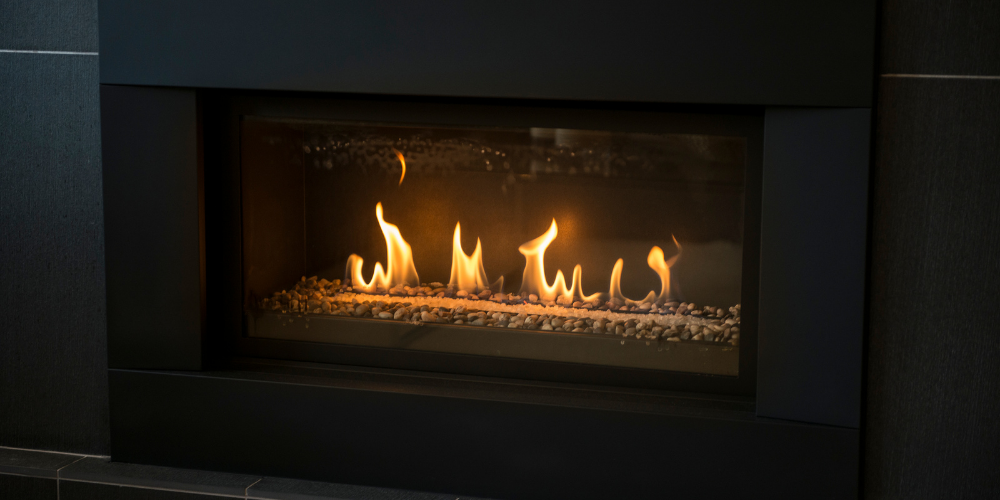
An indoor gas fireplace does more than warm a room. It gives people somewhere to sit around, and the right one looks at home in a new build or an old villa.
The tricky part is that the fire you like the look of often isn't the fire your room needs. Where it goes, how much heat it throws, what fuel it runs on, how it vents and what building work it takes all narrow your options long before looks come into it.
Decide Where the Fire Will Go
Sort the location out first, because it shapes almost every choice after it.
If you're replacing an old fire, you may already have a cavity or chimney you can use. Some gas fires slot straight into an existing opening, others need a fresh space built for them, and knowing which you're dealing with cuts the list down fast.
If you're starting from scratch, look at the whole room rather than just the wall. Where will the couch go? How do people walk through space? Will you see the fire from one spot or several? Answer those now and you won't spend the rest of the renovation rearranging a room around a fire in the wrong place.
Pick a Shape That Suits the Room
Gas fires come in several shapes, and your room layout will rule most of them out before you do.
A single-sided fire sits flat against a wall and anchors the room. A corner fire works where a flat wall would look awkward. In open-plan spaces, a peninsula or double-sided fire links two areas while keeping each one distinct.
Mode makes all four: single-sided, corner, three-sided peninsula, and a see-through double-sided that connects two rooms. Put the indoor gas fireplace shapes side by side, and you'll see how differently each one handles the same space.
Work Out How Much Heat You Need
A small lounge and a big open-plan area need very different amounts of heat, so check the kilowatt rating of each model against your room rather than hoping it copes. Mode's indoor gas fires run at 9.9kW, and you'll find plenty above and below that across the market.
How you'll use the fire matters just as much as the number. If it's doing most of the heating for the room, output decides everything. If you just want warmth on cold evenings and a flame to look at, it barely matters.
Check the Gas Type and Flue Early
Gas fires run on either natural gas or LPG, and every model vents differently. Both decide where you can put the fire and how much work goes on around it, so check them before you fall for a particular unit.
Venting has come a long way. Escea's Powered Direct Vent lets the flue run up, down or sideways, which puts fires in spots a standard vertical flue could never reach.
Older homes throw up more problems. You'll often need to alter an existing fireplace, chimney or cavity before a new fire fits. Some models make that retrofit straightforward, while others suit new builds and open layouts better.
One thing you can't get around: a licensed gasfitter has to do the gas work. Anyone without a current licence isn't legally allowed to touch it. Ask to see the licence before they start, and look the name up on the public register. You may also need building consent, depending on how much structural or flue work the job involves.
Match the Fire to the Room
A fire should look like it belongs, not like someone added it afterwards. Start with the size of the room, decide whether you want the fire to make a statement or sit quietly in the background, then choose the surround, hearth and shelving to match.
Modern gas fires give you more room to move than most people expect. Escea's DS Series has a zero rated clearance, so the wall behind stays cool enough for most materials and you skip the expensive fire-rated build. You can also hang a TV as close as 200mm above the firebox, which solves a problem plenty of living rooms have.
You don't have to stick to one style either. A clean-lined gas fire suits a modern home, and a more traditional installation looks right in a character property.
Plan the Install With the Rest of the Job
Fitting a gas fire takes more than sliding it into place. You might need to remove or alter a chimney. You'll often need work on the wall, the floor or the finishes around it. A full job can run to surrounds, mantels, tiling, plastering, painting, hearths and shelving.
Get all of that into the renovation schedule early instead of treating the fire as a last-minute add-on. It keeps the finish clean and the job on time.
That goes double for an older Wellington home. Existing structures rarely make things easy, so get someone to look at the space before work starts. Problems are far cheaper to fix on paper than halfway through a build.
Controls and Everyday Use
Controls are easy to ignore while you're choosing how the fire looks, and impossible to ignore once you're using it every night.
Several ranges now run off your phone. You can control a Mode fireplace from anywhere, and Escea's Smart Heat links the fire to your home network to do the same thing. If you adjust the temperature often, that's usually the difference between a fire you use and one you forget about.
Conclusion
Once you've worked through the practical side, your shortlist usually looks different from where it started. Compare fires on shape, heat output, fuel, venting and controls first, then look at how each one fits the room. Plenty of people find the fire they first liked isn't the right one once they see the full installation, and another model suits the space, the heat or the surroundings better.
Start with the room, pick a shape that works in it, confirm the technical side, and plan the install alongside the rest of the build. Do it in that order and the fire ends up part of the home rather than something you worked around.