Electric and utility organizations are increasingly modernizing their GIS environments to improve asset visibility, network analysis, operational efficiency, and data management. As utility infrastructure becomes more interconnected and geographically distributed, legacy GIS environments can become increasingly difficult to maintain and scale.
Migrating to a modern utility network environment can address many of these challenges, but the migration itself requires careful planning.
A utility network migration is not simply a matter of transferring existing GIS data into a new system. Organizations need to evaluate their existing data, business processes, integrations, network models, workflows, and future requirements before moving forward.
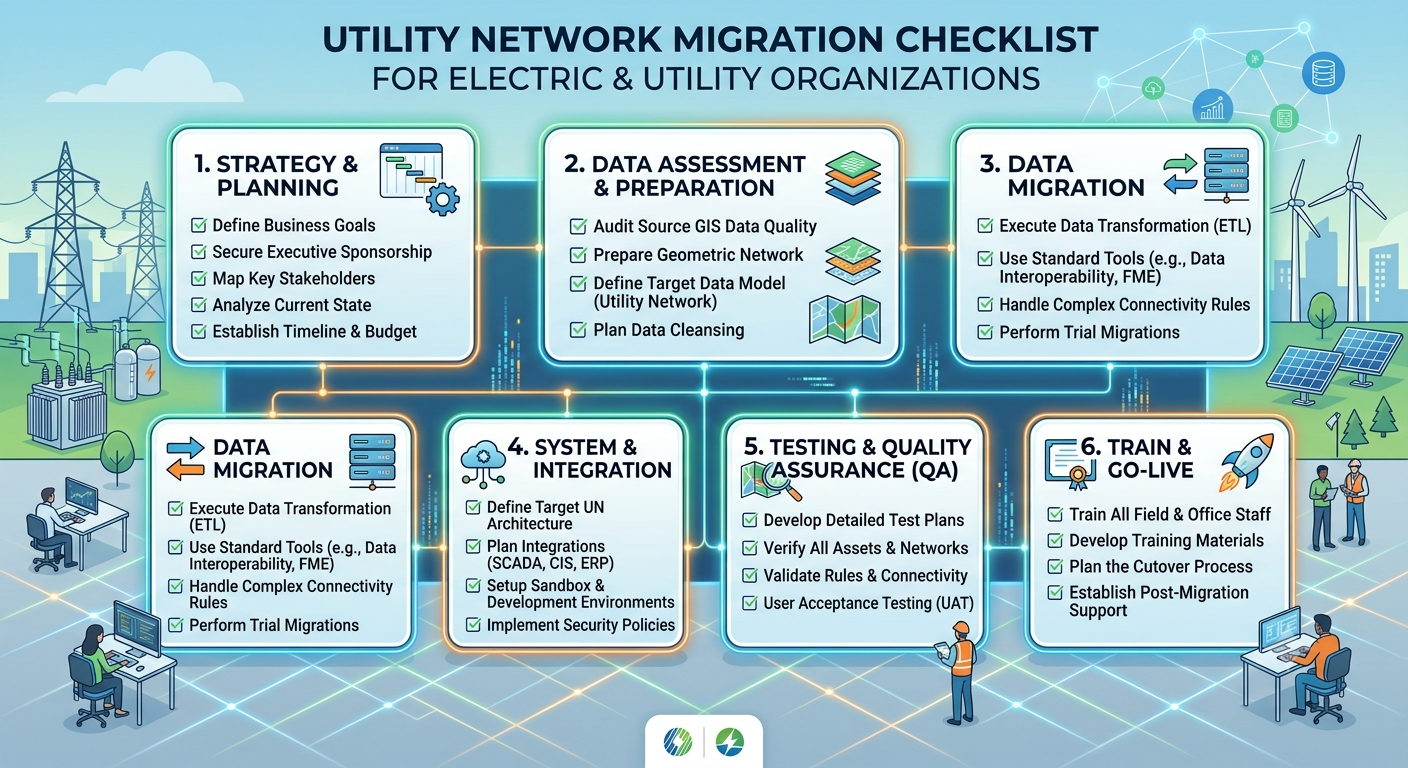
A structured checklist can help electric and utility organizations prepare for a smoother transition.
1. Define the Goals of the Migration
Before starting a migration project, clearly document what the organization wants to achieve.
Common objectives may include:
* Improving network and asset visibility
* Supporting advanced network tracing
* Improving GIS data quality
* Modernizing legacy infrastructure
* Streamlining field workflows
* Integrating GIS with enterprise applications
* Supporting better network planning and analysis
* Establishing a scalable foundation for future growth
Defining these objectives early helps ensure that migration decisions are connected to actual operational requirements rather than technology alone.
2. Assess the Existing GIS Environment
A detailed assessment of the current environment should be one of the first steps.
Review the existing GIS database, network datasets, feature classes, attributes, domains, relationships, editing workflows, custom applications, and integrations.
Electric utilities should also examine how network components such as substations, transformers, feeders, switches, poles, conductors, and service connections are currently represented.
For water, gas, and other utility organizations, the assessment may include mains, pipes, valves, meters, pressure-regulating equipment, service connections, and related infrastructure.
The objective is to understand what exists today before determining what needs to change.
3. Evaluate Data Quality and Readiness
Data quality is one of the most important factors in a successful migration.
Legacy datasets may contain duplicate records, missing attributes, inaccurate locations, outdated assets, inconsistent naming conventions, or connectivity problems.
Before migration, organizations should identify and address issues such as:
* Missing or invalid asset attributes
* Incorrect geometry
* Duplicate features
* Invalid network connectivity
* Inconsistent asset classifications
* Outdated infrastructure records
* Missing relationships
* Domain and subtype inconsistencies
Conducting data profiling and remediation before migration can reduce complications during implementation and improve the quality of the resulting network environment.
4. Map the Existing Data Model to the Target Model
A modern utility network may use a different data structure from a legacy GIS environment.
Therefore, organizations should create a clear mapping between existing datasets and the target utility network model.
This mapping should document:
* Source feature classes
* Target asset groups and asset types
* Attribute mappings
* Domains and coded values
* Relationships
* Network connectivity
* Associations
* Rules and constraints
A detailed mapping document can become an important reference throughout the migration, testing, and validation stages.
5. Review Network Connectivity and Relationships
Electric and utility networks are more than collections of spatial features. Their operational value comes from the relationships between assets.
During migration planning, organizations should review how assets connect and interact.
For an electric utility, this could involve tracing connectivity between generation or substations, feeders, switches, transformers, conductors, and customers.
For water or gas organizations, the review could include connections between mains, valves, service lines, meters, and other network components.
Understanding these relationships before migration helps organizations identify gaps that may need to be corrected in the source data.
6. Identify Existing Integrations
GIS rarely operates as an isolated system within a utility organization.
Before migration, create an inventory of applications and systems that exchange information with GIS.
These may include:
* Enterprise asset management systems
* Outage management systems
* Customer information systems
* Work management platforms
* Advanced distribution management systems
* Mobile field applications
* Data warehouses
* Reporting and analytics platforms
Document how each integration works, what data is exchanged, and whether changes to the GIS architecture could affect it.
This helps reduce the risk of unexpected integration problems after migration.
7. Plan the ArcGIS Utility Network Implementation
A successful ArcGIS utility network implementation requires more than installing and configuring the platform.
Organizations should define the target architecture, network model, user roles, workflows, validation processes, editing requirements, integrations, and governance model.
The implementation plan should also establish milestones for development, testing, pilot migration, user acceptance, and production deployment.
Working with experienced utility network solutions providers can help organizations address technical and operational requirements throughout the modernization process.
8. Establish a Migration and Testing Strategy
Avoid treating the production migration as the first real test of the new environment.
A phased approach can provide an opportunity to identify problems earlier.
Organizations can consider:
Development environment:
Configure and test the target network model.
Pilot migration:
Migrate a representative portion of the network and evaluate results.
User acceptance testing:
Allow GIS, engineering, operations, and field users to test critical workflows.
Production migration:
Execute the final migration after issues identified during testing have been resolved.
Testing should cover both data and business processes.
9. Validate the Migrated Network
After migration, organizations should validate that the target environment accurately represents the source network and satisfies business requirements.
Validation can include:
* Asset counts
* Attribute comparisons
* Spatial accuracy
* Network connectivity
* Associations
* Domains
* Network rules
* Tracing
* Editing workflows
* Integration functionality
* Application performance
For electric utilities, validation may include representative feeder and switching scenarios. Other utility organizations can create equivalent scenarios based on their operational workflows.
10. Prepare Users and Documentation
Technology migration is also a change-management exercise.
GIS administrators, engineers, operations teams, field personnel, and other users may interact with the new environment differently from the legacy system.
Prepare appropriate documentation and training covering:
* New workflows
* Editing procedures
* Network tracing
* Data validation
* Field updates
* User roles
* Troubleshooting
* Governance procedures
Early user involvement can also help identify workflow gaps before production deployment.
11. Establish Governance and Ongoing Data Management
Migration should not be considered complete when the new system goes live.
Organizations need processes for maintaining data quality and managing future network changes.
Governance should define:
* Data ownership
* Editing responsibilities
* Quality-control procedures
* Version and release management
* Change management
* Validation standards
* Security and access
* Backup and recovery
* Performance monitoring
A well-defined governance framework helps maintain the accuracy of the utility network over time.
12. Plan for Future Scalability
Finally, consider where the organization expects its GIS and utility network environment to be in the next several years.
The target architecture should account for potential growth in:
* Network size
* Users
* Field devices
* Data volume
* Integrations
* Analytics requirements
* Automation
* Cloud adoption
Thinking about future requirements during migration can help prevent the organization from creating another technology bottleneck a few years later.
Utility Network Migration Checklist
Before moving forward, electric and utility organizations can use this quick checklist:
* Define migration objectives
* Assess the existing GIS environment
* Profile and remediate source data
* Map legacy data to the target model
* Review network connectivity and relationships
* Inventory enterprise integrations
* Define the target architecture
* Plan ArcGIS utility network implementation
* Conduct a pilot migration
*Test critical workflows
* Validate migrated data and network behavior
* Train users
* Establish governance
* Plan ongoing support and scalability
Conclusion
Utility network migration can provide electric and utility organizations with a foundation for more connected asset management, improved network visibility, and modern GIS workflows. However, the quality of the migration depends heavily on preparation.
By assessing existing data, documenting network relationships, planning integrations, testing the target environment, validating migrated information, and preparing users, organizations can approach modernization with greater clarity.
A checklist-driven approach also makes it easier to identify potential issues before they affect production operations. Whether an organization is modernizing an electric distribution network, water infrastructure, gas assets, or another utility environment, careful planning is an essential part of building a sustainable modern GIS foundation.


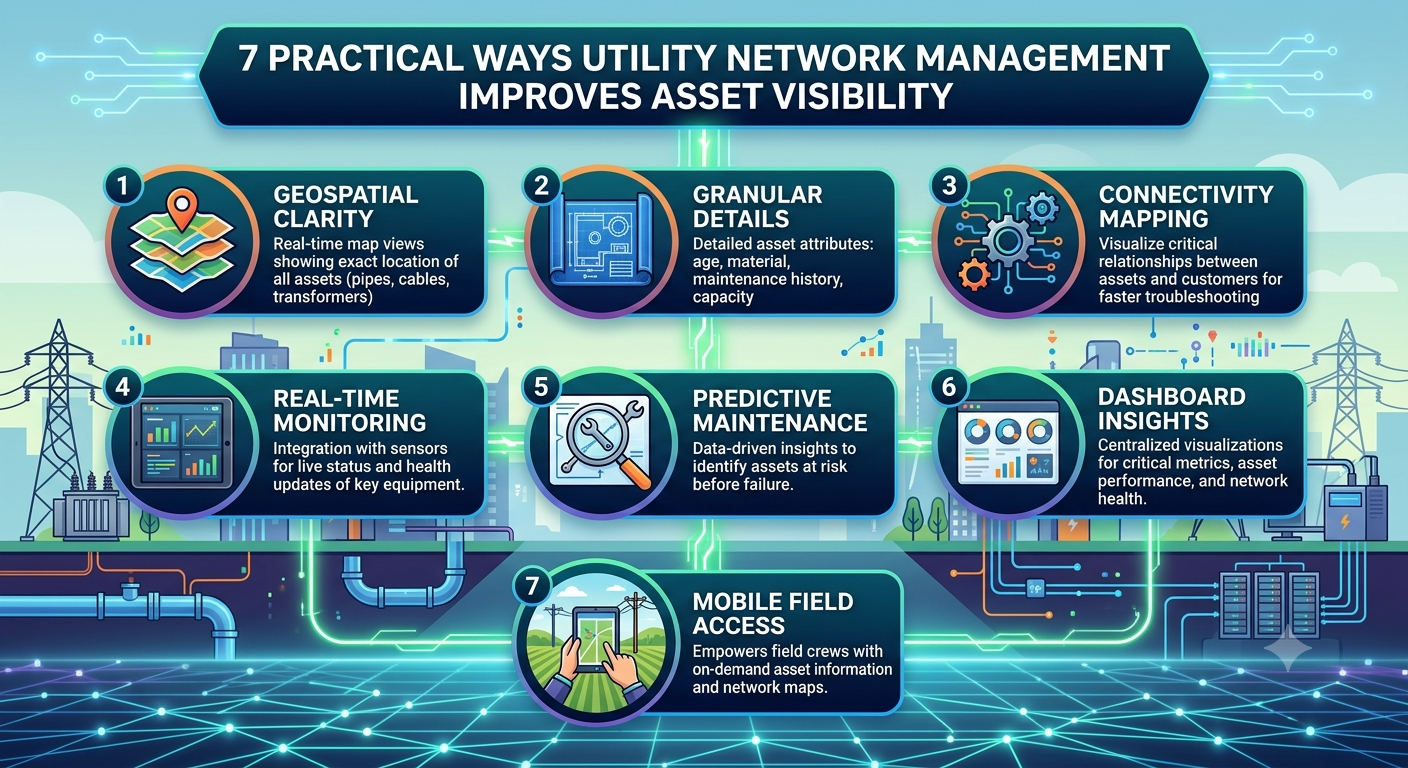
Utility companies manage extensive networks of assets spread across large geographic areas. From power lines and substations to water pipelines, valves, and gas infrastructure, knowing where assets

AgilNetworks is the Turnkey Network Construction and Management Company in the Caribbean Region.
We offer telecommunications services like network audits, gis mapping, and data integrity in the Caribbean Region.
For more info visit: https://www.agilnetworks.com/construction/