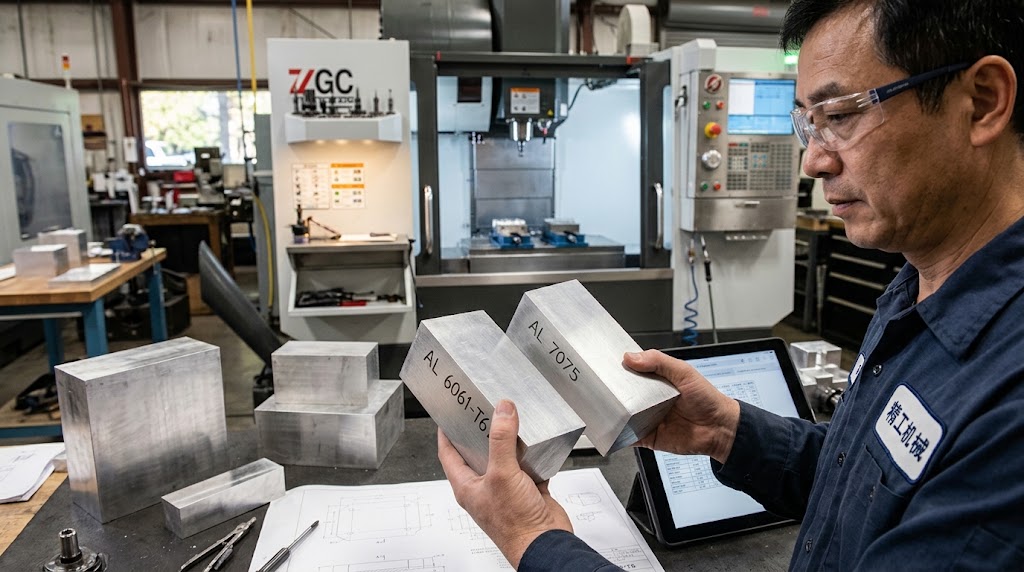
For most parts, 6061-T6 aluminum gives the best overall balance of machinability, strength, and cost in aluminum CNC machining. 7075-T6 is the better choice for high-strength, aerospace-grade components; 2024-T3 performs best in fatigue-critical structural parts; and 5052-H32 is preferred where corrosion resistance and sheet-metal formability matter more than raw strength. Selecting the wrong alloy before aluminum CNC machining begins is one of the most common causes of tool wear, dimensional drift, and rejected parts.
Quick Answer: Which Aluminum Alloy Should You Choose?
Why Alloy Selection Matters in Aluminum CNC Machining
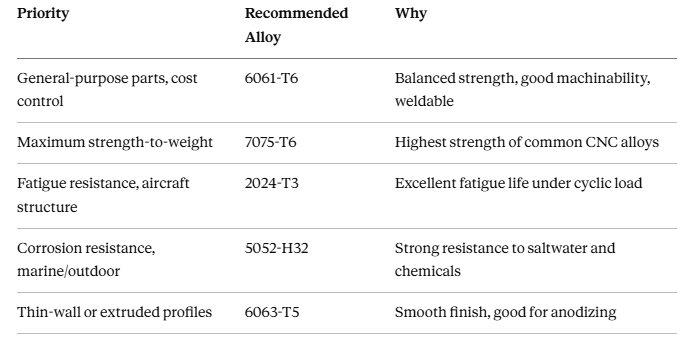
Based on our processing experience, alloy choice affects three things before a single cut is made: tool life, achievable tolerance, and post-machining finishing cost.
Machinability Differences Between Alloys
- Alloys with higher silicon or copper content (e.g., 2024, 7075) tend to produce shorter, more brittle chips, which is actually favorable for chip evacuation.
- Softer alloys like pure 1100 or 3003 aluminum can gum up on cutting tools, requiring sharper tooling and higher spindle speeds.
- 6061 sits in the middle: it machines cleanly at moderate speeds without specialized tooling.
Thermal Expansion and Tolerance Control
- Aluminum's thermal expansion coefficient is roughly 2–3x that of steel, meaning heat generated during cutting can cause measurable dimensional shift in tight-tolerance parts.
- Based on our processing experience, parts held to tolerances under ±0.02 mm benefit from alloys with lower thermal sensitivity (6061, 6063) combined with controlled coolant flow.
Tool Wear Patterns by Alloy
- Higher-strength alloys (7075, 2024) accelerate flank wear on standard carbide tooling.
- Softer, more ductile alloys (5052, 6063) are gentler on tooling but more prone to built-up edge if speeds are too low.
Comparing the Most Common Aluminum Alloys for CNC Machining
6061-T6
- Tensile strength: approximately 310 MPa
- Machinability rating: good
- Corrosion resistance: good
- Typical applications: enclosures, brackets, fixtures, prototypes
7075-T6
- Tensile strength: approximately 570 MPa
- Machinability rating: fair to good
- Corrosion resistance: moderate (often requires coating)
- Typical applications: aerospace fittings, high-load structural parts, tooling
2024-T3
- Tensile strength: approximately 485 MPa
- Machinability rating: fair
- Corrosion resistance: moderate (susceptible to pitting without cladding)
- Typical applications: aircraft skins, fatigue-loaded structural components
5052-H32
- Tensile strength: approximately 230 MPa
- Machinability rating: fair (gummy at low speeds)
- Corrosion resistance: excellent
- Typical applications: marine hardware, fuel tanks, sheet-metal enclosures
6063-T5
- Tensile strength: approximately 185 MPa
- Machinability rating: excellent
- Corrosion resistance: good
- Typical applications: architectural profiles, thin-wall extrusions, decorative parts
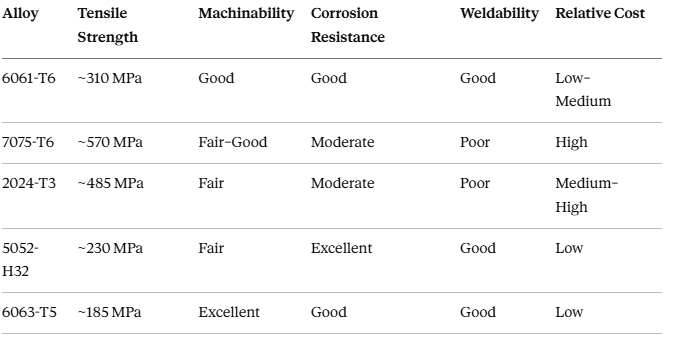
Full Comparison Table
Practical Machining Parameters by Alloy Family
Based on our processing experience running production batches across these five alloys:
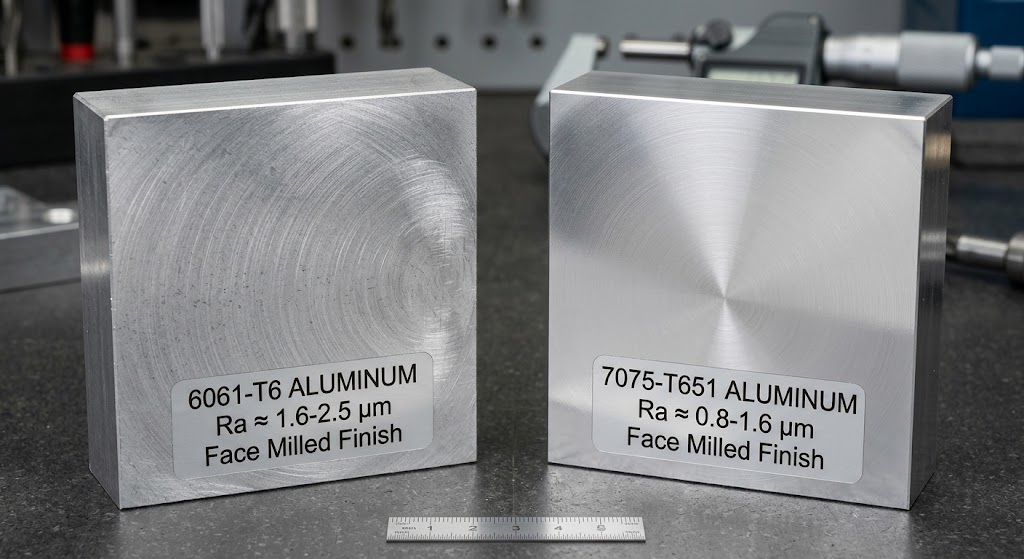
- 6061-T6: cutting speeds of 300–600 m/min with carbide tooling produce a consistent surface finish without excessive burr formation.
- 7075-T6: lower feed rates and sharper tool geometry reduce work-hardening effects at the cut edge.
- 2024-T3: requires more frequent tool inspection, since built-up edge appears faster than with 6061.
- 5052-H32: benefits from higher spindle speeds to avoid material sticking to the flute.
- 6063-T5: tolerant of a wide speed range, making it forgiving for less rigid setups.
Common Machining Defects Linked to Alloy Choice
- Burr formation on soft alloys (5052, 6063) at low cutting speeds
- Micro-cracking on 7075 when feed rates are too aggressive
- Surface smearing on 2024 without adequate coolant
- Chatter marks on thin-wall 6061 parts without proper fixturing
How to Choose Based on Your Application
- Need the lowest total cost for a general bracket or enclosure? → 6061-T6
- Need maximum strength for a load-bearing aerospace part? → 7075-T6
- Need fatigue resistance under repeated cyclic stress? → 2024-T3
- Need long-term outdoor or marine exposure resistance? → 5052-H32
- Need a smooth anodized finish on a thin-wall or decorative part? → 6063-T5
See our full guide on CNC machining tolerances and surface finish standards
Common Mistakes When Selecting Aluminum for CNC Machining
- Choosing 7075 by default for "strength" without checking whether corrosion protection is actually required
- Ignoring weldability requirements early in design, then discovering 7075/2024 are poor candidates for welded assemblies
- Using 5052 for tight-tolerance precision parts, where its softness makes chatter and tolerance drift more likely
- Overlooking heat-treatment condition (T3 vs T6 vs H32) when comparing published strength values, since the temper — not just the alloy number — drives real-world performance
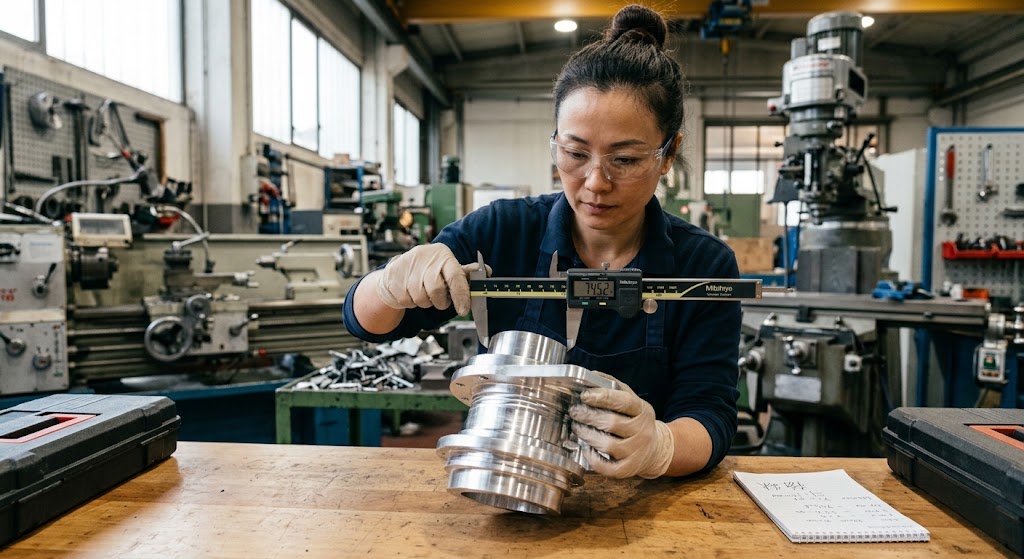
Learn how we verify dimensional accuracy on every CNC batch
If you're unsure which alloy fits your part's strength, tolerance, or environmental requirements, share your drawing and application details with our engineering team for a material recommendation and a project quote.
FAQ — Aluminum CNC Machining Alloy Questions
Q1: What is the easiest aluminum alloy to CNC machine?
A: 6063-T5 and 6061-T6 are generally the easiest to machine, offering predictable chip formation and low tool wear across a wide range of cutting speeds.
Q2: Is 6061 or 7075 better for CNC machining?
A: 6061 machines more easily and costs less; 7075 offers significantly higher strength but machines slightly harder and is less weldable. The choice depends on whether the part is strength-critical.
Q3: Can 2024 aluminum be anodized?
A: Yes, but 2024's copper content can cause uneven or duller anodized finishes compared to 6061 or 6063, so cosmetic anodizing is less common on this alloy.
Q4: What tolerance can CNC aluminum machining achieve?
A: Standard aluminum CNC machining commonly holds ISO2768-m, with tighter tolerances down to ±0.01–0.02 mm achievable on stable alloys like 6061 under controlled thermal conditions.
Q5: Which aluminum alloy is best for corrosion resistance without coating?
A: 5052-H32 offers the strongest natural corrosion resistance among common CNC alloys, particularly in marine or humid environments, without requiring additional surface treatment.