Engineers sourcing conductive parts often face a frustrating trade-off: suppliers who understand electrical performance rarely understand tight mechanical tolerances, and vice versa — which is exactly why reliable copper cnc machining has become the deciding factor between a part that merely fits and one that performs flawlessly for years.
Why Copper Remains the Gold Standard for Conductivity
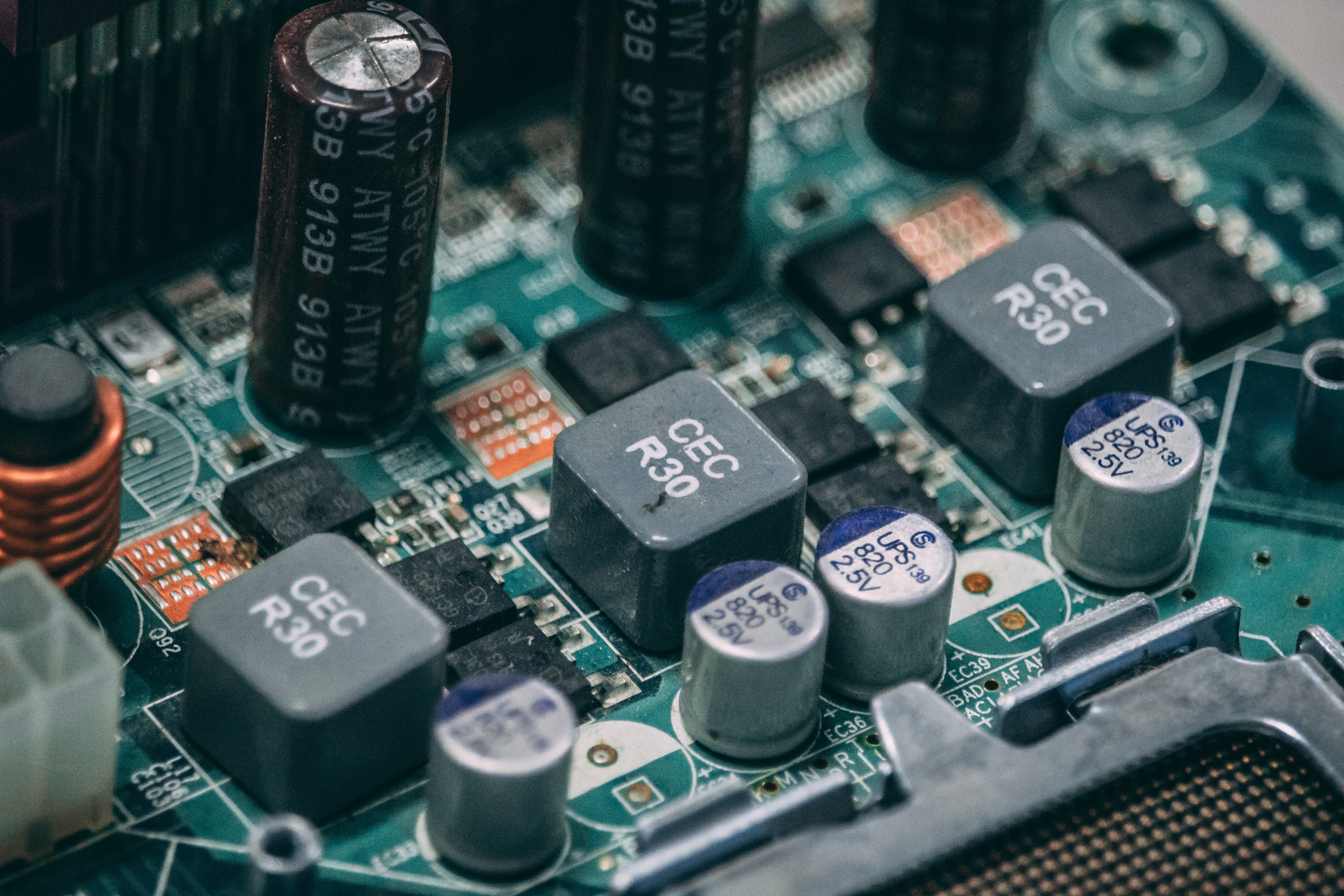
Despite decades of advances in alternative alloys and composite conductors, copper has never been dethroned as the material of choice for high-performance electrical components. Its combination of excellent electrical conductivity, strong thermal dissipation, and workable ductility makes it uniquely suited to busbars, terminals, connectors, and heat-transfer components. However, raw conductivity means little if the finished part cannot meet dimensional and surface-finish requirements. This is where copper cnc machining bridges the gap between material science and manufacturing precision. Unlike casting or stamping, computer-controlled subtractive processes allow engineers to hold tolerances measured in microns while preserving the grain structure that gives copper its conductive advantage. For applications like power distribution units, motor windings, and RF shielding, even minor surface irregularities can create resistance hotspots or signal loss. A well-executed copper cnc machining process eliminates these inconsistencies, producing parts that behave predictably under load, temperature cycling, and long-term use. As electrical systems trend toward higher power densities and smaller footprints, the margin for error shrinks accordingly, making machining precision not a luxury but a baseline requirement for serious electrical hardware.
Tolerances, Tooling, and the Machining Challenge
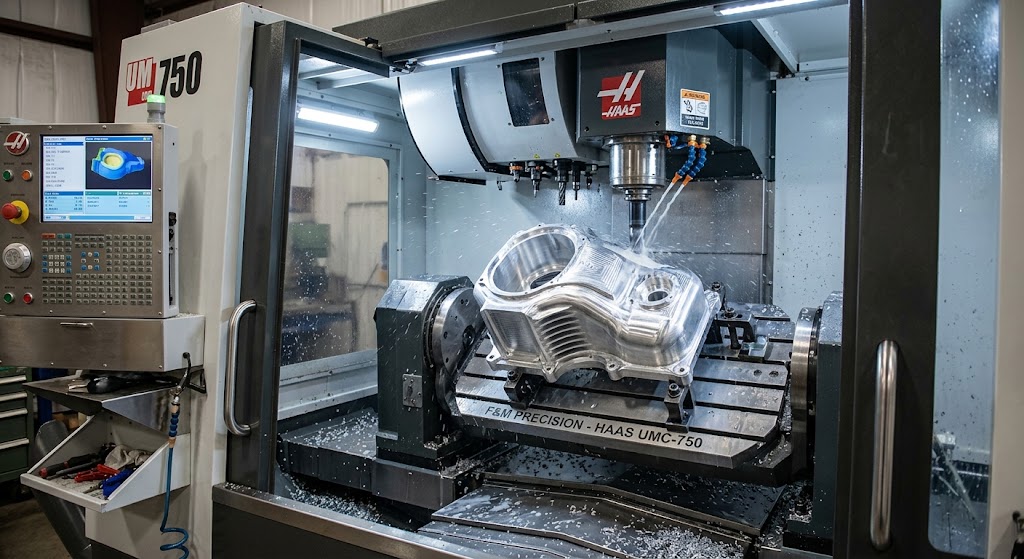
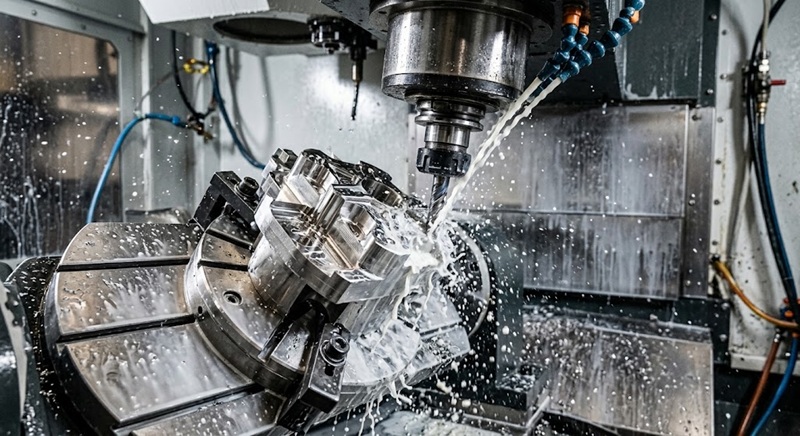
Copper's very properties that make it electrically desirable — softness, ductility, and thermal conductivity — also make it notoriously difficult to machine cleanly. Unlike harder metals, copper tends to gum up cutting tools, generate built-up edge, and deform under standard machining pressure if not handled with the right feeds, speeds, and tool geometry. Successful copper cnc machining requires specialized tooling strategies: sharp-edged carbide or diamond-coated tools, optimized coolant flow to manage heat buildup, and carefully calculated cutting parameters that prevent work-hardening. Shops without copper-specific experience often struggle with burr formation, dimensional drift, and inconsistent surface finish — all of which directly degrade electrical performance in the final assembly. Precision copper cnc machining operations account for these challenges by using multi-axis CNC platforms capable of maintaining consistent chip load throughout complex geometries, whether producing simple flat busbars or intricate multi-cavity connector housings. The result is a part that not only meets blueprint dimensions but also retains the surface integrity necessary for low-resistance electrical contact points. For manufacturers producing high volumes of electrical hardware, this level of process control also translates into repeatability — critical when a single out-of-spec batch can compromise an entire product line's safety certification.
Applications Across Power and Connectivity Systems
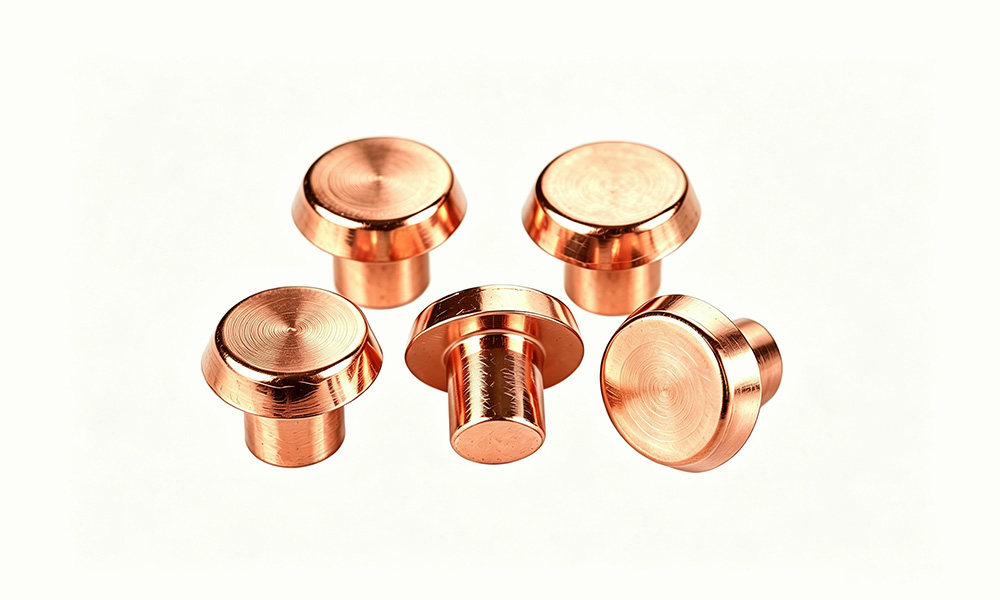
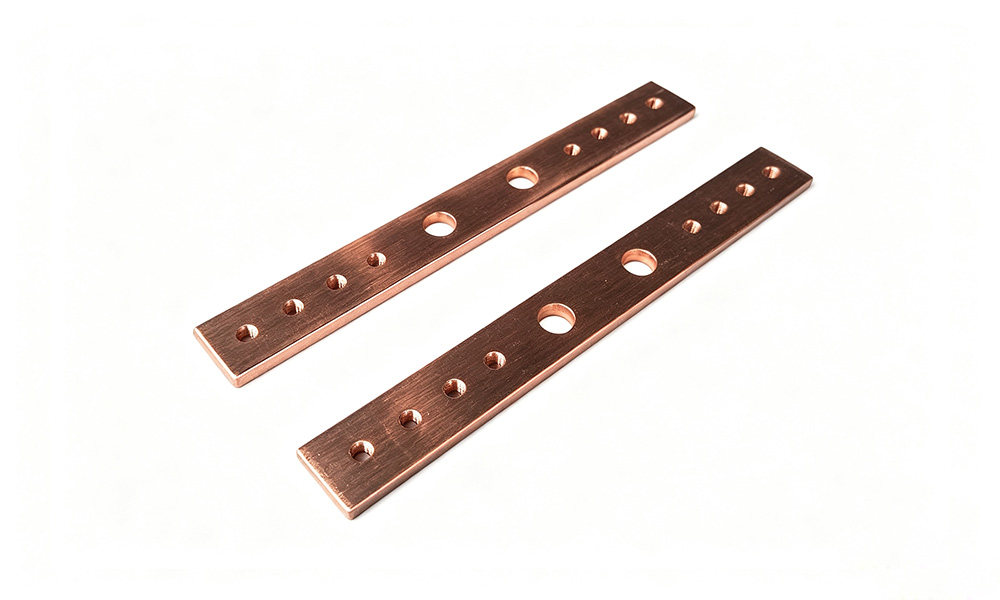
The reach of machined copper components extends across nearly every sector that depends on electrical or thermal transfer. Busbars used in electric vehicle battery packs, server power distribution, and industrial switchgear all rely on copper cnc machining to achieve the exact bend angles, hole placements, and edge finishes required for safe, efficient current flow. Connector pins and sockets in aerospace and telecommunications equipment demand similarly tight tolerances, since even small dimensional deviations can cause intermittent connections or signal degradation. Heat sinks and thermal interface components also benefit heavily from machined copper, as CNC processes allow for complex fin geometries that maximize surface area for heat dissipation — something far harder to achieve consistently with casting. In renewable energy systems, particularly solar inverters and wind turbine generators, copper cnc machining supports the production of custom terminal blocks and grounding components that must endure years of outdoor exposure without losing conductive performance. Across all these applications, the common thread is that copper's electrical advantages only translate into real-world reliability when paired with a machining process capable of controlling every dimensional variable that affects current flow and heat transfer.
Choosing a Manufacturing Partner You Can Trust
Selecting the right partner for copper cnc machining is less about finding the lowest price per part and more about finding a team that understands the material's quirks well enough to avoid costly rework or field failures. Look for a manufacturer with documented process controls for copper-specific tooling, in-house quality inspection using calibrated metrology equipment, and a track record of producing electrical components at the tolerances your application demands. Ask about their experience with your specific copper alloy — pure electrolytic copper, beryllium copper, or copper alloys with trace additives all machine differently and require adjusted parameters. A capable partner will also offer guidance during the design phase, flagging features that may be difficult to machine economically and suggesting alternatives that preserve electrical performance while reducing cost. Transparency around lead times, minimum order quantities, and prototyping capability matters too, especially for engineering teams iterating on new designs. Ultimately, the right copper cnc machining partner should feel like an extension of your engineering team — one that treats tolerance and conductivity as equally non-negotiable priorities rather than competing constraints.
Conclusion and Next Steps
Electrical performance and mechanical precision are not separate concerns — they are two sides of the same manufacturing challenge, and copper cnc machining is what brings them together reliably. Whether you're developing busbars for next-generation battery systems, terminals for industrial power equipment, or custom connectors for telecommunications hardware, the quality of your machining process directly determines the long-term performance and safety of your product. If you're evaluating suppliers for an upcoming project, don't wait until a prototype fails tolerance checks to ask the hard questions. Reach out to a manufacturing partner with proven copper machining expertise today, request a quote on your current design, or send over your drawings for a free feasibility review — the earlier precision enters your process, the fewer surprises you'll face down the line.
Frequently Asked Questions
Q: Why is copper harder to CNC machine than steel or aluminum?
A: Copper's softness and ductility cause it to gum up cutting edges and work-harden under improper feeds and speeds, requiring specialized tooling and cooling strategies that differ from harder metals.
Q: What tolerances can copper CNC machining typically achieve?
A: With proper equipment and process control, many shops can hold tolerances in the range of ±0.01mm to ±0.05mm, depending on part geometry and copper alloy.
Q: Which copper alloys are commonly used in electrical machining?
A: Pure electrolytic copper (C101/C110) is popular for maximum conductivity, while beryllium copper and copper-tellurium alloys are chosen when added strength or improved machinability is needed.
Q: Can machined copper parts be plated or finished?
A: Yes, common finishes include tin, nickel, and silver plating, which further enhance corrosion resistance and solderability for electrical connections.
Q: How do I get a quote for a custom copper component?
A: Most manufacturers request a CAD drawing or 3D model along with material specification and quantity to provide an accurate machining quote and lead time.