Scientific research is entering a new phase as artificial intelligence moves beyond data analysis toward systems capable of planning experiments, evaluating evidence, and refining research strategies. This shift is creating new possibilities for AI for scientific discovery, particularly when AI systems can participate in iterative research workflows.
1. From Analysis to Experimentation
Traditional AI tools often focus on answering questions or processing datasets. New research agents can take a more active role by identifying problems, proposing approaches, using computational tools, and evaluating experimental outcomes.
2. Generating Research Hypotheses
One important capability is autonomous hypothesis generation. AI systems can analyze large bodies of scientific information and identify relationships that may lead to new hypotheses. Researchers can then assess these ideas and determine which are suitable for further testing.
3. Automating Computational Experiments
AI agents can write and execute code, run simulations, analyze datasets, and compare results. This allows repetitive computational experiments to be performed faster while researchers focus on higher-level scientific questions.
4. Learning From Experimental Results
An autonomous research workflow becomes more powerful when results are fed back into subsequent experiments. Failed approaches can reveal limitations, while successful experiments can provide information for designing more focused tests.
5. Exploring Complex Scientific Datasets
Modern scientific research produces enormous datasets across fields such as biology, chemistry, physics, and Earth science. AI agents can help organize these datasets, detect patterns, identify anomalies, and connect information from multiple sources.
6. Applying AI to Earth and Geological Science
Geological research provides a strong example of this approach. AI can work with geological reports, maps, drillholes, assays, geophysical information, and spatial datasets to develop and test competing interpretations. Eigenform's research combines specialized geological tools with agent-driven experimentation.
7. Human Expertise Remains Essential
Autonomous experimentation does not eliminate scientists. Experimental design, domain knowledge, safety, interpretation, and real-world validation remain critical. AI is most useful when it expands the number of hypotheses and experiments researchers can investigate.
Conclusion
The rise of AI for scientific discovery is moving research toward increasingly iterative and automated workflows. Through autonomous hypothesis generation, computational experimentation, evaluation, and feedback, AI agents could help researchers explore complex questions more efficiently while keeping scientific judgment and validation at the center of discovery.
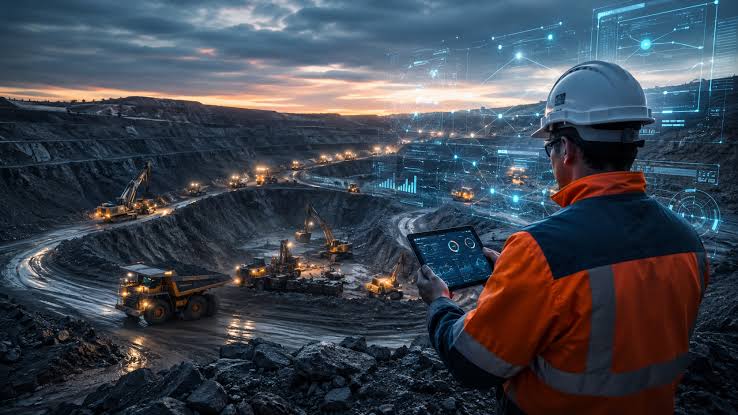


Mineral exploration depends on continuously analyzing geological evidence, testing interpretations, and refining exploration decisions. As datasets become larger and more complex, AI can help creat