




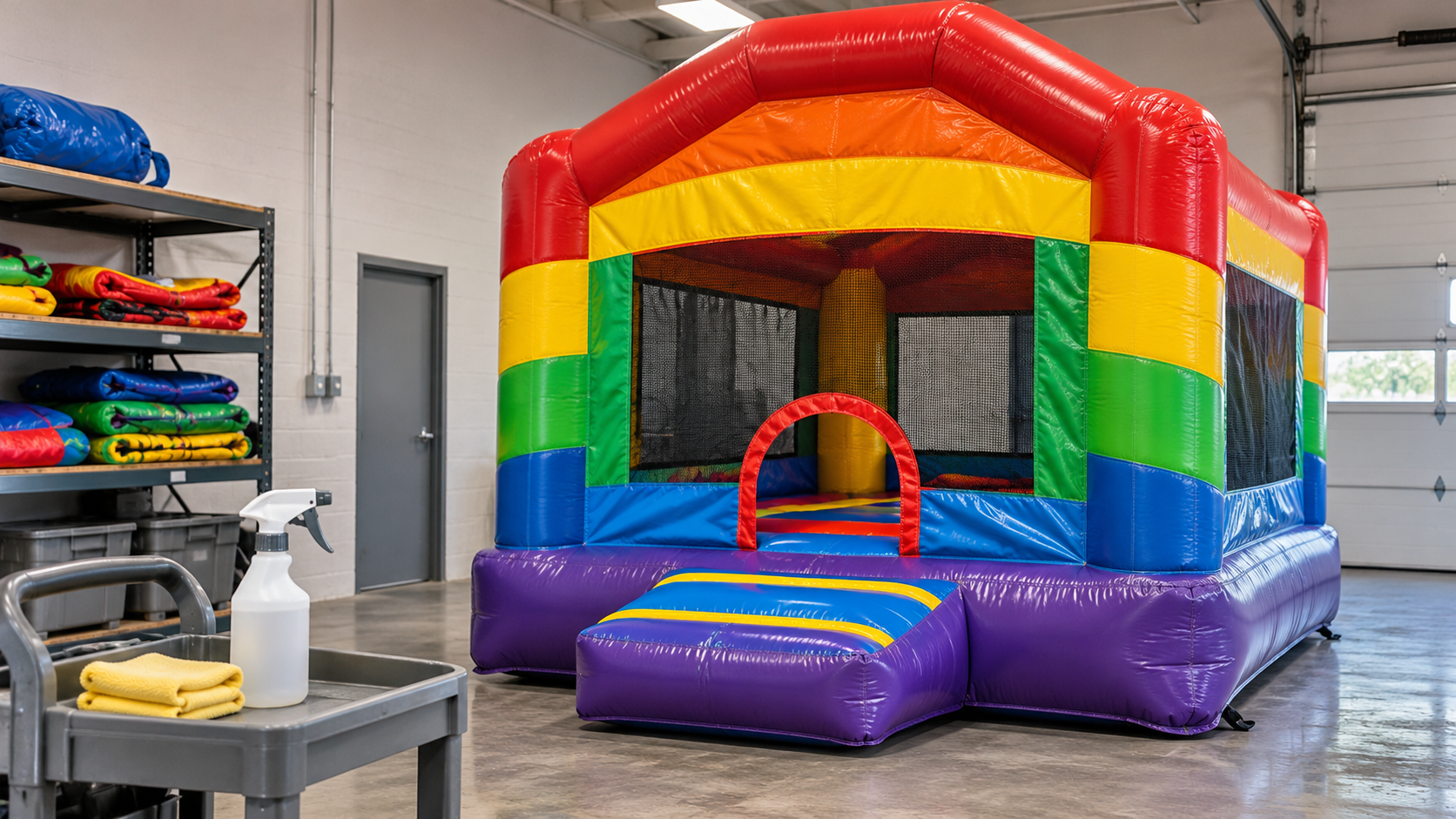
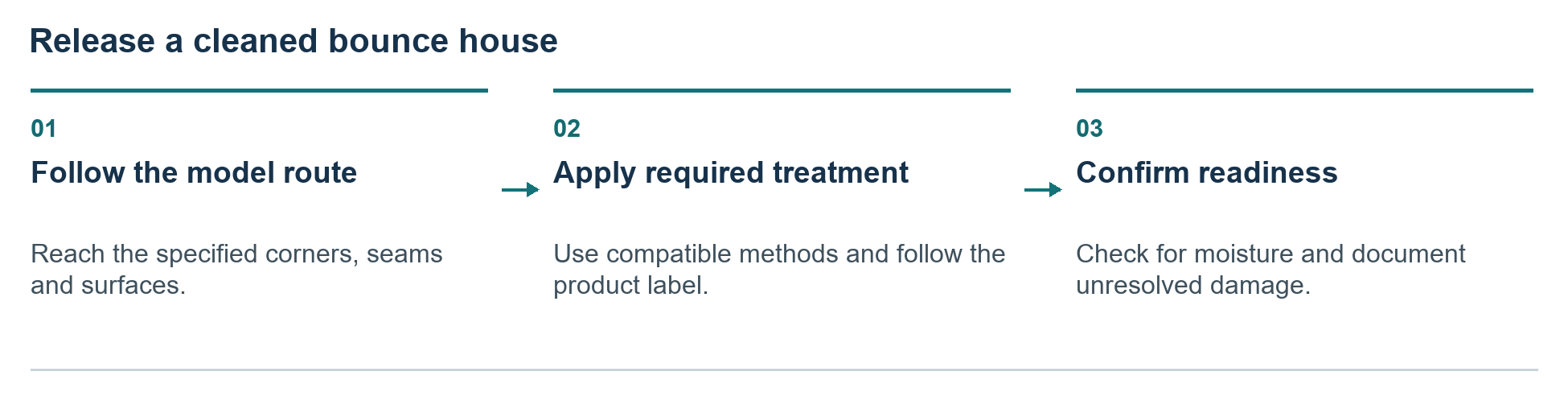
A bounce house can look clean from the entrance while dirt remains in the corners, along the climb or under the entrance flap. A useful turnaround routine gives staff an order of work and a clear release decision. Follow the equipment manual for the cleaning setup and compatible products, remove visible dirt, apply any required hygiene treatment correctly, and confirm that the unit is dry and ready for the next inspection.
Set Up a Cleaning Area That Keeps Users Out
Assign a place where staff can handle the identified unit without children entering it. Pull the manual for that model and confirm whether each task should be done with the equipment inflated, deflated or in another prescribed state. Follow the manufacturer's instructions for blower and electrical equipment around moisture. Keep the cleaning setup separate from public operation.
Log the unit ID and anything the event crew observed. Rain at pickup, sticky drink residue and an incident involving bodily fluids require different responses. If the returned unit has an unexplained stain, damaged seam or another condition beyond routine cleaning, take it out of the release queue and use the appropriate assessment procedure.
Remove Loose Dirt Before Applying a Cleaner
Work through a route that covers the entrance, main floor, seams, corners and any climbing or slide components the model includes. Use only the equipment and cleaning methods approved for the material. Concentrate on spots that can be missed when someone looks in from the doorway. If a removable component needs attention, follow the unit manual for handling and reassembly.
A commercial inflatable catalog illustrates why a route needs to match the unit. The listed designs include simple bounce areas as well as units with slides or pool sections. Write the route for the actual configuration. A useful crew sheet identifies every surface the manufacturer expects staff to reach and points out where debris or moisture can collect.
Match the Hygiene Treatment to the Situation
CDC guidance for early care and education settings distinguishes cleaning from sanitizing and disinfecting. It advises cleaning surfaces before applying a sanitizer or disinfectant where such treatment is appropriate. For rental inflatables, use the manufacturer's compatible product instructions and the applicable site or health procedure. The product label should cover the intended use and surface. Follow its directions, including contact time and any instructions for rinsing, ventilation or protective equipment.
Treat a bodily-fluid incident under your written incident procedure and applicable health guidance. Keep the unit unavailable while trained staff determine the right response. If the required method and the material instructions cannot both be met, get direction from the responsible parties before returning the unit to service.
Check Seams and Folds Before Packing
A dry floor does not establish that the complete unit is dry. Check areas specified by the manual, including corners, steps, fold lines and any accessible parts where moisture can remain. Pay particular attention after wet use or pickup in the rain. Follow the manufacturer's drying and storage method and allow enough time before rolling.
If a location is hard to reach or the material's response to a cleaner is uncertain, ask Gmich Play or the actual manufacturer for model-specific care instructions. Describe the affected area and the type of residue. Avoid improvised solvents, high-pressure washing or unapproved cleaning methods. A method that removes a mark can still damage the surface.
Complete a Separate Release Check
Record the date, unit, cleaning method, any hygiene treatment and whether drying was completed. Have the assigned person check that no unresolved issue remains. If the crew discovered loose stitching, a torn mesh panel or a damaged anchor point, keep the unit out of use and follow the inspection and repair procedure. Cleaning does not resolve an equipment defect.
Use a second crew member or a documented handoff when shifts change. The next person should be able to see which zones were completed and why a unit was held. A simple status such as “awaiting dry check” prevents a partly prepared inflatable from looking ready on the dispatch list.
Conclusion
Build bounce house cleaning into the rental turnaround. Use the model manual, clean the surfaces before any required treatment, check hidden areas for moisture, and document the release decision. Set aside units with damage or unresolved contamination so the next booking does not override the check.
Q&A
Can I use the same cleaner on every bounce house?
Use the product and method permitted for each model's surface and the intended hygiene task. Confirm compatibility when the instructions are unclear.
Should I disinfect every surface after routine use?
Follow the applicable hygiene policy, product label and equipment instructions. Cleaning, sanitizing and disinfecting serve different purposes, and the appropriate treatment depends on the surface and situation.
Can I roll the inflatable when the visible floor is dry?
Check the other specified areas first. Seams, folds and recesses can retain moisture after an exposed floor looks dry.


Planning for any wonderful birthday bash?
CleanlinessWhilst renting an inflatable, you should ensure that that's clean and follows hygiene standards.
There are many companies which are very careless in relation to hygiene and that could lead to allergic reactions in kids.
These are the queries you will need to learn prior to you go for bounce house rentals.
Children of your age 3- 7 require to possess soft and low structured inflatable whilst kids 8 - 12 would need something stronger and at a higher level.
PriceSome companies charge on per hour basis though other individuals offer you package deals that incorporate games, entertainment and catering.
