


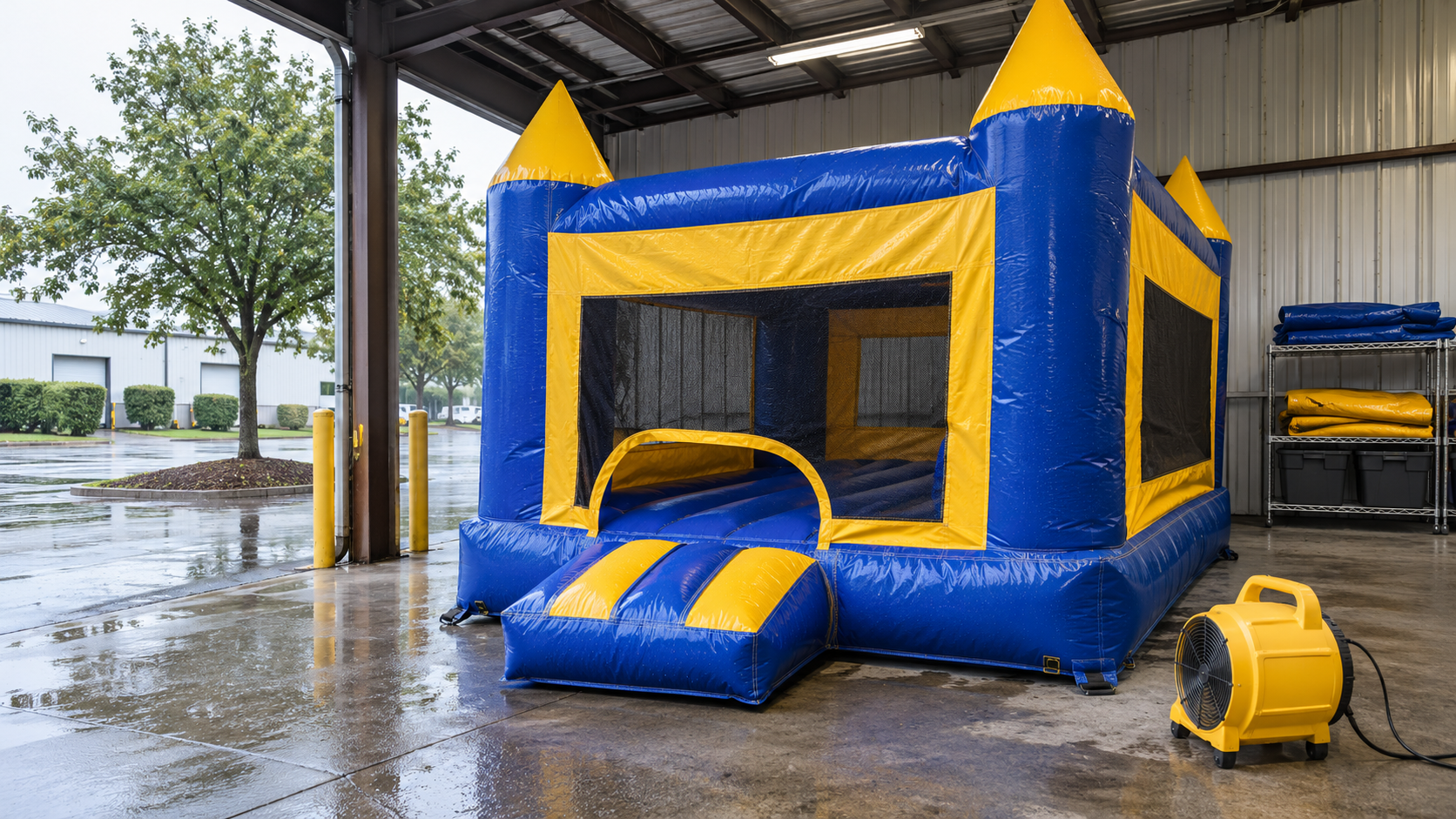
Rain during pickup changes the job at the warehouse. A folded inflatable may hold water between layers even when the outer roll feels dry. The next crew needs to know that the unit returned wet, where water entered, and which checks are still open. A clear intake and drying procedure gives staff a way to hold the equipment until its condition can be verified.
Flag Wet Returns at Pickup
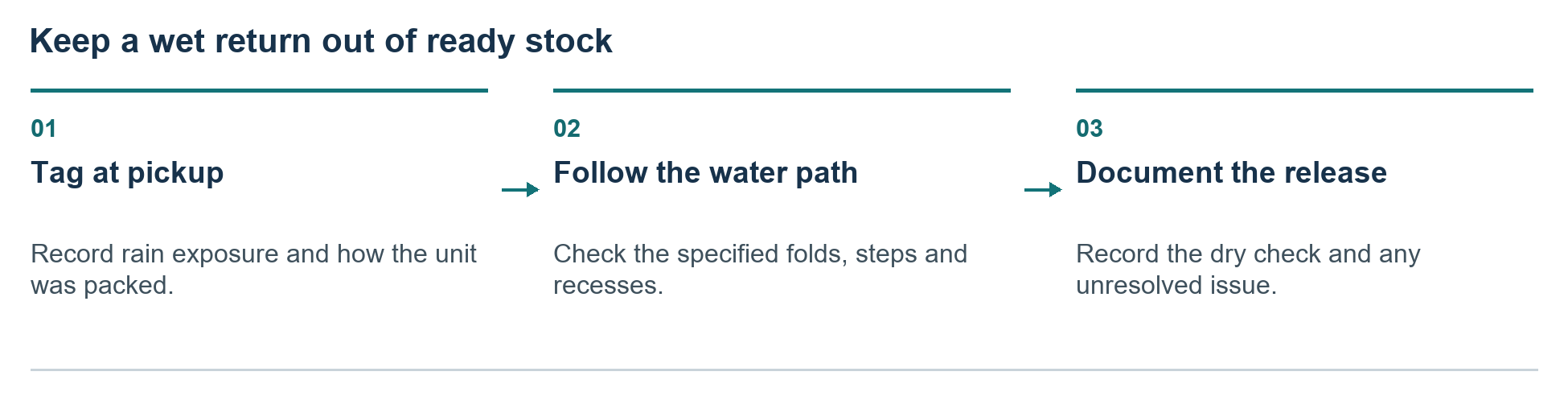
Once the event has ended under the site's approved operating procedures, record whether the unit was exposed to rain or other water and whether it had to be packed before drying. Identify the model and serial or rental ID. Note visible pooling, ground contact and any unusual contamination or damage. Put that status on both the return record and the physical equipment tag.
Keep wet units out of the ready inventory. Assign a drying location and a responsible crew member as part of dispatch planning. If the schedule does not leave time to complete the manufacturer's process, assign another cleared unit. A calendar slot should never function as a release decision.
Use the Model Instructions to Remove Water and Dirt
Check the owner's instructions before setting up the inflatable for cleaning or drying. Use the prescribed configuration and equipment. Pay attention to the manufacturer's directions for electrical parts and the blower where moisture is present. Keep users away while the equipment is being serviced. Have trained staff handle conditions beyond the normal return process.
The Gmich Play inflatable equipment catalog includes combination units and designs with pool areas. Those shapes illustrate how a single return can have several wet locations. Follow the manual for draining or handling the unit. Clean off visible dirt with an approved method and note areas needing another look after the surface is dry.
Follow the Water Path Through the Unit
Create a short inspection route for the model. Begin where rain or runoff was observed, then follow the likely path toward lower areas and folds. Inspect the entrance, landing surface and accessible seams. For a model with a slide, check the zones around the transition from climb to slide and where the unit folds for transport. Avoid dismantling parts or opening enclosed areas unless the manufacturer authorizes it.
Imagine a crew that removes standing water from the main floor and leaves the inflatable to dry. The exposed floor clears first, while material folded near a step still feels damp. Add that location to the release checklist. An explicit list of model-specific trouble spots helps staff use the same checks after the next wet return.
Distinguish Moisture From Possible Damage
A sour odor, visible growth, changing texture or loose stitching calls for further assessment. Set the unit aside and document where the issue appears. Do not attempt to conceal it with fragrance, paint or stronger cleaning chemicals. If the question is whether a treatment is compatible, ask Gmich Play or the actual manufacturer for written instructions for the exact model and surface.
Follow the applicable hygiene procedure for unusual contamination. The Magic Jump Rentals cleaning procedure describes cleaning and drying before packing as part of its own routine. Use that sequence as a reminder to schedule time for both tasks. Follow your unit's instructions for the actual methods and criteria.
Hand Over an Explicit Decision
Before packing, record which locations were checked, whether the manufacturer-required dry condition was confirmed and who verified it. Keep unresolved stains, damage or persistent moisture marked as holds. Make the paperwork clear enough that someone working the next shift can tell what has already been done and what remains.
Reopen and inspect a unit if the packing status is uncertain or there are signs it was stored damp. If you repeatedly find moisture in one area, adjust the model's route or ask the manufacturer about that point. A recurring observation is more useful when the record identifies the position, prior handling and storage conditions.
Conclusion
After a rainy event, mark the bounce house as a wet return, follow the model instructions and inspect the areas where water can stay hidden. Release it only when the documented checks are complete and any damage or contamination concern has been resolved under the applicable procedure.
Q&A
How long should a wet bounce house take to dry?
Drying time depends on the model, where water entered and the drying conditions. Check the specified surfaces and folds instead of using a fixed waiting time.
Is a damp smell enough to identify mold?
No. An odor calls for inspection and may justify holding the unit. Follow the manufacturer's assessment procedure and the applicable hygiene guidance.
Can I put a wet return straight into storage?
Keep the return marked and follow the manufacturer-approved drying and handling instructions. Move it to ready stock only after the required checks are complete.


Bounce houses add a complete new dimension to a birthday party.
Inflatables were when deemed a luxury accessible only for purchase having said that nowadays they can be also be rented on a day-to-day or even weekly basis according to the occasion.
Their inflated structure and rubber composition makes for any nice soft landing pad in case kids shed their balance whilst jumping up and down.
Numerous Inflatables Designs Themes: That is one on the ideal attributes of Inflatables.
The facial expression of any youngster says it all as soon as they see a Inflatables.
Decision of Versatility: Rental Inflatables are an excellent attraction for any occasion and usually are not restricted to just birthday parties.