


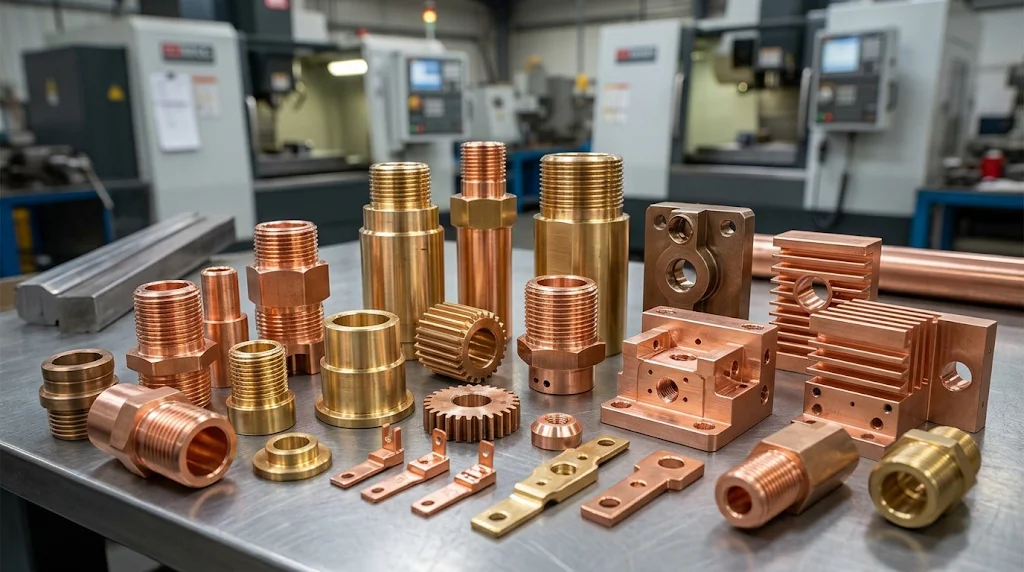
Custom copper manufacturing combines appropriate material selection, advanced machining processes, and strict quality control. Understanding these factors helps businesses obtain reliable components that meet their engineering requirements and production expectations.
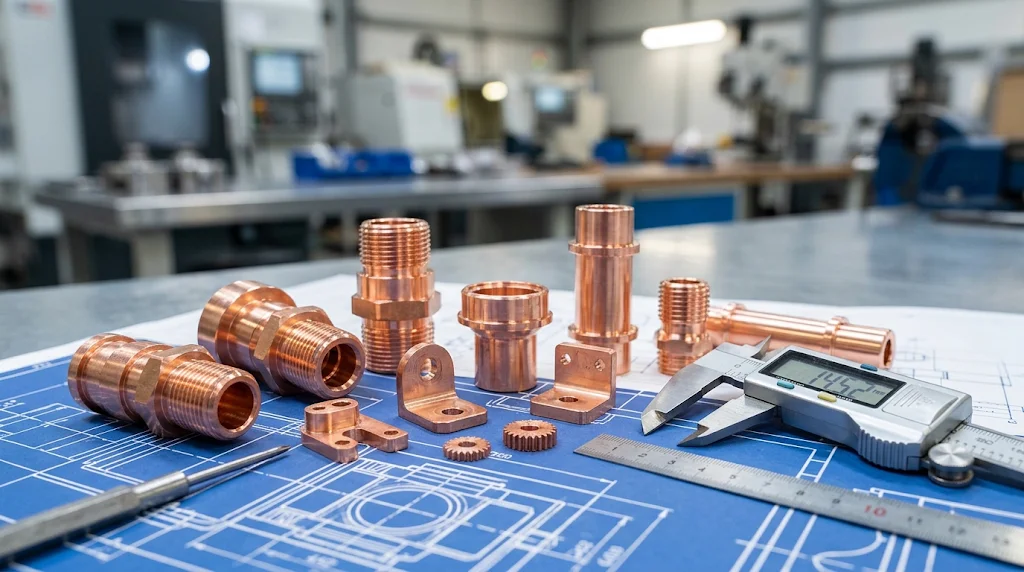
Why Choose Custom Precision Copper Components?
Copper offers a combination of electrical conductivity, thermal conductivity, corrosion resistance, and machinability. These properties make it suitable for applications where consistent performance and dimensional accuracy are essential.
Unlike standard off-the-shelf products, custom copper components are manufactured according to specific drawings, dimensions, tolerances, and application requirements.
Key advantages include:
- Excellent electrical conductivity for connectors and terminals.
- High thermal conductivity for heat transfer applications.
- Good corrosion resistance in suitable operating environments.
- Flexible manufacturing options for complex geometries.
- Custom dimensions for specialized mechanical assemblies.
For manufacturers, customized production helps ensure that each component fits its intended application without unnecessary design compromises.
Common Copper Materials for Precision Machining
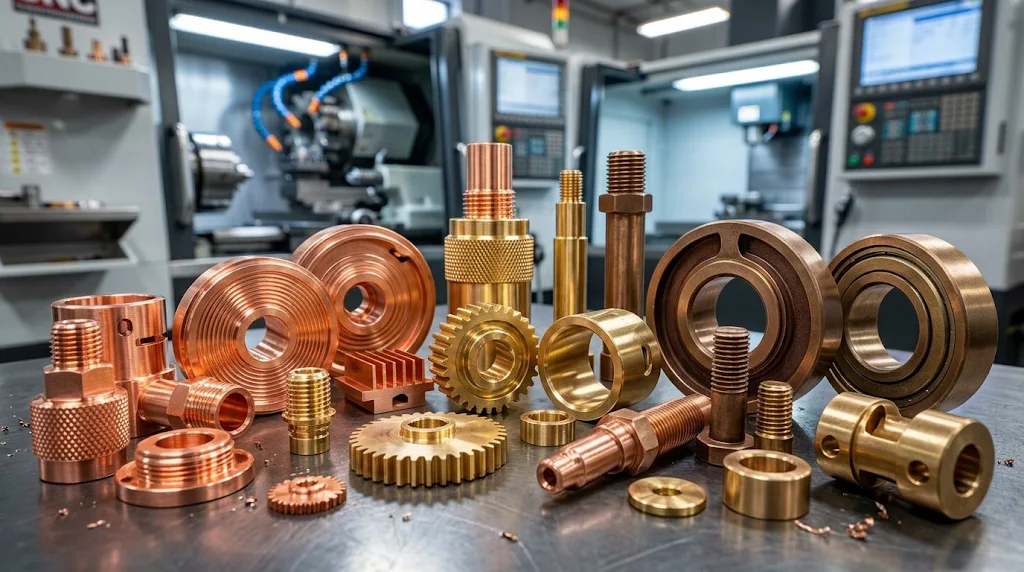
Selecting the right copper material is an important step in copper component manufacturing. Different copper grades offer different physical and mechanical characteristics.
Pure Copper
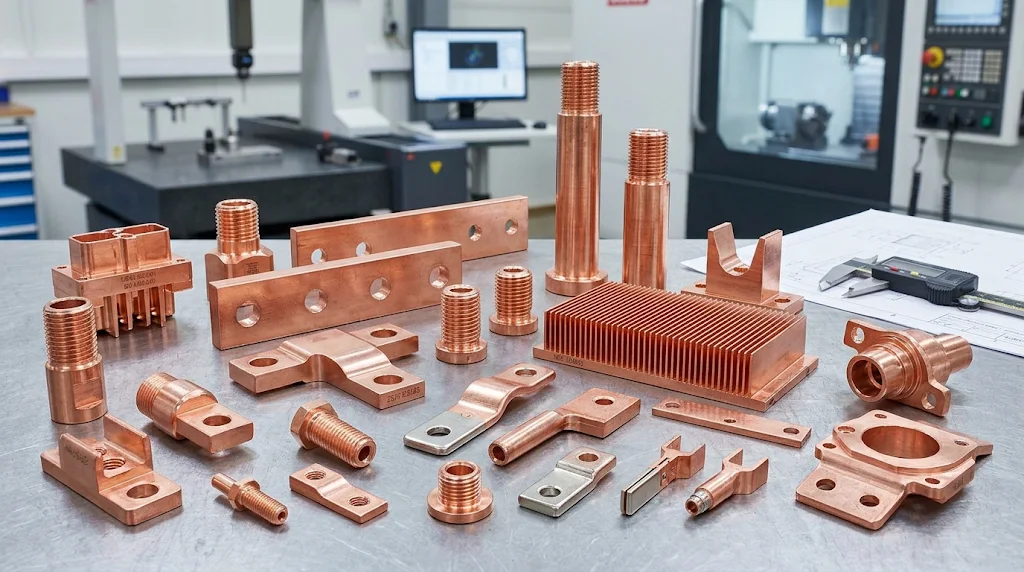
Pure copper is widely used in electrical and thermal applications because of its excellent conductivity. It is suitable for busbars, electrical contacts, conductive plates, and heat transfer components.
Brass
Brass is a copper-zinc alloy known for its good machinability and corrosion resistance. It is commonly selected for fittings, connectors, valves, and precision mechanical parts.
Bronze
Bronze alloys offer good wear resistance, strength, and corrosion resistance. They are suitable for bushings, bearings, mechanical fittings, and industrial components.
Material selection should consider conductivity, mechanical strength, operating conditions, machining requirements, and final application.
Manufacturing Processes for Custom Copper Parts
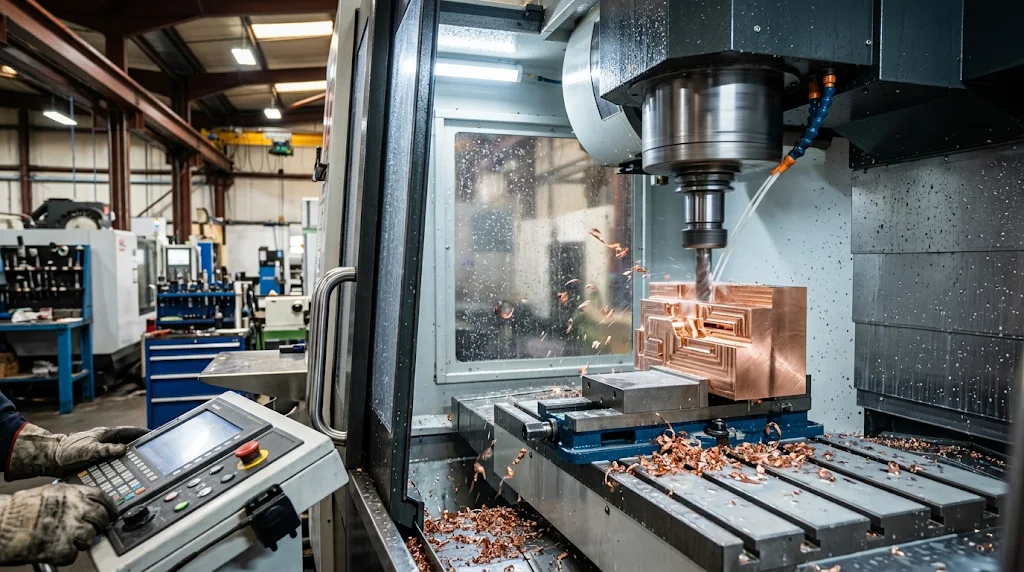
Producing reliable custom copper parts requires a manufacturing process tailored to component geometry, material properties, and drawing specifications.
CNC Turning
CNC turning is suitable for cylindrical copper components, including shafts, sleeves, bushings, and threaded connectors. It provides consistent dimensional control for round features.
CNC Milling
CNC milling is used to manufacture copper plates, blocks, housings, slots, and complex geometries. It allows manufacturers to produce components with different shapes and dimensional requirements.
Drilling and Threading
Drilling and threading create mounting holes, threaded connections, and assembly features. Accurate positioning is essential for components used in electrical and mechanical systems.
Surface Finishing
Depending on the application, copper components may require deburring, polishing, plating, or other surface treatments to achieve the required appearance and functional performance.
Key Factors Affecting Copper Machining Quality
Although copper is relatively easy to machine in certain grades, its softness and ductility can create manufacturing challenges.
Several factors influence the final quality of high-precision copper parts:
- Tool selection: Appropriate cutting tools help reduce burr formation and improve surface finish.
- Cutting parameters: Optimized cutting speeds and feed rates help prevent deformation and unstable machining.
- Workholding: Proper clamping prevents movement and minimizes distortion during machining.
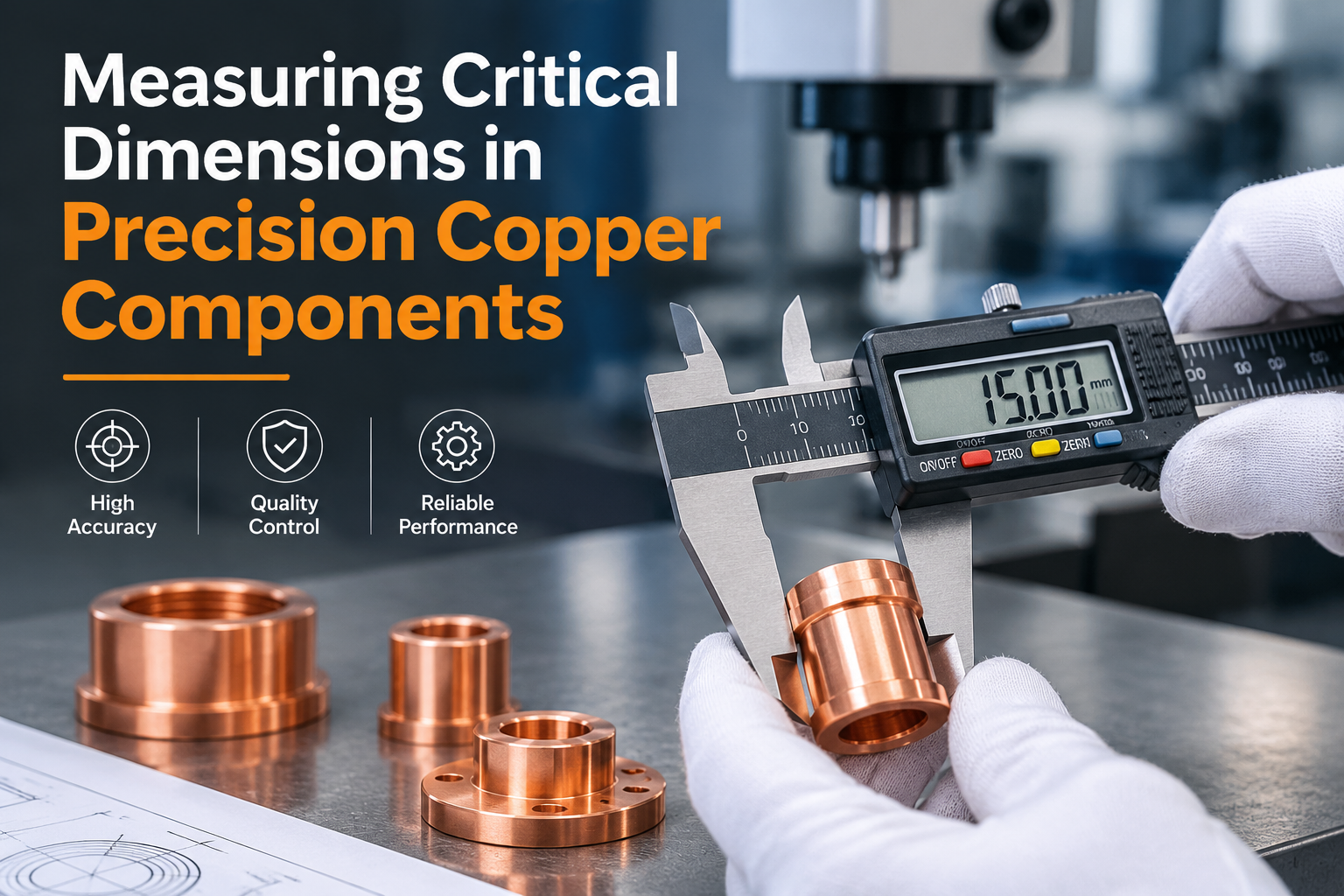
- Dimensional inspection: Critical dimensions should be checked throughout production.
- Surface protection: Proper handling prevents scratches, contamination, and unwanted surface marks.
A well-controlled machining process helps maintain consistency across both prototype and production batches.
Applications of Precision Copper Components
Precision copper machining supports a wide range of industrial applications.
Common examples include:
- Electrical connectors and conductive terminals.
- Power distribution components and busbars.
- Heat exchangers and thermal management parts.
- Automotive electrical components.
- Industrial machinery fittings.
- Electronic equipment housings and contacts.
Each application has different requirements for conductivity, strength, dimensional accuracy, and surface condition. Custom manufacturing allows these requirements to be addressed during the production process.
How to Choose a Reliable Copper Components Manufacturer
Choosing the right custom copper components manufacturer involves more than comparing prices.
Businesses should evaluate several important capabilities:
1. Material sourcing and grade verification.
2. CNC machining equipment and technical capabilities.
3. Experience with complex copper geometries.
4. Dimensional inspection and quality control procedures.
5. Surface finishing and secondary processing options.
6. Production capacity and delivery consistency.
Providing detailed engineering drawings, material specifications, tolerance requirements, and expected order quantities helps manufacturers evaluate projects more accurately.
Conclusion
Precision copper components are essential for applications requiring reliable electrical conductivity, thermal performance, and dimensional accuracy. From material selection to CNC machining and final inspection, every manufacturing stage contributes to the quality of the finished product.
Looking for custom copper machining solutions? Contact Yumei Hardware to discuss your drawings, material requirements, and custom component manufacturing needs.
Frequently Asked Questions
Q1. What are precision copper components?
A: They are copper or copper-alloy parts manufactured to specific dimensional tolerances and engineering requirements for electrical, thermal, and mechanical applications.
Q2. Which copper materials are suitable for CNC machining?
A: Common options include pure copper, brass, and bronze. The appropriate material depends on conductivity, strength, machinability, and application requirements.
Q3. Can copper components be manufactured according to custom drawings?
A: Yes. Manufacturers can produce custom copper parts according to customer-provided CAD files, technical drawings, dimensions, and tolerance specifications.
Q4. What CNC processes are used for copper component manufacturing?
A: Common processes include CNC turning, CNC milling, drilling, threading, and secondary surface finishing.
Q5. How can the quality of custom copper parts be ensured?
A: Quality can be maintained through material verification, optimized machining parameters, proper workholding, dimensional inspection, and controlled production processes.


According to a new report published by Allied Market Research, titled, Copper & Copper Manufactured Products Market by Product Type and Geography: Global Opportunity Analysis and Industry Forecast, 2017-2023, the copper & copper manufactured products market size was valued at $140,851 million in 2016, and is projected to reach $147,623 million by 2023, growing at a CAGR of 0.8% from 2017 to 2023.
Moreover, more than 85% of the U.S. homeowners have installed copper plumbing systems because it can outlast the life of home.
Copper piping requires very few or less support and yet can handle extreme weather conditions.
Thus, U.S. was the highest revenue country in North America in 2016.Do Enquiry for Sample Report: https://www.alliedmarketresearch.com/request-sample/4486Rapid urbanization and industrialization in emerging economies and growth in electrical & electronics industry drive the copper & copper manufactured products market growth.
In addition, continuous development in green buildings is expected to supplement the global market in the future.
The increased use of electric components, such as on-board navigation systems, anti-lock braking systems, and heated seats, has increased the demand for copper in the automobile sector.

Sanjay Precision Industries is a well-established precision company manufacturing Import-Exporting CNC Turned Parts in Germany.
The company was established in 1987, specializing from the very beginning in supplying high-quality metal parts for the automation industry.
Our greatest pride is that we are able to provide our clients with a fast turnaround service while maintaining the highest possible quality.
