

2025/10/15 SHANGHAI — For years, the Chinese fitness boom was defined by large, glossy chain gyms and group classes that mirrored the West.
Yet, as the calendar turns to 2025, a quieter, more subversive revolution is underway, driven by the generation born after 2000.
This cohort, often called the linglinghou or Gen Z, is not just exercising; they are redefining what fitness means in a high-pressure, digitally saturated society.
According to a recent analysis from the China Fitness Management & Operation Forum (CFMOF), this demographic is less drawn to traditional long-term gym memberships than any previous generation. Instead, the report signals a decisive shift toward "niche communities, solitary pursuits, and data-driven training," a trend that now holds the keys to the world's most dynamic fitness market.
This movement is not simply about changing workouts; it is about a fundamental change in lifestyle and consumption.
The linglinghou are trading the communal sweat of the boxing ring for the focused solitude of a climbing wall.
They are seeking experiences that offer both "social currency and personal development," all while navigating economic uncertainty and the enduring demands of modern urban life.

The Rise of the Hyper-Specialized Niche
The days of the one-size-fits-all mega-gym are receding for China’s Gen Z.
They are demanding hyper-specialized venues that speak directly to their individual passions, often marrying intensive physical activity with social media shareability.
1. Functional Fitness and the Hyrox Effect
Functional training, blending strength and endurance, has captured the imagination of this group. The global hybrid racing trend, embodied by events like Hyrox, has seen a rapid uptake in Beijing and Shanghai.
- The Appeal: These events are competitive but offer a highly structured, measurable path to fitness. Gen Z values transparency and clear metrics, and Hyrox provides both.
- Unique Insight: The fitness is a performance, but the performance is broadcast. Social sharing platforms like Xiaohongshu are flooded with training videos and race results, turning physical effort into cultural capital.
2. Solitary Thrills: The Climbing Wall Boom
Rock climbing and bouldering have moved from fringe sports to mainstream hobbies.
Data from e-commerce platforms show a staggering year-on-year increase in sales for climbing gear—chalk powder, helmets, and specialty shoes—entering 2025.
- The draw is not strength, but focus. Climbing is a physical puzzle. For a generation dealing with the constant noise of the digital world, the need for intense, singular focus is a powerful form of mental escape.
- The Bouldering Escape. Ms. Lin, a 23-year-old software engineer in Shenzhen, spends three nights a week at a bouldering gym. "I used to go to a spinning class, but I always felt like I was still thinking about work," she explained. "When you are on the wall, if you think about anything else, you fall. It forces my mind to be silent. It is the only true 'off' switch I have." This desire for mental clarity underscores the solitary nature of their preferred workouts.
Digital Integration: From 'Live' to 'Personalized'
For the linglinghou, fitness is inherently digital, but the format is evolving.
The live-streaming boom that characterized the pandemic years is giving way to tools for advanced self-management and personalization.
1. Wearables and the Data Obsession
Gen Z is perhaps the most data-literate generation in history.
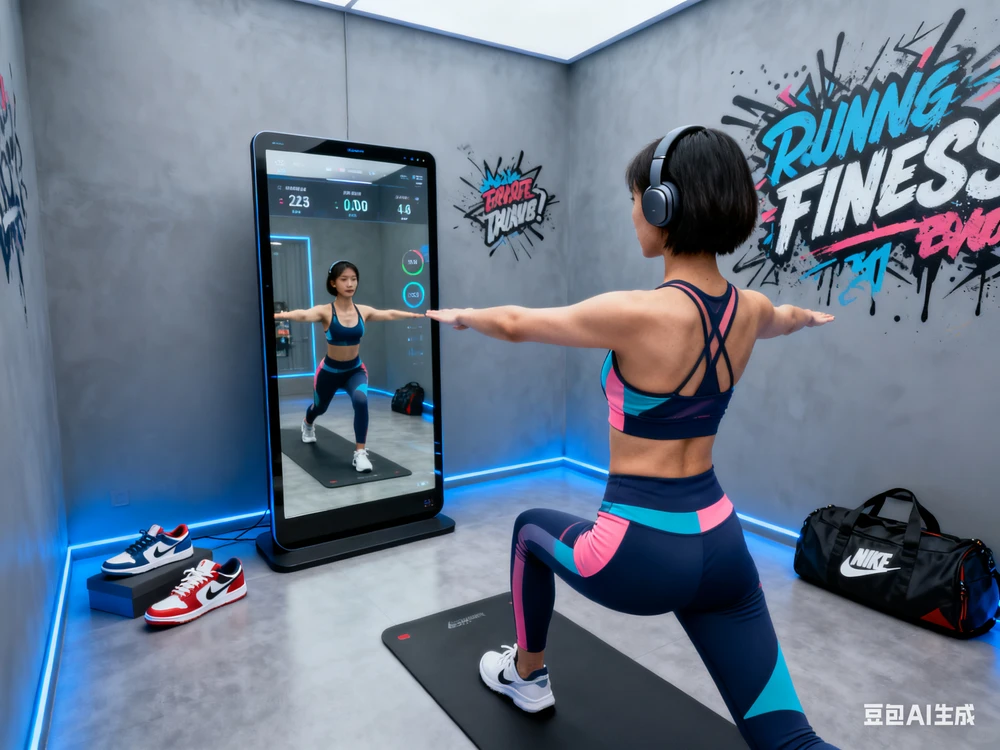
They don't just track their steps; they analyze their heart rate variability, sleep scores, and training load ratios.
- The New Personal Trainer: Sophisticated smartwatches and rings are replacing the need for an in-person coach for basic routines. Young consumers use the data to prove their effort and optimize recovery, turning their body into a quantified project.
- Value Analysis: This demand drives a premium on data accuracy and seamless app integration. For fitness brands, hardware must be invisible; the value is in the software and the actionable insights it provides.
2. The 'Micro-Gym' App Economy
Traditional gym memberships are being replaced by subscription packages for specialized fitness apps.
These apps don’t just offer video; they offer community portals for niche hobbies like Hyrox or specific yoga styles.
- CFMOF Trend Confirmation: The Forum's findings suggest that the average Gen Z consumer now uses three to five separate fitness applications, often paying for monthly access to small, highly curated content libraries instead of one large platform.
The Societal Pivot: From Health to Identity
The driving force behind these trends is identity. In a society where individual success is often tied to career and material wealth, fitness has become a powerful, accessible tool for self-definition.
1. The 'Retro-Social' Sports Craze
A surprising number of retro, low-impact sports are gaining traction—activities that blend physical movement with a strong social component that is not competitive.
- The Appeal: Bowling, Frisbee, and even Padel attract audiences with a "nostalgic, sociable, and relaxed vibe." They are less about burning calories and more about creating a fun, low-stakes environment for social interaction outside the digital sphere.
- The Frisbee Crew. Mr. Zhao, a 20-year-old university student in Chengdu, started a weekend Ultimate Frisbee club. "The best thing is that there are no 'pros' here. It’s just running and laughing," he said. "It feels like we are playing a children’s game, but we are adults. It’s a break from being serious about everything—school, career, all of it." This echoes a desire for genuine, unpolished social connection.
2. The New Professionalism of Wellness
For the linglinghou, physical activity is a sign of discipline, which translates directly to professional competence. Being fit is a subtle signal that one can handle the rigors of the "996" work culture.
Unique Insight: Wellness is an armor. Investing time and money in niche, high-effort sports is a way to distinguish oneself in a crowded job market. It’s less about looking good and more about communicating resilience.
Future Value: The Road Ahead for Fitness
The trends driven by China’s Gen Z are more than fleeting fads; they offer a roadmap for the global fitness industry.
1. Decentralization of the Gym
The future of fitness infrastructure is decentralized. The massive, expensive downtown club will yield to a network of specialized, smaller facilities: a bouldering cave here, a Hyrox training zone there.
- Value Prediction: Real estate investors and developers should pivot to small-format, high-density vertical fitness spaces. The "15-minute fitness circle" concept, heavily promoted by the Chinese government, perfectly aligns with this micro-venue model.
2. The Experience Economy Triumphs over Membership
Traditional recurring revenue models based on the long-term contract are vulnerable. The new model is subscription-based experience revenue.
- The Shift: Businesses must sell access to specialized events, unique data insights, and curated social groups, rather than simply access to equipment. Consumers will pay a premium for hyper-relevance.
3. The Premiumization of Recovery
As training becomes more specialized and data-driven, the market for recovery is set to explode. Gen Z understands that optimization requires rest.
- Future Trend: Expect massive growth in targeted recovery services—cryotherapy, hyperbaric oxygen chambers, and advanced sports massage—marketed not as luxury, but as essential tools for performance data optimization.
The Quiet Power of Choice
The quiet power of China’s youngest consumers lies in their informed choices.
They are not chasing celebrity endorsements; they are pursuing personal goals validated by data and shared through curated digital proof.
The Data-Driven Runner.
I spoke with a young man in Hangzhou, Mr. Chen, who had never joined a gym. His fitness was built entirely on personalized running plans and a $300 smart watch. “The data never lies,” he told me. “My score today is 85/100. The only competition I have is my score from yesterday.”
This highly individualized, measured approach—confirmed by the CFMOF findings—signals a seismic shift. China's Gen Z is moving away from the loud, communal rituals of previous generations.
Their fitness is solitary, data-driven, and highly personal, making them the most compelling and transformative demographic the global fitness industry has encountered yet.
This is not a trend; it is the new market structure.