


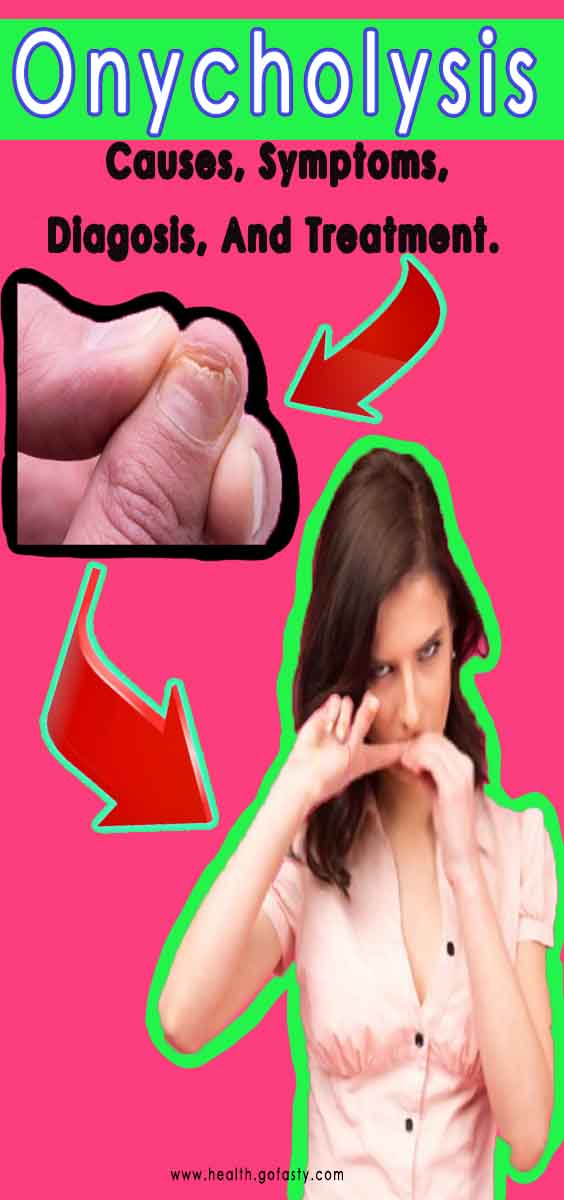
Beautiful hands with smooth, graceful nails are the pride of some women and the dream of others. And in many ways, the beauty of the hands depends on the health of the nails. It is only at first glance that it seems that nails are not a living plate. In fact, this is the same part of the body as any of the organs. Nails can also hurt, become inflamed, metabolism is disturbed in them. Diseases leading to various types of destruction of the nail plate are treated in Rostov-on-Don at the PF Clinic medical center. Including, we deal with the problems of nail detachment.
What is onycholysis
Onycholysis is a disease leading to detachment of the nail plate from the nail bed - one of the varieties of nail dystrophy. The disease is infectious or non-infectious. With non-infectious onycholysis, the nail plate does not lose its structure and color. An infectious lesion makes the nail plate cloudy, rough, and not rigid enough, voids form under it. Detachment occurs both on the arms and legs. The etiology is distributed as follows:
In 60% of patients, diseases occur due to traumatic damage to the nails, 30% of cases are due to fungal infection, in 10%, the cause of onycholysis lies in concomitant diseases, pyoderma, and other skin diseases in the area of the nails, leading to the rejection of the nail plate.
The less often somatic disorders occur, the more difficult it can be to identify them. The health of the nails is influenced by such factors as the condition of the digestive tract and metabolism, hormonal imbalance, and allergic reactions. And for the treatment to be effective, these factors must be identified and eliminated.
Onycholysis is predominantly aesthetic in nature and makes people suffer precisely from the unattractiveness of the nails, since, affecting the nail plates, the disease does not spread to other organs. At the same time, detachment often indicates a malfunction in the body - a lack of trace elements, vitamins, the presence of infection, and the inability of the immune system to cope with it.
This disease is more often observed in women, since they often turn to specialists, as they pay more attention to their appearance. Passion for cosmetics can give the opposite effect when the body rejects a particular cosmetic used by the masters of the nail service. There are often cases when onycholysis occurred as a result of a procedure that was unsuccessfully performed in a beauty salon. By the way, we provide medical pedicure services, which are done by professional doctors.
Stages
Onycholysis proceeds in stages:
-
- stage of development of the disease.
- stable stage without progression.
- the stage of subsiding of the dystrophic process.
- stage of regression.
- complete recovery.
Read Also:
Terry’s nails: Causes, Symptoms, Diagnosis and, Treatment
Subungual Melanoma: Causes, Symptoms, Diagnosis, And Treatment " Brown Line On The Nail "
Onycholysis Causes
What causes Onycholysis?
In 60% of cases, onycholysis develops after a blow, from injury, with pinching of the nail. Moreover, even a minor injury is enough, to which a person will not pay attention. The second most common cause of nail onycholysis is a fungal infection (onychomycosis). Also, the disease provokes allergies. For example, when hands come into contact with household chemicals.
Depending on the cause, the nail may be affected only on one finger or on several fingers at the same time.
The risk group includes people who have:
-
- chronic skin diseases (eczema, psoriasis).
- malnutrition, deficiency of vitamins A, E, group B.
- metabolic disorders.
- predisposition to allergic reactions.
- weakened immunity, including during pregnancy and in old age.
diabetes. - Onycholysis disease often appears in workers in the chemical industry, laboratories, whose hands are constantly in contact with organic solvents, aggressive substances.
Due to the desire for beauty, women face the problem more often than men.
Onycholysis is caused by:
-
- nail extension.
- improper performance of manicure or pedicure.
- trauma to the area in the cuticle area.
- the use of decorative varnishes, liquids for their removal, containing harmful organic solvents.
- coating with gel polish.
Almost all women love to do the procedures listed above to make their hands look attractive and well-groomed. But the first thing to remember is safety. Because many of them do not have the most beneficial effect on the nails. They cause allergic reactions, chemical burns, burns from an ultraviolet lamp.
Often, onycholysis occurs on the hands from gel polish or shellac. Why does it happen? The reason is ignoring the precautions. During drying under a UV lamp, the nail burns. Therefore, if the master speaks, take it out, if it bakes, you need to do it. If you endure a burning sensation for a couple of minutes, the consequences can be dire. You run the risk of being left not only without a manicure but also without nails. A burning sensation provokes a burn, a violation of the connection of the plate with the nail bed. Therefore, you need to get your hands out from under the lamp for a few seconds until the discomfort disappears.
In addition to the above reasons, the disease is caused by prolonged use of drugs that increase the body's sensitivity to solar radiation. We are talking about antibiotics from the group of penicillin, tetracycline. For example, in the instructions for the drug Doxycycline in the list of adverse reactions, it is indicated that it is capable of causing photo onycholysis, discoloration of nails.
The causes of onycholysis on the hands and feet are different. Toenails are less likely to undergo aesthetic manicure procedures, but they are more likely to be injured. Most often, the detachment of the nail plate is formed on the big toe due to mechanical squeezing with tightly closed shoes, flat feet, improper distribution of the load on the foot, violation of its biomechanics, long nail length.
Depending on the cause, several types of disease are distinguished.
The most common onycholysis occurs:
-
- Traumatic. Nails begin to flake off after blows, wounds, burns, splinters, exposure to heat, cold, long stay in the water, wearing tight shoes. This also includes pathological changes caused by the action of acids, alkalis, solvents, household chemicals;
- Fungal. It occurs due to the ingestion and reproduction in the subungual space of pathogens of a fungal infection. Formed as a secondary complication of onychomycosis.
- Allergic. Onycholysis develops as an allergic reaction against the background of taking medications with photosensitizing properties, ultraviolet radiation (photo onycholysis), contact of the nail plate with harmful chemicals.
In terms of the size of the affected area, onycholysis is partial, when only a small area of the nail exfoliates in the form of a strip or semicircle, and complete when it leaves entirely. The separation of the nail plate can occur from the distal (free) edge or from the side of the lateral ridges (lateral onycholysis).
Onycholysis Symptoms
What are the Symptoms of Onycholysis?
The clinical picture is the same for all types of pathology: the nail plate is separated from the base of the nail in the distal or lateral part, from the free edge to the nail hole. The color of the plates changes from flesh to grayish-white, which is due to the penetration of air into the cracks under the skin. In the free space formed by the development of pathogenic microflora, further discoloration is possible: yellow changes caused by bacterial infections, brown changes caused by the formation of a colony of micro seals, green changes caused by lesions caused by Pseudomonas aeruginosa.
Bacterial infections affect the structure and endurance of the nail plate. The surface of the nails loses shine, becomes rough, and gradually deforms. The nail room is filled with dirt and keratin. This leads to the development of hyperkeratosis, which is characterized by an unpleasant odor. At a developed stage of pathology, the focus of secondary inflammation may appear. The separation of part of the nail is called partial oncolysis, and the separation of the entire nail plate - complete.
The first symptoms of onycholysis are a good reason to visit the clinic. A dermatologist should be consulted at every stage of the disease. During the diagnosis and treatment of the disease, the patient may need the opinion of other specialists: endocrinologist, surgeon, therapist.
Ignoring the symptoms of pathology can lead to severe damage to the patient's hand and toenail plates, the development of several points of infection, and damage to other tissues and body systems.
Don't Miss:
Beau’s lines “Beau’s Ridges”: Causes, Symptoms, Diagnosis, and Treatment
Onycholysis " Nail lifting ": Causes, Symptoms, Diagnosis, And Treatment.
Complications and consequences
Onycholysis certainly does not pose any danger to the patient's life. The disease can even go away on its own, subject to the elimination of the provoking factor. However, if the detachment is caused by exposure to an infectious agent, then if untreated, the infection can spread and gradually capture all the nails, both on the upper and lower extremities. Infected nails become unattractive, brittle, discolored over time, affecting the quality of daily life.
Onycholysis Diagnosis
How is Onycholysis diagnosed?
To diagnose and treat the disease, you need to consult a dermatologist. If the dermatologist discovers specific causes of the development of the disease, he can refer the patient for further examination to an endocrinologist, gastroenterologist, or allergist.
In order not to be mistaken with the choice of treatment, it is very important for the doctor to correctly determine the cause of the disease. To do this, he first carefully examines the affected nails, questioning the patient about his complaints and symptoms.
Tests are prescribed in order to identify the causative agent of the infection - for example, to determine the presence of a fungus, streptococcus, or staphylococcus. In addition, a general blood test can be prescribed - to assess the work of the whole body, as well as to identify the inflammatory process.
Instrumental diagnostics for nail pathologies are rarely used, which may depend on the expected cause of the appearance of detachment.
Differential diagnosis
Differential diagnosis is most often carried out with other degenerative processes of the nails:
-
- hapalonichia - softening of the nails.
- the fragility of nails against the background of vitamin deficiency.
- onychomadesis - complete detachment of the nail.
- onychorrexis - the longitudinal splitting of the nail.
- onychoschisis - the transverse splitting of the nail.
- trachynonychia - roughness and peeling of the plate.
- nail needle - wear on the free side of the tile.
In addition, the disease should be distinguished from mycoses, Bowen's disease, lichen planus, and nail psoriasis.
The differences between onycholysis and the fungus are significant, although in some cases the differentiation of diseases can be difficult:
-
- nail fungus is transmitted from person to person, and non-infectious onycholysis is not infectious.
- detachment of the nail, as a rule, is not accompanied by a significant change in the color and shape of the plate: the fungus makes the nail rough and radically changes its color.
- with a fungus, patients complain of a feeling of itching and irritation, but with normal detachment, there are no such symptoms.
- with a fungus, the smell of the feet changes.
- the fungus will never appear as a result of injury.
Diagnostics can present some difficulties if a person has onychomycosis and onycholysis at the same time - such situations, by the way, are common. In this case, laboratory tests should be performed.
Onycholysis Treatment
How is Onycholysis treated?
The treatment regimen for the disease depends on its cause. But, in any case, an integrated approach is used - and this is especially true for progressive and sluggish pathologies.
How to quickly cure onycholysis? The doctor can give some advice on this matter. For example, he will advise you to limit contact with chemicals, detergents, and cleaning products, and use protective fingertips or gloves. In addition to the appropriate careful nail care, the doctor will prescribe local and systemic drugs.
As a systemic effect, you can use physiotherapy, drugs to improve bio balance, vascular protectors. It can be recommended to take brewer's yeast, amino acid, and vitamin complex preparations.
In case of illness, additional intake of such vitamins and minerals is relevant:
vitamins A, E, ascorbic acid, β-carotene (trigger regenerative processes in tissues);
vitamins belonging to group B (accelerate metabolic processes, improve the functioning of the nervous system);
preparations containing calcium, iron, sulfur, copper, zinc.
Aevit with onycholysis is taken both internally and externally. For oral administration, one capsule is enough daily, for 2-3 weeks. For external use, the Aevit capsule should be needled with a needle and its contents (oil solution) should be applied to the surface of the nail and the skin of the nail and massaged for a few minutes, involving the skin outside the nail by about 1 cm in the process. The duration of such treatment is 2-3 weeks, after which you need to take a break.
Read This:
Onychogryphosis "ram's horn nail ": Causes, Symptoms, Diagnosis, And Treatment.
Medicines
Oral medications for nail detachment are prescribed relatively rarely, mainly for infectious lesions. For example, in the presence of a fungal infection, tablets are almost always required: the treatment regimen in such a situation should be combined in order to get rid of the fungus completely.
If you have an infection, your doctor usually recommends one of the following antifungal medications:
Griseofulvin
The drug takes 250 mg twice a day. The duration of admission is determined individually and can be 1 year or even more.
Itraconazole
The drug is administered according to the following schedule:
-
- 200 mg twice a day for one week.
- after three weeks, treatment is repeated.
- after another three weeks, the course is repeated a third time.
Terbinafine
The drug can be used for onychomycosis on the nails of the hands and feet. The treatment regimen is 250 mg per day for 12-24 weeks.
Fluconazole
The drug is usually taken at 150-300 mg once every 7 days, for six months or more.
These medicines are usually well-tolerated, side effects are rare.
Ointments for onycholysis of nails
External preparations are used for marginal detachment of the nail. Solcoseryl ointment helps well, which improves local blood flow, strengthens blood vessels, reduces oxygen deprivation of tissues, and allows them to quickly recover.
Other ointment preparations are also used. For example, to prevent or treat a microbial infection, Heliomycin ointment or Synthomycin emulsion is prescribed: these drugs are rubbed into the area with a detached nail in the morning and in the evening.
Vishnevsky ointment has a good and quick effect. If you do not take into account the not very pleasant smell of this remedy, then you can highlight a lot of its useful properties: the ointment heals the damage within a month, with regular use. The effect of the ointment is due to the content of birch tar, castor oil and xeroform in it.
If the detachment is caused by the influence of a fungal pathogen, then the doctor will definitely prescribe antifungal drugs. It can be Intraconazole, Mycospore, or Batrafen. The leader among such medicines is Exoderil - it is used both in the form of a liquid and in the form of a cream.
Exoderil from onycholysis is distributed over the entire affected area in the morning and at night. The duration of use varies: for example, in case of damage to nails on the hands, the minimum course of therapy is six months, and in case of damage to the lower extremities - 6-12 months. If the infection is persistent or widespread, oral antifungal medications are prescribed.
Levomekol for onycholysis is used in the presence of a bacterial infection. The ointment is applied to the skin and nail treated with an antiseptic, covered with a gauze napkin on top, and fixed with a bandage or plaster. Levomekol destroys microbes and helps the affected skin recover. It is advisable to carry out the procedure before bedtime, within a week. Prolonged use of this ointment is not recommended.
Related Content:
Lunula nails: What does it mean when you have no Lunula
Paronychia, Inflammation Around The Nail: Causes, Symptoms, Diagnosis And, Treatment
Baths for nails with onycholysis
A sufficiently effective remedy for curing nail detachment, especially at the initial stages of the development of the disease and in the absence of an infectious pathogen, is the use of all kinds of baths. These can be baths with warm water with the addition of vegetable oil and lemon or orange juice (in equal proportions). Also, 4% baths with sea salt, with a decoction of needles, or an infusion of chamomile color are considered no less effective.
A gelatinous solution gives an excellent effect. To prepare it, mix one tablespoon of gelatin in a glass of warm water. Keep your fingers in this solution for about 30-40 minutes.
To strengthen nails, it is useful to carry out baths with a grapefruit extract or decoction of calamus rhizome 2 times a week. The duration of such a procedure shall be a quarter of an hour.
Treatment of onycholysis with iodine
There are several known methods for treating nail detachment using iodine.
-
- Take a cotton swab, dip it in an iodine solution and treat the affected nails, morning and evening.
- Prepare a bath: 1-2 tsp are poured into hot water (three liters). iodine, lower the affected fingers and steam them for 10-15 minutes. After that, the damaged parts of the nail are removed with scissors, followed by treatment with hydrogen peroxide. The procedure is carried out daily.
- Iodine and table vinegar are mixed in equal amounts. The resulting mixture is treated with nails daily for 14 days. A repeat course can be attended only 10 days after the previous course.
The use of iodine will give first results only after a few weeks, and the total duration of treatment is usually 2-4 months.
Related Content:
Lunula nails: What does it mean when you have no Lunula
Paronychia, Inflammation Around The Nail: Causes, Symptoms, Diagnosis And, Treatment
Physiotherapy treatment
Physiotherapy involves the use of iontophoresis, diathermic procedures, phonophoresis using the vitamins retinol and tocopherol. The therapy is carried out in courses, including from 10 to 15 sessions, with intervals of 5-6 weeks.
If, in addition to detachment, there is a thickening of the nail plate, then a special plaster with keratolytic is used. It helps to soften hardened nail areas, making it easier to remove them later.
Traditional treatment
Propolis is recognized as an additional agent that is successfully used by many patients. For several nights in a row, nails should be lubricated with a 20% propolis alcohol tincture. It is recommended to lubricate only the nails, does not touch dense skin.
Sea salt also has a positive effect on the healing process. Dilute one tablespoon of salt in a glass of warm water. Damaged fingers must be placed in this solution and held for up to 20 minutes. After such a bath, it is important to wipe your hands well, and it is advisable to additionally apply wax on the nail plates.
It is great if the listed methods are used simultaneously. By the way, many patients have noticed that the disease goes away much faster if you take a tincture or tea based on motherwort or valerian root daily. An integrated approach leads to the fact that damaged tissues are restored more intensively.
And one more thing: do not hide the disease by hiding your nails under a layer of varnish. This will aggravate the pathology and delay the onset of recovery. It is recommended that the affected surface be open to the air.
Tea tree oil for onycholysis
Tea tree oil is considered to be the strongest antiseptic with antimicrobial and anti-inflammatory effects.
The use of such oil for detachment of nail plates consists in rubbing it daily into the affected area, and it is necessary to rub it several times a day - up to 6-7 times. When applying oil, it is recommended to drop a small amount of it under the plate.
The duration of this treatment varies. Since such a remedy is harmless, many use it until complete healing and getting rid of the disease.
On average, the use of the oil lasts about three months.
Herbal treatment
Aloe leaf compress has a good effect. Aloe has a pronounced anti-inflammatory, antifungal, and antimicrobial effect, prevents the spread of infection, eliminates an unpleasant odor (has deodorant properties).
Aloe is allowed to be used for detachment of infectious and non-infectious origin. It is preferable to use old - lower leaves for treatment, the age of which is more than two years.
The leaf of the plant is cut off, washed under running water, cut to length, divided into parts. Each of the parts is applied with a cut to the affected nail, fixed on top with a bandage or adhesive plaster.
For the desired effect, it is enough if the plant is kept on the nails for about half an hour. After the procedure, the compress is removed, the skin and nail plates are not washed, but are additionally treated with a nourishing agent, for example, cream.
The duration of such treatment: minimum - 14 days, maximum - three months.
Outside and inside, it is recommended to use natural fungistatic and fungicidal agents - onions and garlic.
For auxiliary treatment, a collection of juniper berries, sage foliage, yarrow, eucalyptus, chamomile, calendula, birch, and poplar buds is used.
Affected exfoliated areas are treated with chlorophyllipt or calendula tincture.
Homeopathy
The most effective homeopathic remedies for detachment of nail plates are:
-
- Silicon 30-6-3.
- Graphite 6-3.
- Fluoricum Acidum 6-12.
- Causticum 3.
- Thuja 3x.
- Conium 3.
- Natrum 6-30.
The drugs are taken three times a day, alternating with each other in days (at least two drugs).
Doses are determined individually, taking into account the individual characteristics of the patient and accompanying diseases.
Contraindications: individual hypersensitivity to medications (rare).
Surgery
Nail removal is one of the treatments for detachment that is not always justified. In most cases, the disease also goes away with the use of conservative therapy, with the use of external and internal drugs.
It is advisable to remove the nail to increase the effectiveness of antifungal or antibacterial therapy: in the absence of damaged parts of the nail, the external drug can penetrate the skin and the site of infection in higher concentrations.
Today, doctors are less and less likely to resort to removing the nail by surgical intervention. Such an operation is quite painful and in the future can lead to a change in the shape of the newly grown nail plates.
Surgical resection for the treatment of the onion can be replaced by gradual "dissolving" of the nail. For this, special external preparations are used, which include urea. In addition, with small pathological foci, painless "grinding" of the nail plate is possible, but this requires a special grinding apparatus. Often damaged nails are "removed" by laser.
Care during treatment
Until a new nail grows back after stripping, its connection with the nail bed is restored, gentle care will be required.
It is forbidden:
-
- apply any irritating substances to the nail of the affected finger;
- paint your nails with varnish or try to mask the defect with gel varnish;
- wash dishes, use household detergents without gloves;
- use sharp tools when performing a pedicure or manicure.
Prosthetics of nails with onycholysis
The prosthetics of nails is, in fact, one of the varieties of nail extension. Prosthetics helps to get rid of only aesthetic problems. It is possible only when there is at least a small part of the natural nail plate (it is necessary for fixation). If there is no nail on the finger at all, then it is impossible to perform a similar procedure.
Prosthetics are not recommended for psoriasis, diabetes mellitus, local inflammation, as well as for fungal infections. The fact is that an untreated infection after the installation of a prosthesis may worsen.
How is the prosthetics procedure performed:
-
- Do a pedicure.
- Remove all affected areas on the nails.
- Prepare the rest of the nail plate for the extension.
- Apply the main layer of the gel, dry.
- Apply a second layer of gel, level, and dry.
- Remove the glue, cut off the edges of the nails.
- Smooth the surface of the nails.
- Apply a special concealing bio gel, dry it.
- Eliminate stickiness.
- Improve the look with nail polish or gel polish.
After installing the prosthesis, special care will be required, which will be discussed by the podiatrist upon completion of the procedure.
Prophylaxis
Preventive measures are as follows:
-
- In order to avoid detachment of nails, it is necessary to observe safety measures during manicure and pedicure procedures.
- If covering or liquid nail preparations are used, then you should take care of their quality in advance.
- When using chemical detergents or cleaning products, it is important to use additional protective gloves or protective processes.
- It is important to eat properly and fully in order to avoid vitamin deficiency and the weakening of the immune system.
- In winter and spring, you can additionally take vitamin complex preparations.
- It is necessary to timely and efficiently treat any infectious diseases, as well as systemic pathologies of a chronic nature.
Forecast
The disease has a relatively favorable prognosis. Non-infectious pathology can be stopped on its own, subject to the elimination of the root cause. Infectious onycholysis requires proper treatment: otherwise, the situation may deteriorate due to additional inflammatory spots, partial destruction of the nail, and deformation.
Onycholysis is a complex and long-term disease, so you need to be patient and treat it correctly, taking into account the cause of its occurrence.
Related Content:


Finger nails are made up of protein called keratin.
Having long and strong nails will absolutely add beauty to your hands.
A healthy nail always reproduces the state of your total health.
It will decreased growth rate of your nails and refers to the lack of nutrients, proteins, health problems, or other disorders in your body.
Nothing slows down your nail progress faster than biting them.
Do you want to develop your nails faster & stronger?
The disease can be accompanied by pain, discomfort, a change in the appearance of the nails, which in some cases leads to serious physical and professional restrictions, the patient's anxiety, and a decrease in the quality of their life.According to medical estimates, more than 15% of the world's population suffers from it, although this pathology is diagnosed much less often (in 2% of people).In the United States, nail onychomycosis occurs in about 2-13% of the population, in Canada - in 6.5%, in England, Spain, and Finland - in 3-8%.
The nail loses its shine, becomes dull, thickens, and deforms up to the formation of onychogryphosis (thickening and curvature of the nail like the claw of the mythical bird of the griffin), partially collapses, especially from the sides, patients often experience pain when walking.The onycholysis form is characterized by a dull brownish-gray color of the affected part of the nail, its atrophy, and rejection from the bed - the exposed area is covered with loose hyperkeratotic layers; at the same time, the proximal part of the nail remains unchanged for a long time.In addition, classification is used based on the localization of the nail lesion: distal onychomycosis (with damage to the nail at the free edge), lateral (with damage to the lateral sides), proximal (with damage to the posterior ridge), and total (with damage to the entire nail) are distinguished.Onychomycosis causesWhat is the cause of onychomycosis?Onychomycosis is caused by three main classes of fungi: dermatophytes, yeasts, and non-dermatophytic molds.There are various types of fungi that can cause onychomycosis.
Wearing socks and shoes on wet feet can also be a provoking factor.Related Content:The Lunula Nail Everything You Need To Know AboutYellow Nail Syndrome: Causes, Symptoms, Diagnosis And, TreatmentIf there are wounds and cracks, they allow infection to penetrate directly into the tissues, avoiding the need to storm the protective barrier that forms the surface of our skin.The spread of fungi is facilitated by negligence in relation to personal hygiene: you cannot use other people's slippers, soap, and a towel.
A more reliable, albeit more expensive, the method is the PCR study (polymerase chain reaction).Lunula nails: What does it mean when you have no LunulaParonychia, Inflammation Around The Nail: Causes, Symptoms, Diagnosis And, Treatment Onychomycosis DiagnosisHow is onychomycosis diagnosed?The diagnosis of onychomycosis can only be made by a doctor, the reason to turn to which will be a change in the shape or color of the nails.
With deep lesions of mycosis, long-term therapy (9-12 months) is required for a full cure, using not only local but also tablet forms of drugs.Related Content:7 most famous Lunula Nail Problems, Lunula Nail Definitions & FonctionsLeukonychia, White Spots On Nails: Causes, Symptoms, Diagnosis And, Treatment.Onychomycosis treatmentHow is onychomycosis treated?How do you get rid of onychomycosis, Can onychomycosis go away on its own?Topical antifungal agents are ineffective in case of damage to nail plates.
However, its use is limited by many side effects, as well as a high incidence of relapses.Ketoconazole is used in a daily dose of 200 mg (1 tablet) with meals.

Many people think that the health benefits of almond oil price in pakistan are only limited to skincare and to treating minor burns.
This is not true at all as this is one of the best sources of naturally occurring vitamin A.
Even though it is in the almonds, vitamin A finds its way into the bloodstream as well and hence can prove to be beneficial to your body.
Vitamin A helps in the growth of strong nails, hair growth, good vision, good hearing as well as in skin health.