


JSP Optimization Tips
Welcome to this article on Advanced JSP techniques that will take your Java Server Pages skills to the next level! In this section, we will explore some valuable optimization tips that can help improve the performance of your JSP applications.
Optimizing JSPs is crucial for ensuring fast response times and efficient resource utilization. By following these tips, you can enhance the speed and scalability of your JSP-based applications, resulting in a better user experience.
1. Minimize Scriptlets
Scriptlets in JSPs can lead to code clutter and make maintenance difficult. To optimize your JSP, minimize the use of scriptlets and prefer using JSP expressions or custom tags instead. This not only promotes better separation of concerns but also improves the maintainability of your code.
2. Utilize JSTL and EL
The JSP Standard Tag Library (JSTL) and Expression Language (EL) are powerful tools that provide a higher level of abstraction for common tasks in JSPs. By utilizing JSTL and EL, you can keep your JSPs clean and concise while taking advantage of the built-in functionality provided by these libraries.
3. Avoid Excessive Use of Java Code
While JSP allows embedding Java code, excessive use of Java code in your JSPs can impact performance. Instead of writing complex logic directly in your JSPs, consider moving it to backend Java classes or custom tags. This separation of concerns not only improves the performance but also enhances the maintainability and reusability of your code.
4. Caching
Caching is a popular technique to improve the performance of web applications, including JSP-based applications. You can leverage caching at different levels, such as browser caching, server caching, or database caching. By properly implementing caching mechanisms, you can significantly reduce the processing time of your JSPs and enhance the overall performance of your application.
5. Efficient Database Access
JSPs often interact with databases to retrieve or manipulate data. To optimize database access, consider implementing efficient techniques such as connection pooling, optimizing queries, and using appropriate indexing strategies. These techniques can help minimize the database overhead and improve the response time of your JSPs.
Enhancing JSP Functionality
In this section, we will explore various techniques to enhance the functionality of your JSPs, allowing you to build more robust and feature-rich applications.
1. Custom Tag Libraries
Custom tag libraries enable you to encapsulate complex logic or reusable components into custom tags, making your JSPs more modular and maintainable. By creating custom tags, you can abstract away complex operations, improve code reuse, and enhance the readability of your JSPs.
2. Error Handling and Logging
Proper error handling and logging are essential for the robustness of any application. In your JSPs, consider implementing error handling mechanisms such as try-catch blocks and logging frameworks like Log4j. This allows you to catch and handle exceptions gracefully and log relevant information for debugging purposes.
3. Internationalization and Localization
If you're building applications targeting a global audience, it's important to implement internationalization (i18n) and localization (l10n) support in your JSPs. By externalizing user-facing messages into resource bundles and using appropriate locale-specific formatting, you can provide a more personalized and localized experience to your users.
4. AJAX Integration
AJAX (Asynchronous JavaScript and XML) allows you to build more interactive and responsive web applications. By integrating AJAX techniques into your JSPs, you can enable asynchronous data exchange between the client and server, resulting in a smoother user experience. Consider using JavaScript libraries like jQuery to simplify AJAX integration.
JSP Best Practices
In this section, we will discuss some JSP best practices that will help you maintain clean, efficient, and scalable code.
1. Follow MVC Architecture
Adhering to the Model-View-Controller (MVC) architecture is considered a best practice for developing web applications, including JSP-based applications. Separate your business logic (model) from the presentation logic (view) by leveraging servlets or controllers. This helps in achieving modularity, testability, and maintainability in your JSP codebase.
2. Use CSS and JavaScript External Files
To maintain cleaner and more maintainable code, it's recommended to externalize CSS and JavaScript files rather than embedding them directly within your JSPs. External files allow for better separation of concerns, improved code reusability, and enable browser caching, resulting in faster page load times.
3. Keep JSPs Simple and Concise
Avoid overcomplicating your JSPs by keeping them simple and concise. Split complex logic into separate components, use appropriate abstractions, and modularize your code using custom tags or JSTL. This not only improves the readability of your code but also makes it easier to maintain and debug.
4. Test and Optimize Performance
Regularly test and optimize the performance of your JSPs to ensure a smooth user experience. Use profiling tools to identify performance bottlenecks, optimize database queries and minimize network round trips. Implementing performance-related best practices, such as efficient resource utilization and response time optimization, can significantly enhance the overall performance of your JSP applications.
By following these JSP optimization tips, enhancing JSP functionality, and adhering to best practices, you can elevate your Java Server Pages skills to the next level. Whether you're a college student from a programming languages background or an experienced developer, these techniques will enable you to build more efficient, feature-rich, and scalable JSP applications.


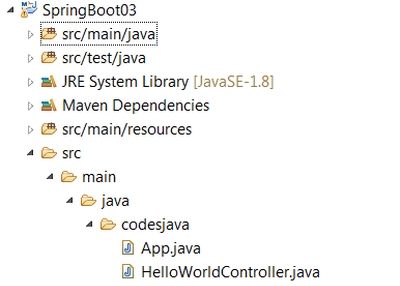
Find great Spring boot JSP hello world example and online placement oriented training on various computer languages here with us at CodesJava.

JSP infotech is one of the best website design and SEO agency in Ahmedabad.
We build sites designed to convert traffic into leads and sales.