


Impact of Machine Learning on Various Industries
Machine learning has revolutionized the way industries operate and has made significant impacts across various sectors. The ability of machines to learn and improve from experience without being explicitly programmed has opened up endless possibilities for innovation and efficiency. In this article, we will explore the profound impact of machine learning on different industries and how it is shaping the future.
Impact of ML on Education
One of the sectors that has seen a tremendous transformation due to machine learning is education. Machine learning algorithms have the ability to process and analyze vast amounts of data, allowing educational institutions to personalize the learning experience for each student. By analyzing student performance, machine learning algorithms can identify areas where a student may be struggling and provide targeted interventions and recommendations. This personalized approach to education has the potential to revolutionize the traditional classroom setting, making learning more accessible and effective for students.
Machine Learning Technology
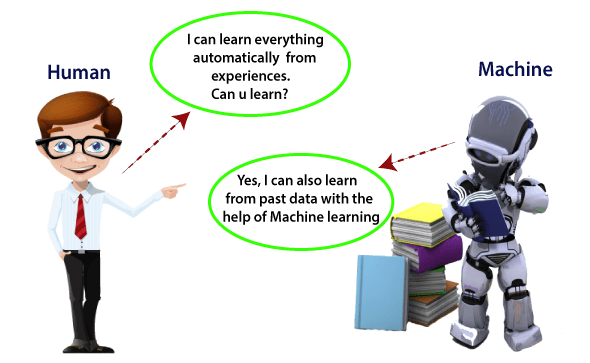
Before diving into the impact of machine learning on various industries, it's essential to understand the technology behind it. Machine learning is a subset of artificial intelligence that focuses on enabling machines to learn from past experiences or data. It involves developing algorithms and models that can analyze and interpret data, allowing machines to make decisions or predictions without being explicitly programmed to do so.
Machine learning algorithms rely on large datasets to train models and make accurate predictions or decisions. These algorithms can be divided into three main types:
- Supervised Learning: In this type of machine learning, the algorithm learns from labeled data, where the input data is paired with the corresponding output or outcome. The algorithm uses these labeled examples to make predictions or classifications on new, unseen data.
- Unsupervised Learning: Here, the algorithm learns from unlabeled data, without any predefined outcomes. The algorithm identifies patterns and relationships within the data, helping to reveal hidden insights or structures.
- Reinforcement Learning: In reinforcement learning, the algorithm learns by interacting with an environment and receiving feedback in the form of rewards or punishments. The algorithm's objective is to maximize the cumulative reward by making optimal decisions or actions.
Machine Learning Applications
Now let's delve into the impact of machine learning across various industries:
1. Healthcare
Machine learning is transforming the healthcare industry by enabling more accurate diagnoses, personalized treatment plans, and efficient drug discovery. Algorithms can analyze medical records, genetic data, and other patient information to identify patterns and make predictions, leading to early detection of diseases and improved patient outcomes. Machine learning also plays a crucial role in medical imaging analysis, helping radiologists identify abnormalities and tumors with higher accuracy.
2. Finance
Financial institutions are leveraging machine learning to detect and prevent fraud, assess creditworthiness, and optimize investment strategies. Machine learning algorithms can analyze vast amounts of financial data in real-time, identifying suspicious transactions and patterns that might indicate fraudulent behavior. These algorithms can also assess credit risk by analyzing customer data and make accurate predictions regarding loan repayments. Additionally, machine learning models aid in portfolio management, providing insights and recommendations for effective investment decisions.
3. Retail
Machine learning has revolutionized the retail industry by enabling personalized marketing, inventory management, and demand forecasting. By analyzing customer data, including browsing behavior and purchase history, machine learning algorithms can provide personalized product recommendations, increasing sales and customer satisfaction. Machine learning also helps retailers optimize their inventory by analyzing sales patterns and predicting product demand. This ensures that the right products are stocked at the right time, reducing costs and minimizing stockouts.
4. Manufacturing
In the manufacturing industry, machine learning is used to improve operational efficiency, predict equipment failures, and optimize supply chain management. By analyzing historical data from sensors and machines, machine learning algorithms can identify patterns that indicate potential equipment failures, allowing for proactive maintenance and minimizing costly downtime. Machine learning models can also optimize production schedules and inventory management, enabling manufacturers to meet demand while minimizing costs.
5. Transportation
Machine learning plays a crucial role in improving transportation systems by optimizing route planning, predicting maintenance needs, and enhancing driver safety. By analyzing historical transportation data, machine learning algorithms can identify the most efficient routes, reducing travel time and minimizing fuel consumption. Machine learning models can also predict maintenance needs for vehicles, such as predicting when a part might fail, allowing for proactive repairs and minimizing breakdowns. Additionally, machine learning algorithms can analyze driver behavior data to identify patterns that might indicate unsafe driving practices, thus improving overall driver safety.
What is Machine Learning?
Machine learning is a branch of artificial intelligence that focuses on enabling machines to learn from data and improve their performance without being explicitly programmed. It involves the development of algorithms and models that can analyze and interpret data, allowing machines to make decisions or predictions based on the patterns and insights they discover.
Machine learning algorithms can be broadly categorized into three types: supervised learning, unsupervised learning, and reinforcement learning. Supervised learning involves training algorithms with labeled data, allowing them to make predictions or classifications on new, unseen data. Unsupervised learning, on the other hand, involves training algorithms with unlabeled data, helping them identify patterns and structures within the data. Reinforcement learning is a type of machine learning where the algorithm learns by interacting with an environment and receiving feedback in the form of rewards or punishments.
Machine learning has become increasingly popular due to its ability to analyze vast amounts of data and extract meaningful insights. By leveraging machine learning, industries across various sectors can improve efficiency, make more accurate predictions, and enhance decision-making processes.
In conclusion, machine learning has had a profound impact on various industries, ranging from education and healthcare to finance and transportation. As the technology continues to evolve, we can expect even more exciting applications and advancements in the future. Students interested in artificial intelligence and machine learning have a vast array of opportunities ahead, as the demand for skilled professionals in this field continues to grow. It is truly an exciting time to be a part of the machine learning revolution!

Artificial Intelligence and Machine Learning both are the terms of computer science.
This article addresses several points on the basis of which we can distinguish between these two terms.OverviewArtificial Intelligence: The word Artificial Intelligence consists of two words "Artificial" and "Intelligence".
There is a misconception that Artificial Intelligence is a system, but it is not an AI system implemented in the system.
" The main differences between AI and ML are:ARTIFICIAL INTELLIGENCE AI manages more comprehensive issues of automating a system.
This computerization should be possible by utilizing any field such as image processing, cognitive science, neural systems, machine learning etc.AI manages the making of machines, frameworks and different gadgets savvy by enabling them to think and do errands as all people generally do.AI is short for Artificial intelligence, where intelligence is defined as the acquisition of knowledge intelligence is defined as the ability to achieve and apply knowledge.The aim is to increase the chances of success and not accuracy.It functions as a computer program that does smart workThe aim is to simulate natural intelligence to solve complex problems.AI is decision making.This leads to the development of a system to imitate humans to respond to behave in a situation.AI will look for an optimal solution.MACHINE LEARNINGMachine Learning (ML) manages which influences the user's machine to benefit from the external environment.
This external environment can be sensors, electronic segments, external storage gadgets, and many other devices.What ML does, depending on user input or requests requested by the client, the framework checks whether it is available on the knowledge base or not.