What is Spider Silk?
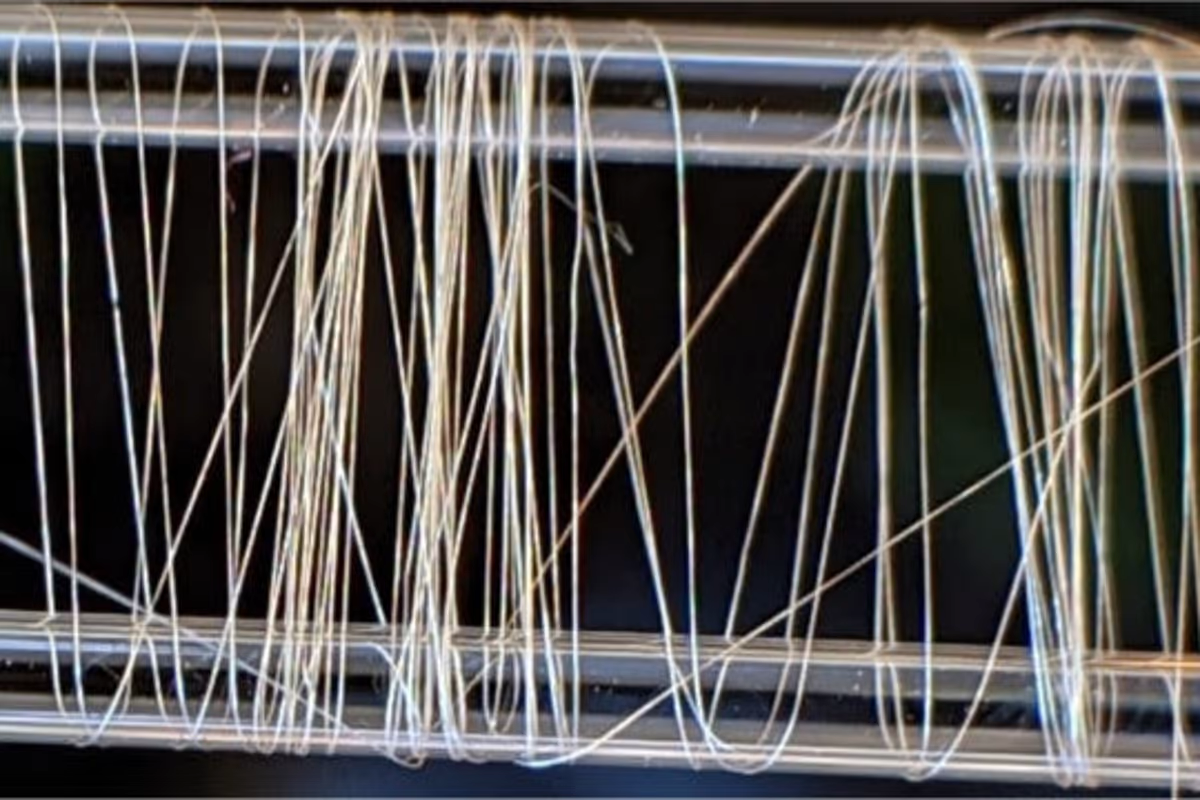
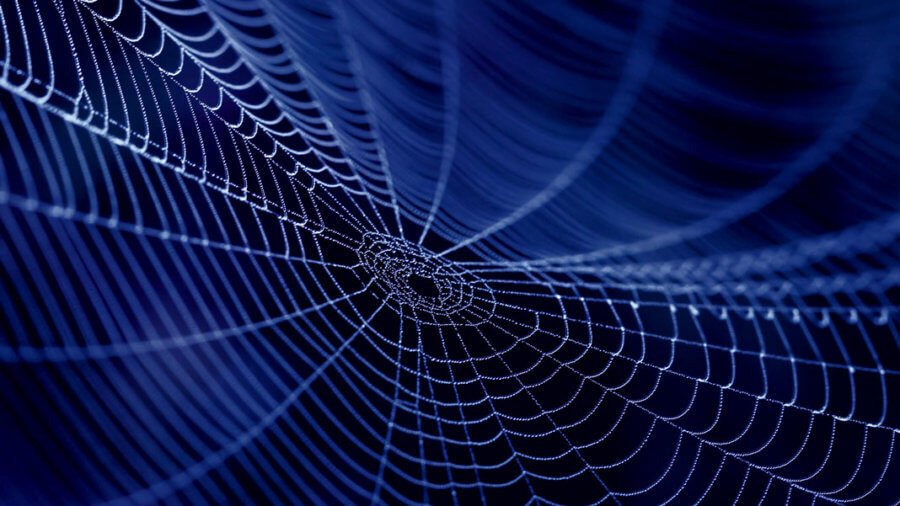
Spider silk is a natural fiber produced by many different spider species to make their webs. There are several different types of silk made by spiders, all with distinct properties and functions. The major ampullate silk that spiders use to build the framework of their webs is remarkable for its combination of strength and elasticity. This silk is five times stronger than steel on an equal weight basis and twice as elastic as nylon. The unique molecular structure and assembly process of spider silk fibers contribute to their outstanding properties. Production and Structure of Natural Spider Silk
Synthetic Spider Silk through spinnerets located on their abdomen. Each spinneret contains many miniature spigots that extrude special fibers consisting mainly of two proteins, dragline silk and spidroin. These proteins consist of repeating amino acid motifs that assemble into beta sheet crystals joined by flexible loops. As the protein chains pass through the spinneret duct, water is removed, facilitating the formation of beta sheet domains responsible for strength and elasticity. Amazing Mechanical Properties
The crystalline beta sheet domains give dragline silk its strength, enabling orb-weaving spiders to capture prey many times their own weight with ease. Meanwhile, the flexible protein loops allow dragline silk to stretch considerably without breaking. Tests have shown dragline silk can undergo reversible stretching of up to 30% of its initial length before permanent deformation occurs. This unique combination of strength and elasticity surpasses other natural and synthetic fibers. Biomimetic Synthetic Spider Silk Production
Due to these remarkable properties, researchers have long sought to bioengineer spider silk. Traditional production methods involve transgenic organisms like goats or silkworms engineered to spin synthetic spider silk proteins. However, these methods can be limited by low yields and difficulties controlling fiber assembly. New biomimetic approaches aim to mimic natural spider silk production more closely by extruding recombinant spider silk proteins from spinnerets under carefully controlled conditions. By studying the solvent environments and shear forces that occur during natural silk spinning, synthetic spinnerets have been developed that can successfully extrude fibers with the correct nanoscale structures and properties approaching natural dragline silk. Continuous flows of water miscible solvents are used to initiate and facilitate self-assembly of the silk proteins into the characteristic beta sheet crystalline domains during extrusion. This bottom-up biomimetic design aims to overcome limitations of earlier transgenic production methods. Applications
If large-scale production of biomimetic synthetic spider silk can be commercially realized, its potential applications are vast. Lightweight yet extremely durable silk fibers could revolutionize ballistic armor, parachutes, tendons/ligaments, and high performance textiles. Spider silk's unique combination of strength and elasticity make it well-suited for applications requiring tensile strength and flexibility. It could replace steel in applications where reduced weight is critical, like aircraft and vehicles. Advances are being made incorporating spider silk into composite materials to further boost its toughness and impact resistance. Synthetic spider silk fibers may also prove useful for advanced biomaterials, since their nanoscale structures closely mimic natural extracellular matrix proteins. Ultimately, the outstanding mechanical properties of spider silk have the potential to enable novel high-tech applications if scalable production methods can achieve consistent mass production of fibers with properties matching natural dragline silk. Future Outlook and Challenges
The promise of spider silk-inspired materials has captured scientific and commercial interest for decades due to their potential applications if mass production barriers can be overcome. Significant strides have been made using both biological and biomimetic approaches, with synthetic spider silk fibers now approaching the mechanical performance of natural dragline silk. However, key challenges remain in developing scalable production systems capable of consistently spinning synthetic silk fibers with reproducible properties on an industrial scale. Major efforts are underway to address production bottlenecks through engineered biomanufacturing strategies and biomimetic spinning technologies. With further optimization and scale-up, these approaches could finally unlock spider silk's potential as a revolutionary high-performance fiber. If low-cost, bulk production systems achieve fiber mechanical properties and yields demanded by various industries, synthetic spider silk could lead to new classes of lightweight yet durable materials transforming sectors from defense and aerospace to textiles and biomaterials engineering. Realizing spider silk's full commercial viability requires overcoming remaining technical hurdles, but its unique blending of strength, flexibility and sustainability continues attracting researchers determined to one day fulfill its transformative promise.
Explore More Related Article On- Synthetic Spider Silk
Discover the Report for More Insights, Tailored to Your Language:
About Author:
Vaagisha brings over three years of expertise as a content editor in the market research domain. Originally a creative writer, she discovered her passion for editing, combining her flair for writing with a meticulous eye for detail. Her ability to craft and refine compelling content makes her an invaluable asset in delivering polished and engaging write-ups.
(LinkedIn: https://www.linkedin.com/in/vaagisha-singh-8080b91)