





The demand for precision and efficiency in manufacturing processes has never been higher, particularly in industries that rely on coils for motors, transformers, and other electrical components. Traditionally, coil winding has been a labor-intensive and time-consuming process. However, Coil Winding Automation has revolutionized the industry by streamlining production, enhancing accuracy, and reducing waste. Companies like Oracle Robotics are leading the way in delivering advanced automation solutions to meet the growing demands of modern manufacturing. In this article, we will explore the key benefits of automating the coil winding process and how it can transform operations across various industries.
1. Enhanced Precision and Consistency
Manual coil winding is susceptible to human errors, leading to inconsistencies in coil tension, wire layering, and winding patterns. Automation eliminates these inconsistencies by ensuring uniform tension control and precise winding patterns. Automated coil winding machines follow programmed instructions with extreme accuracy, resulting in consistently high-quality products that meet industry standards.
2. Increased Production Speed
One of the most significant advantages of Coil Winding Automation is the ability to produce coils at a much faster rate than manual methods. Automated machines can operate continuously without fatigue, reducing cycle times and increasing overall productivity. This speed advantage allows manufacturers to meet higher production demands and fulfill large orders efficiently.
3. Reduced Labor Costs
By automating the coil winding process, manufacturers can reduce their dependence on manual labor, which leads to significant cost savings. Skilled labor for coil winding can be expensive, and training new employees requires time and resources. Automation minimizes labor costs while ensuring a more efficient and reliable production process.
4. Minimized Material Waste
Manual winding processes can result in material wastage due to human error, improper tensioning, or inaccurate wire placement. Automated coil winding machines are designed to use materials more efficiently, reducing wire waste and ensuring optimal usage of raw materials. This contributes to cost savings and promotes sustainability.
5. Improved Quality Control
Automated coil winding systems come equipped with advanced monitoring and quality control features. These systems can detect and correct deviations in real-time, ensuring each coil meets the required specifications. The integration of sensors and vision systems helps manufacturers maintain high-quality standards and reduce defects.
6. Flexibility in Design and Customization
Modern automated coil winding machines offer great flexibility, allowing manufacturers to produce coils of different sizes, shapes, and winding configurations with minimal manual intervention. With programmable settings, machines can switch between different product specifications quickly, making them ideal for custom and specialized coil winding applications.
7. Enhanced Worker Safety
Manual coil winding can be physically demanding and pose safety risks such as repetitive strain injuries, electrical hazards, and handling sharp wires. Automation reduces these risks by minimizing human involvement in the winding process. Workers can focus on machine supervision and quality control rather than performing repetitive and potentially hazardous tasks.
8. Integration with Industry 4.0 Technologies
Automated coil winding systems can be integrated with Industrial IoT (Internet of Things) and other Industry 4.0 technologies. This enables real-time monitoring, predictive maintenance, and data-driven decision-making. Manufacturers can track machine performance, analyze production metrics, and optimize efficiency through smart automation solutions.
9. Scalability for Future Growth
As demand for electric motors, transformers, and other coil-based products increases, manufacturers need scalable solutions to expand production capacity. Automated coil winding machines can be easily upgraded or reconfigured to handle higher volumes without requiring extensive modifications, making them a future-proof investment.
10. Better Energy Efficiency
Modern coil winding automation systems are designed to consume less energy while maintaining high performance. By optimizing motor speeds, reducing idle times, and minimizing material waste, these systems contribute to lower energy costs and support sustainable manufacturing practices.
Conclusion
The shift towards Coil Winding Automation is transforming the way industries produce high-quality coils for various applications. By enhancing precision, increasing speed, reducing costs, and improving overall efficiency, automation offers a compelling advantage for manufacturers looking to stay competitive. Companies like Oracle Robotics are at the forefront of this technological evolution, providing innovative automation solutions tailored to industry needs. As the demand for electrical components continues to rise, investing in automated coil winding solutions will be essential for manufacturers aiming for long-term success and growth.

Electrical Coil Windings - MARKET ADVISORY SERVICES
Electrical Coil Windings market is anticipated to grow with an upward trend as a result of increase in the demand of electrical components such as power grid transformers, white goods, electrical appliances, transducers, electrical motors across the world driving the market.
Electrical coils windings present inside an electrical conductor is being increasingly used with electrical resistors and capacitors to create filters in electrical circuit boards to improve signal processing in electronic and electrical devices pushing the demand for electrical coil windings in the market further.
A low impact restraint that can become a roadblock to the growth of electrical coil windings market is the erratic availability of raw material especially copper that is used extensively for the construction of windings.
Electrical coils or electromagnetic coils are conductive metallic wires wound around a bobbin in order to create and electromagnetic flux force around the electrical coil winding.
Electrical wire wound around in a single direction makes up the simplest form of electrical coil windings while two or more coil windings around a common core are also sold in the market for specific operations and are known as inductively coupled electrical coil windings.
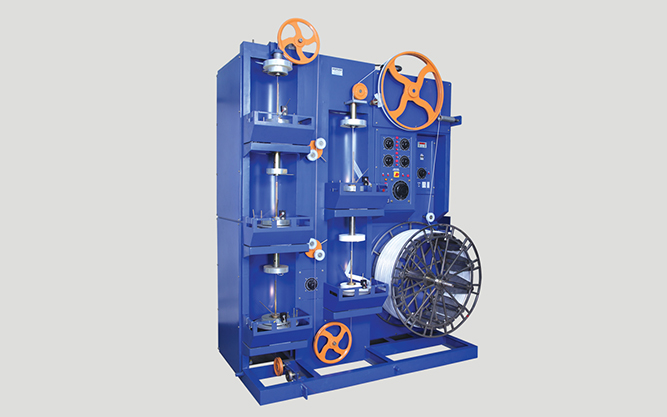
We are Wire Winding Machine Supplier, Exporters and Manufacturers from India.
We export Wire Winding Machine in UAE, Wire Winding Machine in Saudi Arabia, Wire Winding Machine in Africa, Wire Winding Machine in Iraq, Wire Winding Machine in Sri Lanks, Wire Winding Machine in Pakistan, Wire Winding Machine in Spain, Wire Winding Machine in Turky, Wire Winding Machine in Egypt, Wire Winding Machine in Ukraine, Wire Winding Machine in Italy.
Rushi Techniques is also offers tapping machine, winding machine and automatic tape machine at affordable prices.https://www.rushitechniques.com/