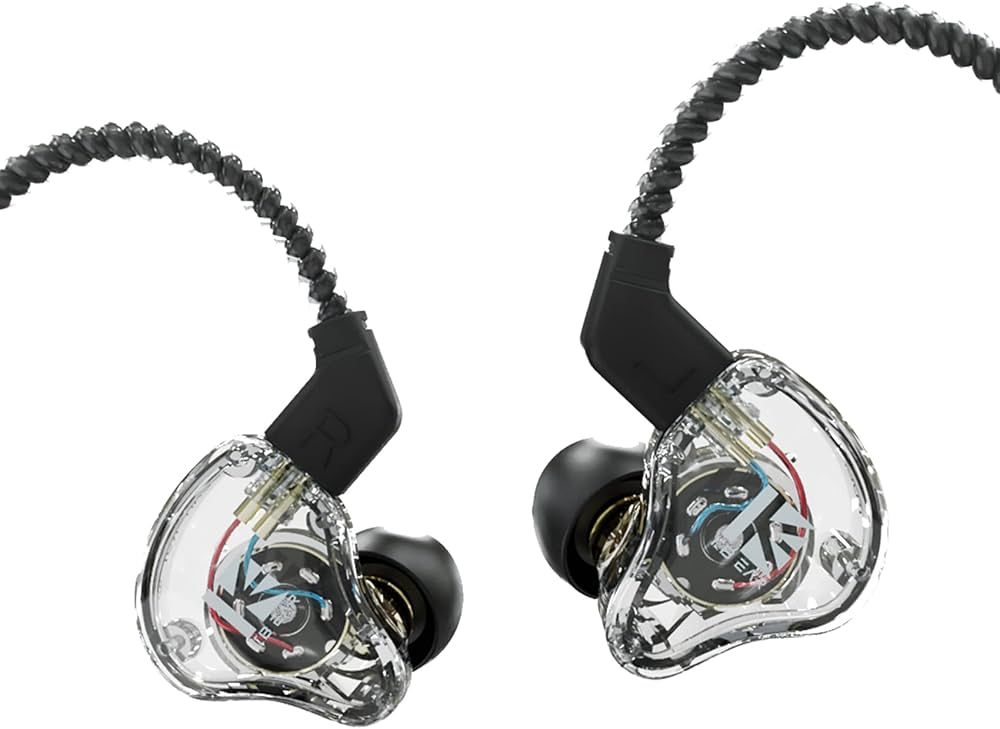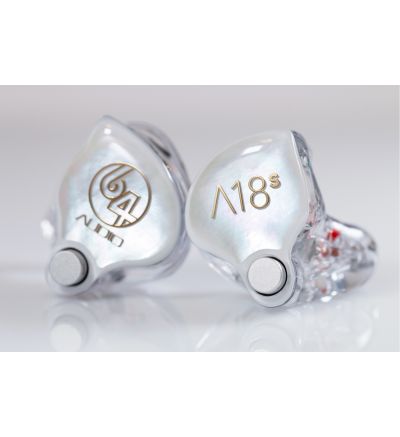
For musicians, sound engineers, and performers, the stage is
where passion meets precision. Every note, every beat, and every word must land exactly where it should — and that’s only possible when you can hear yourself and your bandmates clearly. Enter custom in-ear monitors (IEMs) — a game-changing tool for live performers. More than just a high-tech earbud, custom IEMs offer unparalleled sound isolation, comfort, and clarity that can elevate your performance to new heights.
What Are Custom In-Ear Monitors?
Custom in-ear monitors are earpieces molded to fit the
unique shape of your ear canal. Unlike universal-fit earbuds, which come in standard sizes and rely on silicone or foam tips, custom IEMs are built from impressions of your ears, ensuring a perfect seal and a personalized fit.
But the benefits go far beyond just comfort. Custom IEMs typically feature multiple drivers — tiny speakers inside each earpiece — that separate bass, mids, and treble, delivering studio-quality sound directly into your ears.
Why Sound Clarity on Stage Matters
When you’re on stage, especially in loud environments like
concerts or festivals, it’s easy to lose track of your sound. Floor wedges (traditional stage monitors) blast sound back at you, but they’re often muddied by ambient noise, stage acoustics, and competing monitor mixes. If you can’t hear yourself or your bandmates properly, your pitch, timing, and performance suffer.
Custom IEMs solve this problem by:
Isolating stage noise, reducing the risk of ear fatigue and hearing damage
Providing consistent sound, regardless of your position on stage
Allowing tailored monitor mixes, so you only hear what you need
Benefits of Custom In-Ear Monitors for Live Performances
1. Superior Sound Isolation
One of the biggest challenges in live performance is dealing with ambient noise. Drums, amps, crowd noise — it all competes with the audio you need to hear. Custom IEMs can offer up to 26-30 dB of passive noise isolation, letting you focus solely on your mix without cranking up the volume. This not only improves performance but protects your hearing long-term.
2. Tailored Frequency Response
Many custom IEMs offer multiple driver configurations — from dual-drivers to six or more — each handling different parts of the audio spectrum. This results in cleaner lows, crisp highs, and detailed mids. Bassists might want a warmer low-end response, while vocalists may prefer more midrange clarity. With custom IEMs, you get to choose the signature that matches your role and style.
3. Comfort for Long Sets
Performing for an hour or more under stage lights can be physically demanding. The last thing you need is discomfort from your gear. Since custom IEMs are molded specifically to your ears, they fit like a glove. This means no slipping, no pressure points, and no need for constant adjustment — just comfort, even during high-energy sets.
4. Mobility and Freedom
Say goodbye to staying rooted near floor wedges. With wireless IEM systems and custom monitors, you can move around the stage freely without losing your mix. Whether you're jumping, dancing, or playing an instrument, your audio stays consistent — giving you the confidence to perform at your best.
5. Cleaner Stage Sound
Custom IEMs help reduce on-stage volume, leading to a cleaner front-of-house mix. Without blaring floor wedges and amps spilling into microphones, your live sound engineer has more control over the overall mix, which benefits the audience experience as well.
Choosing the Right Custom IEMs
When shopping for custom in-ear monitors, consider the following:
Driver Count and Type
More drivers generally mean better separation and clarity, but it’s also about how those drivers are tuned. A dual-driver model may be perfect for vocalists, while drummers or DJs might prefer quad or six-driver models for richer bass response.
Fit and Build Quality
Look for reputable brands like Ultimate Ears, 64 Audio, Westone, JH Audio, or Shure. These companies use medical-grade materials, offer excellent warranties, and provide reliable customer support.
Sound Signature
Some IEMs have a flat frequency response for reference listening, while others are tuned for enhanced lows or highs. If possible, try demo units or consult with audio professionals to match your IEM’s tuning with your instrument and performance needs.
Connectivity and Accessories
Most custom IEMs come with detachable cables, and many support Bluetooth adapters for casual listening off-stage. Check what’s included — cleaning tools, storage cases, and cable upgrades can make a big difference.
Caring for Your Custom IEMs
Custom IEMs are an investment, so taking care of them is essential. Here are a few tips:
Clean them regularly with the included cleaning tool to prevent wax buildup.
Store them properly in a hard case when not in use to avoid damage.
Avoid exposing them to moisture or extreme heat.
Check and replace cables if they become worn or frayed.
Real-World Use: What Performers Say
Many professional artists swear by their custom IEMs. Whether it’s a pop vocalist needing crystal-clear pitch feedback, a guitarist trying to lock in with the drummer, or a worship leader at church managing multiple instruments — custom monitors are essential.
In fact, many performers find they sing and play more confidently once they switch to custom IEMs. The ability to hear subtle details — like harmonies, timing cues, and even audience response — creates a more connected, dynamic performance.
Final Thoughts
For anyone serious about live performance, custom in-ear monitors are more than a luxury — they’re a necessity. They protect your hearing, improve your mix, reduce vocal strain, and give you the freedom to focus on your art without distractions. If you’re still relying on floor wedges or struggling with universal-fit earbuds, it might be time to upgrade.
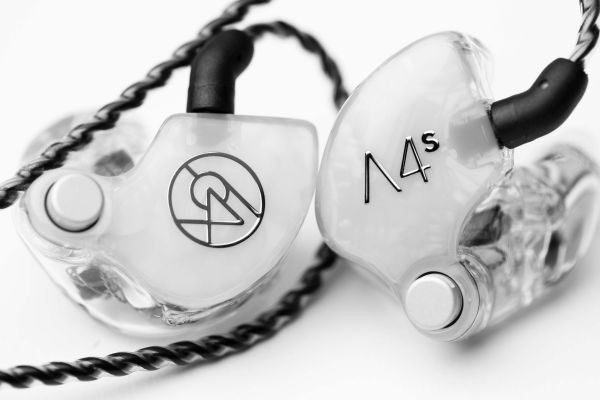

Earphones may also be referred to as in ear headphones due to the fact that each goes inside your ears.
You must be knowledgeable about this earphones since a few more affordable earphones come with all the mp3-players or iPods.
Earbuds are also of distinct kinds; a number of them just sit at the bowls of your own ear, but some go quite deep within the ear fascia.
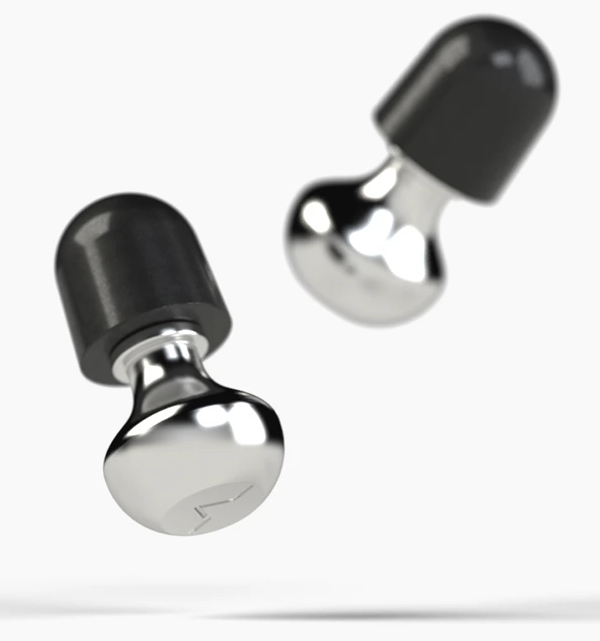
Nevertheless, there's one audio solutions company out there that's aiming to tackle this problem, and that's none other than Flare Audio, who has recently come up with its Flare Audio Calmer In-Ear Earbuds and its Flare Audio Isolate 2 In-Ear Protectors.The Flare Audio Calmer Earbuds are unique small in-ear devices that are designed to reduce the amount of higher-frequencies that reach your inner ear, thus helping to reduce stress while simultaneously increasing the overall sound quality of surrounding noises by simply reducing any unpleasant high-frequenciesThen we also have the Isolate 2 Ear Protectors, which are a pair of revolutionary certified micro ear protectors that use solid aluminum to block noise like never before.
Basically, this pair of ear protectors is designed to protect its users from really loud sound environments, like a concert for example, and ultimately, to protect them from any loud noises that can cause hearing damage and potential hearing loss.Now, join us on our detailed review for both of these audio solutions, which, depending on what you're looking for, will help you decide on whether to pick up the Flare Audio Calmer Earbuds for a more overall sound reduction of annoyingly high-frequency sounds within your daily routine (like car horns and city traffic, the metro/subway breaking as it reaches the subway station stop, etc.)
The standard Calmer Earbuds measure 0.46 inches long by 0.49 inches wide (11.7 x 12.6 mm), while the Calmer Earbuds Mini measure 0.46 inches long by 0.42 inches wide (9.1 x 10.8 mm).
[caption id="attachment_46305" align="aligncenter" width="640"] Flare Audio Calmer Earbuds (Standard-Size)[/caption][caption id="attachment_46306" align="aligncenter" width="640"] Flare Audio Calmer Earbuds (Mini-Size)[/caption]Regardless of what size model you decide to go with, the Flare Audio Calmer Earbuds are really well constructed, as these in-ear earbuds are solely made of soft-touch durable silicone, which not only makes them very comfortable to wear, but also making them very easy to fit within your ear as well as very discrete when worn.I'd also like to add that these specialized high-frequency reduction earbuds do not contain any latex whatsoever in their construction, so if you're allergic to the substance, there's that, which is definitely a plus.Now, moving on to the earbuds' design.
The earplugs themselves are incredibly small, coming in a very compact shape that allows them to be discretely worn at any time.Right at the front of each earbud, you'll notice the company's Flare Logo carved into the silicone itself, which is perfectly centered on each earplug's body.Additionally, each of these earbuds also integrates a short silicone tab right at the top of earbuds' body, which basically helps users to have an easier time removing the earbuds from their ears at any point that they're done wearing them.Lastly, I'd also like to mention that the Flare Audio Calmer Earbuds also come together with their own little Carrying Mesh Bag.This little mesh bag is just slightly bigger than both earbuds combined, but still reasonably compact to be carried around, as well as pretty neat and handy to carry the earbuds with you at all times and perfect to give you a decent place to store them whenever you're not using them.HOW TO WEAR THE CALMER EARBUDS?Starting with the main purpose of the Flare Audio Calmer Earbuds, these earbuds are designed to reduce any potential high-frequencies from occurring sounds around us in order to ultimately reduce the way that our ears' concha - meaning a "shell-shaped" structure within the cavity of our external ear (outer ear) - shapes any incoming sound.With that said, I'd like to note that, while wearing the Calmer Earbuds, one of the first things I noticed is that the highs became much less edgy.The way that our ears shape any incoming sounds from our surroundings is actually quite important, and as such, it should also be explained on this review.
).Now, to put it simply, the main purpose of the Flare Audio Calmer Earbuds is to reduce any high-frequencies within our surrounding sounds to ultimately help us to reduce the stress caused by those same sounds.So, basically, the Flare Audio Calmer Earbuds are designed to help us avoid both our body's physical reactions to sound - i.e.