

The pharmaceutical industry faces unique challenges in managing complex operations, from stringent regulatory requirements to supply chain management and production optimization. Enterprise Resource Planning (ERP) systems have become a game-changing solution to address these challenges. By integrating all aspects of a pharmaceutical company's operations into a single unified platform, ERP systems help streamline processes, reduce costs, and ensure compliance with industry standards.
In the pharmaceutical sector, where the margin for error is incredibly small and regulatory scrutiny is high, having a robust ERP system is not just beneficial—it’s essential for maintaining operational efficiency and product quality. But what exactly makes ERP for pharmaceutical industry so critical? Let’s explore.
ERP System in the Pharmaceutical Industry
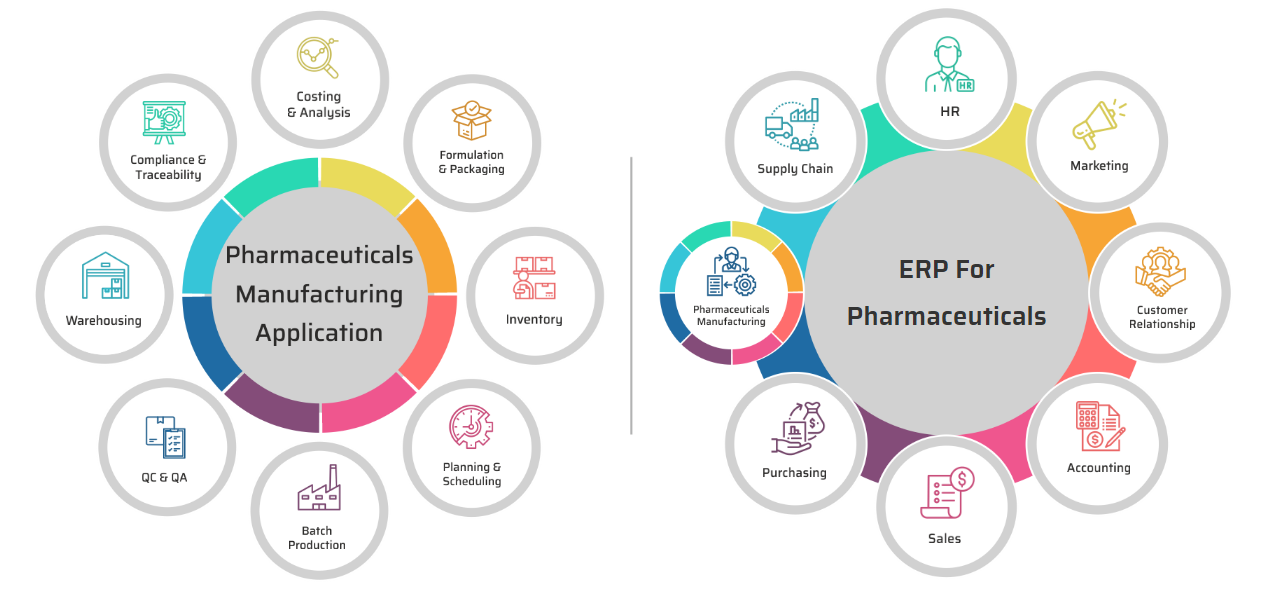
Pharmaceutical companies operate under tight regulations that demand precise control over every stage of the product lifecycle, from research and development to manufacturing and distribution. An ERP system in the pharmaceutical industry addresses this complexity by consolidating various functions—such as manufacturing, procurement, quality control, and distribution—into one platform, allowing for seamless data sharing and decision-making across the organization.
What sets pharmaceutical ERP apart is its ability to manage critical elements like batch tracking, expiry date management, and compliance documentation. For example, real-time data capture helps manufacturers track the movement of ingredients and finished goods at each stage of production, ensuring that regulatory requirements, such as Good Manufacturing Practices (GMP), are always met. ERP systems also generate automatic reports for audits, easing the compliance burden on companies and reducing the risk of human error.
Best Pharmaceutical ERP Software for Business
When selecting best pharmaceutical ERP software for business, it’s crucial to ensure that the solution is not only feature-rich but also customizable to fit the unique needs of the company. A good ERP system should address specific challenges such as:
Regulatory Compliance: Pharmaceutical companies are required to meet multiple regulatory standards, such as those set by the FDA and EMA. ERP software should automate compliance-related tasks and offer tools to track and report necessary documentation.
Inventory Management: Proper inventory management is critical, especially when dealing with expensive or time-sensitive raw materials. The ERP should offer real-time tracking of stock levels, expiry dates, and batch information to prevent shortages or overstocking.
Production Management: The software should streamline production planning, ensuring that resources are optimally allocated and that manufacturing processes are aligned with demand forecasts.
Supply Chain Integration: ERP software should seamlessly integrate with suppliers and distributors, ensuring a smooth flow of materials and finished products across the supply chain.
The best pharmaceutical ERP software for business must not only enhance day-to-day operations but also provide insights that lead to smarter, data-driven decisions. Popular solutions in the industry, such as SAP S/4HANA for Pharmaceuticals, Microsoft Dynamics 365, and Oracle NetSuite and NestorBird, are designed to tackle the unique challenges faced by pharmaceutical companies, helping them scale and adapt to market changes.
ERP Enhances Efficiency in Pharma Industry
Efficiency is one of the key drivers behind the adoption of ERP systems in the pharmaceutical industry. With the complex nature of pharma manufacturing and the importance of compliance, reducing inefficiencies can have a significant impact on both profitability and safety.
Automating Time-Consuming Tasks: ERP systems automate manual tasks such as inventory tracking, order processing, and compliance reporting, significantly reducing human errors and freeing up resources for more strategic activities.
Real-Time Data Access: Immediate access to real-time data allows companies to respond faster to changing market conditions. For instance, if an issue arises in the supply chain or if production delays occur, managers can make quick decisions to minimize impact.
Optimized Resource Utilization: ERP software helps pharmaceutical companies make better use of their resources, ensuring that production schedules align with available inventory and that equipment is maintained regularly to prevent costly downtime.
Fewer Compliance Issues: By automating compliance processes and ensuring that all records are stored and tracked properly, ERP systems help pharmaceutical companies avoid costly fines and penalties due to missed or inaccurate reporting.
By eliminating inefficiencies across departments, ERP systems ultimately enhance productivity and profitability, while reducing operational costs in the pharmaceutical industry.
Manufacturing Solution for Pharmaceutical Industry
The manufacturing solution for pharmaceutical industry needs to address the complexity of the production process, which involves everything from raw material procurement to quality checks, packaging, and final product distribution. An ERP system designed specifically for pharmaceutical manufacturers can offer:
Comprehensive Batch Management: Pharmaceuticals are often produced in batches, and ERP systems provide full visibility into the production process, helping companies manage batch-related data such as ingredient sourcing, production timelines, and compliance reports.
Quality Control & Assurance: With quality being a critical focus, ERP systems allow for real-time monitoring of quality control measures, ensuring that every batch adheres to regulatory standards and internal specifications. Any deviation is flagged, and corrective actions can be taken promptly.
Maintenance Management: Pharmaceutical companies rely on equipment that must be properly maintained to ensure smooth and safe operations. ERP systems can schedule and track preventive maintenance tasks, reducing the risk of costly production stoppages.
Automated Documentation: Compliance documentation, such as certificates of analysis and quality checks, is automatically generated and stored in the system, reducing manual workloads and improving audit readiness.
These manufacturing capabilities streamline operations, reduce errors, and ensure the highest quality standards throughout the production process, from raw material procurement to packaging.
ERP for Pharmaceutical Industry Challenges & Benefits
Implementing an ERP system in the pharmaceutical industry offers tremendous benefits, but it’s not without challenges. Let’s take a deeper look at both.
Challenges
High Initial Investment: The cost of implementing an ERP system can be significant, especially when it requires customization for pharmaceutical-specific needs such as batch tracking and regulatory compliance.
Data Migration: Migrating data from legacy systems to a new ERP platform is often a complex and time-consuming process. Ensuring data accuracy and completeness during this transition is crucial to avoid operational disruptions.
Employee Training and Change Management: A successful ERP implementation requires comprehensive training to ensure all employees can use the system effectively. Additionally, organizational change management is necessary to get buy-in from all departments and encourage smooth adoption.
Complex Regulatory Compliance: Pharmaceutical companies operate in a highly regulated environment, and the ERP system must be continuously updated to meet changing regulations. Ensuring that the software stays compliant can be a challenge as industry standards evolve.
Benefits
Increased Efficiency and Productivity: Automation of routine tasks such as inventory tracking, order processing, and report generation allows employees to focus on more value-adding activities.
Better Decision-Making: With real-time access to accurate data, decision-makers can respond faster to market demands and unforeseen issues, improving overall agility.
Enhanced Compliance: ERP systems automate compliance-related tasks, ensuring that pharmaceutical companies stay on top of regulatory requirements and avoid costly penalties.
Cost Reduction: By optimizing resource allocation, reducing manual errors, and improving inventory management, ERP systems lead to long-term cost savings.
Conclusion
ERP systems are vital for pharmaceutical companies to streamline operations, ensure compliance, and enhance efficiency. By integrating critical functions like manufacturing, inventory management, and regulatory reporting, ERP systems reduce errors and improve decision-making. Despite the initial challenges of implementation, the long-term benefits—such as cost reduction, better resource management, and improved product quality—make ERP an essential tool for staying competitive and compliant in the pharmaceutical industry.