

The construction industry is undergoing a seismic shift, moving beyond traditional cost and time efficiency to embrace sustainability as a core driver of competitiveness.
With rising environmental regulations, global commitments to carbon neutrality, and growing client demand for green buildings, construction firms are under pressure to digitize sustainability.
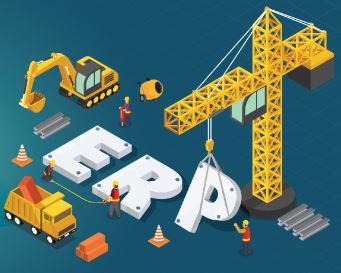
ERP (Enterprise Resource Planning) systems are no longer just project management tools they are becoming the central nervous system for tracking carbon emissions, waste management, and compliance reporting.
This report explores the latest ERP trends enabling sustainability in construction, with a forecast on how businesses can align digital transformation with environmental responsibility.
Current Industry Context
Construction contributes nearly 40% of global carbon emissions, with massive energy use, material consumption, and waste generation.
Governments and regulators worldwide are tightening sustainability norms India’s Energy Conservation Building Code (ECBC), RERA, and mandatory Environmental Impact Assessments (EIA) are prime examples.
At the same time, investors and clients increasingly favor firms demonstrating environmental, social, and governance (ESG) compliance.
Digital solutions are stepping in to bridge the gap: ERP systems now integrate modules to capture, analyze, and report environmental data, enabling construction firms to move from reactive compliance to proactive sustainability leadership.
Global ERP Market Outlook in Construction
• The global construction ERP market is projected to grow at a CAGR of 9–11% through 2030, with sustainability-focused modules being among the fastest-growing features.
• Sustainability tracking, IoT-enabled waste monitoring, and carbon accounting are emerging as standard ERP capabilities.
• By 2027, over 65% of mid-to-large construction companies are expected to adopt ERP systems that integrate sustainability and compliance data.
Key ERP Sustainability Trends (2025–2030)
1. Carbon Footprint Tracking Becomes Standard
ERP platforms are integrating carbon accounting dashboards to measure emissions across supply chains, material sourcing, and onsite activities. Firms can compare project carbon intensity, forecast emissions, and report against global frameworks like ISO 14064 and GHG Protocol.
2. Waste Management Digitization
Construction sites generate an estimated 1.3 billion tons of solid waste annually worldwide. ERP systems now include real-time waste tracking, recycling management, and smart inventory utilization. This helps reduce surplus material, track reuse, and align with zero-waste construction targets.
3. Compliance Automation
Compliance with environmental, labor, and safety laws is increasingly automated through ERP. Systems generate audit-ready reports, flag non-compliance risks, and integrate with government portals (e.g., GST e-invoicing, RERA documentation in India). This reduces legal exposure and improves trust with regulators and investors.
4. IoT and ERP Convergence for Sustainability
Sensors track energy usage, dust emissions, and water consumption in real time, feeding data directly into ERP. This convergence allows for predictive sustainability planning and more accurate compliance monitoring.
5. Sustainability as ROI, Not Cost
ERP is shifting sustainability from a cost center to a value generator. Firms leveraging sustainability-enabled ERP report lower operating costs, higher client trust, and access to green financing. In India, green-certified projects can command 5–10% higher valuations.
India-Specific Outlook
India’s construction sector, projected to reach USD 1.4 trillion by 2030, faces increasing scrutiny on carbon emissions, safety, and transparency. ERP-driven sustainability is being accelerated by:
• Government regulations – RERA, GST, ECBC, EIA clearances.
• Smart Cities Mission – demand for digital, green construction.
• Corporate ESG mandates – firms needing to align with SEBI ESG disclosure norms.
• Labor compliance tracking – ERP helping contractors ensure ethical workforce management.
Local adoption of Odoo ERP, Tally-integrated compliance, and AWS-hosted rental ERPs is making sustainability modules affordable, even for subcontractors and mid-sized firms.
Odoo as a Sustainability-Driven ERP Solution
Among ERP platforms, Odoo ERP for construction stands out as a versatile and modular solution that can be tailored to construction firms’ sustainability needs.
Its open-source foundation and affordability make it accessible for both large enterprises and subcontractors, aligning perfectly with the trend of democratized digital transformation.
• Carbon and Energy Tracking – With custom modules, Odoo can integrate IoT sensors and carbon dashboards to help firms monitor emissions and energy usage in real time.
• Waste Management – Odoo’s inventory and project modules can be extended to track material usage, minimize waste, and promote recycling initiatives.
• Compliance Automation – Seamless integration with GST, RERA, and Indian labor law compliance ensures audit-ready documentation and reduced risk exposure.
• Sustainability Reporting – Odoo’s robust reporting tools enable custom ESG dashboards, giving decision-makers real-time insights into sustainability KPIs.
• Cloud Deployment – With options to run Odoo on AWS or private cloud, construction firms can adopt scalable, rental-based ERP models without heavy upfront costs.
By combining flexibility, affordability, and modular design, Odoo empowers construction firms to align sustainability goals with business performance, making it a practical solution for tracking carbon, waste, and compliance in real-world projects.
Sustainability in construction is no longer a buzzword it is a regulatory necessity, financial opportunity, and brand differentiator.
ERP systems are evolving into the backbone of sustainable construction, enabling firms to track carbon, minimize waste, and automate compliance.
As we look toward 2030, companies that embed sustainability-driven ERP practices will not only comply with stricter norms but also gain a competitive edge in winning projects, securing funding, and building trust with clients.
To know more how we can help you incorporate the ERP trends in your construction industry business drop us a mail at sales@apagen.com or call us on +91 9971800665.