Privacy is perhaps the greatest currency of the digital world. We share more information online than ever, from our financial transactions to our health data. But listen carefully: each time we verify who we are or what we possess, we stand a risk of leaking more than we want to.
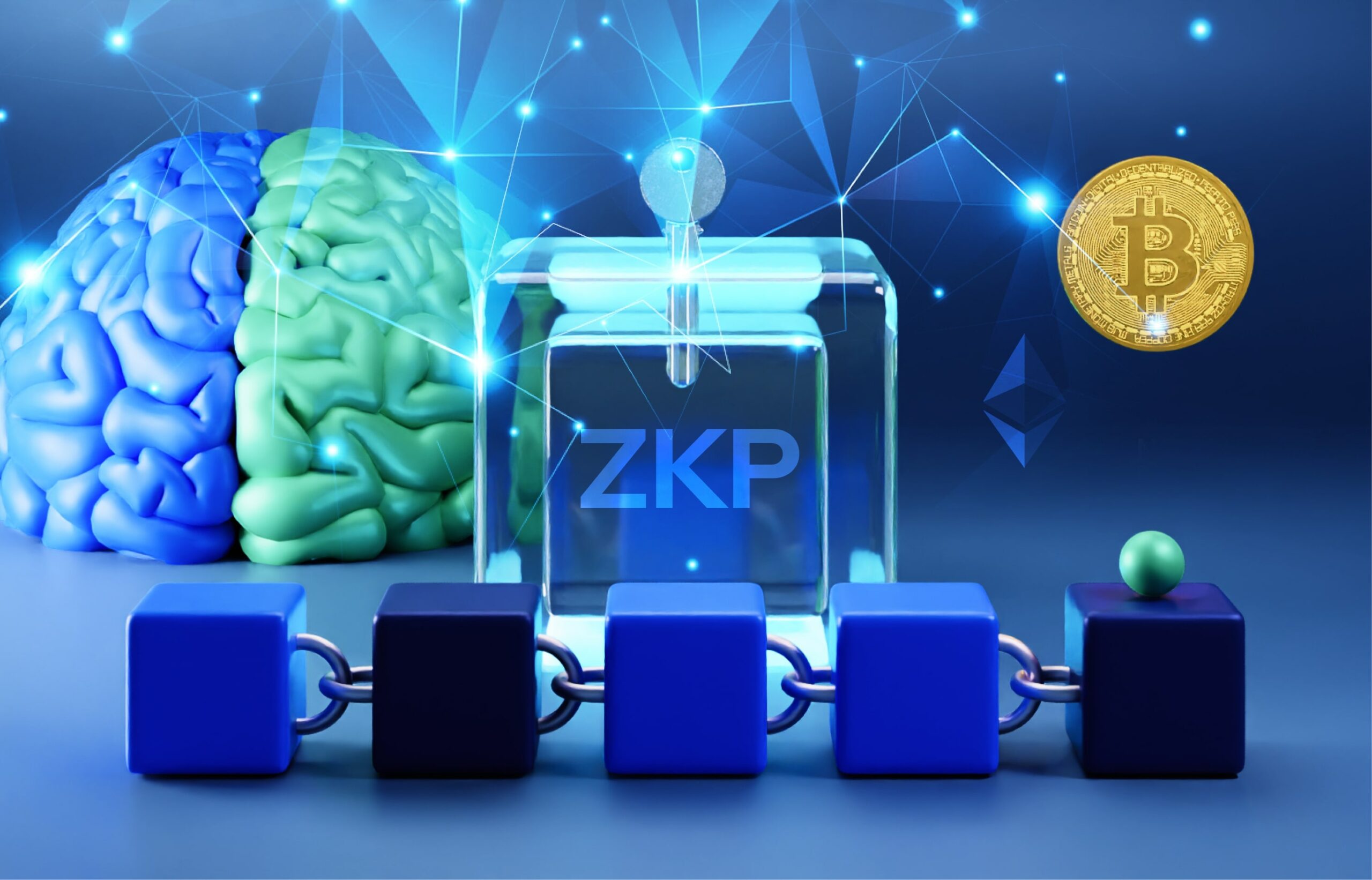
This is where Zero-Knowledge Proofs (ZKPs) come in—a groundbreaking crypto innovation that lets you prove something is true without revealing the underlying data. Think "I know the password" without ever actually entering the password.
What Are Zero-Knowledge Proofs Exactly
Fundamentally, a Zero-Knowledge Proof is a mathematical method in which one party (the verifier) can cause another (the prover) to guarantee that something holds without divulging any other information.
The traditional analogy
Suppose a locked door with a secret code. You'd like to demonstrate that you possess the code without disclosing it. With a Zero-Knowledge Proof, you can provide evidence that you do have the code by merely stating that you can pass through the door—without disclosing the code.
Why ZKPs Are a Game-Changer
Unmatched Privacy
ZKPs allow individuals to prove or verify without revealing personal data. This is monumental for industries like banking, healthcare, and government services.
Scalability in Web3
Blockchains are not scalable, but ZKPs like zk-SNARKs and zk-STARKs enable faster, lighter, and more secure transactions. Technologies like zkSync, StarkNet, and Polygon zkEVM are already constructing scalable Web3's future.
AI & Data Security
Because AI models require vast quantities of personal and business data, ZKPs can store models trained on sensitive data without ever exposing raw data—enabling a new age of privacy-preserving AI.
Real-Life Use Cases
Finance (DeFi & Banking): Secure payments and identity checks without exposing account details.
Healthcare: Prove that you meet certain medical conditions (e.g., vaccinated) without exposing complete health records.
Voting Systems: Allow electronic voting where votes are hidden but can be verified.
AI Collaboration: Multiple businesses can train shared AI models without sharing proprietary data sets.
Challenges to Adoption
Like with any new technology, ZKPs have problems:
Computational Cost: Some proofs are expensive to calculate, slowing adoption.
Complexity: Implementation of ZKPs requires advanced cryptography skills.
Standardization: Industry standards are being built.
But like during the dawn of the internet age, innovation is progressing fast enough to drive costs down and ease of use up.
The Future: Privacy-First Digital World
In the next 5 years, Zero-Knowledge Proofs could be as common as HTTPS. Imagine a world where you're able to:
Authenticate your age without showing your ID.
Obtain a loan without giving away all your financial history.
Train AI models collaboratively without divulging trade secrets.
That's not science fiction—that's what ZKPs are making possible today.
Conclusion
Zero-Knowledge Proofs aren't a cryptographic trick; they're the foundation of 21st-century digital trust. Where Web3, AI, and data privacy converge, ZKPs are quietly leading a revolution—where security and transparency aren't the enemies of privacy.
The revolution is already quietly in progress. The question is: Are you ready to prove without revealing?