Affective Computing Gains Emotional Momentum Worldwide
Cutting-edge systems that can sense, interpret, and simulate human emotion are moving from research labs into everyday technologies. This rapidly evolving field—known as affective computing—is being embraced across industries, transforming everything from virtual assistants and automotive interfaces to healthcare and customer experience platforms.
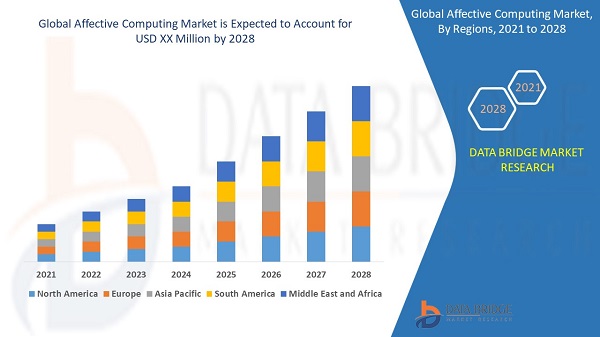
According to Straits Research, “The global affective computing segment size was valued at USD 80.81 billion in 2024 and is expected to grow from USD 105.5 billion in 2025 to reach USD 890.16 billion by 2033, growing at a CAGR of 30.55% during the forecast period (2025–2033).”
Regional Advances & Innovation Highlights
United States & Voice-First Interfaces
New York-based startup Hume AI recently launched a next-gen empathic voice interface, enabling virtual assistants—including those built by leading AI labs—to both express and understand emotional tone during conversations. While still being fine-tuned for real-world deployment, the system represents a leap forward for emotionally intelligent machines in industries such as mental health support and customer service.
Emotion Recognition in Devices
American tech leaders are now embedding emotion-sensing capabilities directly into hardware. Intel's latest processors support real-time emotion recognition, significantly enhancing applications like driver fatigue detection and remote health diagnostics. Meanwhile, Qualcomm’s AI chips now power mobile and automotive platforms with advanced emotion-aware tools for smarter, more personalized experiences.
Global Players Shaping Affective Computing
Leading Tech Giants
Major corporations are at the forefront of affective technology innovation:
IBM applies emotion-aware AI across healthcare, customer engagement, and security systems.
Microsoft enables emotion recognition through its Azure AI suite, used in virtual assistants and accessibility tools.
Google is incorporating empathic sensing across products while focusing on responsible AI development.
Apple continues integrating subtle emotion-sensing features in wearables and devices.
Affectiva, based in the United States and spun out of MIT, remains a major force in emotion AI—especially in advertising analytics and in-vehicle systems.
Innovators and Startups
Canadian company NuraLogix has developed a touchless technology called Anura, capable of analyzing vital signs and emotional states through facial scans. Its newest product, a smart mirror that tracks emotional wellness in real time, is gaining traction in consumer health.
In the U.S., Behavioral Signal Technologies, led by researchers and engineers, has created speech analytics tools that detect emotional cues in voice, now used in customer care and banking. These platforms identify not just what is said—but how it’s said.
Academic and Research-Driven Contributions
MIT professor Rosalind Picard, who first coined the term "affective computing," continues to be a pioneer in this space. Her work laid the foundation for both wearable emotion trackers and commercial emotion AI applications. Another leader, Maja Pantić, has contributed groundbreaking research in facial emotion analysis and now consults for financial institutions applying these tools in digital banking.
In the UK, Hatice Gunes at the University of Cambridge is researching socially intelligent machines and emotionally adaptive avatars for virtual interaction, pushing the boundary of human-AI relationships.
Industry Trends and Growth Factors
One of the most notable shifts is the transition from cloud-based emotion analysis to on-device processing. Devices powered by next-generation AI chips now perform facial and voice emotion recognition locally, reducing latency and addressing privacy concerns.
Multimodal emotion detection is also gaining ground. Instead of relying on just facial cues or voice, systems now analyze combined data sources—facial expressions, tone of voice, physiological responses—for a more accurate emotional reading.
Healthcare and automotive remain two of the most promising application areas. In medicine, emotion-aware AI is used in virtual therapy and monitoring patients’ psychological well-being remotely. In vehicles, emotion AI is increasingly found in driver monitoring systems that detect distraction, fatigue, or stress.
Another important trend is the growing call for ethical AI development. Researchers have raised concerns about bias in emotion datasets, especially regarding how emotion is expressed across different races, ages, and cultural backgrounds. Companies are now investing more in building inclusive datasets and involving diverse teams in training emotion recognition models.
With these advances, data privacy has emerged as a central concern. Affective computing inherently involves collecting sensitive biometric and emotional data, leading to increased scrutiny from regulators, particularly in Europe. This has led to innovation in privacy-preserving AI methods and stronger controls over data usage.
Noteworthy Industry Developments
Hume AI’s new emotional interface is now being used in trials with several voice assistant platforms, enabling emotionally responsive interactions in customer-facing applications.
Intel and Qualcomm have rolled out chips with built-in emotion AI accelerators, allowing manufacturers to embed emotional awareness in everything from wearables to cars.
NuraLogix’s new smart mirror, which offers emotion and health tracking in real time, is being explored for use in gyms, wellness centers, and homes.
Affectiva continues to dominate in the automotive sector, working with global vehicle manufacturers to integrate emotion detection in driver monitoring systems.
Amazon and Microsoft have increased research spending on empathy-driven AI systems, with goals of improving human-computer collaboration in healthcare and education.
Global Reach and Country-Specific Insights
The United States remains a leader in affective computing, with Silicon Valley hosting many startups and research centers. Canada’s AI sector has produced key contributions, including emotion-recognition software used in public health.
In Europe, countries like Germany and the UK are investing heavily in ethical AI research, while Scandinavian nations are emphasizing privacy-first approaches to emotion data. Japan and South Korea are leveraging affective computing in robotics and caregiving, addressing aging population challenges with emotionally intelligent companion robots.
Meanwhile, China is deploying emotion-sensing tools in educational tech and public service platforms, although some applications have raised privacy debates.
Summary (3-Line Ending Paragraph)
Affective computing is no longer a futuristic concept—it's becoming an essential layer in how machines understand and respond to humans. From phones and cars to healthcare and education, emotion-aware systems are being designed to adapt and empathize. As this emotional intelligence spreads globally, the future of human-AI interaction is being rewritten in real time.