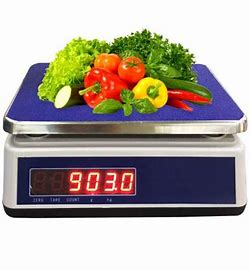
In today’s fast-evolving industrial and laboratory environments, precision is paramount. Whether you’re working in pharmaceuticals, food processing, quality control, or research and development, the accuracy of your measurements can significantly impact product quality, compliance, and operational efficiency. This is where a high-precision table scale becomes an indispensable tool.
A Table Scale is designed to provide accurate weight measurements in a compact, user-friendly form factor. However, not all table scales are created equal. With a wide variety of models available on the market, selecting the right one can be a daunting task. To help you make an informed decision, this guide will explore the top 5 features to look for in a high-precision table scale—ensuring you invest in a device that meets your exact needs.

At Ningbo Develo Precision Mac Co., Ltd., we specialize in manufacturing and supplying advanced weighing solutions, including precision table scales that combine reliability, durability, and cutting-edge technology. Our expertise in this field allows us to understand the critical features that make a table scale truly effective in demanding environments.
Why Precision Matters in a Table Scale?
Before diving into the features, it’s important to understand why precision is so crucial. Inaccurate measurements can lead to:
- Product inconsistencie
- Regulatory non-complianc
- Increased waste and cost
- Compromised research outcomes
Therefore, choosing a table scale with the right features ensures that your measurements are reliable, repeatable, and traceable.
Transitioning to the Top 5 Features
Now that we’ve established the importance of precision, let’s explore the key features that distinguish a high-quality table scale from the rest. These features not only enhance accuracy but also improve usability, durability, and integration with your existing systems.
1. High-Resolution Load Cells
At the heart of every table scale is the load cell—the sensor that converts weight into an electrical signal. For high-precision applications, the quality and resolution of the load cell are paramount.
- Look for load cells with high sensitivity and low drift
- Ensure the scale offers fine readability, often down to 0.001 grams or better, depending on your application
- Advanced load cells also feature temperature compensation to maintain accuracy in varying environments.
2. Robust and Stable Construction
Precision is not just about electronics; mechanical stability plays a vital role.
A sturdy platform made from stainless steel or other durable materials reduces vibrations and external interference.
Anti-slip feet and shock-absorbing mounts help maintain consistent readings.
Compact design with a low center of gravity enhances stability during weighing.
3. User-Friendly Interface and Display
Ease of use is critical, especially in fast-paced environments.
Look for clear, backlit LCD or LED displays that show weight, units, and status indicators.
Intuitive keypad or touchscreen controls simplify operations like tare, unit conversion, and calibration.
Some models offer multilingual support and programmable functions for customized workflows.
4. Connectivity and Data Management
Modern industrial and laboratory settings demand seamless data integration.
USB, RS232, Bluetooth, or Wi-Fi connectivity allows for easy data transfer to computers, printers, or cloud systems.
Built-in memory for storing measurement data enhances traceability.
Compatibility with software for statistical process control (SPC) or inventory management is a plus.
5. Calibration and Compliance Features
To maintain accuracy over time, calibration is essential.
Look for scales with easy-to-use internal or external calibration options.
Compliance with international standards such as ISO, OIML, or NTEP ensures legal-for-trade use.
Some models include automatic calibration reminders and diagnostic alerts.
Why Choose Ningbo Develo’s Table Scales?
At Ningbo Develo Precision Mac Co., Ltd., our table scales are engineered with these features and more. We combine precision engineering with user-centric design to deliver scales that excel in accuracy, durability, and connectivity. Our products undergo rigorous quality control and come with comprehensive support and warranty services.

Conclusion
Selecting the right high-precision table scale is a critical decision that impacts the accuracy, efficiency, and compliance of your operations. By focusing on the key features outlined above—load cell quality, construction, user interface, connectivity, and calibration—you can ensure that your investment delivers reliable performance for years to come.
For more information on our range of precision table scales and how they can meet your specific needs, contact Ningbo Develo Precision Mac Co., Ltd. today. Our team of experts is ready to assist you in finding the perfect weighing solution tailored to your industry.
Frequently Asked Questions (FAQ)
Q1: What is the difference between a standard and a high-precision table scale?
A: High-precision table scales offer finer readability, better load cell technology, and enhanced stability, making them suitable for applications requiring exact measurements.
Q2: How often should I calibrate my table scale?
A: Calibration frequency depends on usage and regulatory requirements, but typically ranges from monthly to annually. Many high-precision scales offer automatic calibration features.
Q3: Can I connect my table scale to a computer or printer?
A: Yes, most modern table scales support multiple connectivity options such as USB, RS232, or wireless connections for data transfer and printing.
Q4: Are Ningbo Develo’s table scales suitable for hazardous environments?
A: We offer models with certifications and designs suitable for various industrial environments, including those requiring explosion-proof or dust-resistant features.
Q5: What is the maximum weight capacity of your table scales?
A: Our table scales range from a few grams up to several kilograms, depending on the model and application requirements.


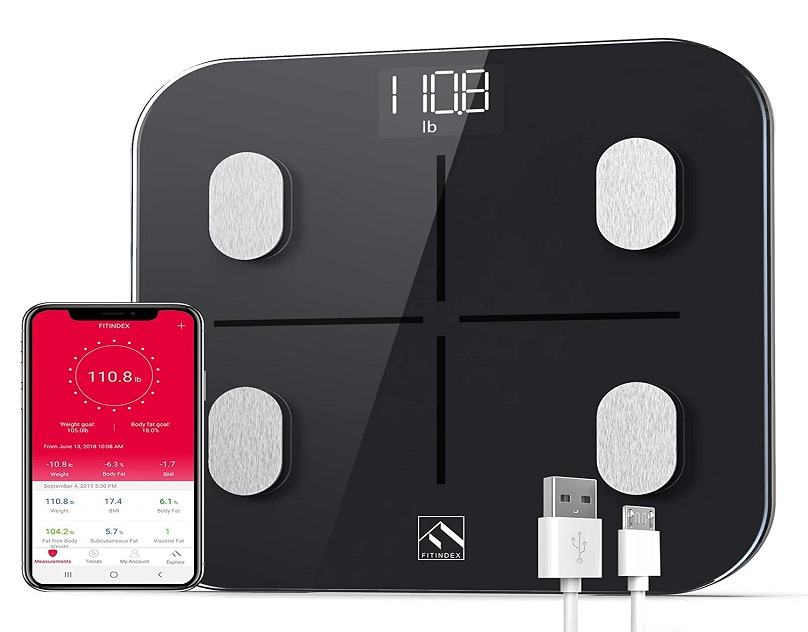
Smart Scale is a type of electronic weighing machine, which is used to measure an object or a person’s weight.
In this report, it covers glass platform, stainless steel platform and other product type.The market volume of smart Scale is related to downstream demand and global economy.
As there will always be some uncertainties in the global economy in the following years, the growth rate of smart scale market might not keep that fast.
But it is surely forecasted that the market of smart scale is still promising.In 2015, the China currently has a 28.68% production market share of the total worldwide smart scale industry, followed by the EU with 30.71%.Download FREE Sample of this Report @ https://www.grandresearchstore.com/report-sample/global-smart-scale-2019-2024-253According to this study, over the next five years the Smart Scale market will register a 0.094 CAGR in terms of revenue, the global market size will reach US$ 300 million by 2024, from US$ 180 million in 2019.
In particular, this report presents the global market share (sales and revenue) of key companies in Smart Scale business, shared in Chapter 3.This report presents a comprehensive overview, market shares, and growth opportunities of Smart Scale market by product type, application, key manufacturers and key regions and countries.This study considers the Smart Scale value and volume generated from the sales of the following segments:Segmentation by product type: breakdown data from 2014 to 2019, in Section 2.3; and forecast to 2024 in section 11.7.Glass PlatformStainless Steel PlatformOthersSegmentation by application: breakdown data from 2014 to 2019, in Section 2.4; and forecast to 2024 in section 11.8.ResidentialGymhealth FacilitiesOthersThis report also splits the market by region: Breakdown data in Chapter 4, 5, 6, 7 and 8.AmericasUnited StatesCanadaMexicoBrazilAPACChinaJapanKoreaSoutheast AsiaIndiaAustraliaEuropeGermanyThe report also presents the market competition landscape and a corresponding detailed analysis of the major vendor/manufacturers in the market.The key manufacturers covered in this report: Breakdown data in in Chapter 3.FitbitWithingsBlipcarePyleTanitaTayloriHealth LabsQardioGarminPICOOCMoikitYolandaXiaomiIn addition, this report discusses the key drivers influencing market growth, opportunities, the challenges and the risks faced by key manufacturers and the market as a whole.
It also analyzes key emerging trends and their impact on present and future development.Research objectivesTo study and analyze the global Smart Scale consumption (value & volume) by key regions/countries, product type and application, history data from 2014 to 2018, and forecast to 2024.To understand the structure of Smart Scale market by identifying its various subsegments.Focuses on the key global Smart Scale manufacturers, to define, describe and analyze the sales volume, value, market share, market competition landscape, SWOT analysis and development plans in next few years.To analyze the Smart Scale with respect to individual growth trends, future prospects, and their contribution to the total market.To share detailed information about the key factors influencing the growth of the market (growth potential, opportunities, drivers, industry-specific challenges and risks).To project the consumption of Smart Scale submarkets, with respect to key regions (along with their respective key countries).To analyze competitive developments such as expansions, agreements, new product launches, and acquisitions in the market.To strategically profile the key players and comprehensively analyze their growth strategies.Get the Complete Report & TOC @ https://www.grandresearchstore.com/semiconductor-and-electronics/global-smart-scale-2019-2024-253Table of content2019–2024 Global Smart Scale Consumption Market Report1 Scope of the Report1.1 Market Introduction1.2 Research Objectives1.3 Years Considered1.4 Market Research Methodology1.5 Economic Indicators1.6 Currency Considered2 Executive Summary2.1 World Market Overview2.1.1 Global Smart Scale Consumption 2014–20242.1.2 Smart Scale Consumption CAGR by Region2.2 Smart Scale Segment by Type2.2.1 Glass Platform2.2.2 Stainless Steel Platform2.2.3 Others2.3 Smart Scale Consumption by Type2.3.1 Global Smart Scale Consumption Market Share by Type (2014–2019)2.3.2 Global Smart Scale Revenue and Market Share by Type (2014–2019)2.3.3 Global Smart Scale Sale Price by Type (2014–2019)2.4 Smart Scale Segment by Application2.4.1 Residential2.4.2 Gym2.4.3 health Facilities2.4.4 Others2.5 Smart Scale Consumption by Application2.5.1 Global Smart Scale Consumption Market Share by Application (2014–2019)2.5.2 Global Smart Scale Value and Market Share by Application (2014–2019)2.5.3 Global Smart Scale Sale Price by Application (2014–2019)CONTACT US:276 5th Avenue, New York , NY 10001,United StatesInternational: (+1) 646 781 7170 / +91 8087042414Email: help@grandresearchstore.comFollow Us On linkedin :- https://www.linkedin.com/company/grand-research-store/