In today’s advanced scientific and industrial laboratories, precision is not a luxury; it's a necessity. A small error of just a few milligrams can compromise the integrity of a chemical reaction, distort research findings, or lead to failed quality control tests in pharmaceutical development. At the heart of every successful laboratory process lies one key instrument—the Laboratory Analytical Balance.
However, even the most sophisticated analytical balance becomes unreliable if not properly calibrated. Regular and professional calibration ensures that your balance delivers consistently accurate measurements and remains compliant with international standards such as ISO, GLP, or GMP. Whether you're a seasoned laboratory technician or a new researcher, understanding how to calibrate your Laboratory Analytical Balance like a pro will significantly improve the credibility and efficiency of your work.
What Is a Laboratory Analytical Balance?
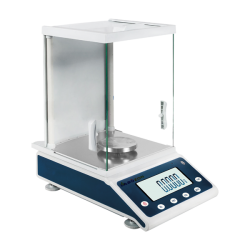
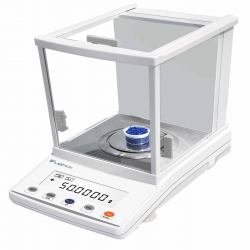
A Laboratory Analytical Balance is a high-precision instrument designed to measure mass in sub-milligram increments—often as precise as 0.0001 g (0.1 mg). It’s typically enclosed in a glass draft shield to eliminate environmental interference and used in laboratories across pharmaceutical, chemical, food, and academic research sectors.
Without routine calibration, even the best balance will eventually drift from accuracy, affecting the reproducibility, legality, and ultimately the reliability of your lab results.
Why Calibration Is Critical?
1. Ensures Accurate Measurements
Over time, environmental conditions, usage frequency, and mechanical wear can cause small deviations in measuring accuracy. Calibration realigns the balance with known weight standards, keeping results within acceptable limits.
2. Supports Regulatory Compliance
Laboratories operating under ISO 17025, GLP (Good Laboratory Practice), or GMP (Good Manufacturing Practice) require documented, traceable calibration processes.
3. Prevents Costly Errors
In drug compounding, forensic analysis, or food testing, calibration errors may lead to incorrect dosages, legal consequences, or product recalls.
4. Extends Instrument Lifespan
Regular calibration prevents over-compensation errors, reduces mechanical strain, and flags performance issues early.
Types of Calibration for Laboratory Analytical Balances
There are generally two recognized calibration methods for Laboratory Analytical Balances:
✅ Internal Calibration
Balances with built-in automation use an internal sensor to calibrate themselves at specific intervals or upon temperature shifts. These are highly convenient but still should be verified with external standards periodically.
✅ External Calibration
This involves using certified external weights that match international standards (e.g., ASTM, OIML, NIST). It's more versatile and suitable for laboratory applications where traceability is critical.
At Ningbo Develo Precision Mac Co., Ltd., we manufacture analytical balances with both internal and external calibration features, providing flexibility and compliance for every type of laboratory.
Step-by-Step Guide: Calibrating Your Laboratory Analytical Balance Like a Pro
Let’s walk through the professional calibration process step-by-step. Follow these carefully to ensure maximum accuracy in your weighing tasks.
Step 1: Prepare Your Workspace
- Place the balance on a vibration-resistant, level surface.
- Eliminate all airflow around the balance by closing windows and using the draft shield.
- Use an anti-static brush or ionizer to remove static charges from the weighing container and balance tray.
- Avoid wearing loose clothing which may disturb air around the balance.
Step 2: Warm Up Your Balance
Turn on your Laboratory Analytical Balance and allow it to warm up for at least 30 minutes. This step stabilizes internal components and increases calibration accuracy.
Step 3: Check Leveling
Most balances come with a built-in spirit level. Adjust the leveling feet to ensure the bubble is centered. Even a minor tilt can produce large measurement errors at sub-milligram levels.
Step 4: Perform a Tare Test
Before calibration, press the TARE or ZERO button to reset the display to zero. Make sure the weighing pan is empty and stationary.
Step 5: Internal Calibration (if available)
- Navigate to your balance's calibration menu.
- Select “Internal Calibration.”
- The balance will automatically adjust using its internal weight sensor.
- Wait for the process to complete, typically within 1–3 minutes.
Step 6: External Calibration
If your balance requires or allows external calibration:
- Use certified calibration weights that match your balance capacity and resolution.
- Place the weight gently on the pan once prompted by the interface.
- Wait for the balance to stabilize and record the response.
- If the balance is adjustable, it will auto-tune the internal reading to match the external weight.
Note: Only use weights that comply with the OIML or ASTM standards. Mishandling weights (scratches, fingerprints, dust) can skew results.
Step 7: Verification Testing
After calibration:
- Weigh several known standard weights sequentially (e.g., 1g, 10g, 100g).
- Compare the readings with known values.
- Make a log of any deviation within allowable tolerances.
Step 8: Document Calibration
For traceability and audits:
- Record the date, time, ambient temperature, balance ID, user name, and test weight info.
- Use standard calibration certificates as proof.
- Most Ningbo Develo balances come with built-in data logging features to simplify documentation.
Calibration Tips from Our Experts at Develo
- Avoid touching weights with bare hands. Use gloves or tweezers.
- Avoid using expired calibration weights. Certification must be valid.
- Keep records of every calibration event. Use cloud-connected balance options if possible.
- If the results are inconsistent, don’t continue. Restart or seek maintenance support.
- Always perform calibration at the balance's location. Moving the balance to calibrate off-site will distort results.
How Ningbo Develo Precision Mac Co., Ltd. Supports Calibration?
As a trusted manufacturer of Laboratory Analytical Balances, Ningbo Develo Precision Mac Co., Ltd. provides:
- Models with intelligent auto-calibration
- Calibration certificates with every instrument
- Technical documentation for ISO/GLP compliance
- Calibration weight sets (OIML + ASTM) available for purchase
- Expert installation and training support
Our goal is to make calibration easy, traceable, and professional for every lab user, regardless of experience level.
Calibration Is the Key to Laboratory Excellence
Ultimately, the accuracy, integrity, and reproducibility of all your lab measurements revolve around one thing—calibration. Regular, professional attention to your Laboratory Analytical Balance ensures your lab remains compliant, efficient, and respected for its scientific credibility.
At Ningbo Develo Precision Mac Co., Ltd., we are proud to supply laboratories, research institutions, and industrial facilities with dependable, intuitive, and easily calibratable balances. Whether you're using a top-tier automated system with internal calibration or performing manual recalibration with certified weights, knowing how to do it like a pro gives you the confidence to trust every measurement.

Frequently Asked Questions (FAQ)
Q1: How accurate are Laboratory Analytical Balances from Develo after calibration?
✅ A1: Our balances provide highly reliable readings with accuracy down to 0.1 mg or 0.0001g. After professional calibration, the variation is often less than ±0.1% depending on model and operating environment.
Q2: Can I use household weights for calibration?
✅ A2: No. Only certified calibration weights (OIML/ASTM standard) should be used. Household items are not precise and can introduce significant error margins.
Q3: What if my balance isn’t passing external verification after calibration?
✅ A3: If errors persist, reattempt the calibration process. If it still fails, consult your Develo service technician. It may be due to a mechanical fault or outdated firmware.
Q4: Which calibration weight class should I use?
✅ A4: For most Laboratory Analytical Balances, use Class F1 or Class E2 weights to achieve maximum calibration accuracy. Always check your instruction manual for compatibility.
Q5: Do I need to calibrate after every power outage?
✅ A5: While internal calibration systems often compensate, it’s best practice to recalibrate after any electrical disruption or transport event to ensure data integrity.