


In today’s fast-paced digital healthcare environment, telemedicine has transformed how providers connect with patients. However, while telehealth has made access to care more convenient, it has also introduced new challenges in billing and coding. Understanding Telehealth Billing and Coding Services is now more essential than ever for providers seeking efficiency, compliance, and fair reimbursement. This guide breaks down what these services are, why they matter, and how they can streamline your practice operations without overwhelming your administrative staff.
What Are Telehealth Billing Services?
Telehealth billing services handle the end-to-end process of submitting and managing claims for virtual healthcare visits. Unlike traditional billing, telehealth billing involves unique modifiers, location codes, and payer-specific requirements. These small yet critical details determine whether a claim is approved or denied. For example, failing to include the proper place-of-service code or using an outdated CPT modifier could result in payment delays or denials.
Billing professionals specializing in telehealth ensure that every virtual visit is coded correctly and submitted according to the latest regulations. They verify payer rules, track reimbursement trends, and stay current with federal updates, helping practices stay compliant and profitable.
Why Telehealth Billing and Coding Services Matter
The pandemic accelerated telemedicine adoption, but billing systems often struggled to keep up. Many providers quickly realized that telehealth reimbursement wasn’t as straightforward as in-person care. Proper coding ensures accurate revenue capture and compliance with payer policies, while incorrect coding can lead to lost revenue, audits, and compliance issues.
Telehealth billing services bridge this gap by combining regulatory expertise, payer knowledge, and technology-driven accuracy. They ensure that every claim reflects the real value of the care delivered, whether through video consultations, remote monitoring, or asynchronous communications.
The Financial Impact of Accurate Telehealth Billing
Accurate telehealth billing directly influences a practice’s bottom line. A minor coding error—such as missing a time-based modifier or using the wrong telehealth CPT code—can result in claim denials that take weeks to correct. Over time, these errors accumulate into thousands of dollars in lost revenue.
Professional telehealth billing experts reduce these errors through careful code auditing, charge capture validation, and consistent follow-ups. They understand payer nuances, such as which insurers reimburse for audio-only visits or which require specific consent documentation. This level of attention ensures providers get paid correctly and on time.
Key Components of Effective Telehealth Billing
To get the most out of telehealth billing, providers need to understand its main components.
1. Accurate Code Selection
Every telehealth encounter requires a CPT or HCPCS code that accurately reflects the service provided. Billing specialists must also apply the right modifiers (like 95 or GT) and location codes to indicate that the visit occurred virtually.
2. Compliance and Documentation
Telehealth is governed by both federal and state regulations. Proper documentation is essential to prove medical necessity and compliance with HIPAA and payer policies. Expert billing teams ensure every telehealth record meets these standards.
3. Payer-Specific Rules
Not all insurers follow the same reimbursement policies. Some limit telehealth coverage to certain services, while others require specific platforms or consent forms. Billing professionals who specialize in telehealth know these differences and tailor claim submissions accordingly.
4. Real-Time Claim Tracking
Efficient telehealth billing includes real-time claim monitoring and denial management. When a claim is rejected, quick resubmission with corrected details helps maintain steady cash flow.
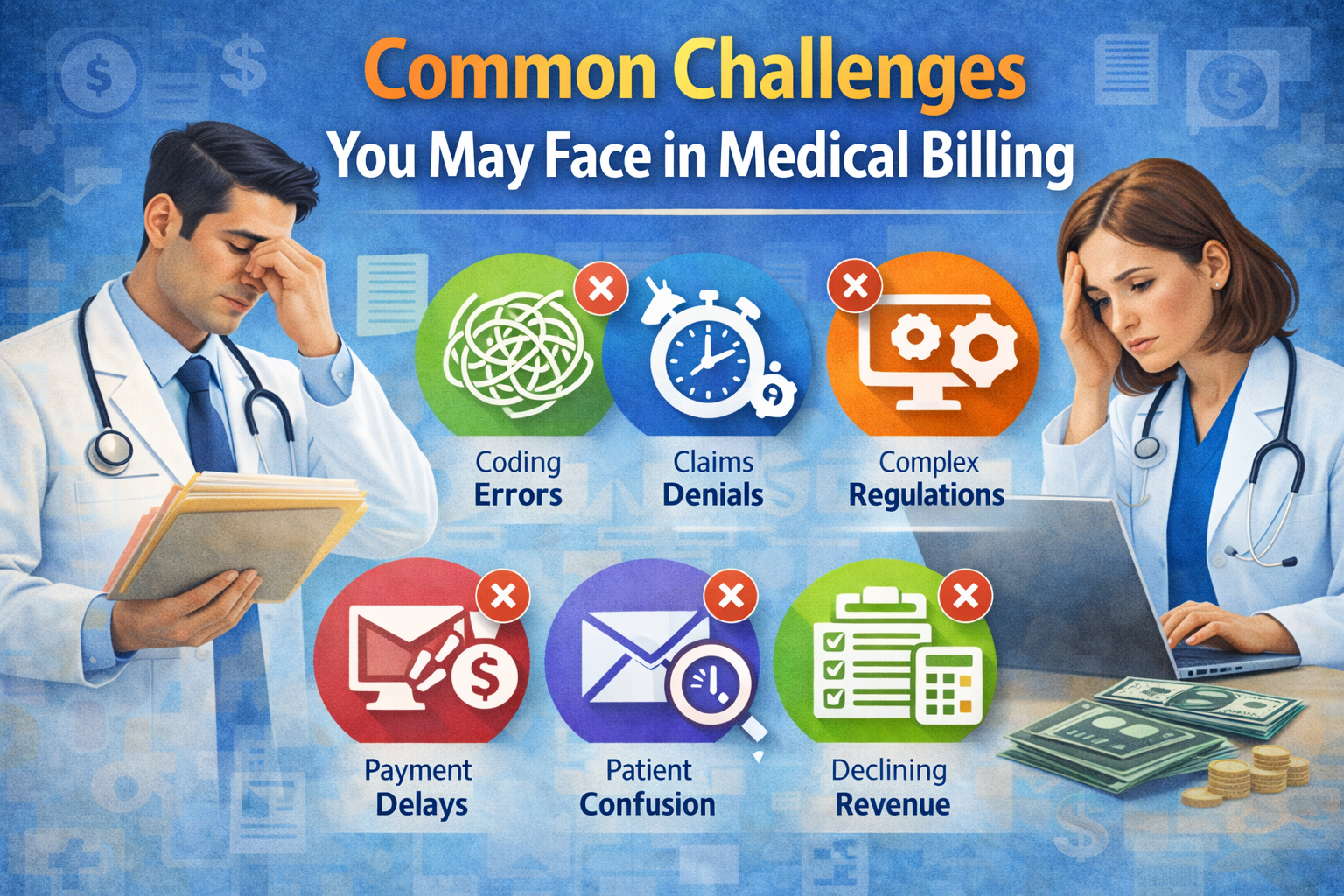
Common Challenges in Telehealth Billing
While telehealth offers convenience, it comes with unique billing challenges:
Complex payer policies: Each insurer may have different rules for telehealth coverage.
Rapidly changing codes: Regulatory updates can alter billing rules overnight.
Inconsistent documentation: Missing patient data or consent can lead to denials.
Limited staff expertise: Many in-house teams lack the time or knowledge to handle telehealth-specific billing requirements.
Partnering with experienced billing professionals helps mitigate these risks and allows providers to focus more on patient care instead of administrative burdens.
The Link Between Telehealth and Specialized Billing Expertise
The growing adoption of telemedicine has led many healthcare organizations to seek specialized billing solutions that go beyond basic claim submission. Experienced billing professionals not only process claims but also analyze payer patterns, identify underpayments, and recommend improvements in charge capture workflows.
This approach is particularly valuable for practices with complex specialties such as OB/Gyn Medical Billing and Coding, where telehealth visits must comply with both telemedicine and specialty-specific regulations. By working with telehealth billing experts who understand these intricacies, providers can avoid costly errors and enhance reimbursement accuracy.
The Role of Technology in Telehealth Billing
Automation and data analytics are transforming telehealth billing efficiency. Modern billing software can automatically apply the correct modifiers, validate claim accuracy, and flag missing documentation before submission.
Artificial intelligence and machine learning tools can also predict denial risks, identify trends in underpayments, and help billing teams stay proactive. For providers, this means faster reimbursements, fewer administrative bottlenecks, and more time for patient engagement.
However, technology alone isn’t enough. The human element—expert billing professionals who interpret data, apply regulatory knowledge, and handle exceptions—is what ensures long-term success.
Compliance: Staying Ahead of Telehealth Regulations
Telehealth billing must adhere to strict compliance rules set by the Centers for Medicare & Medicaid Services (CMS), private payers, and state health agencies. These regulations often evolve, especially as telehealth expands beyond pandemic-era waivers.
Providers must ensure they’re billing according to the latest telehealth coverage policies, including:
Approved CPT and HCPCS codes for telehealth visits
Proper documentation of patient consent and location
Secure, HIPAA-compliant technology use for virtual consultations
Failure to comply can lead to audits or reimbursement clawbacks. Partnering with professionals who monitor these regulations continuously ensures your practice remains protected and compliant.
Outsourcing Telehealth Billing: A Strategic Advantage
For many healthcare providers, outsourcing telehealth billing to a specialized company offers significant advantages. It reduces administrative workload, increases claim accuracy, and provides access to experts who stay up to date with every coding and compliance change.
By outsourcing, providers can shift their focus back to patient care while maintaining steady revenue cycles. Outsourcing also helps smaller practices compete with larger organizations by giving them access to enterprise-level billing resources and technology.
Choosing the Right Partner for Telehealth Billing
When selecting a telehealth billing partner, providers should look for a company with:
Proven experience in telehealth and remote care billing
Transparent reporting and claim tracking
Knowledge of payer-specific telehealth rules
Strong compliance and security practices
RCM Experts is one such organization known for its deep expertise in telehealth billing and coding solutions. Their professionals help healthcare practices reduce denials, improve reimbursement rates, and maintain compliance with evolving telehealth regulations.
Conclusion
Telehealth is no longer a temporary solution—it’s a permanent part of modern healthcare. As virtual visits continue to rise, so does the importance of accurate and compliant billing. Understanding the complexities of Telehealth Billing and Coding Services empowers providers to safeguard their revenue, reduce claim rejections, and deliver care efficiently.
Working with a trusted partner offering comprehensive medical billing services ensures that your telehealth practice not only remains compliant but also thrives financially in this new era of digital healthcare.