

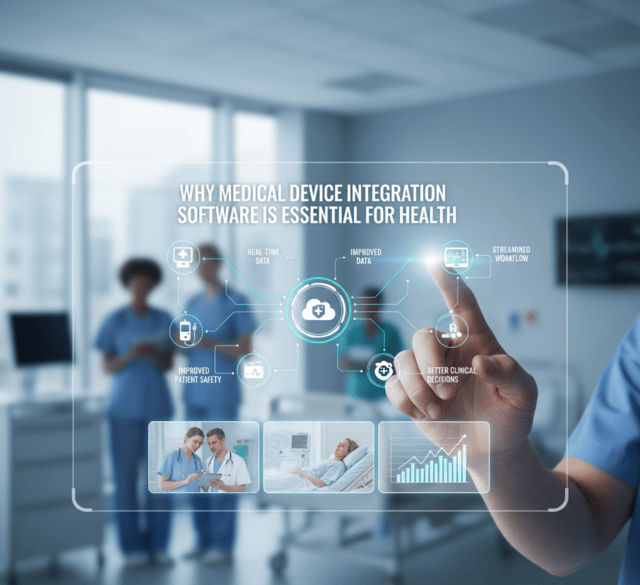
The modern hospital is a symphony of technology, from sophisticated patient monitors and ventilators to infusion pumps and diagnostic imaging systems. Each device generates critical, real-time data that is vital for patient care. However, when these devices operate in isolation—as is often the case in outdated systems—they create a fragmented, inefficient, and potentially dangerous data environment.
This is the core problem solved by medical device integration (MDI) software. MDI isn't just a technical upgrade; it's a fundamental shift in how hospitals manage information, allowing for the seamless, automated flow of patient data from the bedside directly into electronic health records (EHRs) and other clinical applications. It is the crucial link that transforms raw machine output into actionable, clinical intelligence, and it's rapidly becoming the standard of care.
The Perils of the Manual Workflow
Before the widespread adoption of MDI, the transfer of patient data relied heavily on manual charting. A nurse or clinician would physically transcribe data—such as a blood pressure reading, heart rate, or ventilator setting—from the device display into the patient’s chart or EHR. This workflow presents numerous challenges:
· Risk of Transcription Errors: Human error is inevitable, and a single misplaced decimal point in a critical measurement can lead to medication errors or delayed interventions. Studies show that manual transcription can introduce significant error rates.
· Time Consumption and Burnout: Clinicians spend valuable time manually charting instead of focusing on direct patient care. This administrative burden contributes significantly to staff burnout and reduces the capacity to manage more patients.
· Data Latency: Data transcribed minutes after it's generated is inherently historical. Real-time data visibility is lost, hindering timely clinical decision-making, especially in critical care settings like the ICU.
· Incomplete Records: Critical data points collected between manual charting intervals are often missed, leading to gaps in the patient's comprehensive medical record.
The Power of Medical Device Integration Software
Medical device integration software acts as a middle layer, a sophisticated communication hub that automatically captures, cleanses, standardizes, and routes data from nearly any connected medical device.
Here's how MDI software fundamentally transforms patient care and operational efficiency:
1. Enhanced Patient Safety and Data Accuracy 🎯
The most critical benefit is the elimination of transcription errors. When data is automatically captured and streamed, its fidelity remains intact from the point of origin (the device) to the point of record (the EHR). This guarantees that clinicians are making decisions based on accurate, real-time information, improving diagnostic speed and treatment precision. Furthermore, many MDI systems include smart validation logic that flags and filters erroneous readings before they enter the EHR, adding an extra layer of safety.
2. Clinical Workflow Optimization and Efficiency ⏱️
By automating data entry, MDI software significantly frees up nursing time. A typical nurse can save hours per shift by eliminating manual charting, allowing them to redirect their focus to high-value activities, such as patient assessment, education, and compassionate care. This increased efficiency translates directly into a higher capacity for the unit and improved job satisfaction for staff.
3. Real-Time, Comprehensive Documentation 📜
MDI software ensures a complete and chronological patient record. Instead of isolated snapshots charted every hour, the system can provide continuous data streams or high-frequency updates (e.g., every minute). This rich dataset is invaluable for identifying subtle trends, understanding the patient’s physiological trajectory, and ensuring a defensible, detailed clinical record for billing and auditing purposes.
4. Fueling Clinical Intelligence and Predictive Analytics 🧠
When data is standardized and centralized, it moves beyond simple documentation. Integrated data provides the necessary foundation for advanced analytical tools.
· Clinical Decision Support (CDS): MDI data can power CDS tools that alert clinicians to deteriorating conditions (e.g., early sepsis warnings) before they become critical.
· Research and Quality Improvement: Aggregated, high-fidelity data across a patient population can be mined to identify best practices, optimize protocols, and contribute to new medical research. This is the pathway to true learning health systems.
Key Features to Look for in MDI Software
Implementing a successful MDI solution requires careful consideration of the vendor and technology. Essential features include:
· Vendor and Device Agnosticism: The software should be able to integrate with a wide variety of devices from different manufacturers, ensuring long-term flexibility and protecting the hospital’s technology investment.
· Robust Connectivity: Look for systems that support both wired and wireless (Wi-Fi/Bluetooth) connectivity protocols to accommodate mobile devices and flexible care environments.
· Contextualization and Standardization: The system must not just transfer numbers but translate them into standardized formats (like HL7 or FHIR) and attach the necessary patient context (Patient ID, location, time stamp) before sending them to the EHR.
· Audit Trails and Security: Given the sensitivity of patient data, the software must provide comprehensive audit trails to track who accessed what data and when, while adhering strictly to HIPAA and other international data security and privacy standards.
· Scalability and Reliability: The solution must be designed for 24/7 reliability and capable of scaling across multiple hospital departments, from the OR and ICU to general medical floors.
The Future is Integrated
The healthcare landscape is relentlessly moving toward digitalization, automation, and personalized medicine. Medical device integration software is the indispensable bridge that connects the physical world of clinical care with the digital world of health IT. By ensuring that every vital sign, every machine setting, and every critical measurement is instantly, accurately, and securely recorded, MDI solutions are not just improving documentation—they are actively elevating the safety and quality of patient care. For hospital administrators and clinical leaders, investing in robust MDI is an investment in efficiency, compliance, and, most importantly, patient lives.