


Introduction to Software as a Medical Device (SaMD)
Software has become a critical driver of innovation in healthcare, enabling functions such as disease diagnosis, patient monitoring, treatment planning, and clinical decision support. When software performs a medical purpose independently of hardware, it is classified as Software as a Medical Device (SaMD). As the adoption of digital health solutions increases, regulatory oversight is essential to ensure patient safety, data integrity, and clinical reliability.
In the United States, SaMD products are regulated by the US Food and Drug Administration (FDA) under a structured, risk-based framework. Understanding how the FDA evaluates and regulates SaMD is essential for HealthTech startups, medical software developers, and regulatory professionals planning to enter or expand within the US healthcare market.
Definition of SaMD According to IMDRF and FDA Guidance
The FDA aligns its definition of SaMD with the International Medical Device Regulators Forum (IMDRF). According to IMDRF, SaMD is software intended to be used for one or more medical purposes without being part of a hardware medical device. This includes software used for diagnosis, prevention, monitoring, treatment, or alleviation of disease.
The FDA adopts this definition to maintain global regulatory harmonization while applying US-specific regulatory requirements. Importantly, not all healthcare-related software is regulated. Administrative tools, general wellness applications, and software that does not influence clinical decisions may fall outside FDA oversight.
Overview of the US FDA Regulatory Framework for SaMD
The FDA regulates SaMD under the Federal Food, Drug, and Cosmetic Act. SaMD products are treated as medical devices and are subject to regulatory controls based on their intended use and risk profile. The regulatory approach focuses on ensuring safety and effectiveness without unnecessarily restricting innovation.
The FDA has also introduced digital health-specific policies and guidance documents to address the unique characteristics of software development, including frequent updates, cloud deployment, and iterative design models.
Role of the Center for Devices and Radiological Health (CDRH)
The Center for Devices and Radiological Health (CDRH) is the FDA division responsible for overseeing medical devices, including SaMD. Within CDRH, the Digital Health Center of Excellence provides policy direction, regulatory clarity, and stakeholder engagement related to software-based medical technologies.
CDRH evaluates SaMD submissions, reviews clinical evidence, assesses software validation data, and ensures that cybersecurity and usability risks are adequately managed.
SaMD Risk Classification and Regulatory Impact
SaMD products are classified into Class I, Class II, or Class III based on risk. The classification depends on the software’s intended medical purpose and the severity of harm that could result from incorrect output or failure.
Lower-risk SaMD may be exempt from premarket submissions, while moderate-risk software typically requires premarket notification. High-risk SaMD that supports critical clinical decisions may require extensive clinical evidence and premarket approval. Correct classification is essential, as it determines the regulatory pathway, submission type, and post-market obligations.
When FDA Registration, Clearance, or Approval Is Required
Manufacturers must register their establishment and list their device with the FDA once regulatory clearance or approval is obtained. However, registration alone does not grant market access.
Depending on classification, SaMD may require FDA clearance through premarket notification, authorization through a De Novo request, or approval through a more rigorous review process. Understanding when regulatory authorization is required is critical to avoid enforcement action or product delays.
Organizations seeking structured insight into SaMD registration with US FDA often benefit from reviewing regulatory precedents, guidance documents, and classification databases before finalizing development plans.
Key Regulatory Pathways: 510(k), De Novo, and PMA
The 510(k) pathway is commonly used for Class II SaMD products that can demonstrate substantial equivalence to a legally marketed predicate device. This pathway focuses on comparative analysis rather than independent proof of effectiveness.
The De Novo pathway applies when no suitable predicate exists but the software presents moderate risk. De Novo classification establishes a new device type and controls for future products.
Class III SaMD products with high risk typically require Premarket Approval (PMA), which involves comprehensive clinical evidence and extensive FDA review.
Software-Specific Documentation and Validation Requirements
SaMD submissions require detailed software documentation, including architecture design, hazard analysis, verification and validation testing, and lifecycle management processes. The FDA expects manufacturers to follow recognized standards such as IEC 62304 for software lifecycle management.
Change management, version control, and update procedures must be clearly defined. For many organizations, aligning quality systems with FDA expectations early in development reduces regulatory risk and rework.
Cybersecurity, Clinical Evaluation, and Usability Considerations
Cybersecurity is a major regulatory focus for SaMD. Manufacturers must demonstrate that risks related to data breaches, unauthorized access, and system vulnerabilities are adequately controlled throughout the product lifecycle.
Clinical evaluation is required to support claims related to diagnosis or treatment. The level of clinical evidence depends on risk classification and intended use. Usability engineering also plays a critical role, ensuring that the software can be used safely and effectively by intended users in real-world environments.
Common Challenges Faced by SaMD Manufacturers
SaMD manufacturers frequently encounter challenges such as unclear product classification, evolving regulatory guidance, and difficulty generating appropriate clinical evidence. Rapid software updates can complicate compliance if change control processes are not well defined.
Another challenge involves balancing agile development practices with regulatory documentation requirements. Without a clear regulatory strategy, companies may experience delays, additional testing requirements, or regulatory rejections.
Importance of Regulatory Strategy and Expert Guidance
A well-defined regulatory strategy helps SaMD manufacturers align development, validation, and submission activities with FDA expectations. Early planning reduces uncertainty and supports predictable regulatory outcomes.
Industry-facing regulatory knowledge shared by platforms such as Operon Strategist helps stakeholders better understand evolving FDA expectations for digital health technologies without relying on promotional messaging.
Visit:
https://operonstrategist.com/services/regulatory-approvals/samd-registration-with-us-fda/

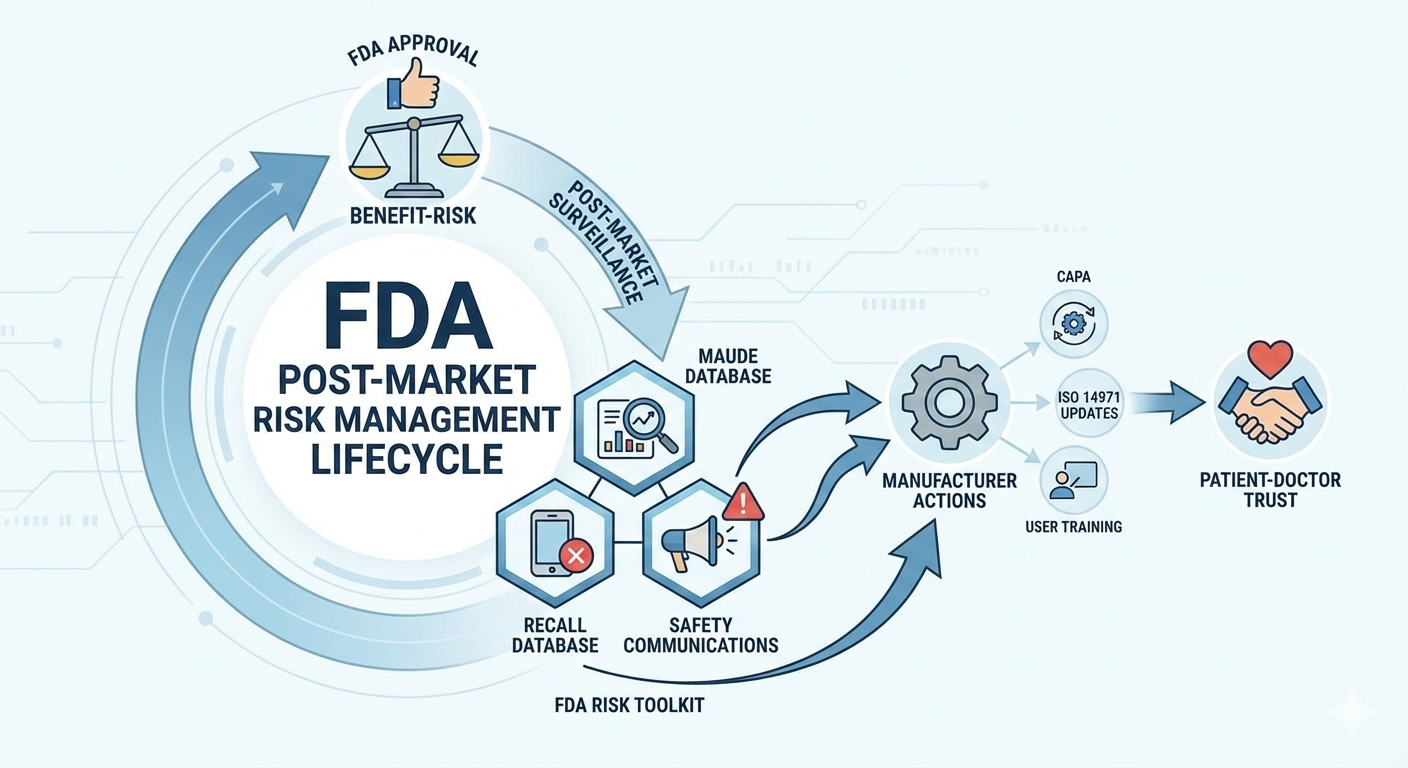




Software has become an important aspect of medical devices and is proving to benefit both patient and provider.
QSS can help licence your medical device!Read more:https://qualitysmartsolutions.com/blog/what-you-need-to-know-software-as-a-medical-device-samd/