Custom software development is a smart investment for any business that wants to build solutions tailored to its specific goals and workflows. Unlike off-the-shelf software, custom software is created from the ground up to match your unique business needs, improve efficiency, and give you a competitive edge.
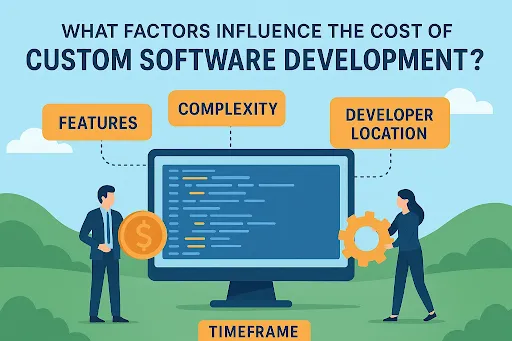
However, the cost of developing custom software can vary widely. It depends on several factors such as the type of software, technology stack, design complexity, testing process, and compliance requirements. By understanding these factors, businesses can plan their budgets better and avoid hidden or unexpected expenses.
To ensure a smooth and cost-effective development process, it’s essential to analyze all the major cost drivers in advance. Factors like user interface design, development team experience, integration with other systems, and the use of third-party tools can all play a big role in determining the final cost of a custom software development project.
Key Factors Affecting Custom Software Development
Type and Complexity of Software
The complexity of the software is one of the primary determinants of cost. Simple applications such as a basic internal tool or a single-purpose mobile app can often be developed relatively quickly and at a lower cost.
Complex applications, such as enterprise-level systems, AI-powered solutions, or multi-platform applications, require advanced architecture, significant coding, and extensive testing, which dramatically increases both development time and cost.
Impact of Features and Functionality
Every additional feature or functionality adds development effort. Examples include:
- User authentication systems
- Dashboards with data analytics
- E-commerce modules
- Chatbots or AI-powered recommendation engines
Each feature requires design, coding, testing, and integration, which accumulates into higher costs. Prioritizing core features and planning phased development can help control costs.
Integration with Existing Systems
Most businesses already use systems such as CRMs, ERPs, or legacy databases. Integrating custom software with these systems adds complexity because developers must ensure compatibility, data consistency, and secure communication between systems.
Complex integrations can require custom APIs, synchronization scripts, or middleware, which further impacts development budgets.
Technology Stack
The programming language and framework chosen for the project affect both cost and performance.
Popular languages like Python or JavaScript may have abundant developers, lowering cost, while niche technologies or advanced frameworks can command higher rates. Additionally, the technology stack affects scalability, security, and future maintenance.
Front-end vs. Back-end Complexity
The front-end (user interface) and back-end (server logic, databases, APIs) vary in complexity.
A visually rich, interactive interface requires sophisticated front-end development, whereas a robust back-end may involve complex data processing, integration with multiple services, or high-security requirements. Both impact the cost depending on the effort required.
Use of Third-Party Tools and Libraries
Third-party libraries and SDKs can speed up development, but they often come with licensing costs and potential long-term support considerations. Choosing the right tools requires balancing initial savings with long-term reliability.
Design and User Experience (UX/UI)
Custom designs offer a unique brand-aligned experience but require more design resources and iterations. Template-based solutions are quicker and cheaper but may lack differentiation and customization.
Importance of Responsive and Intuitive Interfaces
Modern software must work seamlessly across multiple devices, platforms, and screen sizes. Responsive design requires additional planning, development, and testing, which increases costs. Similarly, an intuitive interface may require extensive user research, wireframing, and usability testing.
Design Iterations and Revisions
Frequent design changes or iterative feedback loops can extend timelines and increase costs. Clear design briefs and early prototypes help minimize costly revisions.
Development Team and Expertise
In-house teams offer better control and alignment with company culture but come with higher fixed costs (salaries, benefits, infrastructure). Outsourced or remote teams provide flexibility and cost efficiency but require strong project management to ensure quality and timely delivery.
Experience Level of Developers
Senior developers charge higher rates but work faster and produce high-quality code with fewer errors. Junior developers are cheaper but may require more supervision and take longer, potentially raising total project costs.
Geographic Location and Labor Costs
Labor costs vary widely by location. Developers in North America or Western Europe generally have higher rates than developers in Asia or Eastern Europe. Choosing the right balance between cost, expertise, and time zone alignment is crucial.
Project Size and Duration
Larger projects with multiple interconnected features require more design, coding, testing, and management effort. The more modules, the longer the development cycle and the higher the cost.
Estimated Development Timeline
Extended timelines increase labor costs, project management overhead, and potential delays. Tight deadlines may require hiring additional developers or paying for overtime, further increasing costs.
Long-Term Maintenance and Updates
Custom software is not static; updates, bug fixes, and feature expansions are ongoing costs that must be factored into the total budget. Planning for maintenance ensures the software remains functional and secure over time.
Testing and Quality Assurance (QA)
Manual testing is labor-intensive and time-consuming, particularly for large applications, increasing costs. Automated testing requires upfront investment in tools and scripts but can reduce QA costs over the long term by enabling repetitive tests to be run efficiently.
Security and Performance Testing
Applications handling sensitive data or a high volume of users require rigorous security and performance testing. Penetration tests, load tests, and vulnerability assessments add to both time and cost.
Bug Fixing and Iteration Cycles
Software development is iterative. Bugs identified during QA must be fixed, and the code may need multiple rounds of testing. Complex applications usually require more cycles, which directly increases cost.
Maintenance and Support
Software requires regular updates to fix bugs, improve features, or adapt to new operating systems. Budgeting for these updates is essential for long-term cost planning.
Hosting, Server Costs, and Cloud Services
Hosting options and cloud infrastructure costs vary depending on user traffic, storage, and performance needs. High-availability systems or cloud-based applications may require premium services, adding recurring expenses.
Technical Support Requirements
Providing end-user support, documentation, and troubleshooting involves additional personnel and systems, which should be considered when calculating long-term costs.
Regulatory Compliance and Security Requirements
Industries such as healthcare, finance, or education have strict regulations. Compliance requires additional coding, testing, documentation, and security measures, which increase development costs.
Data Protection and Encryption Needs
Implementing encryption, secure authentication, and access control ensures data protection but requires additional development and testing effort.
Impact on Cost and Development Time
Non-compliance can lead to legal penalties or expensive software redesigns, making upfront investment in compliance both necessary and cost-effective.
Third-Party Integrations
Integration with external services adds complexity. For example, connecting a payment gateway or analytics platform requires secure API integration, testing, and troubleshooting.
Licensing Fees and Subscription Costs
Many third-party services require ongoing fees or subscriptions, which add to both initial and recurring costs.
Integration Complexity
The more systems a software needs to communicate with, the more planning and development time required. Poorly planned integration can result in delays, increased costs, or performance issues.
Project Management and Communication
Agile allows iterative development and flexibility but requires continuous communication and coordination, which can affect costs. Waterfall offers a linear approach, making budgeting and planning easier, but reduces flexibility.
Communication Overhead
Regular meetings, updates, and collaboration with stakeholders add overhead. Miscommunication can lead to rework, delays, and higher costs.
Tools Used for Project Tracking
Project management tools like Jira, Asana, or Trello improve efficiency but may involve licensing fees, training, and setup costs.
Conclusion
The custom software development cost is influenced by a multitude of interrelated factors, ranging from the complexity of the application and technology stack to design, team expertise, and ongoing maintenance. Every decision, whether it’s choosing the right development team, selecting third-party integrations, or ensuring regulatory compliance, has a direct impact on both budget and project timeline.
Understanding these factors in advance allows businesses to make informed decisions, plan realistic budgets, and avoid unexpected expenses during development. While custom software may require a significant upfront investment, carefully considering these cost drivers ensures a high-quality, scalable, and secure solution that delivers long-term value and a competitive edge.



Custom software development affects your business in many ways.
Hire one of the best Custom Software Development Company in India to get your website or application as per your requirement and budget.
Checkout how Custom Software Development affects business: https://www.powerfulcodes.com/how-custom-software-development-affects-business/

When a customer provides their feedback about any product or service, they are doing a huge favor to organizations by etching out their views for better planning and strategy.
For service-based sectors like Hospitality especially hotels, organizations survive on building a strong bond with the customer by providing them personalized services.
If organizations in the hospitality industry want to provide more personalized service than generic over the counter services, they have to provide a lot of options and battle out several factors.
CRM can be adopted as a global strategy that will enable companies to manage interaction with the customer at all levels.
It also is about maintaining a friendly demeanor while dealing with the customer, making rapid decisions and resolve problems instantly.
Rob Yanker of McKinsey and Company very aptly puts it, “Winning back a lost customer can cost up to 50-100 times as much as keep the current one satisfied” With custom CRM as a high-powered tool, organizations can now rely on its analytics to deliver what the customer wants, in a manner they want and the time when they require it”.5.