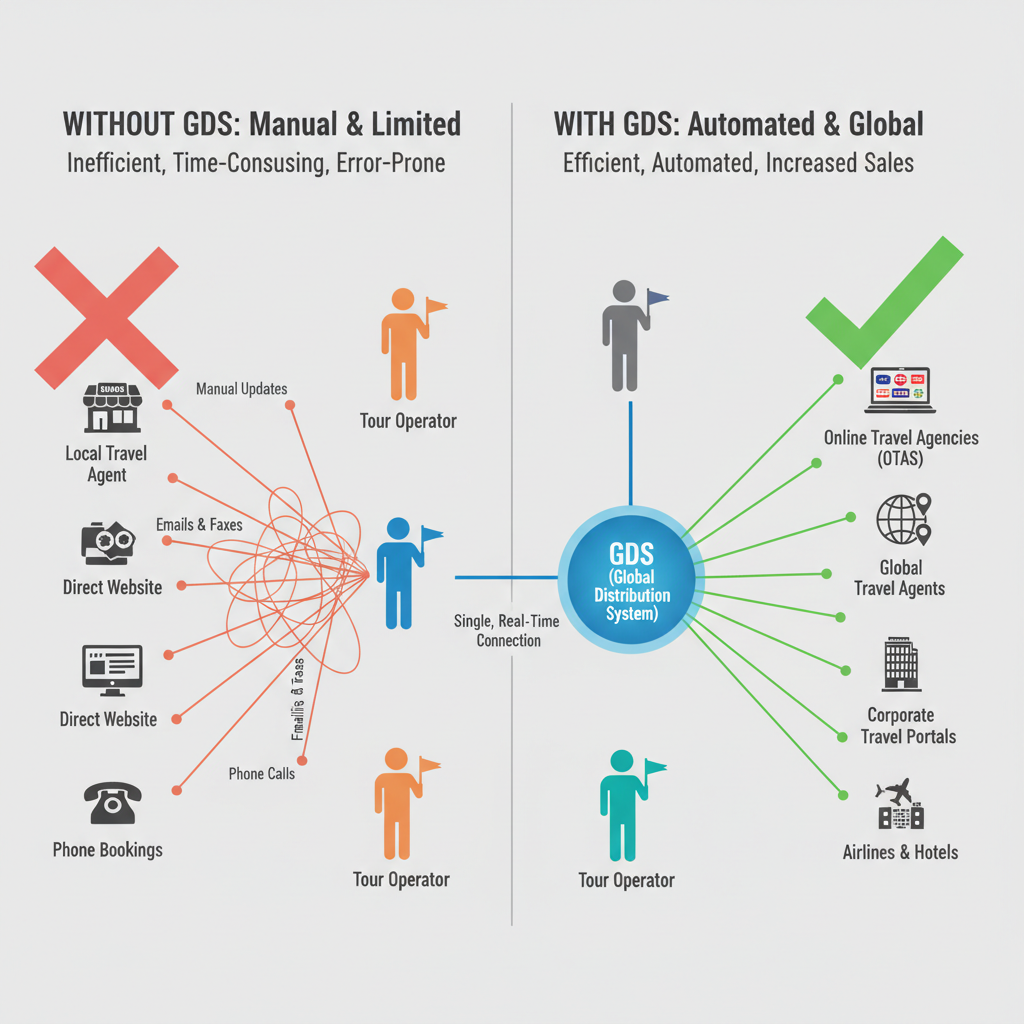
A Global Distribution System is a network that connects travel suppliers such as airlines, hotels, car rental companies, cruise operators, and wholesalers with travel businesses, including tour operators. Through a GDS, tour operators can access updated availability, pricing, schedules, and inventory from multiple suppliers in a single platform. This integration reduces the need for manual coordination, minimizes errors, and ensures that customers see accurate and reliable information at all times.
Additionally, a GDS allows tour operators to automate their booking processes, manage dynamic pricing, and expand the reach of their offerings to multiple distribution channels simultaneously. It serves as a bridge between suppliers and end customers, making it an indispensable tool in today’s travel industry.
Why Tour Operators Should Use a GDS
Access to Worldwide Travel Inventory
With a GDS, tour operators gain instant access to a global inventory of flights, hotels, car rentals, tours, and activities. This eliminates the dependency on limited local suppliers and enables tour operators to provide more diverse options to their clients. By offering a broader selection, operators can appeal to a wider audience and increase booking potential.
Real Time Availability and Pricing
Tourists expect prices and availability to be accurate and updated in real time. A GDS ensures that tour operators can provide live inventory and correct pricing, reducing booking errors, cancellations, and customer dissatisfaction. Real time data also allows operators to respond quickly to changes in availability, seasonal demand, and last minute updates from suppliers.
Faster Bookings and Automation
A GDS automates the processes of searching, comparing, and confirming bookings. This reduces manual work, saves time, and allows tour operators to focus on customer service, itinerary customization, and overall business growth. Automation also ensures a smoother booking flow, reducing friction for the end user and increasing conversion rates.
More Revenue Opportunities
By accessing multiple suppliers and products, tour operators can create flexible packages, offer add-ons, and upsell services such as airport transfers, guided tours, and insurance. A GDS enables dynamic package creation that caters to various traveler preferences, enhancing revenue potential and improving profitability.
Better Partnerships with Airlines and Hotels
Tour operators using a GDS can establish stronger relationships with major travel providers. Access to exclusive deals, negotiated rates, and priority inventory allows operators to create competitive offerings. These partnerships also provide reliability and consistency in services, which is critical for customer satisfaction and repeat business.
Improved User Experience on Travel Websites
Integrating a GDS into a travel website improves the overall user experience. Customers can search for flights, hotels, and packages quickly, compare options side by side, and make bookings without errors or delays. A smooth interface combined with accurate data builds trust and encourages more conversions.
Data Insights for Smarter Decisions
GDS platforms provide detailed analytics about bookings, popular routes, seasonal trends, and customer preferences. Tour operators can leverage these insights to adjust pricing strategies, design better packages, optimize marketing campaigns, and anticipate demand. Data driven decisions help improve efficiency and profitability.
How GDS Helps Tour Operators Stay Competitive
Reduces Manual Work
Tour operators no longer need to check availability, confirm schedules, or update prices manually. Automation through a GDS frees up time and reduces the risk of errors.
Helps Offer Dynamic Packages
Operators can mix and match flights, hotels, tours, and activities to create customizable travel packages that appeal to different types of travelers. This flexibility enhances customer satisfaction and increases booking volumes.
Supports Multi Channel Distribution
A GDS allows tour operators to distribute offerings across multiple platforms, including travel agencies, online travel agencies (OTAs), and their own websites. Multi channel distribution increases exposure and sales opportunities without requiring separate systems.
Challenges Tour Operators Face Without a GDS
- Outdated travel information that frustrates customers
- Higher chances of booking errors and failures
- Limited access to global suppliers and inventory
- Increased manual workload that reduces efficiency
- Slower response times to customer inquiries
- Lost revenue opportunities due to lack of optimization and reach
Without a GDS, tour operators risk falling behind competitors who provide seamless, real time booking experiences.
How to Start Using a GDS in Your Travel Business
- Identify the inventory types and suppliers most relevant to your offerings
- Evaluate and select a GDS provider that fits your business model
- Integrate GDS with your booking engine or travel website
- Train your team to manage and monitor bookings effectively
- Launch packages with real time availability and pricing, ensuring consistent updates and error monitoring
Additional Benefits That Strengthen the Case for GDS Adoption
Beyond the core advantages, several deeper benefits make GDS integration even more valuable for tour operators aiming for sustainable growth.
Enhanced Visibility and Market Reach
A GDS allows tour operators to appear in global platforms used by travel agents, OTAs, and corporate travel planners. This expanded visibility ensures that their offerings reach more potential travelers without additional marketing costs. It also positions tour operators alongside well established brands, improving credibility.
Consistency Across All Channels
Tour operators often struggle with maintaining consistent pricing and availability across different platforms. A GDS solves this by syncing data across channels in real time. This prevents mismatches that lead to customer frustration and booking conflicts.
Seamless Integration with Booking Systems
Most GDS platforms integrate smoothly with CRM systems, payment gateways, itinerary builders, and back office tools. This seamless ecosystem ensures that the entire workflow—from inquiry to booking to post trip support—runs more efficiently.
Support for Corporate and Group Bookings
Corporate clients and large group travelers require accurate schedules, negotiated rates, and instant confirmations. A GDS streamlines these complex requirements, making it easier for tour operators to win high value clients and deliver professional level service.
Access to Ancillary Services
In addition to flights and hotels, GDS platforms include services like:
- Airport transfers
- Local activities and events
- Cruise bookings
- Insurance options
- Rail tickets in specific markets
Ancillary services allow tour operators to create more complete packages and increase per customer revenue.
Future of GDS in the Travel Industry
As the travel industry evolves, GDS platforms are becoming more advanced. They are now integrating AI powered analytics, dynamic pricing engines, and predictive demand forecasting. For tour operators, staying aligned with these advancements will ensure they remain competitive.
AI Enhancements
Artificial intelligence will enable:
- Personalized travel recommendations
- Automated support responses
- Smarter pricing strategies based on demand patterns
Expanded Content from Non Traditional Suppliers
More experiences, boutique stays, and unique accommodations are expected to be available on GDS platforms, appealing to modern travelers seeking authentic experiences.
Greater Focus on Sustainability
Some GDS providers are now adding carbon footprint indicators and eco friendly supplier tags. This helps tour operators support sustainability focused travelers.
Conclusion
A Global Distribution System is more than just a booking tool. it is a strategic asset that empowers tour operators to scale faster, operate more intelligently, and deliver higher quality travel experiences. With access to global inventory, automated workflows, real time pricing, and multi channel distribution, tour operators using a GDS stand out in a competitive market.
By embracing GDS technology today, tour operators position themselves for long term success, increased revenue, stronger customer relationships, and a future ready business model.


By using these protectors, you can use these protectors to make your interior more decorative because a bedroom is the center point of your home.
Many types of injuries can be avoided with the use of standard protectors.Pillows can be a breeding ground for pet dust mites, bed bugs, oil, and sweat unless pillow covers are used.
Keep Allergies Away Dust, bugs and their droppings might gather in your pillow if you don't use a protector.
A second layer is added to "catch" pests before they get into the cushion stuffing.
You won't have to change your pillow as often if you use a pillow protector if you're allergic to dust mites.
They also provide your cushion a little extra comfort, smoothness, and fluff.