





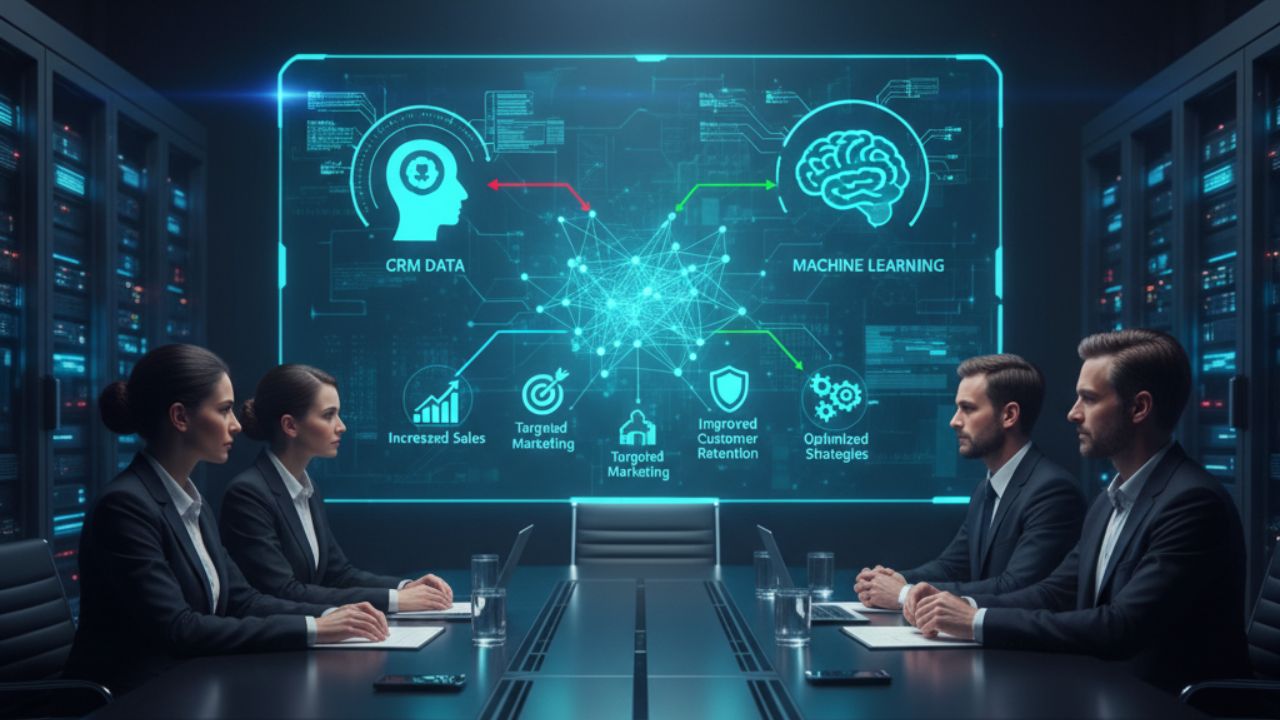
Customer Relationship Management (CRM) systems hold a treasure trove of data sales, interactions, preferences but raw data alone doesn’t cut it anymore. Pairing CRM analytics with machine learning (ML) unlocks deeper insights, automates decisions, and keeps businesses competitive in a fast-moving market. As customer expectations skyrocket and data grows, this combo is becoming a must-have. Here’s why integrating CRM analytics with ML is critical and how it drives real value.
Check Also: Salesforce CRM Analytics Consulting Services
1. Personalizing Customer Experiences at Scale
Customers demand tailored experiences, and ML supercharges CRM analytics to deliver. By analyzing patterns in customer data like purchase history or website clicks ML models predict preferences and behaviors with precision. For example, an e-commerce platform can use ML to recommend products based on past buys, boosting conversion rates by up to 30%, according to industry studies.
Unlike traditional analytics, ML adapts in real time, learning from new data to refine suggestions. This means a CRM can automatically craft personalized emails or offers, even for thousands of users, without manual effort. Businesses that skip this risk losing customers to competitors who make every interaction feel custom-made.
2. Streamlining Operations and Boosting Efficiency
Manual analysis of CRM data is slow and error-prone, especially with growing datasets. ML automates repetitive tasks, like lead scoring or churn prediction, freeing teams to focus on strategy. For instance, an ML model can rank leads by likelihood to convert, letting sales teams prioritize high-value prospects. Studies show companies using ML-driven CRMs see a 20% jump in sales productivity.
ML also spots inefficiencies, like bottlenecks in customer support workflows, by analyzing ticket patterns. Integrating these insights into CRMs like Salesforce or HubSpot ensures decisions are data-driven, not guesswork. Without ML, teams waste time sifting through data, missing opportunities to optimize operations.
3. Staying Competitive in a Data-Driven Market
The market is ruthless businesses that don’t leverage data fall behind. Combining CRM analytics with ML gives a competitive edge by turning raw data into actionable foresight. For example, ML can forecast demand by analyzing historical sales and external factors like market trends, helping businesses stock smarter or adjust pricing.
It also strengthens customer retention by predicting churn risks say, flagging a client who hasn’t engaged recently and triggering proactive outreach. Companies using ML-driven CRMs report up to 15% higher retention rates. As competitors adopt these tools, failing to integrate ML risks losing market share to those who anticipate and act faster.
Check Also: Salesforce Einstein Discovery / Predictions
Final Thoughts
Combining CRM analytics with machine learning is critical because it personalizes experiences, streamlines operations, and keeps businesses ahead in a cutthroat market. It transforms static data into dynamic insights, letting you meet customer needs and optimize processes at scale. Start small test ML features in your existing CRM, like predictive scoring in Salesforce and scale as you see results. In a world where data is king, this integration isn’t just an upgrade; it’s a necessity to stay relevant and thrive.

Get Salesforce Training in Bangalore - a combination of Salesforce Admin and Salesforce Developer training to learn ways to manage and develop custom software products over Salesforce CRM.Get yourself trained with the industry approved knowledge & conceptions to understand the Salesforce Admin & Salesforce Developer certification exams with brilliance.Learn a combination of skills to manage, develop, and configure the customized software applications using the declarative features & lightning version of the Salesforce platform.
Implement a fresh, renewed Salesforce system for your business or migrate your existing CRM to Salesforce.
Atocloud is ready to assist you in implementing various Salesforce products: https://bit.ly/3cZuG0Q