



In today’s data-driven environment, businesses and researchers rely heavily on surveys to collect insights from customers, employees, and other stakeholders. However, managing the process manually—designing, distributing, collecting, and analyzing responses—can be time-consuming and prone to human error. The integration of automation tools has revolutionized how organizations handle survey distribution and analysis, allowing for faster insights, greater accuracy, and improved engagement. Among the latest innovations, QR code surveys have emerged as a simple yet powerful method to reach audiences more efficiently.
Automating the Survey Workflow
Survey automation begins with designing intelligent workflows that handle repetitive tasks. Platforms such as Qualtrics, Google Forms with add-ons, or enterprise solutions like SurveyMonkey Enterprise now include features that automatically trigger surveys based on user actions. For example, when a customer completes a purchase or service request, the system can instantly send a feedback form without human intervention.
Automation tools can also manage reminder schedules and close surveys once a target number of responses has been reached. This reduces administrative workload and ensures that data collection stays on track. Integration with CRM systems or HR software allows survey results to flow seamlessly into analytics dashboards, providing real-time visibility into trends and performance indicators.
Streamlined Distribution Through Smart Channels
Distribution has always been one of the trickiest parts of survey management. Traditional email invitations often suffer from low open rates, while social media links can get lost in crowded feeds. Automation tools help optimize this process by identifying the best channels for each audience and timing deliveries for maximum engagement.
QR code surveys play a crucial role in this new landscape. Instead of relying solely on email or web links, organizations can generate unique QR codes that lead directly to the survey. These can be printed on receipts, posters, packaging, or event materials, allowing respondents to scan and participate instantly with their smartphones. This approach not only simplifies access but also boosts participation rates by reducing friction.
Furthermore, automation tools can track which QR codes are scanned most frequently, revealing which locations or campaigns generate the highest engagement. This data can inform future survey distribution strategies and help refine audience targeting.
Real-Time Data Collection and Processing
One of the most valuable benefits of automation in survey management is real-time data collection and processing. Modern survey platforms use automated pipelines to clean, categorize, and visualize incoming responses as they arrive. Advanced analytics tools can detect patterns, sentiment, or anomalies in the data, allowing decision-makers to act quickly.
For instance, if a company uses QR code surveys for customer feedback in retail locations, automation can instantly flag negative responses and alert management. This immediate feedback loop enables faster problem-solving and improves overall service quality.
Additionally, automated reporting tools can generate dashboards and summaries tailored to different stakeholders—executives, HR managers, or marketing teams—without manual data manipulation. This saves time and ensures consistency across departments.
Enhancing Accuracy and Reducing Human Error
Manual survey processes are vulnerable to errors such as double-counting responses, mislabeling data, or overlooking incomplete answers. Automation minimizes these risks by enforcing validation rules, detecting duplicates, and ensuring that all required fields are completed before submission.
Automated analysis also removes subjectivity from data interpretation. Machine learning algorithms can categorize open-ended responses, identify key themes, and measure sentiment objectively, producing more reliable results. This not only enhances data quality but also builds confidence in decision-making based on survey findings.
Integrating AI for Predictive Insights
The future of survey automation lies in artificial intelligence (AI) and predictive analytics. AI-powered platforms can go beyond descriptive analysis to forecast trends, detect shifts in employee morale, or predict customer churn based on historical response patterns.
For example, by combining AI with QR code surveys, a company can identify geographic or demographic variations in customer satisfaction. This integration enables smarter marketing strategies and more personalized engagement campaigns, all driven by automated data collection.
The Strategic Advantages of Automation
By leveraging automation tools, organizations can transform surveys from static instruments into dynamic sources of insight. The main advantages include:
Speed: Automation shortens the time between survey launch and actionable insights.
Efficiency: Less manual work means teams can focus on interpreting results rather than collecting data.
Scalability: Automation supports large-scale survey campaigns across multiple locations or customer segments.
Engagement: Tools like QR code surveys make participation easier and more appealing.
Accuracy: Automated validation and AI-driven analysis reduce bias and improve data reliability.
Conclusion
Automation tools have fundamentally reshaped the landscape of survey distribution and analysis. From smart scheduling and real-time dashboards to the simplicity of QR code surveys, these technologies streamline every stage of the process. As AI and automation continue to evolve, organizations that embrace these tools will not only save time but also gain deeper, faster, and more reliable insights. The result is a smarter, data-informed approach to understanding people—whether they’re customers, employees, or entire communities.




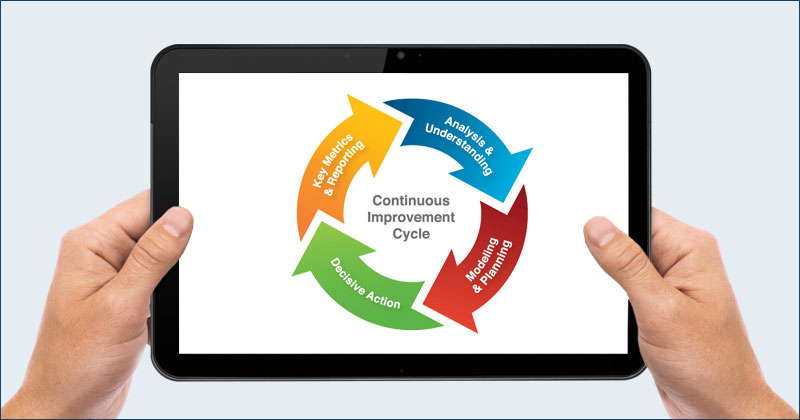
The primary responsibility of the survey tools is making the survey and analyzing the satisfaction of the customer through the client's feedback.
The many various tools with a different functional mechanism for making a survey is been used.
Survey monkey is one of the leading tools for taking a survey easily and simply within a minute, survey legend is the leading and advanced platform for making a survey in handheld devices, and poll daddy is the tool for unlimited surveys and it is completely questions and responses based mechanism.