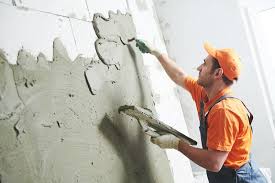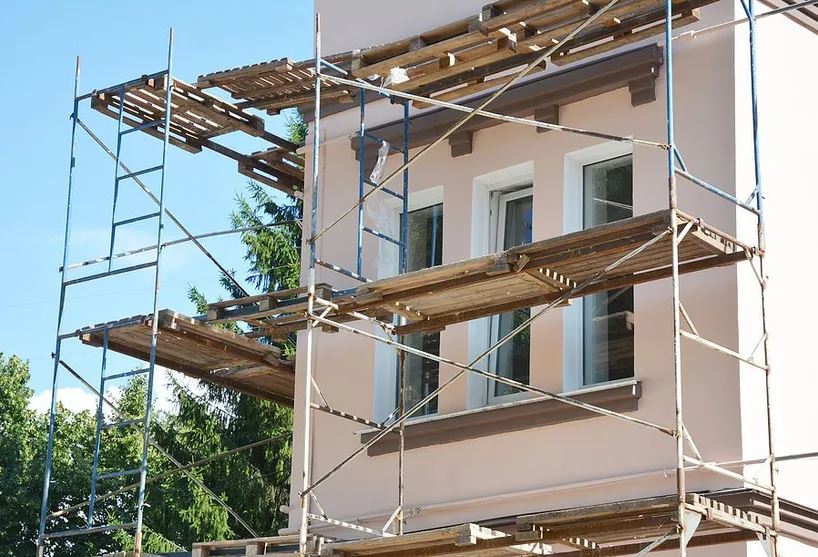



Cement rendering is one of the oldest and most enduring techniques in building construction, used for both protection and aesthetic enhancement of walls and facades. Traditionally, rendering was a manual process—mixing sand, cement, and lime with water and applying it by hand with trowels. However, over the past few decades, advances in materials science, chemistry, and application technologies have transformed cement rendering into a far more sophisticated and durable process.
This article explores the science, engineering, and technology behind modern cement rendering—examining the materials, additives, equipment, and digital innovations that have redefined the trade.
1. The Science of Cement Rendering
At its core, cement rendering is about creating a thin, protective, and decorative layer on a surface—most commonly brick, concrete, or stone. The basic mix typically comprises:
Cement – The binder that gives strength and adhesion.
Sand – The filler that provides structure, texture, and workability.
Water – The catalyst that activates the cement’s hydration process.
Lime or polymer additives – Used to improve flexibility, adhesion, and breathability.
The hydration of cement—a chemical reaction between water and the compounds within cement (primarily tricalcium silicate and dicalcium silicate)—produces calcium silicate hydrate (C-S-H), the key component that provides strength and cohesion. Proper hydration and curing are critical for ensuring that the render bonds well to the substrate and resists cracking.
2. Evolution from Traditional to Modern Render Mixes
Traditional Mixes
Older rendering systems used a simple mix of cement, lime, and sand, usually in a ratio of 1:1:6 or 1:0.5:5 (cement:lime:sand). Lime served an important role, providing elasticity and allowing the render to "breathe," which prevented moisture from being trapped in walls.
Modern Pre-Mixed Systems
Modern rendering technology has moved toward factory-controlled pre-mixed render systems. These pre-packaged materials contain optimized ratios of cement, fine sand, and additives, ensuring consistency and quality control—something difficult to achieve with on-site mixing.
Many pre-mixed renders are enhanced with:
Polymers for increased adhesion and flexibility
Water-retaining agents to improve curing and prevent shrinkage cracks
Hydrophobic compounds that repel water but allow vapor diffusion
Fibers (often glass or polypropylene) to control micro-cracking
The introduction of these advanced materials has significantly improved render performance in terms of longevity, crack resistance, and color stability.
3. Additive Technology and Chemical Engineering
Additives are at the heart of modern cement rendering technology. Chemical admixtures can fine-tune almost every aspect of render behavior:
Plasticizers and Superplasticizers reduce water demand while improving flow, making the mix easier to apply and less prone to segregation.
Retarders slow the setting time, giving applicators more workability, particularly in warm climates.
Accelerators speed up the curing process, useful in cold or damp conditions.
Waterproofing agents such as silicones or silanes create hydrophobic barriers that resist water penetration while allowing the render to breathe.
Bonding agents, usually based on acrylic polymers, improve adhesion between the render and the substrate.
These additives are carefully formulated to maintain balance between strength, flexibility, and vapor permeability—three crucial factors for render durability and performance.
4. The Role of Surface Preparation and Substrate Technology
The success of any rendering job depends heavily on surface preparation. Modern technology offers various priming systems designed to enhance bond strength between the substrate and the render layer.
Acrylic primers seal porous surfaces and prevent suction (rapid water absorption), which can cause weak bonding.
Mechanical keying systems, like textured base coats or mesh reinforcement, help render adhere to smooth surfaces such as concrete or painted walls.
Fiber mesh reinforcement technology—often made of alkali-resistant fiberglass—is embedded within the base coat to improve tensile strength and prevent cracking, particularly over large wall areas.
Digital moisture meters and thermal imaging are now commonly used by professionals to assess substrate conditions before rendering, ensuring that surfaces are dry, clean, and stable.
5. Application Technology: From Manual to Mechanized Systems
Traditionally, rendering was entirely manual, involving trowels, hawks, and floats. Today, mechanized rendering systems have revolutionized the process, improving speed, consistency, and finish quality.
Spray Rendering Machines
Modern plastering and rendering machines use compressed air or pump systems to apply render directly to walls. These machines can handle both thin-coat acrylic renders and heavier cement-based renders.
Advantages include:
Consistent layer thickness
Reduced labor fatigue
Faster coverage rates
Improved adhesion due to forceful application
These systems are particularly beneficial on large-scale projects such as apartment buildings or commercial facades.
Digital Control and Smart Tools
Some high-end render machines are equipped with digital flow control and mix ratio calibration, ensuring uniform consistency. Laser leveling tools and digital thickness gauges are also used to maintain precision across surfaces.
6. Polymer-Modified and Acrylic Renders
One of the most significant technological developments in rendering is the introduction of polymer-modified and acrylic renders.
Polymer-modified renders combine cement with synthetic polymers that increase elasticity and adhesion. They are ideal for substrates that experience movement or thermal expansion, such as lightweight concrete panels.
Acrylic renders are water-based products containing acrylic resins. They are highly flexible, UV-resistant, and available in a wide range of colors and textures. Because they form a thin yet durable film, acrylic renders are often used as the final decorative topcoat over cement render base layers.
Some systems also integrate silicone technology, offering advanced water repellency while maintaining breathability—a critical property for preventing moisture-related damage in walls.
7. Curing and Environmental Control Technologies
Curing plays a vital role in the performance of cement render. Insufficient curing can lead to weak bonding, surface cracks, and reduced durability.
Technological advances in curing compounds—liquid membranes sprayed over freshly applied render—help retain moisture during hydration. These compounds form a temporary barrier that later degrades or can be overcoated.
In large-scale projects, environmental sensors and automated misting systems can monitor temperature and humidity, ensuring optimal curing conditions even in challenging climates.
8. Digital Design and Texture Innovation
Computer-aided design (CAD) and digital texture modeling have also made their way into rendering. Manufacturers now offer digital tools to preview render colors and textures on 3D building models before application.
This technology helps architects and homeowners visualize finishes, choose compatible materials, and predict how light will interact with different surfaces throughout the day.
Laser-etched molds and stencils are also used to create precise architectural patterns, allowing for advanced textures such as stone, brick, or custom geometric designs.
9. Sustainability and Eco-Friendly Advances
Modern cement rendering technology also embraces sustainability. Cement production is energy-intensive and emits significant CO₂, so researchers and manufacturers are developing eco-friendly render systems that reduce environmental impact.
Supplementary cementitious materials (SCMs) such as fly ash, slag, and silica fume partially replace Portland cement, reducing carbon emissions.
Recycled aggregates are increasingly used in render mixes.
Low-VOC acrylic renders help maintain indoor air quality.
Self-cleaning renders incorporating photocatalytic titanium dioxide (TiO₂) break down pollutants and organic matter when exposed to sunlight, keeping surfaces cleaner for longer.
These innovations contribute to greener construction practices while maintaining the performance standards expected in modern buildings.
Cement rendering has evolved from a simple craft into a sophisticated technological process that blends chemistry, materials science, and precision engineering. With innovations ranging from polymer-modified systems and spray rendering equipment to eco-friendly formulations and digital design tools, today’s rendering technology delivers superior durability, aesthetics, and sustainability.
As the construction industry continues to embrace automation and environmental responsibility, the humble render coat—once mixed and applied by hand—now stands as a testament to how even the most traditional trades can be redefined through innovation.



Rendering Brisbane - Rapid Rendering is Brisbane's No.1 company for rendering.
Cement rendering, Acrylic or Polymer rendering.
Fully Licenced and insuredVisit our site: – https://rapidrenderingbrisbane.com.au/Contact UsMonday - Friday 9.00 - 5.00pmSaturdays 9:00 - 1:00 pmSundays by appointmentPO Box 70 Browns Plains BC, QLD 4118admin@rapidrenderingbrisbane.com.au1300 590 526QBCC 1303283