Living with bipolar disorder can be an emotional rollercoaster one that brings moments of extreme highs, deep lows, and the challenges that come between them. While therapy and medication are crucial parts of managing the condition, one powerful yet sometimes overlooked tool in the journey to stability is support groups.
These groups create a safe, understanding, and nonjudgmental environment where individuals with bipolar disorder can share experiences, learn coping skills, and gain emotional encouragement from others who truly understand their struggles.
In this guide, we’ll explore what bipolar disorder support groups are, their benefits, what to expect when joining one, and how they fit into an overall recovery plan.
Understanding Bipolar Disorder
Before exploring support groups, it’s important to briefly understand what bipolar disorder entails.
Bipolar disorder is a mental health condition characterized by significant mood swings from manic or hypomanic episodes (periods of high energy, impulsivity, and euphoria) to depressive episodes (periods of sadness, fatigue, and hopelessness).
There are different types, including:
Bipolar I Disorder: Involves severe manic episodes that may require hospitalization, often alternating with deep depression.
Bipolar II Disorder: Includes milder hypomanic episodes with major depressive episodes.
Cyclothymic Disorder: A milder form of bipolar disorder with chronic mood fluctuations.
While there’s no known cure, the condition can be managed effectively through medication, psychotherapy, lifestyle changes, and importantly, support networks.
What Are Bipolar Disorder Support Groups?
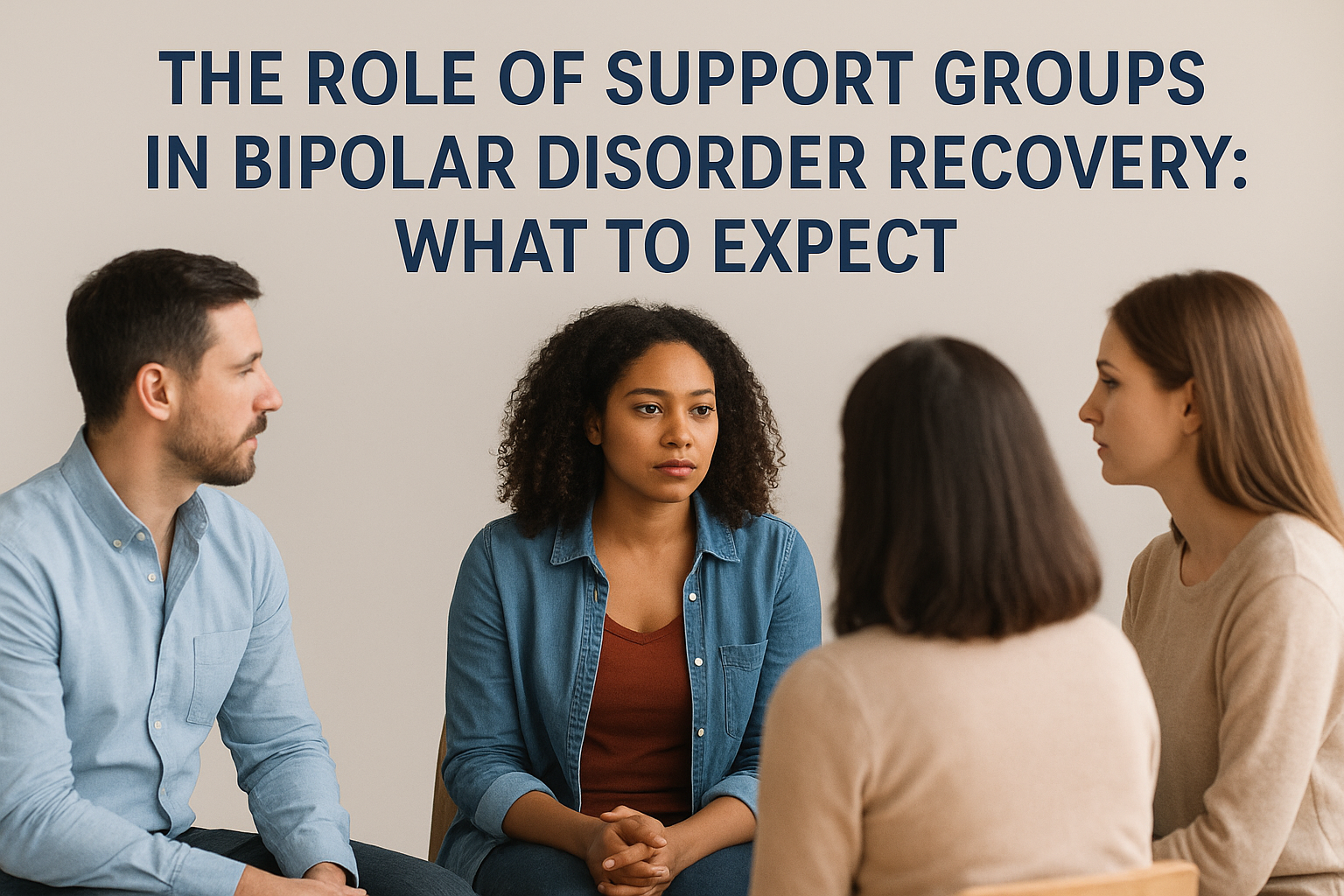
A support group is a gathering of individuals who share a common condition or life experience. In the case of bipolar disorder, these groups bring together people who are living with the illness, as well as sometimes family members or caregivers, to discuss challenges, share strategies, and find comfort in knowing they’re not alone.
Support groups can take several forms:
In-person groups: Held in community centers, hospitals, or mental health clinics.
Online support groups: Hosted on social platforms, forums, or telehealth websites.
Peer-led groups: Facilitated by people who have personal experience managing bipolar disorder.
Clinician-led groups: Guided by psychologists, psychiatrists, or mental health professionals.
The structure and goals may vary, but the underlying mission remains consistent to foster understanding, reduce isolation, and empower members through shared experiences.
Why Support Groups Matter in Bipolar Disorder Recovery
Recovery from bipolar disorder is not just about controlling symptoms with medication it’s also about rebuilding emotional resilience, developing coping strategies, and reconnecting socially. This is where support groups can make a profound difference.
1. Reducing Feelings of Isolation
Many individuals with bipolar disorder feel isolated or misunderstood, even by close friends and family. Support groups bridge that gap. Meeting others who face similar challenges can ease feelings of loneliness and validate your experiences.
2. Learning Practical Coping Strategies
Members often share firsthand advice on managing mood swings, dealing with medication side effects, recognizing early warning signs, and maintaining healthy routines. This real-world knowledge complements professional treatment.
3. Encouragement and Accountability
Seeing others manage their condition successfully can inspire hope. Support groups also help members stay accountable encouraging consistency with medication, therapy, and lifestyle habits.
4. Improved Self-Understanding
Discussing triggers, emotional patterns, and daily struggles with others helps improve self-awareness, which is crucial for managing bipolar disorder effectively.
5. Support for Families and Caregivers
Some groups also include or specifically target family members, helping them better understand bipolar disorder and teaching them how to support their loved one while also caring for their own mental health.
What to Expect When Joining a Support Group
If you’re considering joining a bipolar disorder support group, it’s natural to feel nervous or uncertain at first. Here’s what you can expect:
1. A Safe and Confidential Environment
Support groups maintain confidentiality and provide a judgment-free space. Members agree to respect privacy and create an atmosphere of trust.
2. Guided Discussions
Most meetings have a facilitator either a trained peer or mental health professional who keeps conversations balanced and ensures everyone has the opportunity to share.
3. Diverse Perspectives
Each participant has their own story. Some may be newly diagnosed, while others have managed the condition for years. This diversity allows for learning from different stages of the recovery journey.
4. Emotional Sharing
Members can openly discuss challenges such as medication struggles, stigma, relationship issues, or emotional ups and downs. This sharing process itself can be incredibly therapeutic.
5. Education and Resources
Many support groups also incorporate educational segments covering topics like medication management, stress reduction, or sleep hygiene often featuring guest speakers such as therapists or psychiatrists.
6. Flexibility and Comfort
You can participate at your own pace. There’s no obligation to share until you feel comfortable. Listening is just as valuable as speaking.
The Benefits of Online Support Groups
With the rise of digital healthcare platforms like ExpertMinds, online support groups have become more accessible and effective than ever. They allow individuals to connect from anywhere, making mental health support more inclusive and convenient.
Some benefits include:
Accessibility: Perfect for people in remote areas or those with mobility challenges.
Anonymity: Some individuals find it easier to open up when their identity is protected.
Consistency: Online groups often meet more frequently, helping maintain consistent engagement.
Global Community: Participants can interact with others worldwide, broadening perspectives and understanding.
Whether through chat forums, video meetings, or moderated online communities, digital platforms are transforming how people with bipolar disorder find connection and guidance.
How to Find the Right Support Group
Not every group will be the right fit, and that’s okay. Here’s how to find one that meets your needs:
Ask Your Mental Health Professional
Psychiatrists, psychologists, or therapists often recommend reputable support groups in your area or online.
Check National Organizations
Groups like the Depression and Bipolar Support Alliance (DBSA) and National Alliance on Mental Illness (NAMI) offer both local and virtual options.
Search Online Platforms
Many telehealth services host community spaces specifically for those with bipolar disorder, allowing for moderated, professional-led discussions.
Evaluate the Group’s Structure
Look for consistency in meetings, experienced facilitators, clear guidelines, and a welcoming tone.
Trust Your Comfort Level
You should feel safe and respected. If the group doesn’t feel supportive or balanced, it’s perfectly fine to explore other options.
Common Misconceptions About Support Groups
Even though support groups are proven to be beneficial, some people hesitate to join because of misconceptions:
“I’ll be judged or pitied.”
In reality, everyone in the group understands the struggle. It’s a space for empathy, not judgment.
“Support groups are just for venting.”
While sharing emotions is part of it, groups also focus on practical coping tools and empowerment.
“I can manage on my own.”
Independence is important, but recovery thrives on connection. Even strong individuals need understanding peers.
“It’s not as effective as therapy.”
Support groups don’t replace therapy or medication they enhance them by offering peer insight and social connection.
Combining Support Groups With Professional Treatment
Support groups are most effective when integrated with medical and therapeutic care. They can help reinforce what you learn in therapy and make it easier to apply coping skills in real life.
For example:
Therapy helps identify triggers and patterns.
Medication stabilizes mood fluctuations.
Support groups reinforce these efforts through shared experiences and encouragement.
Together, they create a comprehensive recovery plan that nurtures emotional stability, social confidence, and long-term well-being.
Final Thoughts
Joining a bipolar disorder support group can be one of the most empowering steps in your recovery journey. Beyond professional treatment, it offers a sense of belonging a reminder that you are not defined by your diagnosis but strengthened by your resilience and community.
Through open conversations, shared experiences, and continuous learning, support groups help transform isolation into connection and confusion into clarity.
If you’re ready to take that step, consider reaching out to a trusted professional or exploring digital mental health platforms like ExpertMinds, where guidance and community come together to make recovery accessible and meaningful.