





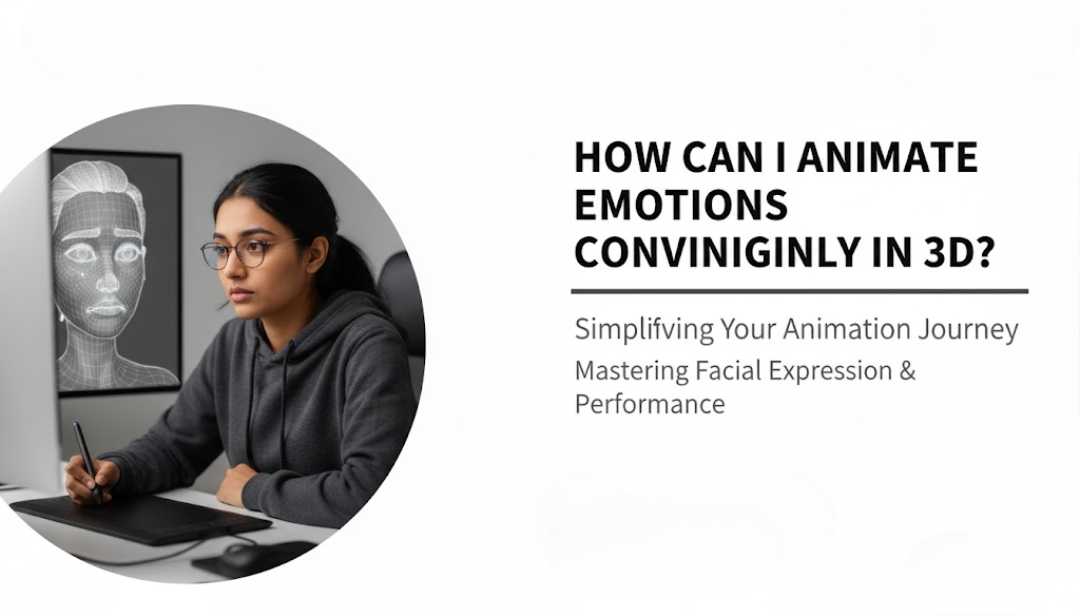
Animating emotions in 3D characters is essential for storytelling. Emotions give characters depth, relatability, and believability, allowing audiences to connect with them on a deeper level. Skilled animators combine technical mastery with artistic observation to create performances that resonate emotionally.
Introduction: Why Emotion Is Key in Character Animation
Emotional animation bridges the gap between visuals and storytelling. Technical animation ensures smooth motion, but expressive animation conveys personality, motivation, and mood. By capturing emotions convincingly, animators make characters memorable and engaging.
Understanding the Basics of Emotion in Animation
Body language, gestures, and posture communicate emotional states effectively. Subtle shifts in stance or movement can express confidence, fear, or excitement.
Facial expressions, including micro-movements like eyebrow twitches or slight lip shifts, are critical for conveying nuanced feelings.
Timing, rhythm, and controlled exaggeration help make emotions readable while maintaining believability.
Using Facial Animation to Convey Emotion
Key facial features—eyes, eyebrows, mouth, and cheeks—express the majority of human emotion.
Blend shapes or shape keys allow precise control over expressions, enabling smooth transitions between moods.
Lip-sync and subtle facial adjustments add realism, especially when characters speak or react naturally in context.
Body Language and Motion
The entire body contributes to emotional storytelling. Weight shifts, gesture timing, and poses reinforce the intended feeling.
Secondary motions, like hair sway, clothing movement, or accessory dynamics, add subtle realism and depth.
Techniques to Enhance Emotional Animation
Keyframe animation provides full control over performance, allowing animators to refine timing, expression, and motion.
Motion capture can serve as a reference or base to capture natural gestures and expressions.
Exaggeration, when applied thoughtfully, ensures emotions read clearly without looking overacted or unnatural.
Tools and Software for Animating Emotion
Blender offers rigging, shape keys, and graph editors to control subtle and complex motions.
Maya provides advanced facial rigging and graph editing for professional-level animation.
Other tools like 3ds Max, Cinema 4D, and Houdini complement these workflows with additional rigging and motion capabilities.
Tips for Making Emotions Convincing
Study real-life references and actors’ performances to understand authentic gestures and expressions.
Animate subtle movements to avoid stiff or exaggerated results, making characters feel alive and relatable.
Playblasts and peer feedback help identify areas that may feel unnatural or mechanical, allowing for refinement.
Common Mistakes to Avoid
Stiff or robotic facial expressions can break immersion.
Inconsistent or unnatural body motion undermines emotional impact.
Ignoring timing and secondary action can make performances feel flat and unconvincing.
Conclusion: Bringing 3D Characters to Life Through Emotion
Combining observation, rigging, and key animation skills allows animators to create expressive and believable characters.
Emotion is what makes characters relatable, memorable, and compelling in storytelling.
Continuous practice, studying references, and refining techniques are essential. For aspiring animators, the best 3D ANIMATION course in Ahmedabad eQuinoxx Creative Academy provides hands-on guidance in facial and body animation, helping students master the art of conveying emotions in 3D.





If you are looking for a website, who provides a quick and complete guide to learn how can I easily log in to Mywifiext.net?
Then My WiFi Extender is the right choice for you.
We have a team of online support, who helps you to solve troubleshoot your connection and connect the Mywifiext Local website.